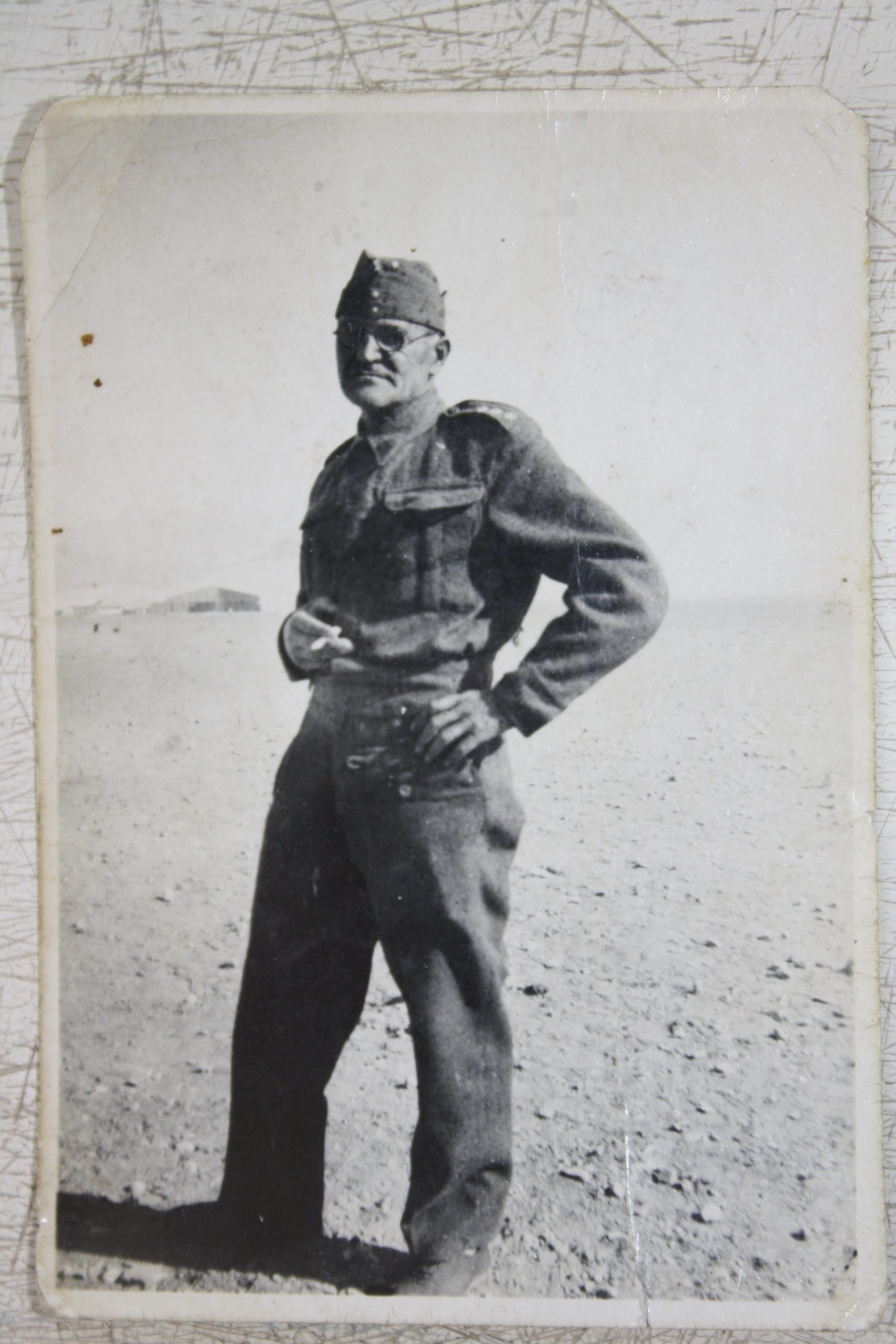


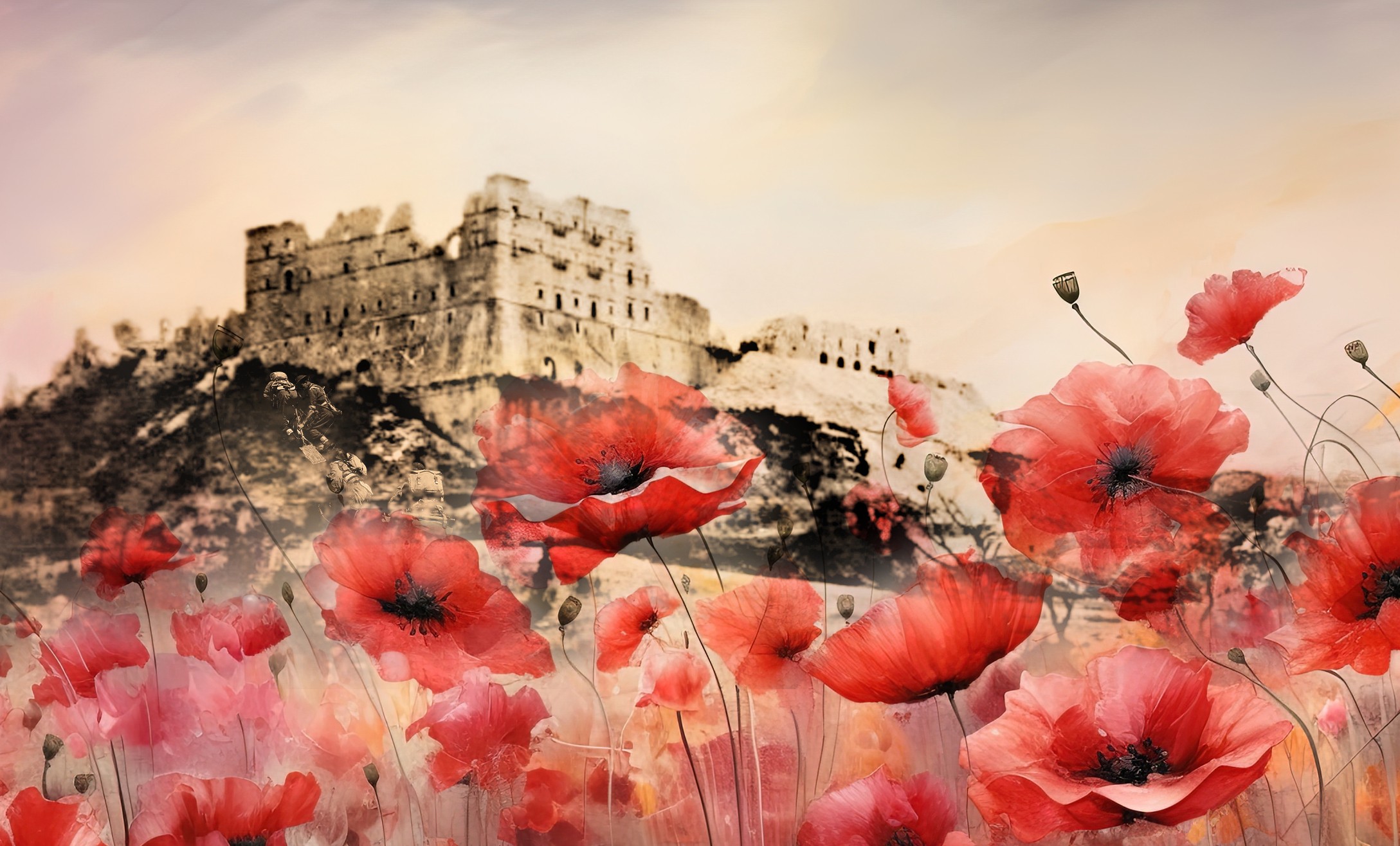
The poppies were donated to the Sybir Memorial Museum in 2025 by the Polish House in Wellington, New Zealand. They were given by the family of Leopold Kundycki, a soldier of Anders’ Army.
Before the outbreak of World War II, Leopold Kundycki lived in Lviv, where he worked as a surveyor. Following the German-Soviet invasion of Poland, Lviv fell under Soviet occupation. In the early hours of April 9, 1940, the NKVD came to Leopold’s home. The Soviets accused him of possessing a weapon, although nothing was found during the search. Despite this, Leopold was arrested and imprisoned in Lviv, then in Kyiv, and finally in Kharkiv. He was initially sentenced to death, but the sentence was later commuted to imprisonment in a labour camp. Leopold was sent to the Siewzheldorlag camp near the village of Kozhva in the Komi Republic. Meanwhile, his wife, daughter, two sons, and father-in-law were deported eastward by the Soviets.
Leopold left the labour camp on September 1, 1941, under the so-called amnesty for Polish citizens and travelled south through the Soviet Union to join the Polish army being formed under the command of General Władysław Anders. As a captain, he evacuated with the army to the Middle East, where he worked as a mathematics teacher at the School for Young Women Volunteers (Junaczki). At the turn of 1943 and 1944, Anders’ troops were sent to Italy. Among them was Captain Leopold Kundycki, who took part in the Battle of Monte Cassino.
“Those poppies were picked by my grandfather Leopold, who fought alongside General Anders at Monte Cassino. I do not know exactly when he picked them or whether it was intended as a reference to the song ‘Red Poppies on Monte Cassino’, written on May 18, 1944. I believe that was precisely the idea,” said Peter Kundycki, Leopold’s grandson.
After the war, Leopold Kundycki went to Great Britain because he did not know what had happened to his family. However, he soon discovered that his wife had been transported from Siberia to New Zealand with the Polish children evacuated to Pahiatua, where she worked as their caregiver. In 1947, Leopold reunited with his family. They settled permanently in New Zealand.
“My grandfather would be happy to know that these poppies have finally returned to the country he came from,” added Peter Kundycki.