



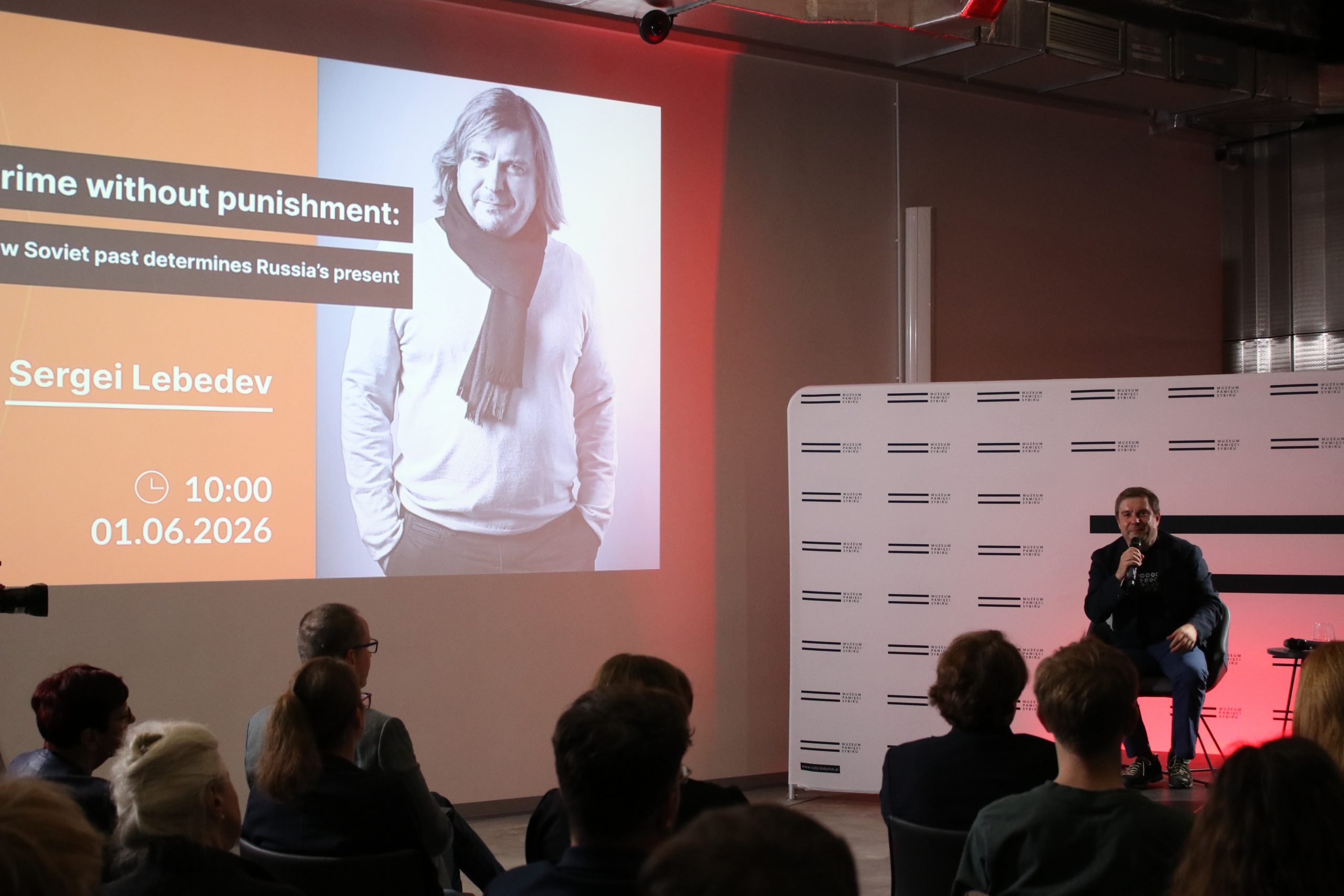
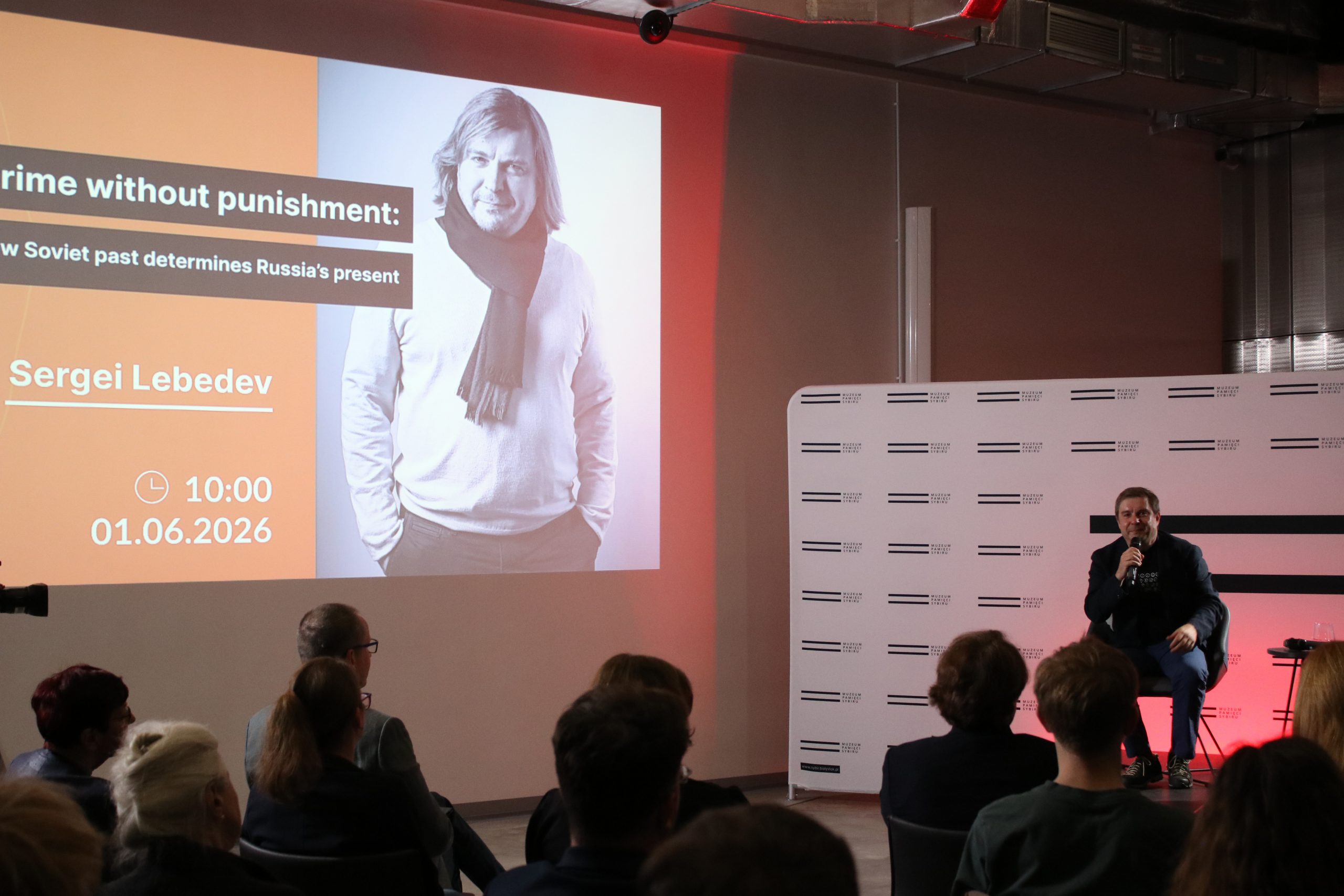
The meeting brought together two ends of the same road: the one that began in Białystok for thousands of deportees, and the one discovered years later in the Russian Far North, among the remains of labour camps hidden deep in the taiga.
Yesterday, the Sybir Memorial Museum had the honour of hosting Sergei Lebedev, a distinguished writer, essayist, and one of the most important contemporary interpreters of the legacy of Soviet crimes.
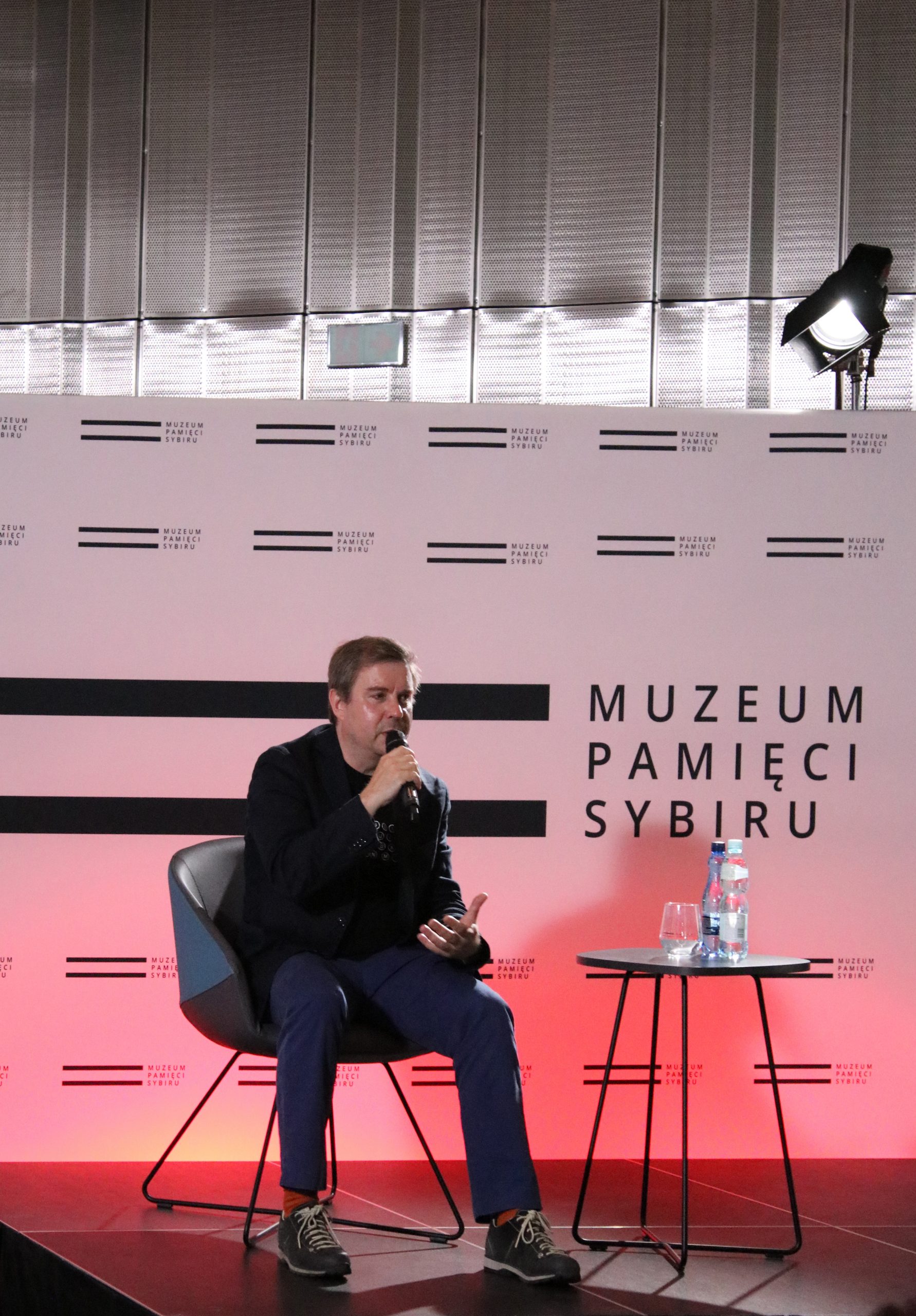
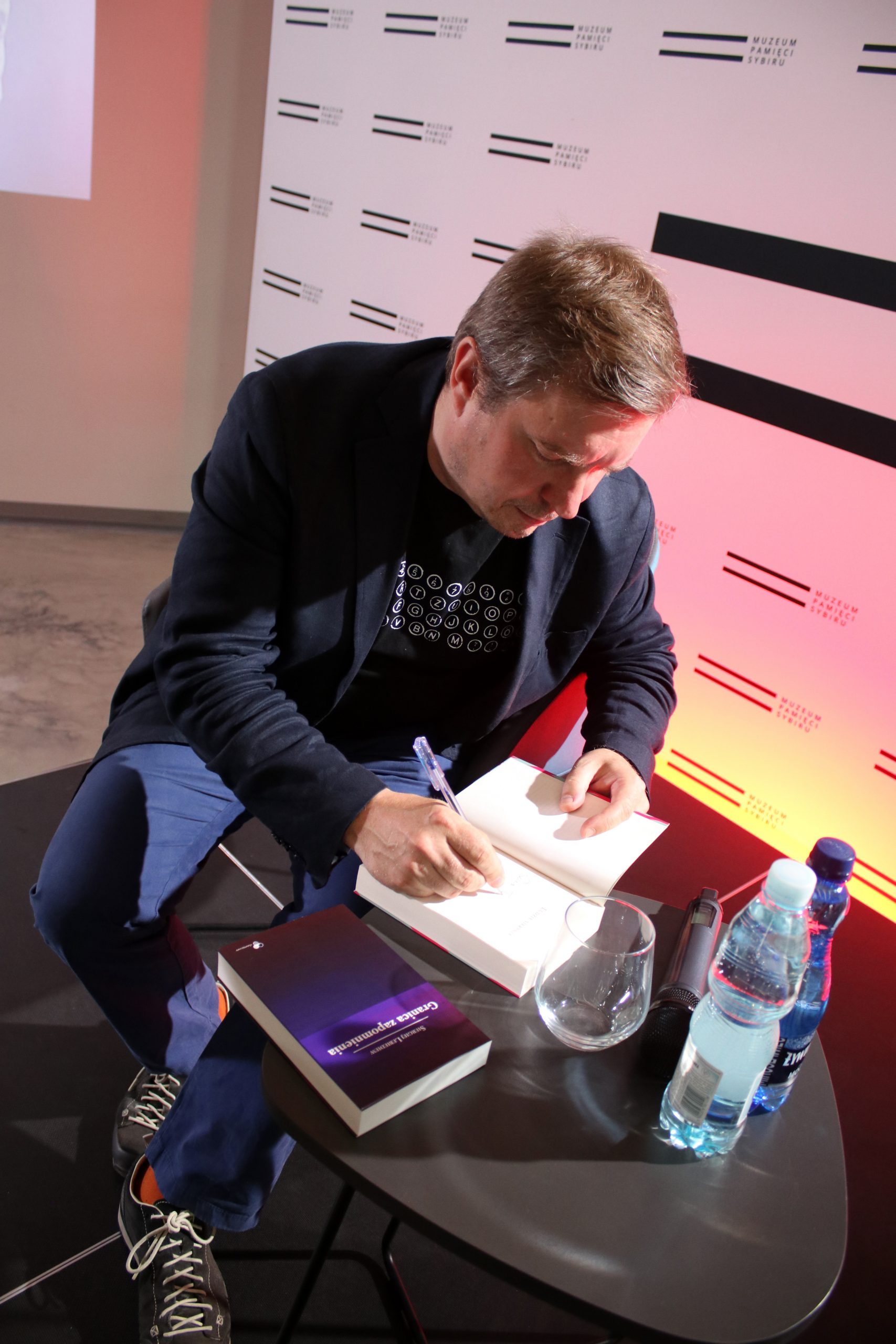
He spoke about his first encounter with the history of Soviet repression. As a teenager, during a geological expedition to northern Russia, he came across traces of former labour camps—overgrown roads, abandoned camp remains, and places that reveal nothing of their past to a casual observer. This experience marked the beginning of his lifelong reflection on memory, responsibility, and the legacy of the Soviet system.
At the heart of his lecture was the question of the consequences of an unaccounted-for past. Lebedev emphasised that remembering the victims is essential, but memory alone is not enough. Without accountability for the crimes that were committed, history remains unresolved, and its consequences continue to resurface across generations.
He also discussed how the memory of deportations, occupation, and state violence can help us understand contemporary developments in Europe and the realities unfolding just beyond our eastern border.
One thought in particular resonated strongly: some places do not tell their own stories—they need people who will remember them and keep their history alive. It is difficult to imagine more fitting words in a place whose mission is to preserve the memory of those deported to Siberia.
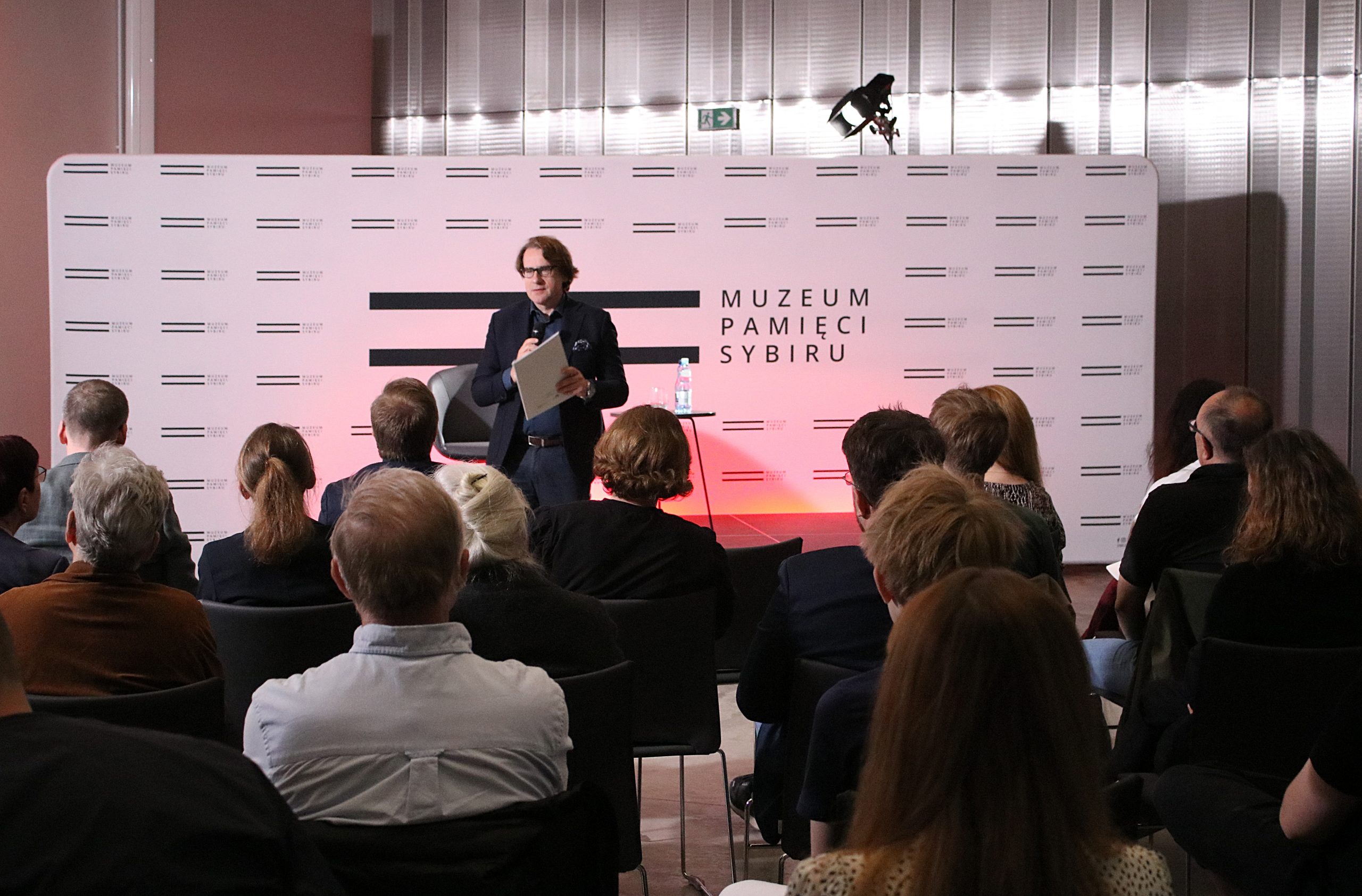
We would like to thank everyone who attended the meeting for joining us and for sharing this moment of reflection. We extend our special gratitude to the Sybir deportees, representatives of cultural, academic, and remembrance institutions, as well as all those interested in the history of Eastern Europe. We are also deeply grateful to Sergei Lebedev for accepting our invitation and for this inspiring meeting at the Sybir Memorial Museum.