


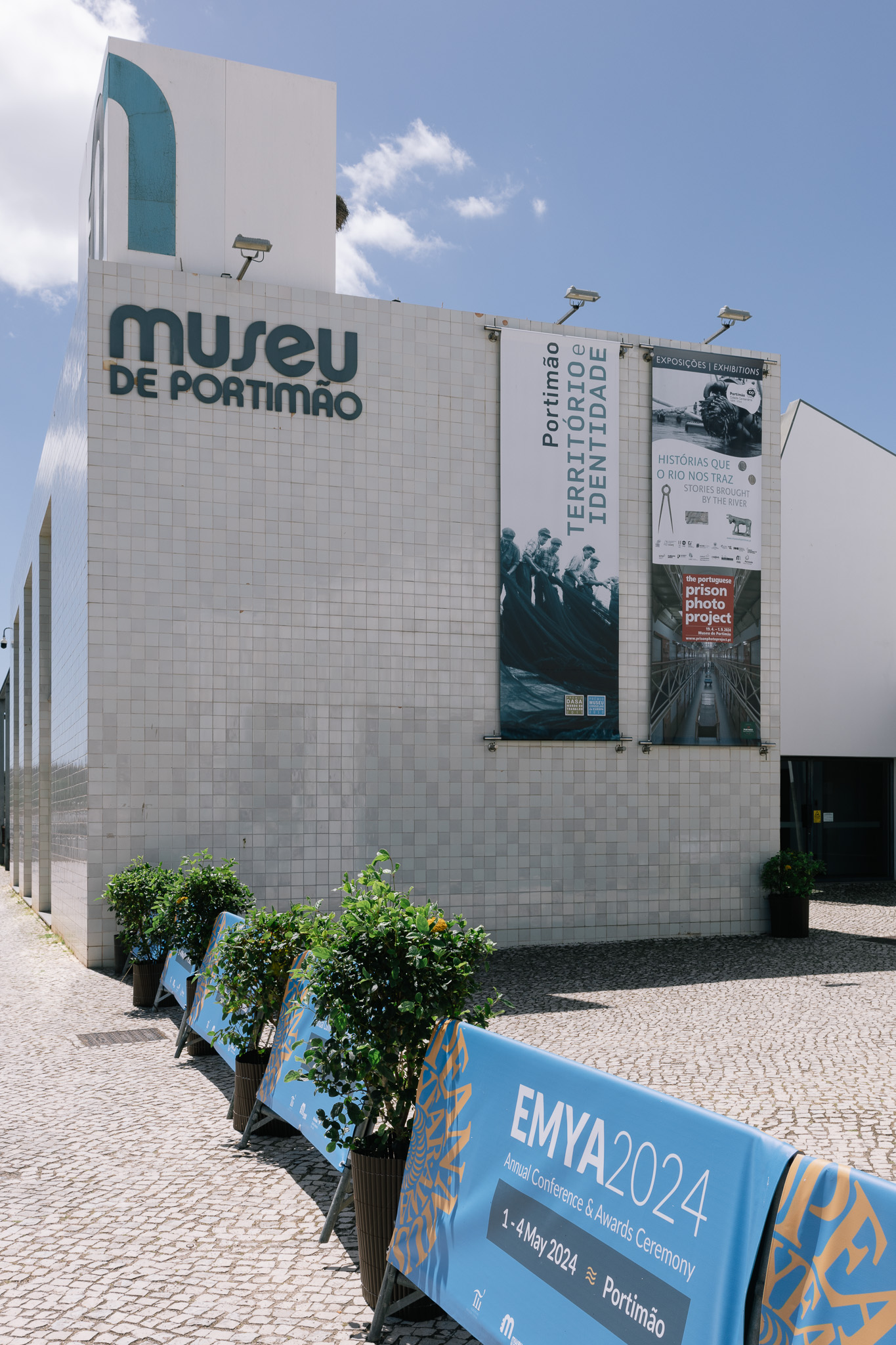
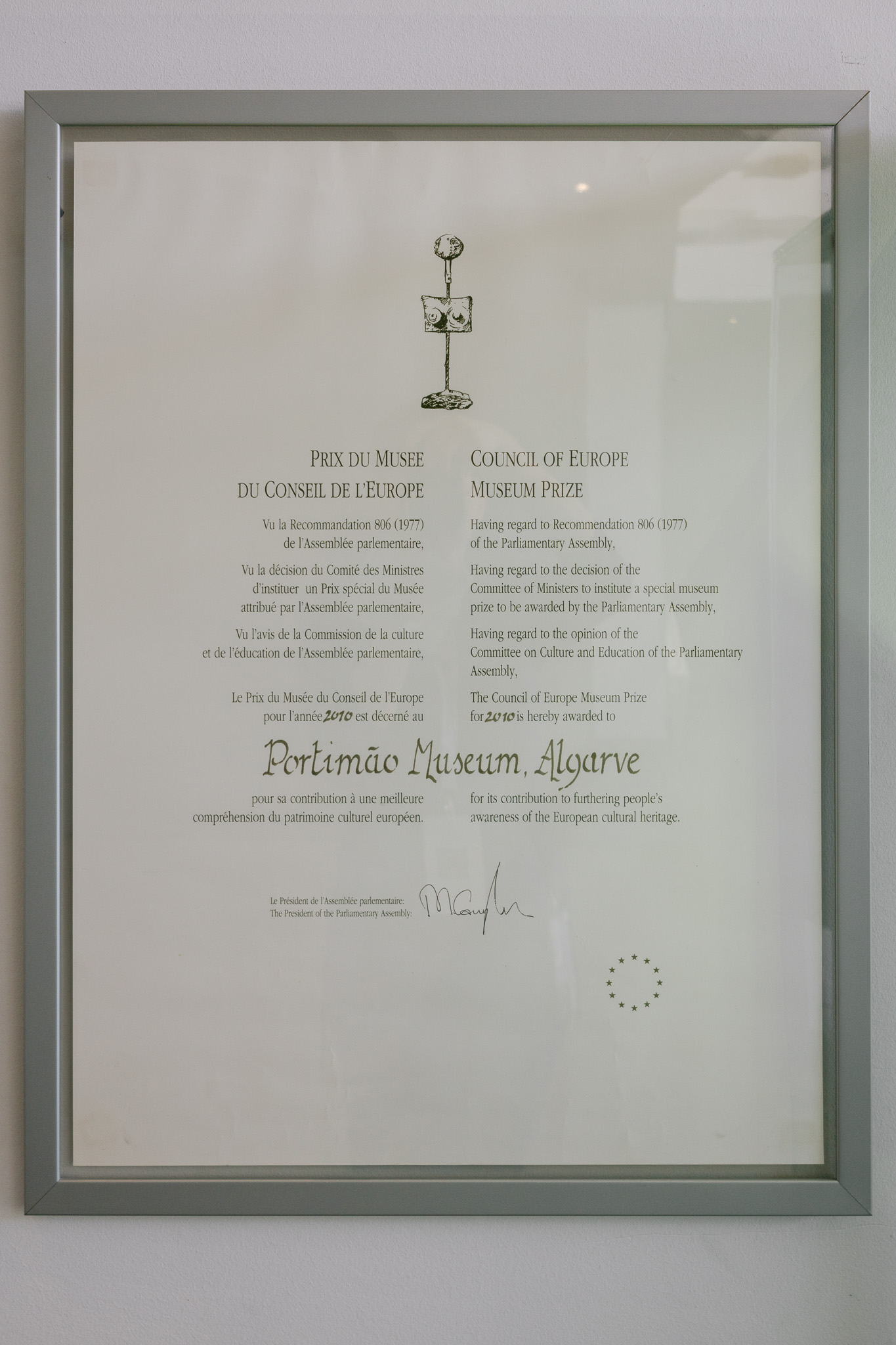
Founded in the late 1970s by British museologist Kenneth Hudson, the European Museum Forum has long been associated with Portimão, a small town in southern Portugal. The Museu de Portimão, which received the Council of Europe Museum Prize in 2010, houses the EMF offices and archives. EMF conferences are held each year in a different European country, often in one of the museums that has previously received an EMYA distinction. In 2024, the event was hosted in Portugal to mark the centenary of Portimão being granted city status.
Panels, discussions and the awards gala took place at TEMPO – the Portimão Municipal Theatre. As part of the conference programme, museum professionals from across Europe also participated in study visits to several institutions preserving the cultural heritage of the Algarve region.
Portimão and Its Fishing Heritage
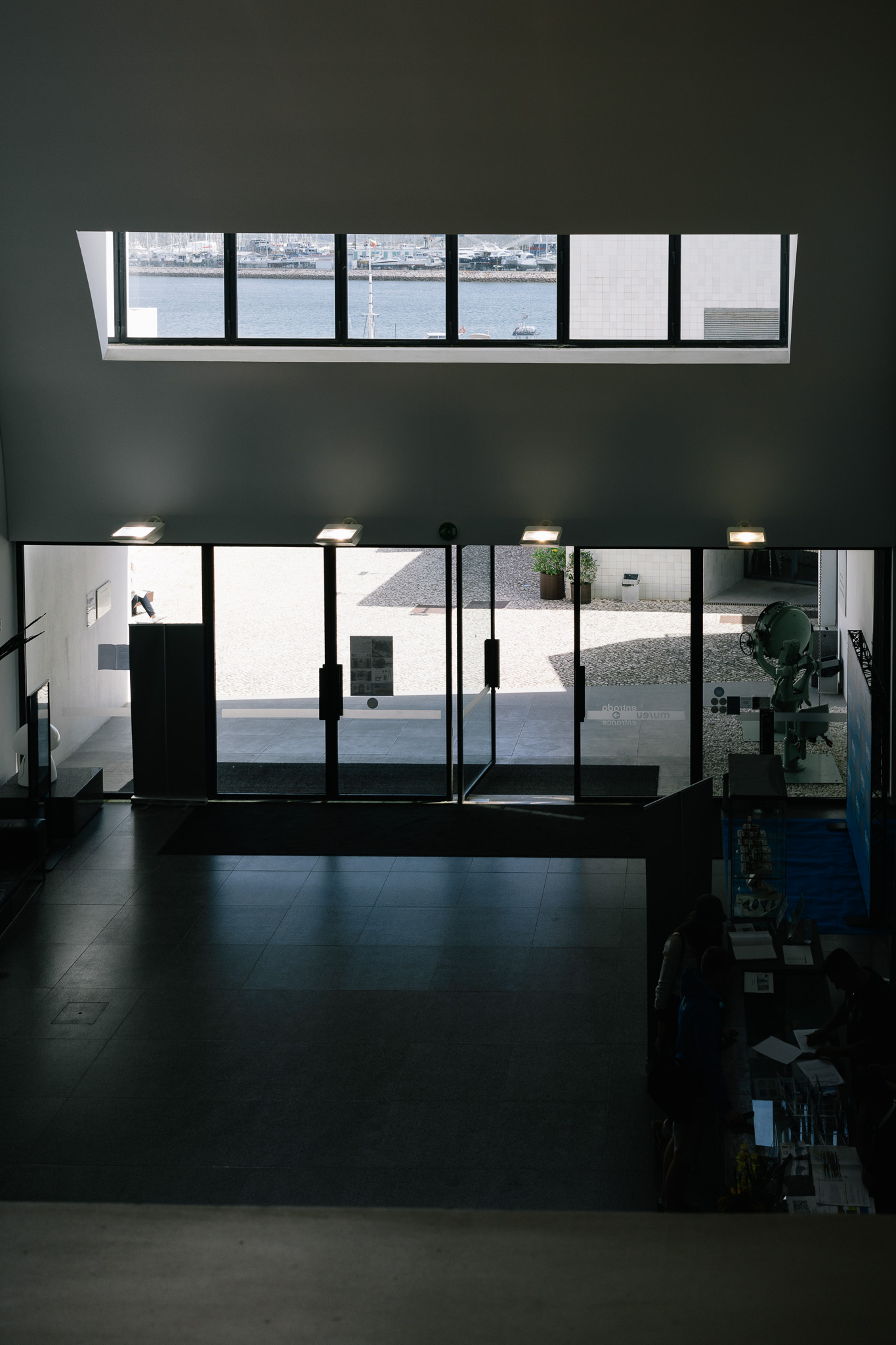
The opening evening of the Forum took place at the Museu de Portimão, located in a former fish-canning factory on the banks of the Arade River, near its mouth at the Atlantic Ocean. Although the museum’s exhibition traces the history of the region back to prehistoric times, its most extensive and significant section focuses on the sardine-canning industry that once shaped the local economy. The preserved production hall, with fragments of original machinery, vividly illustrates the demanding work carried out mainly by women.
“There were dozens of such factories in the surrounding area,” explained José Gameiro, Scientific Director of the Museu de Portimão, who guided us through the exhibition. “Each of them had its own signal used to summon workers, even in the middle of the night. When boats arrived at the quay with fresh catches, the processing of fish had to begin immediately.”
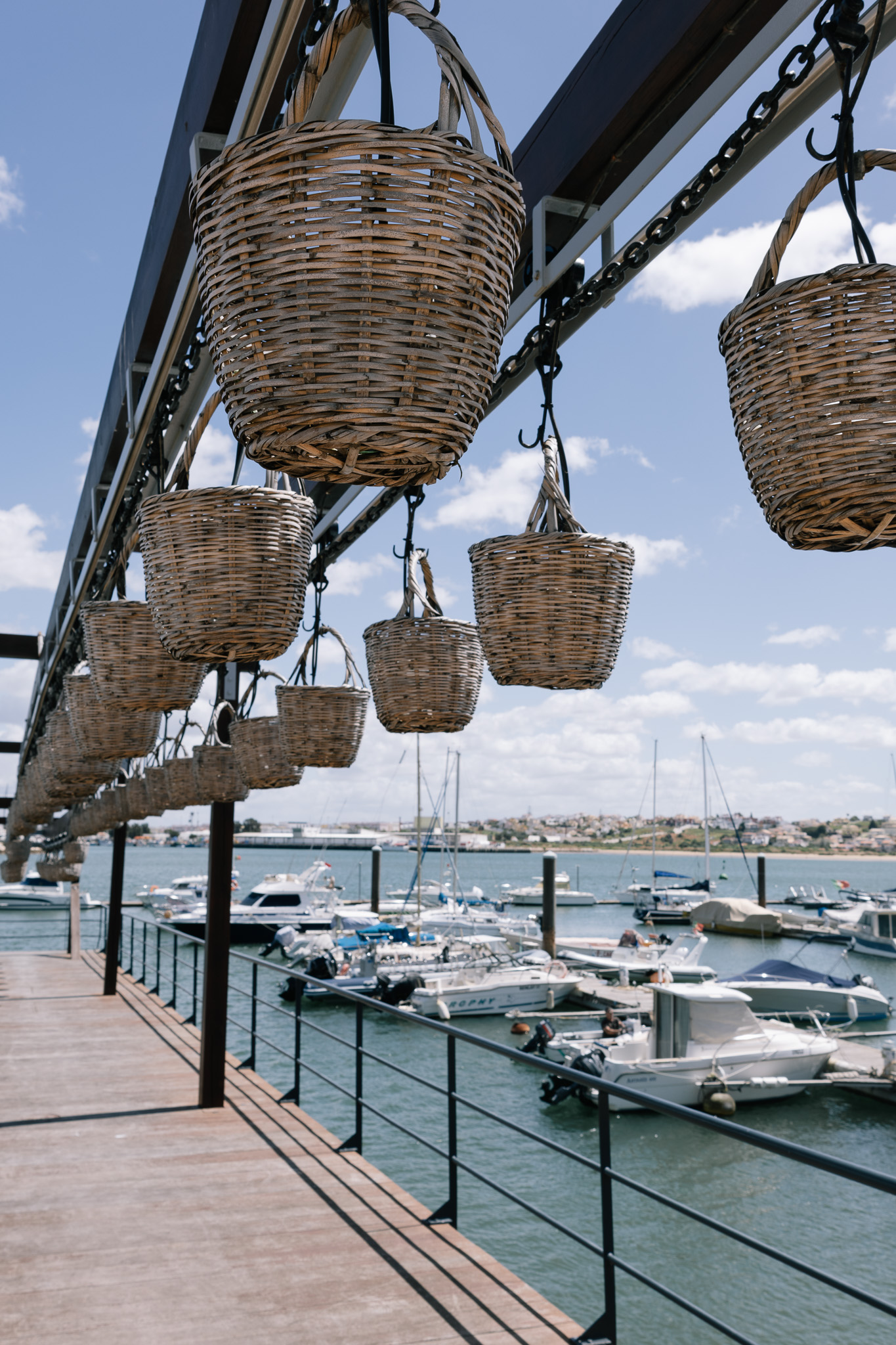
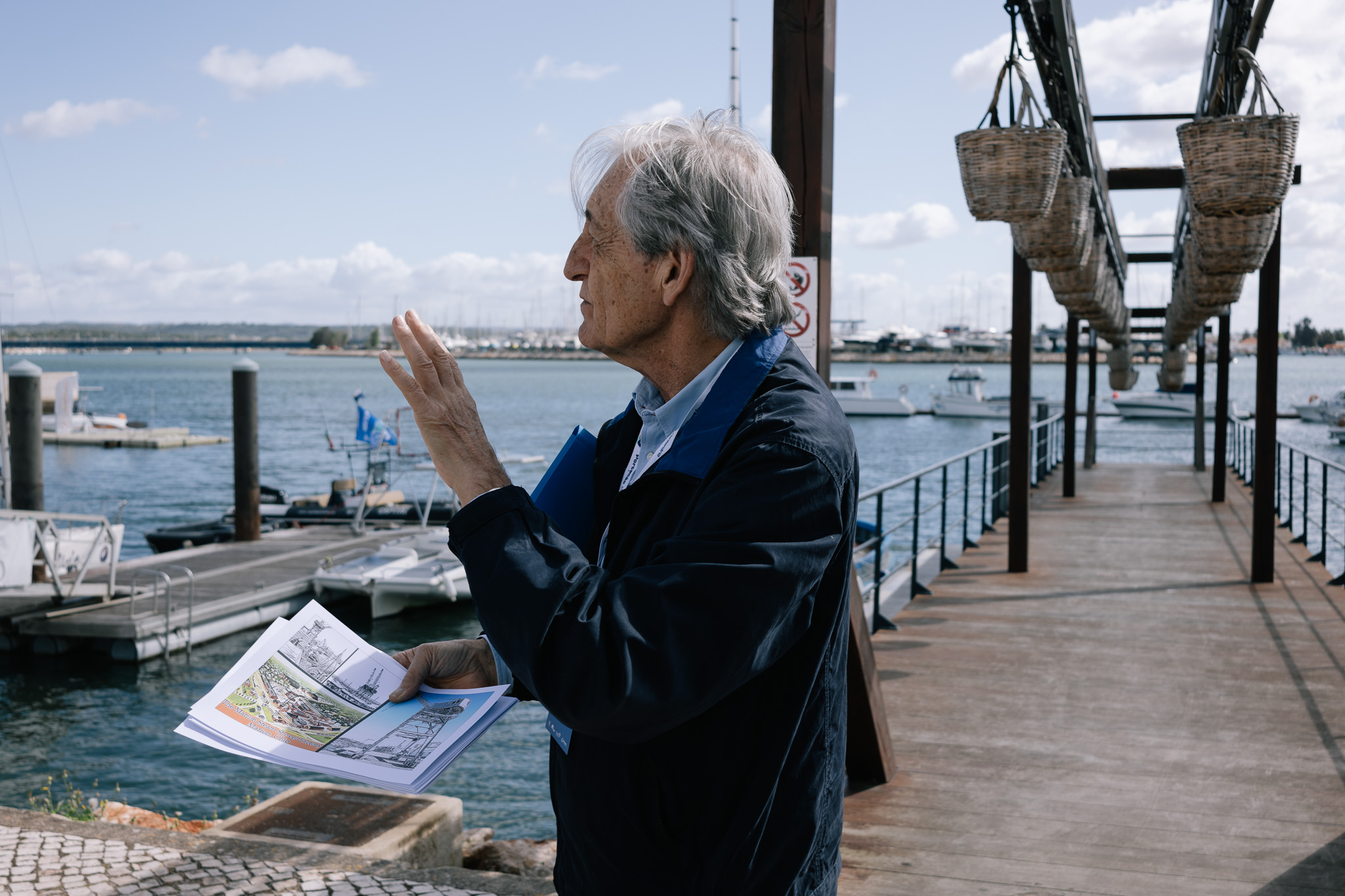
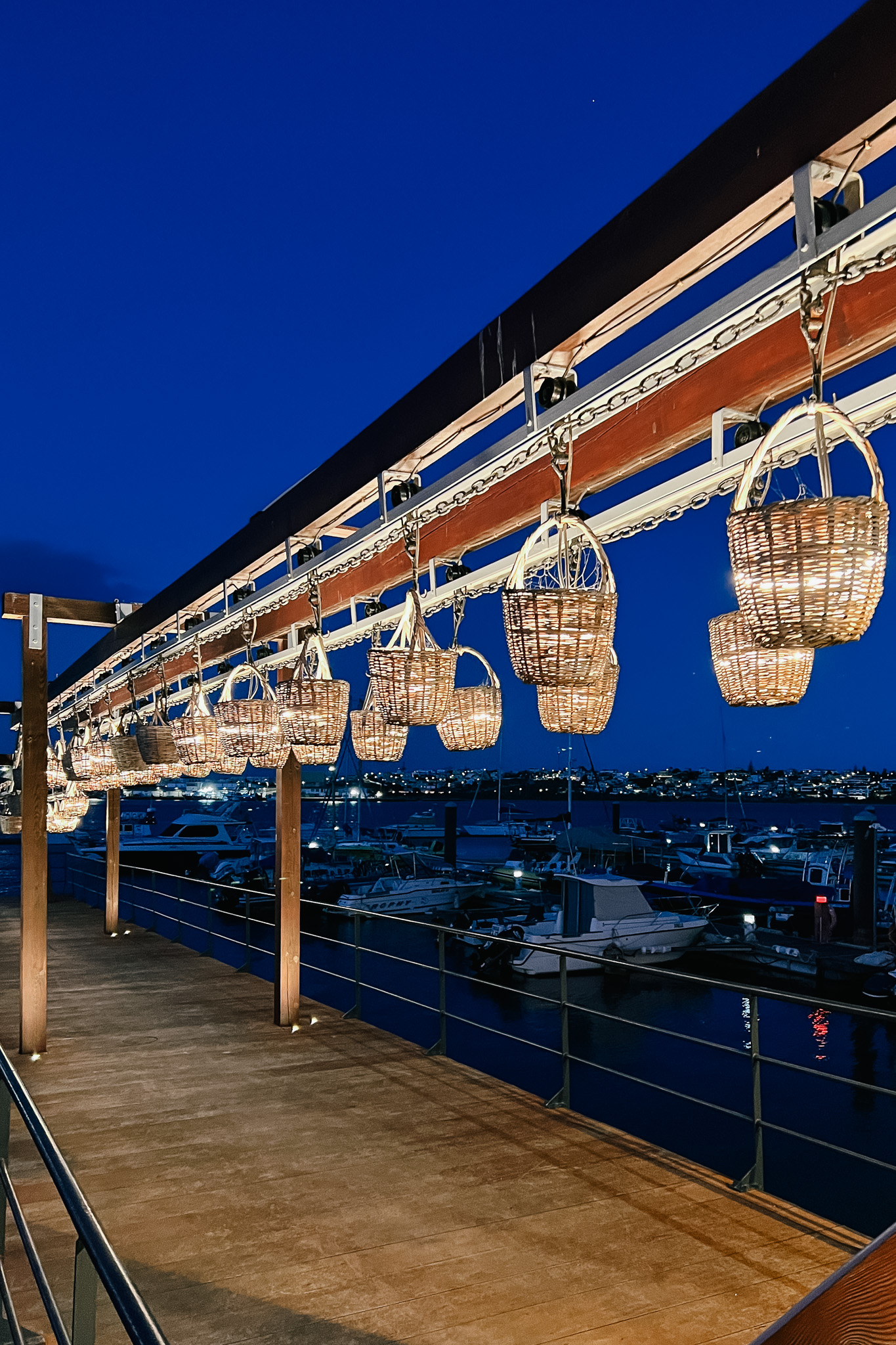
Between the museum building and the quay, remnants of the former lifting system used to transport baskets of sardines from the boats into the factory can still be seen. Today, these baskets, illuminated with white lights after dusk, resemble picturesque lanterns.
Today, all that remains of the former factories are tall brick chimneys, many of which are now inhabited by the numerous storks that nest in the area. The decline of the sardine industry began after the fall of the regime fifty years ago, when the residents of Portimão gradually turned towards the development of tourism. “My grandparents worked in a sardine factory. They were relieved when it closed down – it was extremely hard work, especially under the pressure of the regime,” said an employee of the Portimão municipal office during informal conversations at the opening of the conference. Today, the only reminders of the town’s sardine industry are the menus of local restaurants and the traditional tins of fish sold in the museum shop.


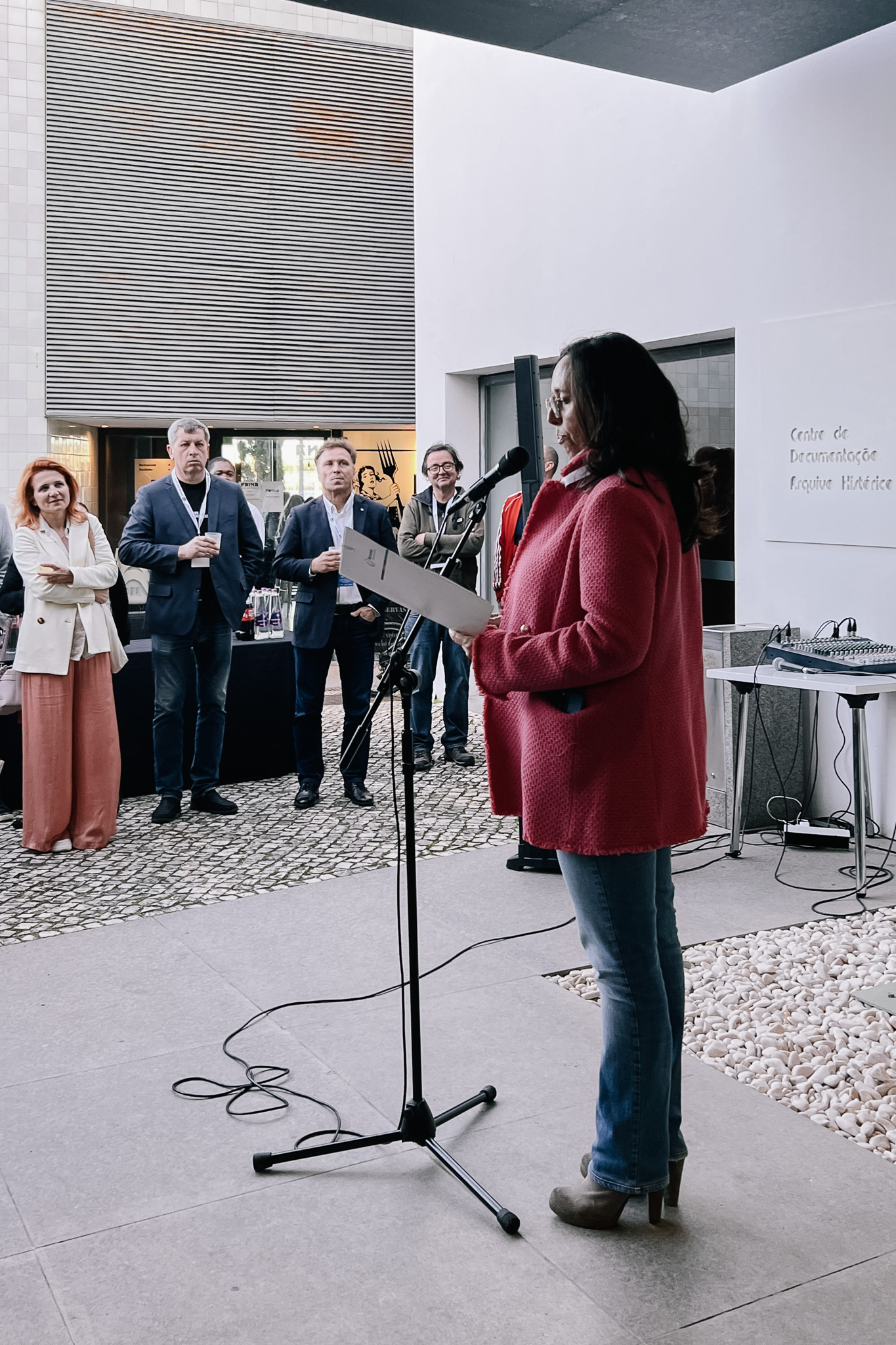
During the opening evening at the Museu de Portimão, speeches were delivered by Deputy Mayor Teresa Mendes, António Apolinário, Minister of Culture of the Algarve Region, and António Ramirez, representing the sixth generation of a family of fish processors. His company, the Ramirez Canning Company, later acquired the historic La Rosa brand, under which sardines were once produced in the very hall that now houses the museum. The remainder of the evening was spent in conversations with other participants of the Forum.
Can Museums Influence Society?
The main conference programme began on the morning of 2 May. This year’s theme was “Museums in Pursuit of Social Impact”, and the role of museums in shaping contemporary societies appeared as a recurring topic in many presentations.
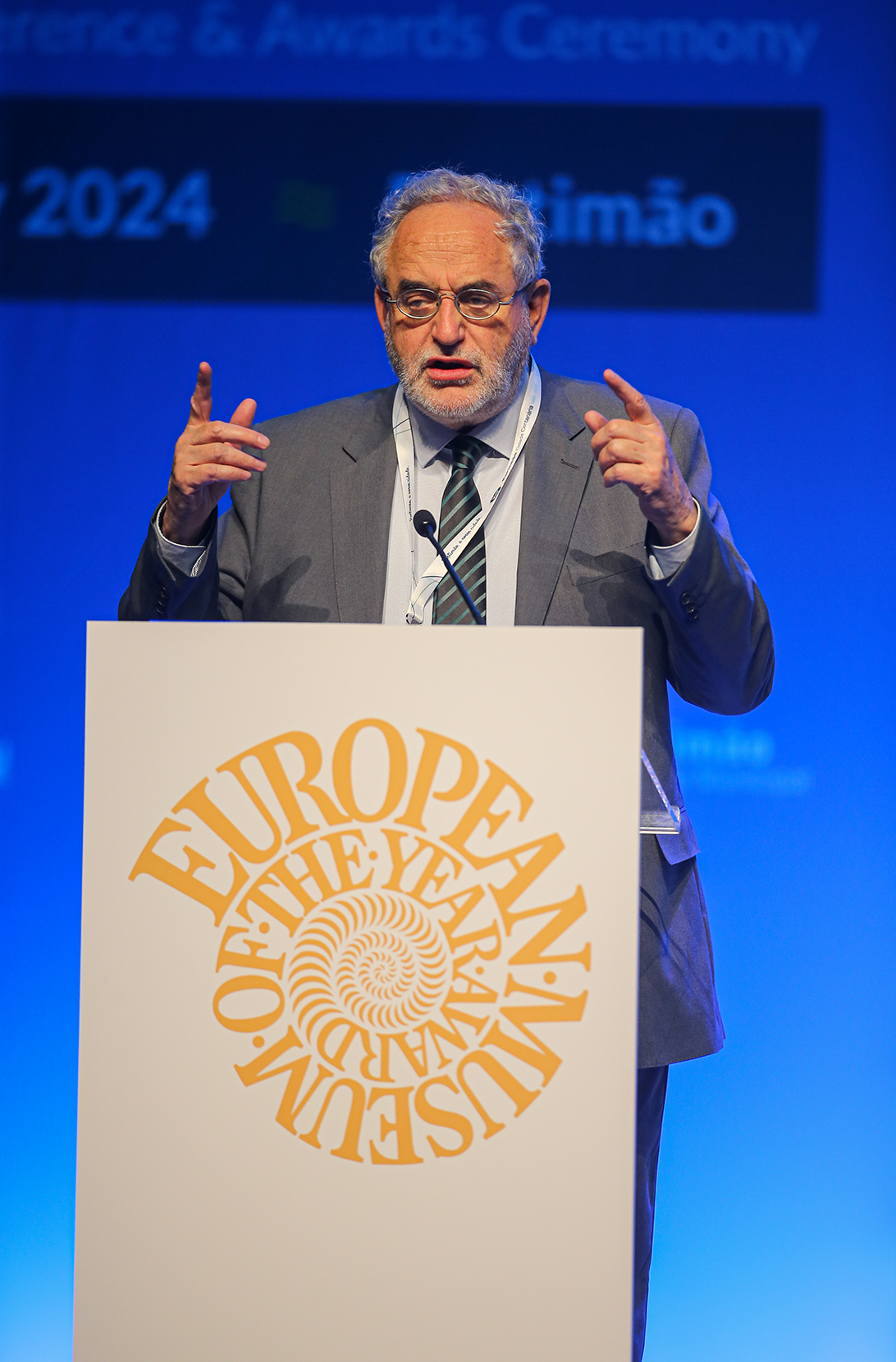
The session was opened by José Gameiro and Joan Roca i Albert, President of the European Museum Forum.
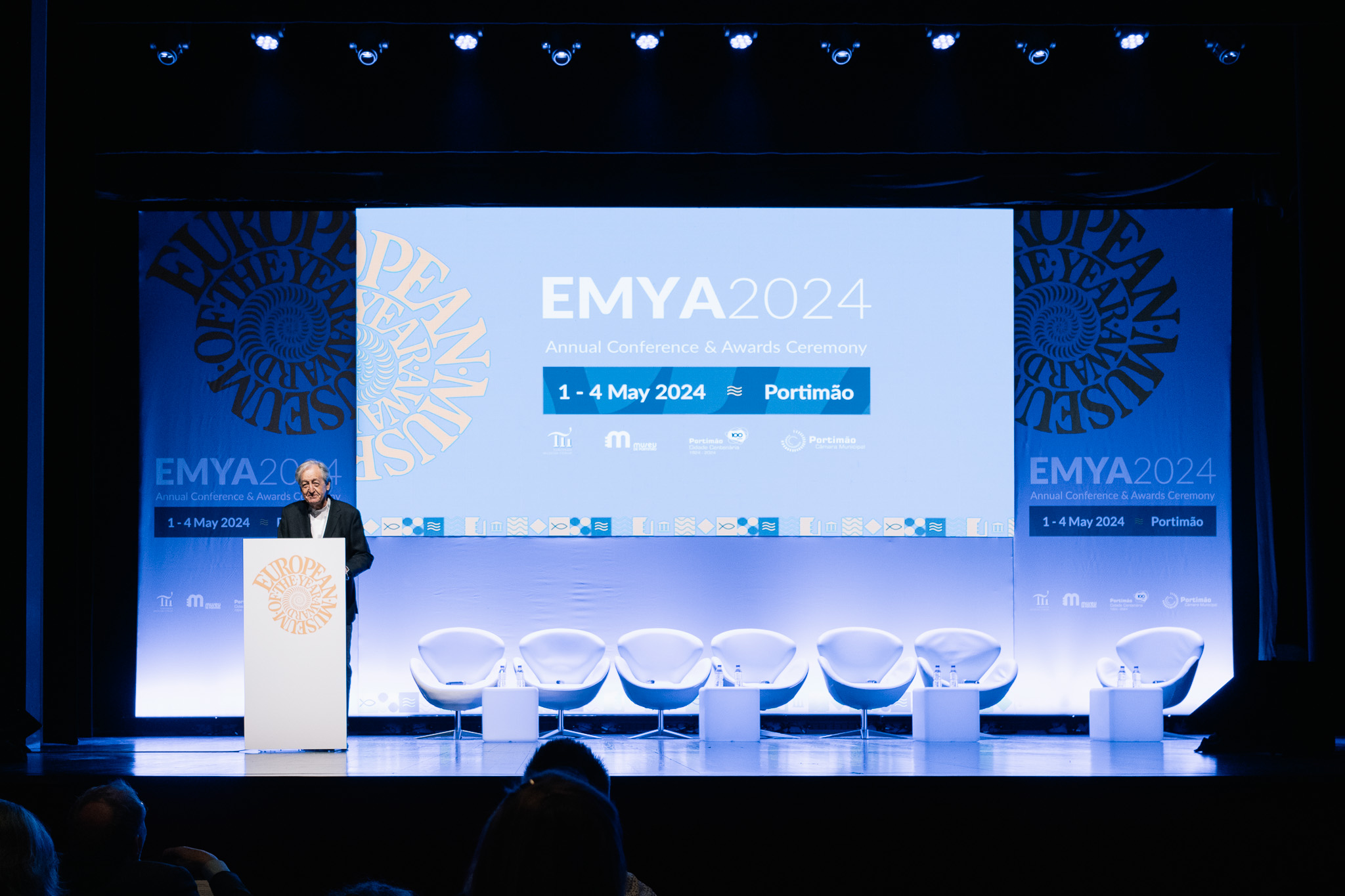
Joan Roca i Albert, who is also the Director of the Barcelona City History Museum, recalled the figure of Kenneth Hudson, founder of the Forum and originator of the EMYA awards:
“He conceived these awards in the generally optimistic atmosphere of the late 1970s, when the expansion of the welfare state was widely anticipated and the role of culture within civil rights was growing,” said Roca i Albert. “The awards were founded on values such as supporting, encouraging, rewarding and showcasing excellence and innovation in the museum sector. At that time, very few organisations and museums had such ambitions. Today Hudson’s 1987 book Museums of Influence is considered a classic.”
“Over the past twenty years we have witnessed many changes that have affected the role of museums, including the financial crisis, technological transformations and, more recently, the pandemic, the rise of authoritarianism and the return of war to Europe. In this context, the challenge for the European Museum Forum and the EMYA Awards is to remain relevant and useful in difficult times. This was also emphasised two weeks earlier when the Council of Europe Museum Prize was awarded in Strasbourg, the city where the Council of Europe was founded in 1948,” he continued.
“The interaction between the Council of Europe and the European Museum Forum, together with organisations such as ICOM, is now more necessary than ever. The struggle for dignity and freedom can play a crucial role in defending human rights in museums and schools. This is why the EMYA awards remain so important. They are the oldest and most prestigious museum awards in Europe, and the winners are selected by the EMYA jury.”

The Strategic Role of Museums
“It is essential to preserve the conditions that allow museums to develop and become strategic spaces for knowledge, human rights, social inclusion and cultural democracy. Among the key factors are intellectual research, institutional autonomy and support from the city and its citizens,” emphasised Joan Roca i Albert.
“A museum that does not devote itself to in-depth research may become merely a cultural attraction and will not generate the innovation that allows us to rethink the world. This role of research – which cannot be limited only to the study of objects and artefacts – requires museums to be clearly recognised as centres of knowledge,” he reiterated, repeating the message he had previously delivered in Strasbourg.
“In times of growing authoritarianism, the intellectual autonomy of museums, just like that of universities, is essential. In this respect, the Council of Europe can count on the support of the European Museum Forum, ICOM and UNESCO,” he added.
“When states were not yet fully consolidated in the Middle Ages, cities formed the backbone of Europe,” he said, quoting the words of Leonardo Benevolo. “The role of local authorities and the involvement of citizens in safeguarding cultural rights are fundamental for museums, helping them avoid both excessive and undesirable state control as well as unwanted privatisation,” Roca i Albert noted.
“This is precisely the role of the EMYA awards: together with other organisations, they promote the changes necessary to protect museums from authoritarianism and commercialisation for as long as possible,” emphasised the head of the European Museum Forum.
50 Unique Institutions
After the official introduction, Amina Krvavac, Chair of the Jury and a member of the Forum’s Board of Trustees, took the floor and presented this year’s nominees as well as the themes of the panels, in which the museums were grouped according to their areas of activity.

Shortly afterwards, the museum presentations began within the individual panels. Each institution was given seven minutes to present its work – within this time limit, it was also possible to show a short film. After all the presentations, museum representatives took part in a short discussion with one of the jurors on topics proposed by the jury.
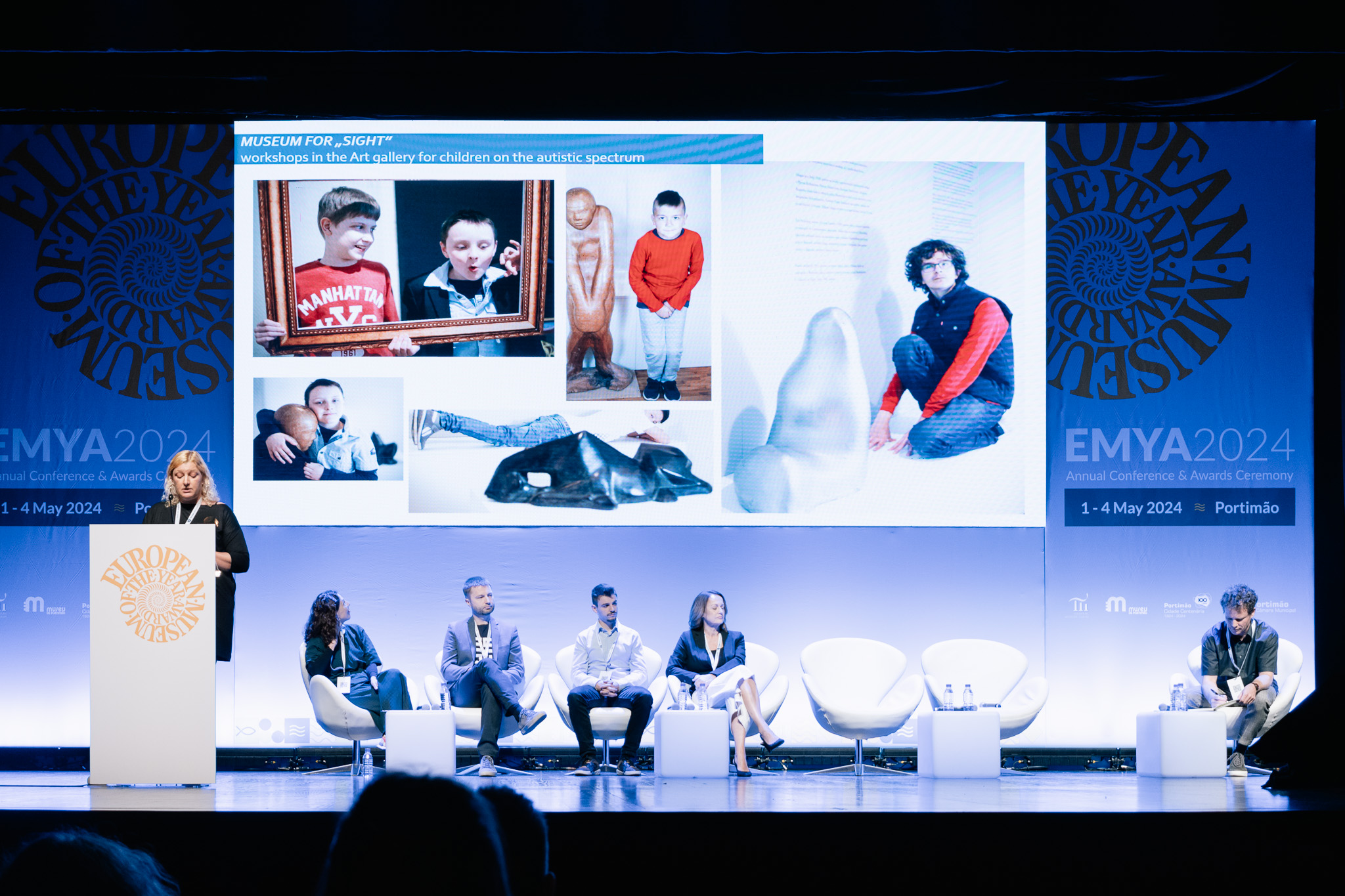
On Thursday, the panel titled “Museums as Places of Action” included, among others, the Estonian Sports and Olympic Museum, as well as the small Bici Lab from Andorra, dedicated to the concept of “bicycles as jewellery”. The ZOOM Children’s Museum in Vienna presented an interesting programme that takes museum activities beyond the museum building and into the city – to playgrounds, schools and kindergartens – in order to reach children whose parents might never think of taking them to a museum. The Hungarian Money Museum in Budapest also presented its educational offer. Meanwhile, the director of the Međimurje Čakovec Castle Museum spoke about the great satisfaction she derives from the trust local residents place in museum professionals.
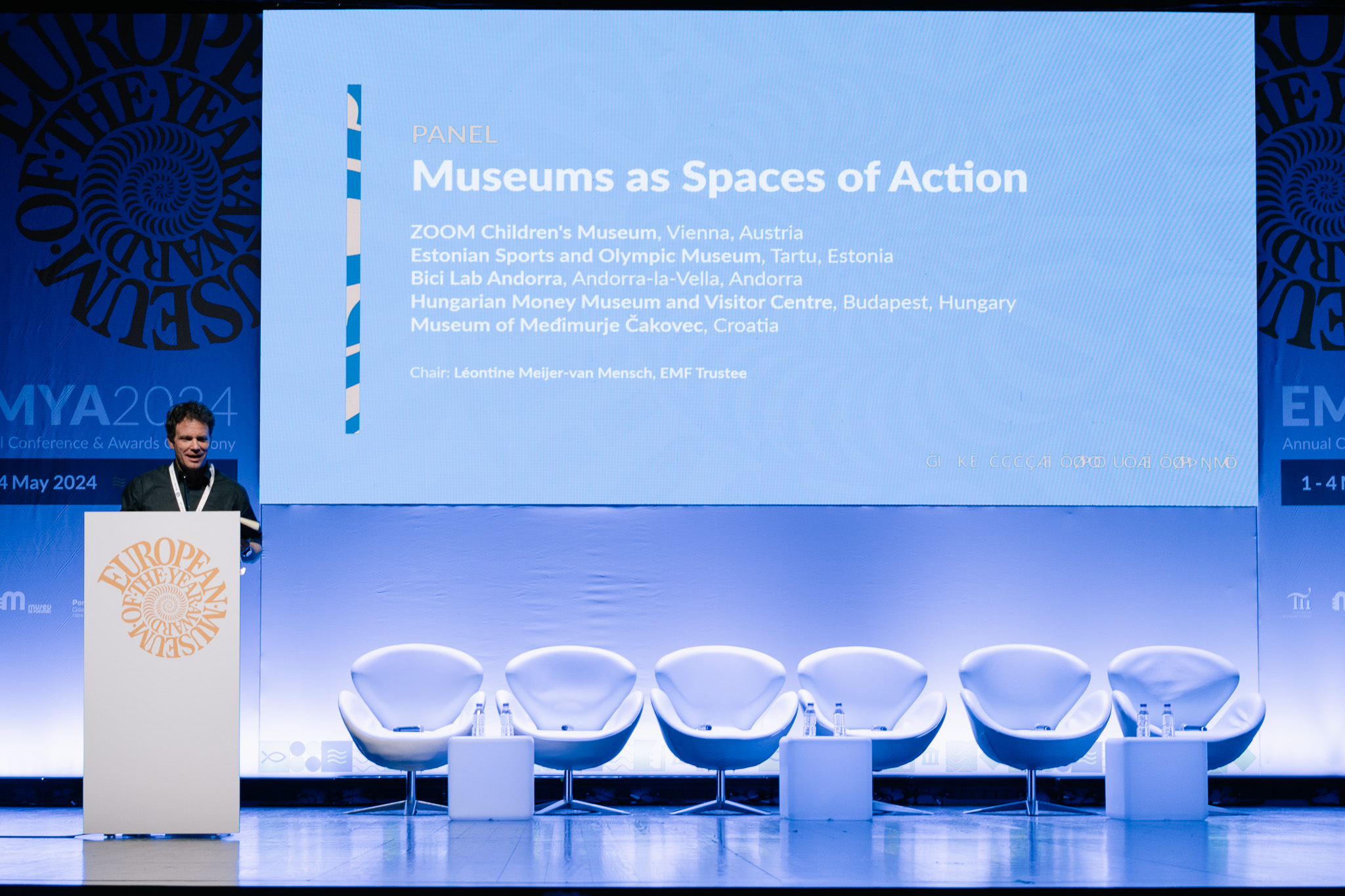
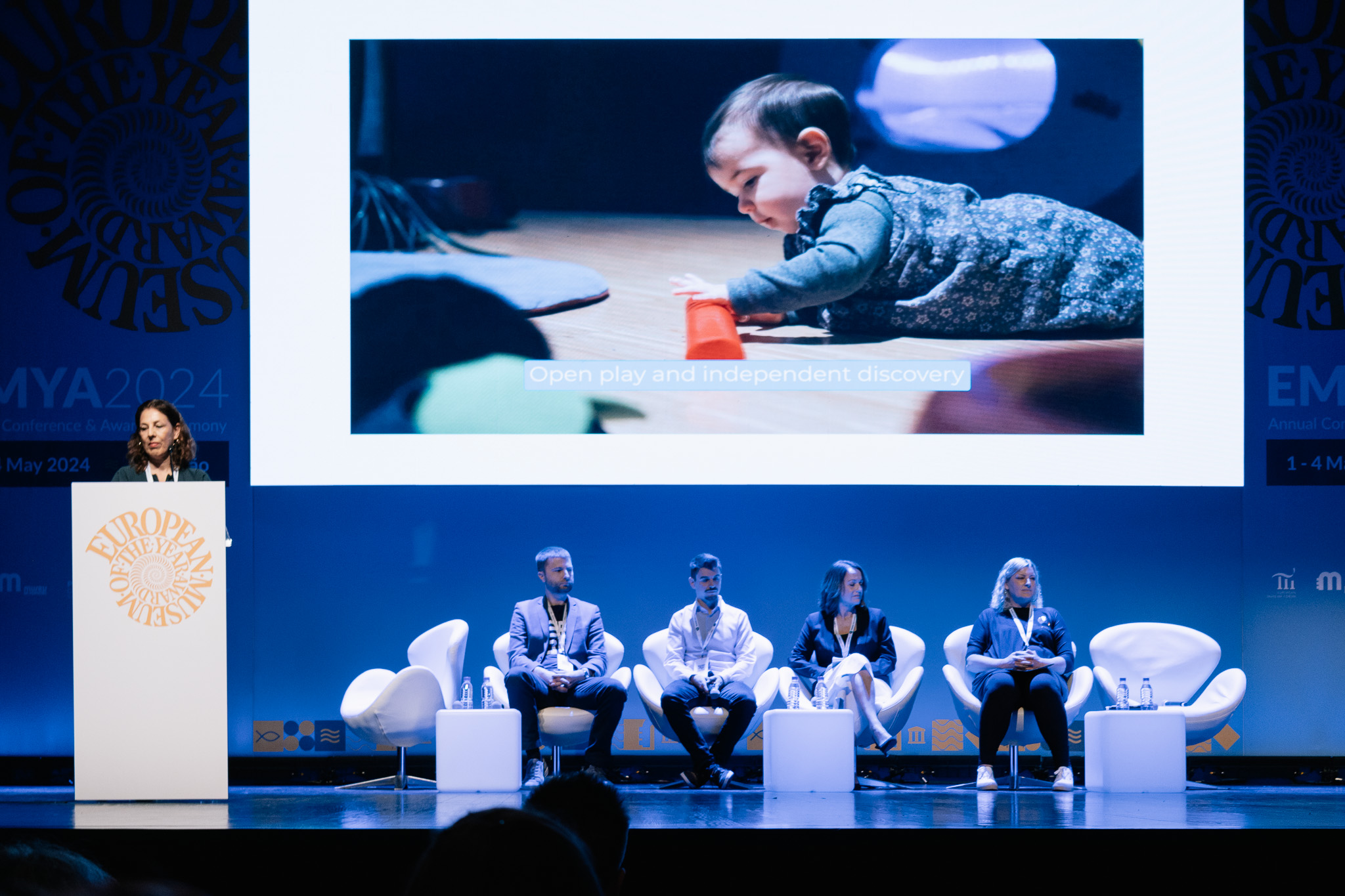
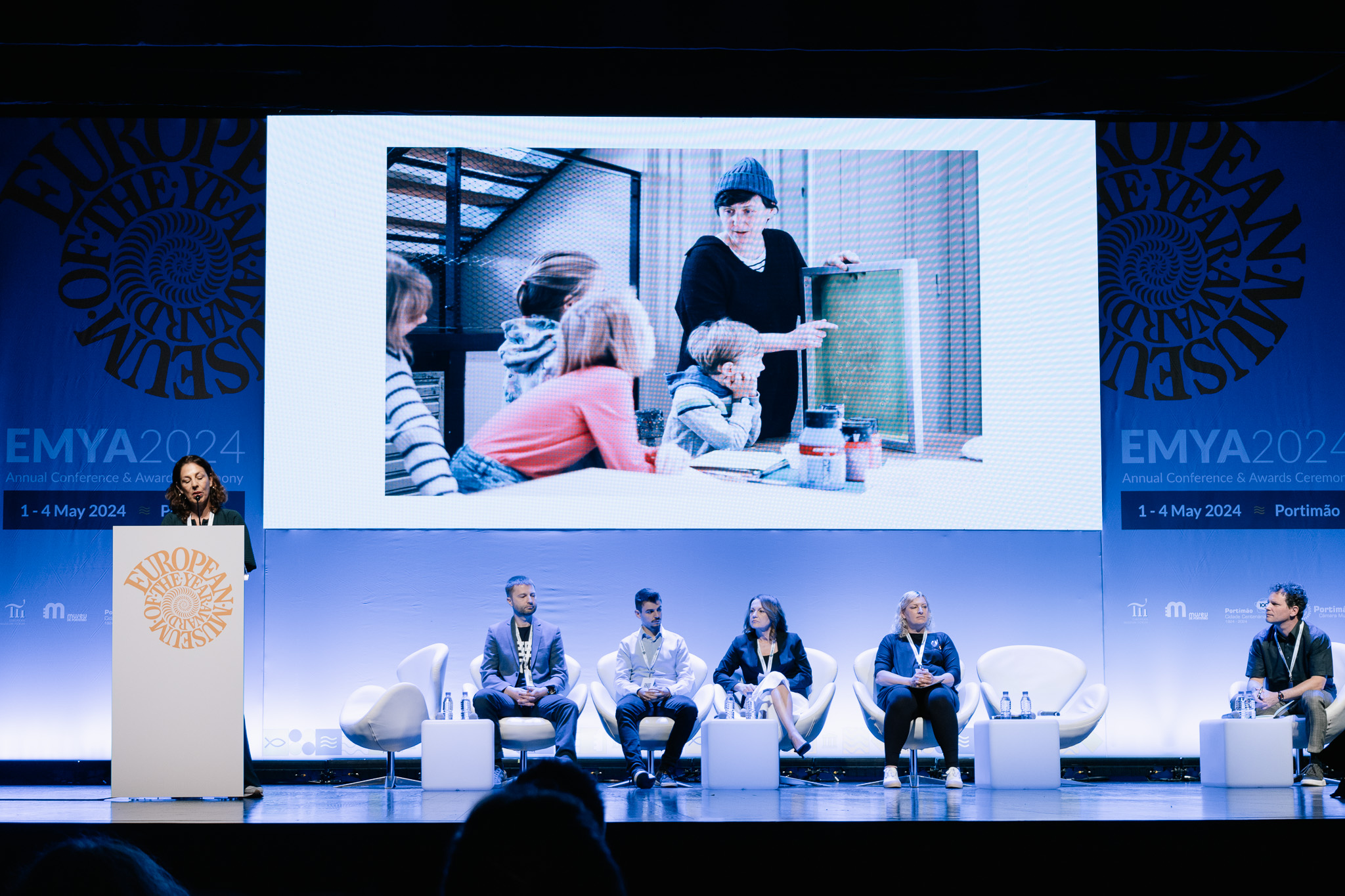


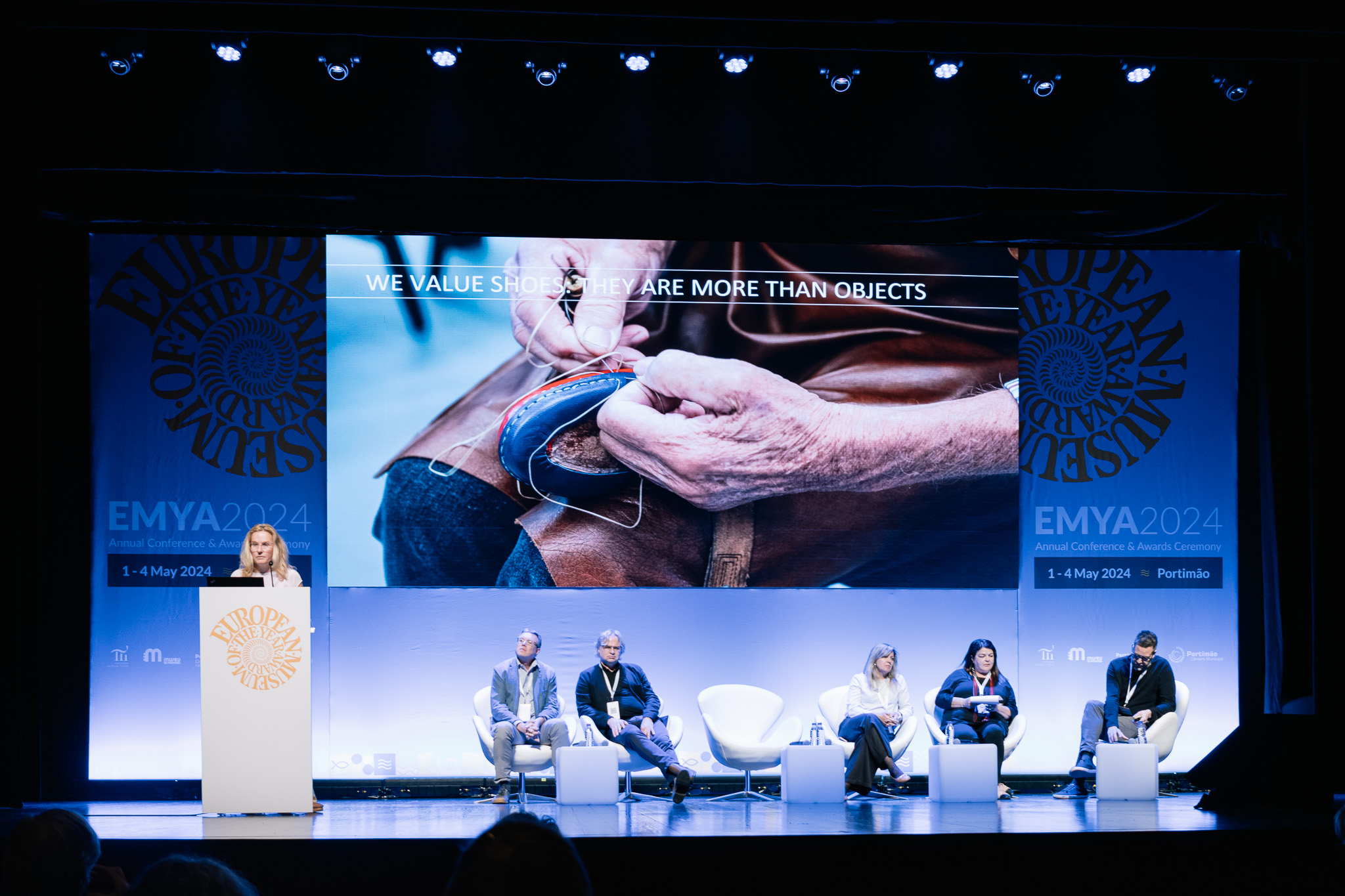
The panel “Discovering New Dimensions of Industrial Heritage” featured presentations by the Salt Museum in Messolonghi (Greece), the Museum of Making in Derby (United Kingdom), the Covilhã Museum (Portugal), the Museum of Glass and Jewelry in Jablonec (Czech Republic) and the Dutch Shoe Quarter in Waalwijk. At the latter museum, visitors can not only learn about the cultural role of shoes and the history of their production, but also take part in workshops led by experienced craftspeople, learn design and shoemaking techniques, attend fashion shows or view works created during artist residencies.
How to Show What We Cannot Have in a Museum?
The panels were interspersed with longer presentations by museums that had received awards the previous year. The director of L’ETNO – the Valencian Museum of Ethnology, which won the EMYA 2023 award – spoke about the impact the prestigious prize had on this relatively small institution, which works very closely with the local community.
“This award helped my team enormously. The staff felt that their work was important and appreciated,” said Joan Seguí Seguí.
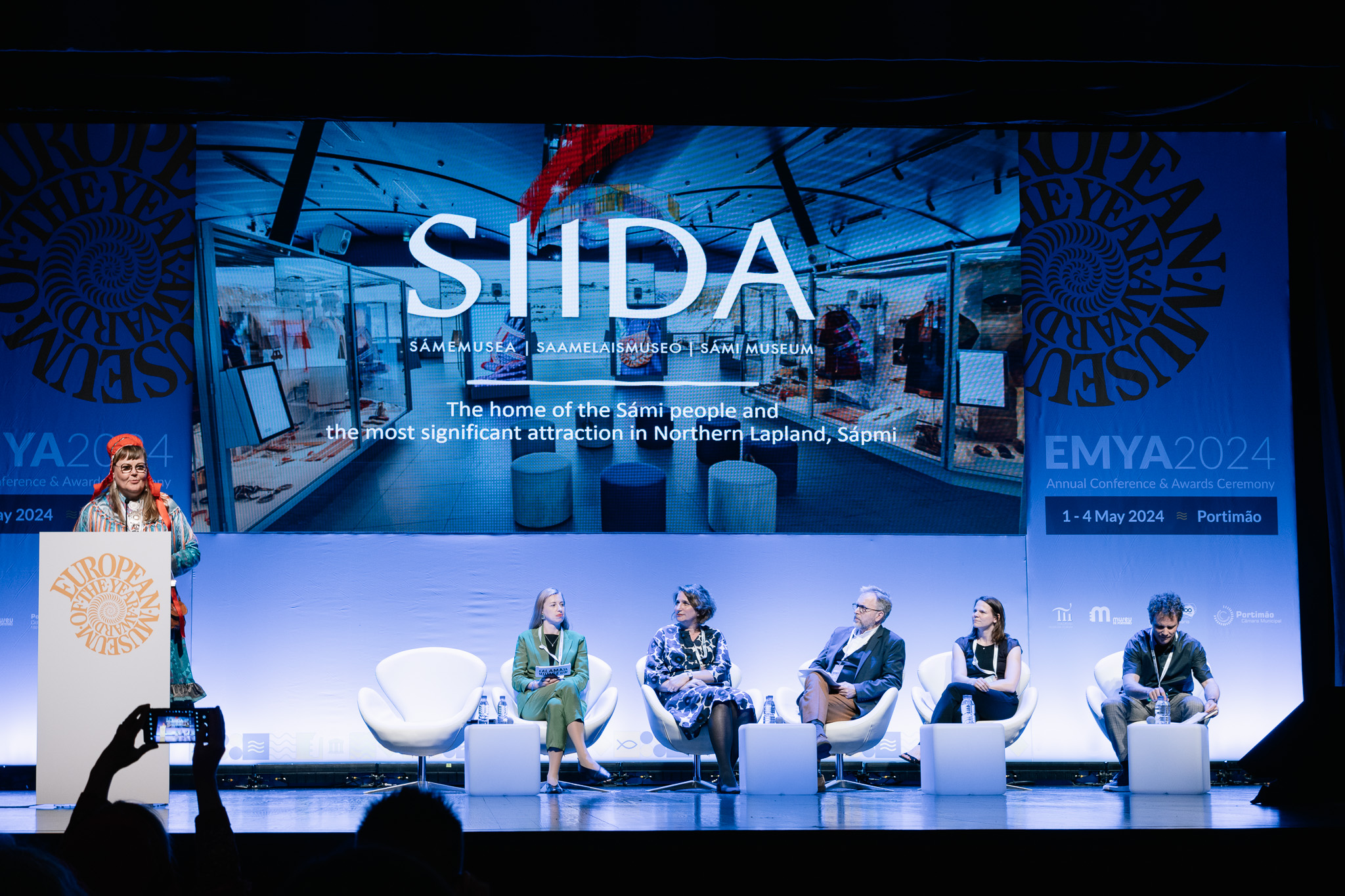
Another panel was titled “Changing Perspectives: Who Owns the Narrative?”. It featured museums whose mission is to give voice to different communities and social groups, as well as to recall forgotten histories with many protagonists. Among them was the SIIDA Sámi Museum, whose representatives appeared in colourful traditional costumes while explaining how important it is for their community to have its own museum.
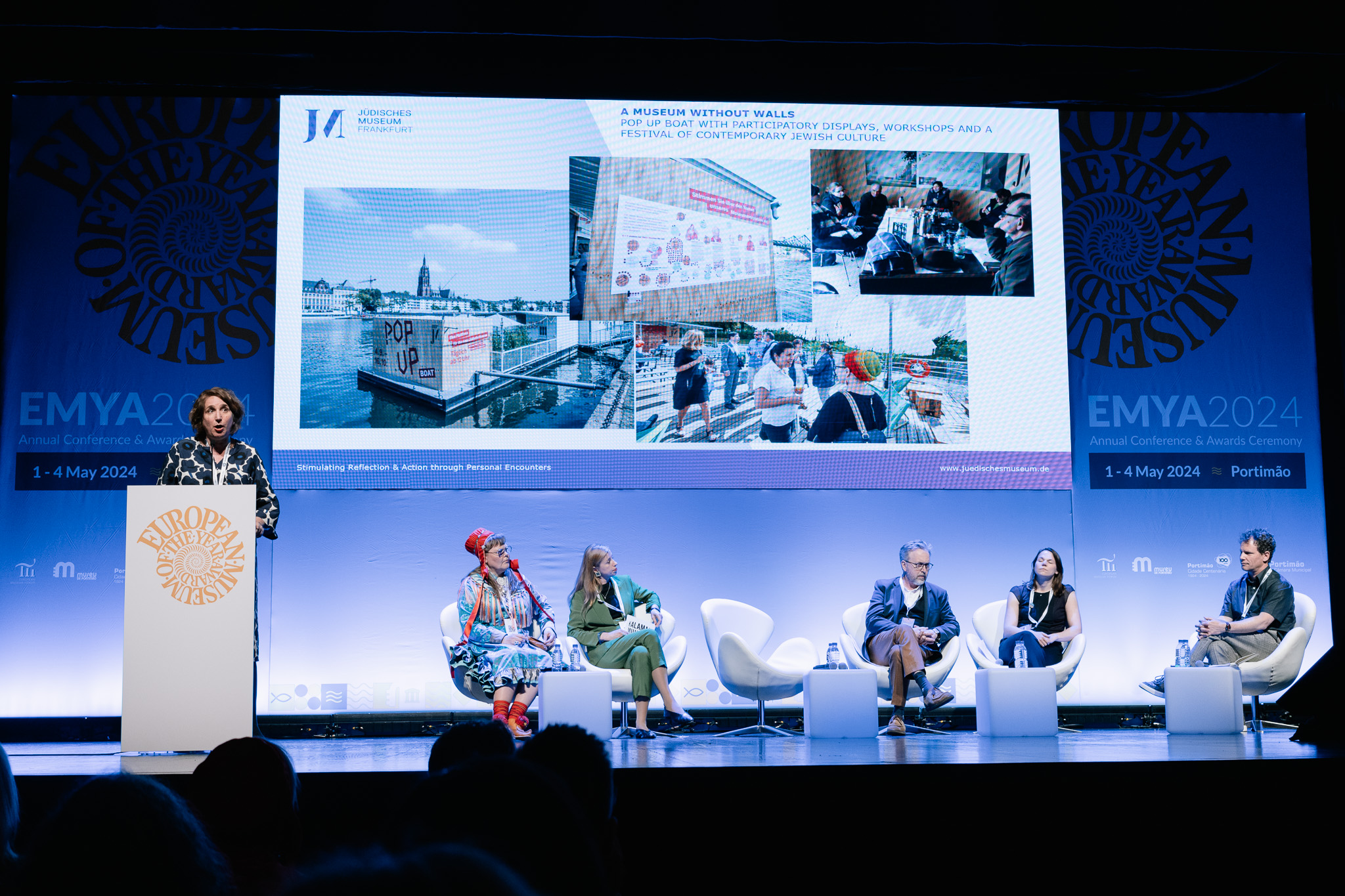
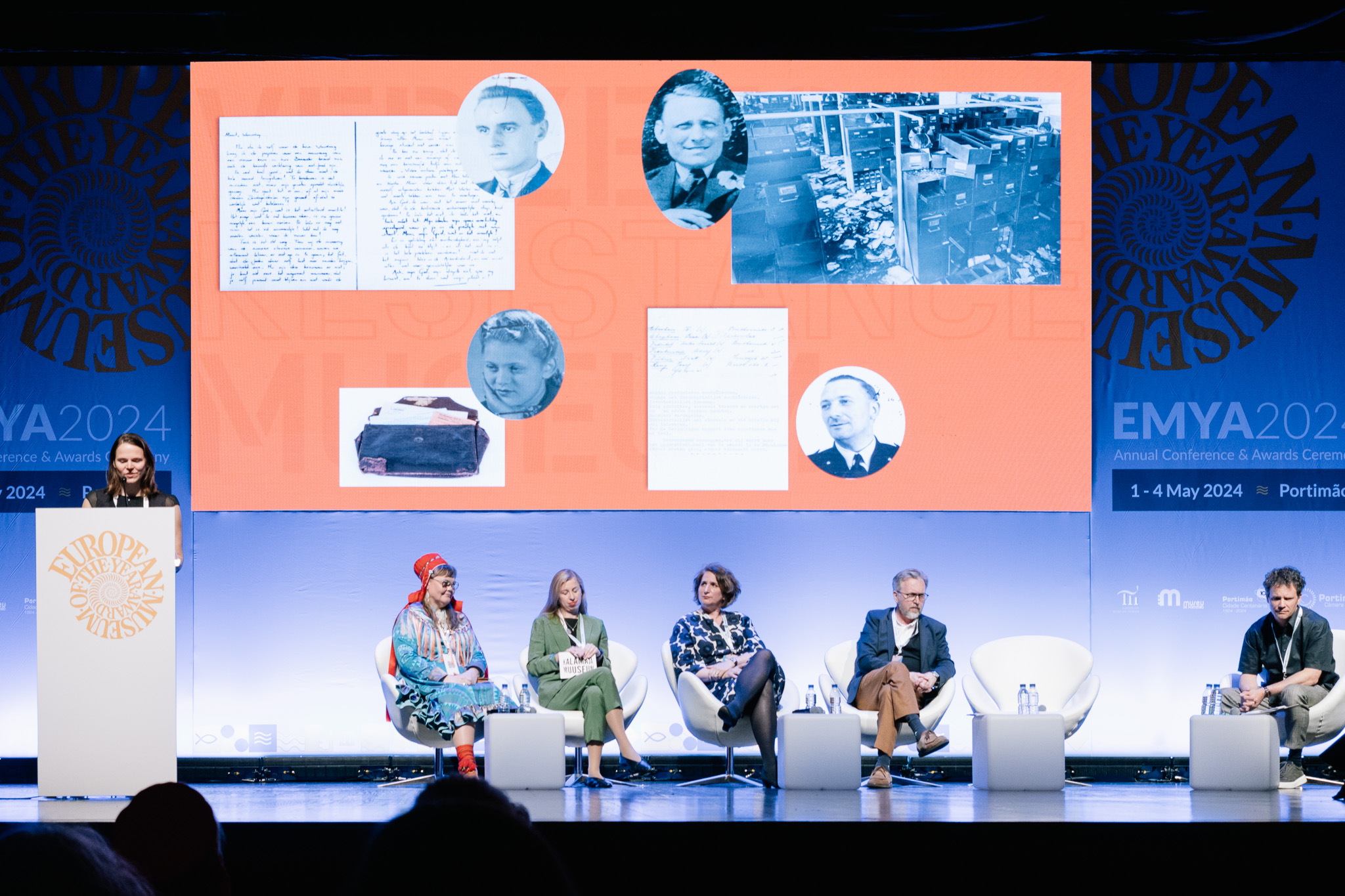
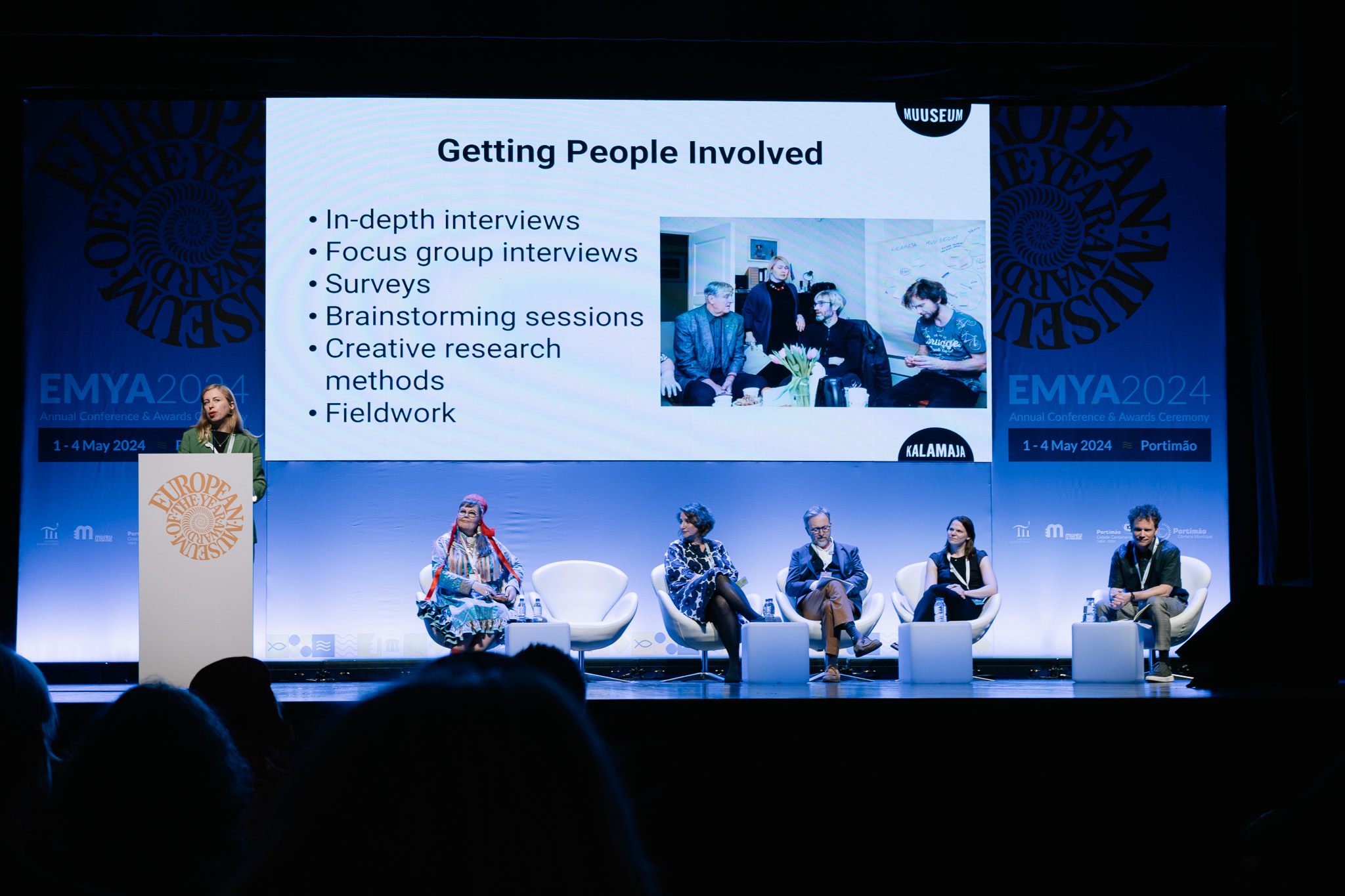
Participants also learned about the Kalamaja Museum, which is co-run by the residents of the district it presents. Although the museum initially struggled to gain the trust of local people, it has now become an important meeting place for the neighbourhood. The panel also included presentations by the Jewish Museum in Frankfurt, the Dutch Resistance Museum in Amsterdam and FLUGT – the Danish Refugee Museum in Oksbøl. The latter institution has creatively arranged the space of a former camp for German refugees fleeing the advancing Red Army.
Museums and Modernity: How to Bring a Collection to Life?
Polish juror Dominika Mroczkowska-Rusiniak (an interview with her about EMYA and contemporary museums can be found on our website) led the panel titled “Navigating the Digital Frontier”. The panel featured institutions that extensively use modern technologies in their exhibitions and educational activities in order to bring the past closer to contemporary audiences or to present heritage that cannot physically be displayed in a museum. “Our exhibits cannot be seen in person – they lie at the bottom of the Baltic Sea. However, we managed to give visitors a sense of direct contact with these traces of the past,” said a curator from the Vrak – Museum of Wrecks in Stockholm.
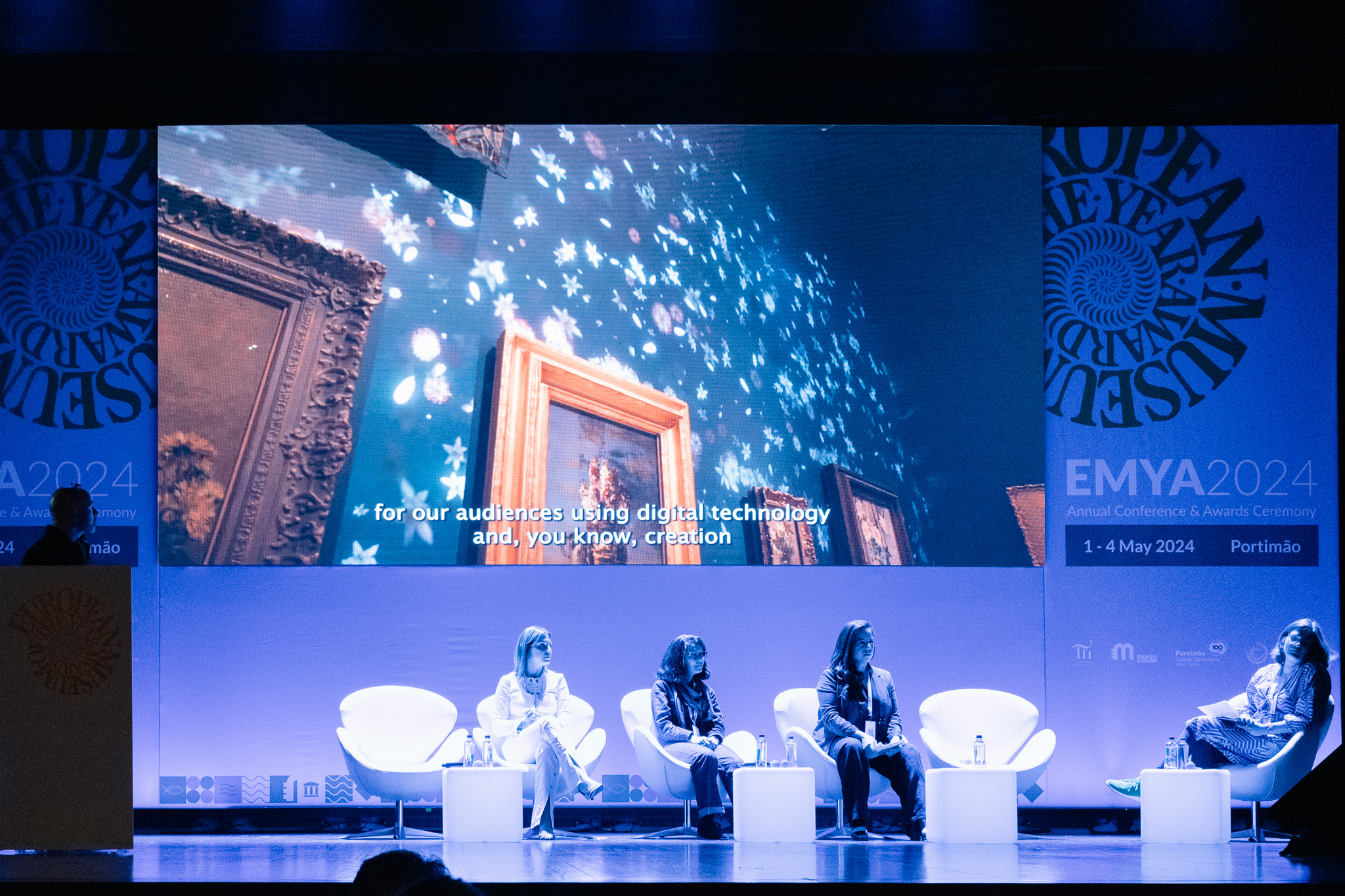
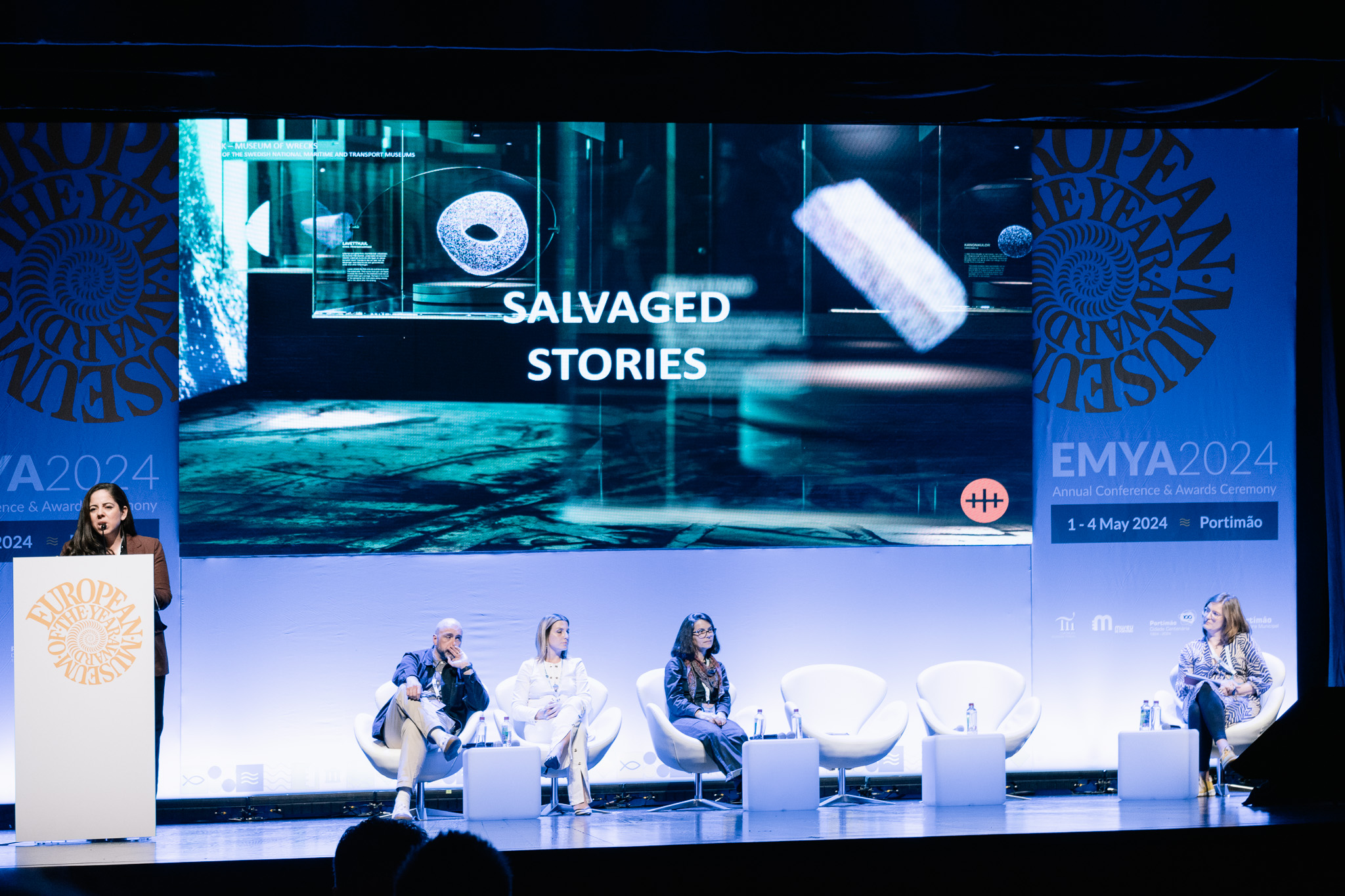
The specialist responsible for the digital transformation of The Burrell Collection in Glasgow described how the museum evolved from a traditional display of decorative arts into an immersive visitor experience. “I didn’t want visitors to enter another room and say: ‘Oh, another damn carpet.’ That’s why today the floral patterns on one of the carpets ‘come to life’ thanks to digital projections, and numerous screens allow visitors to examine details of objects that are protected in display cases.” Representatives of the Netherlands Institute for Sound and Vision in Hilversum, the Istanbul Cinema Museum and the private NARC Museum – founded by Millennium BCP Bank and presenting an archaeological site located beneath its headquarters on one of Lisbon’s main streets – also discussed their ideas for using new media in museum practice.
Philosophy in the Museum
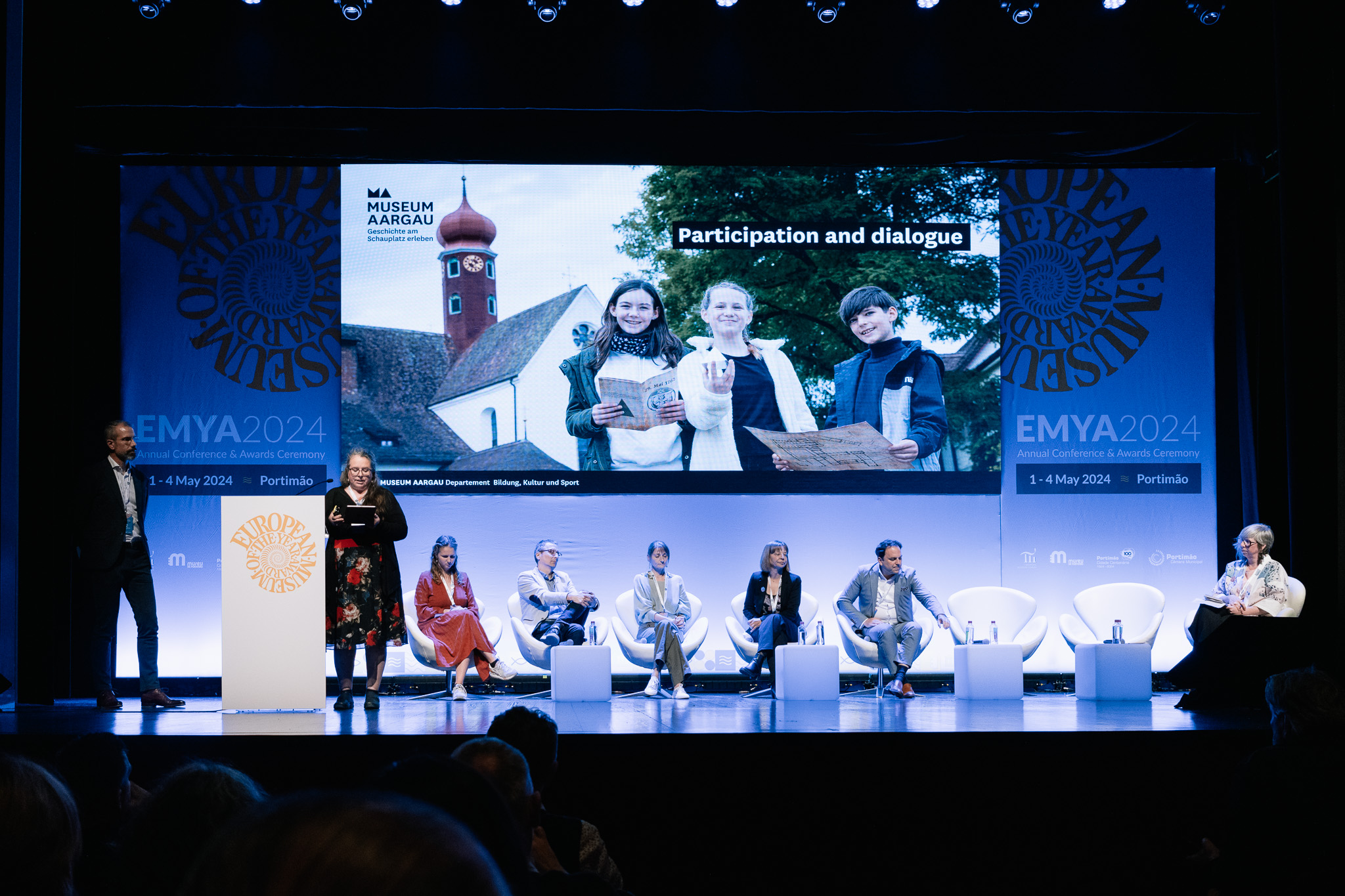
Thursday’s panel discussion focused on “History Meets Contemporary Society.” Presentations were given by the Burgdorf Castle Museum in Switzerland and the Archaeological Museums in Chania (Greece) and Larnaca (Cyprus). The Royal Treasury in Lisbon showcased its recent transformation and stunning jewels, while the Museum–Abbey of Wettingen (a large complex of a former Cistercian monastery) in Aargau demonstrated how philosophical questions about life’s most important issues can attract younger audiences.
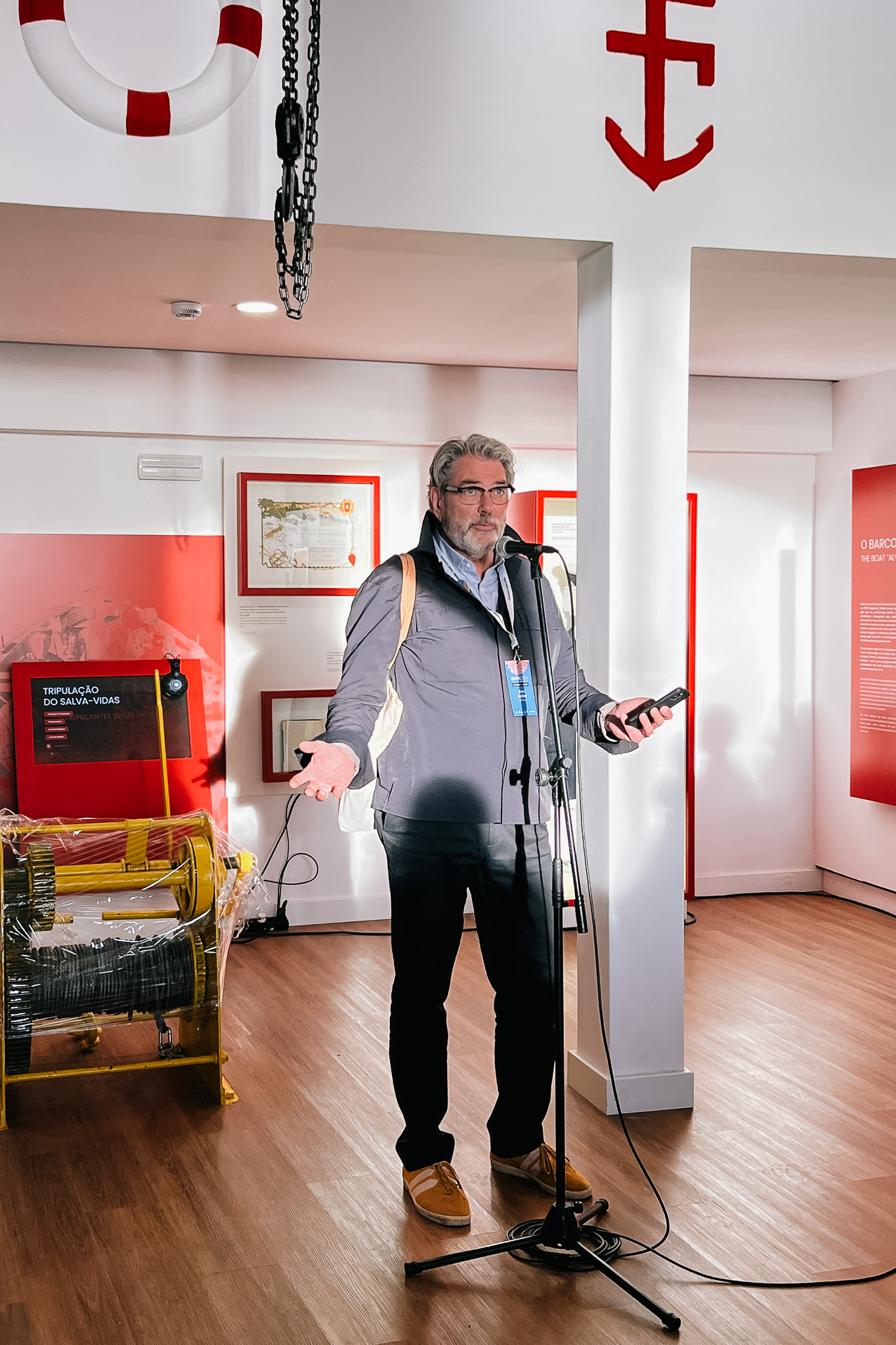
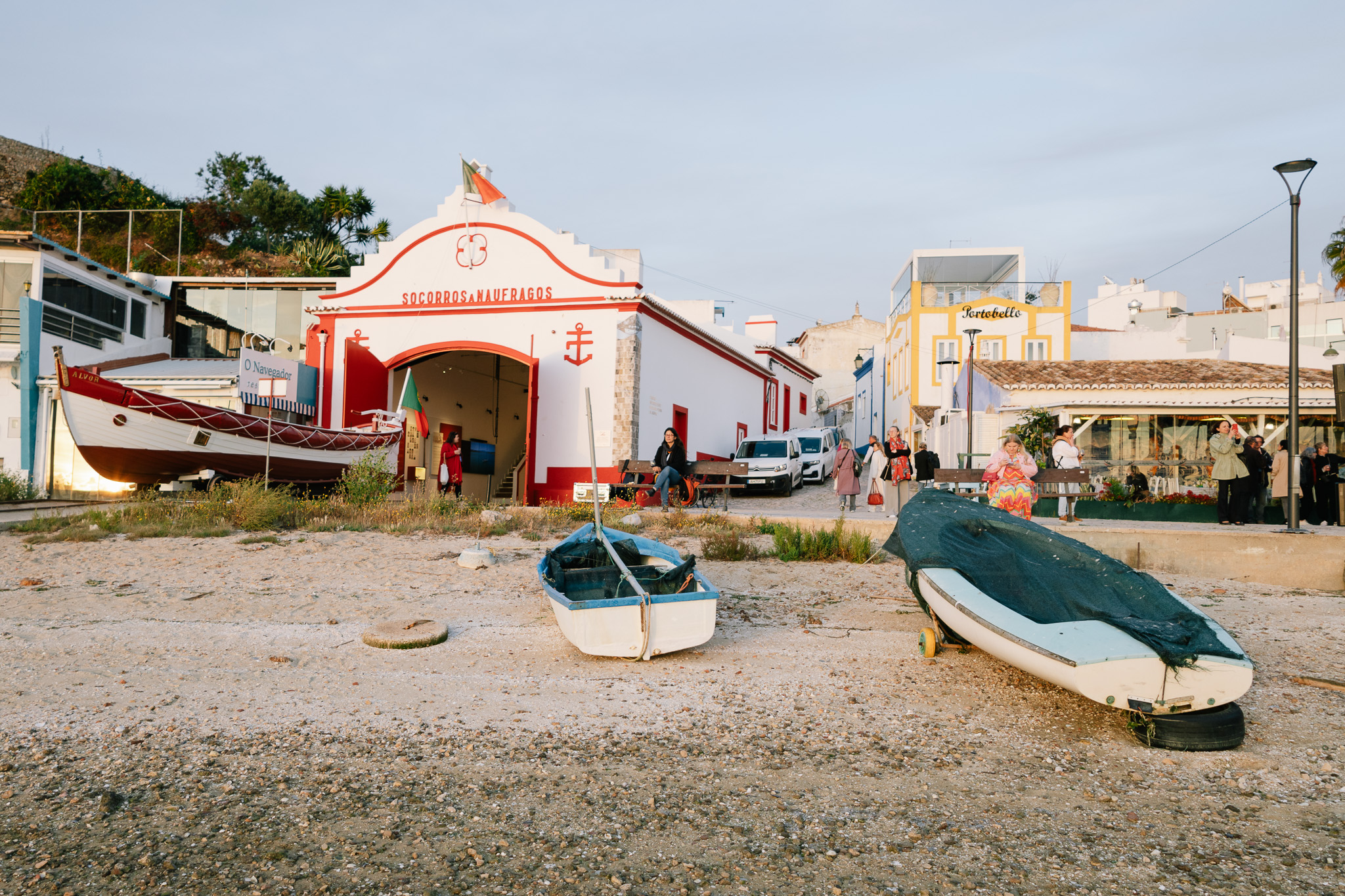
The first day of the conference – intense, filled not only with presentations but also with informal conversations and discussions – ended with a trip to the neighbouring town of Alvor, once a fishing village. The local coastguard headquarters has been transformed into an interpretation centre presenting the former realities of fishermen’s daily work in the region. Gathered in the memorial room (or rather in front of it, as the building is very small), conference participants listened to memories of the recently deceased member of the Board of Trustees of the European Museum Forum, Kimmo Antila.

Polish Day – Sybir Memorial Museum Day
Friday, 3 May, could easily be described as “Polish Day” at EMYA 2024. Our presentation, as the winners of the 2024 Council of Europe Museum Prize, opened the Friday proceedings. We had half an hour to present our activities.
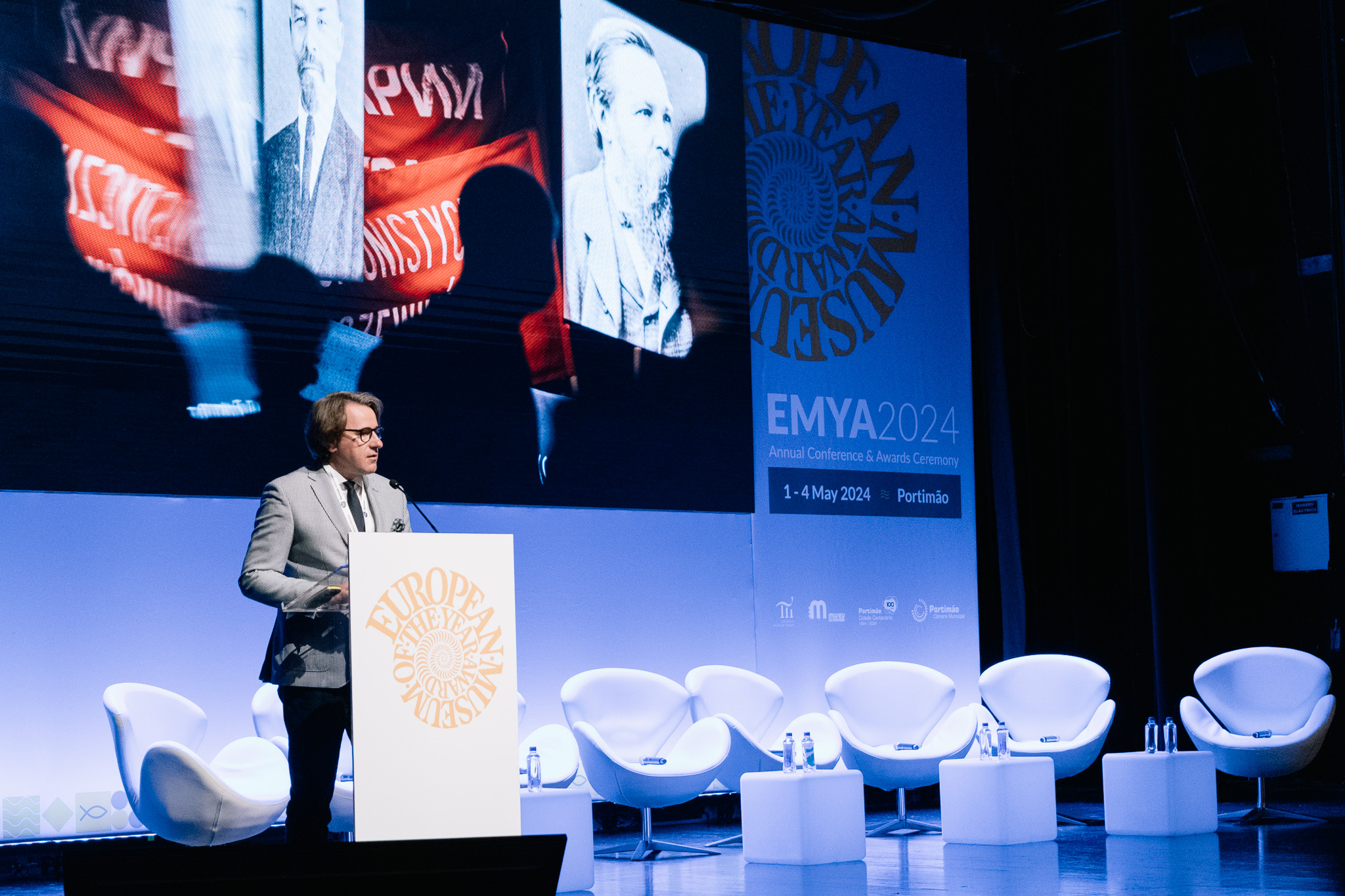
The presentation was opened by the Director of the Sybir Memorial Museum, Prof. Wojciech Śleszyński:
“The Sybir Memorial Museum is important not only for us, the residents of Białystok, but also for all people living in this part of Europe,” he began.

“Let us remember that at the beginning of World War II, Poland faced two aggressors. In September 1939 they divided not only the Second Polish Republic, but the whole of Eastern Europe between themselves. Both eastern Poland and the Baltic states were taken over by the Soviets,” he emphasised.
“Let us remember not only the Nazi camps, but also the Soviet labour camps and the deportations,” he appealed to the audience.

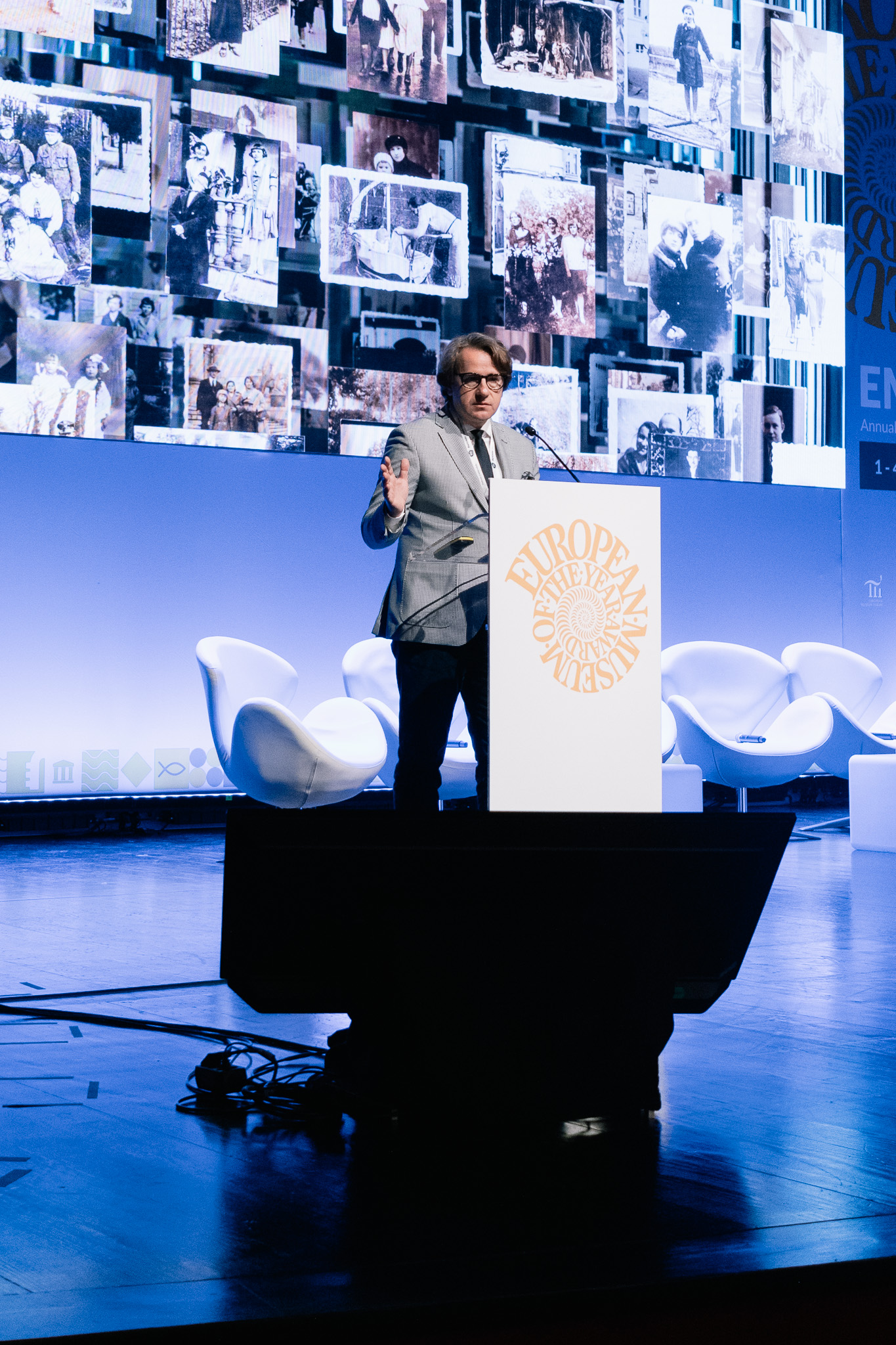
The historian briefly presented the mission and the permanent exhibition of the Sybir Memorial Museum. He noted that the institution enjoys strong support from the city authorities. He concluded his speech with the following words:
“When we opened our museum, we felt that we were recounting events from the past. Today, after Russia’s aggression against Ukraine, it turns out that we are speaking about mechanisms and phenomena that are still present. Unfortunately, history has repeated itself.”
Sybiraks at the Heart of the Sybir Memorial Museum
Paulina Cylka, jointly responsible for the museum’s communications and public image and the author of the EMYA competition application, presented the museum’s wide range of activities, with particular emphasis on cooperation with the Sybirak community.
“They are the heart of our museum, and we emphasise that the Council of Europe Museum Prize is also a recognition of their testimony. We do everything we can to carry their story forward and support them and their descendants in preserving the memory of Siberia.”
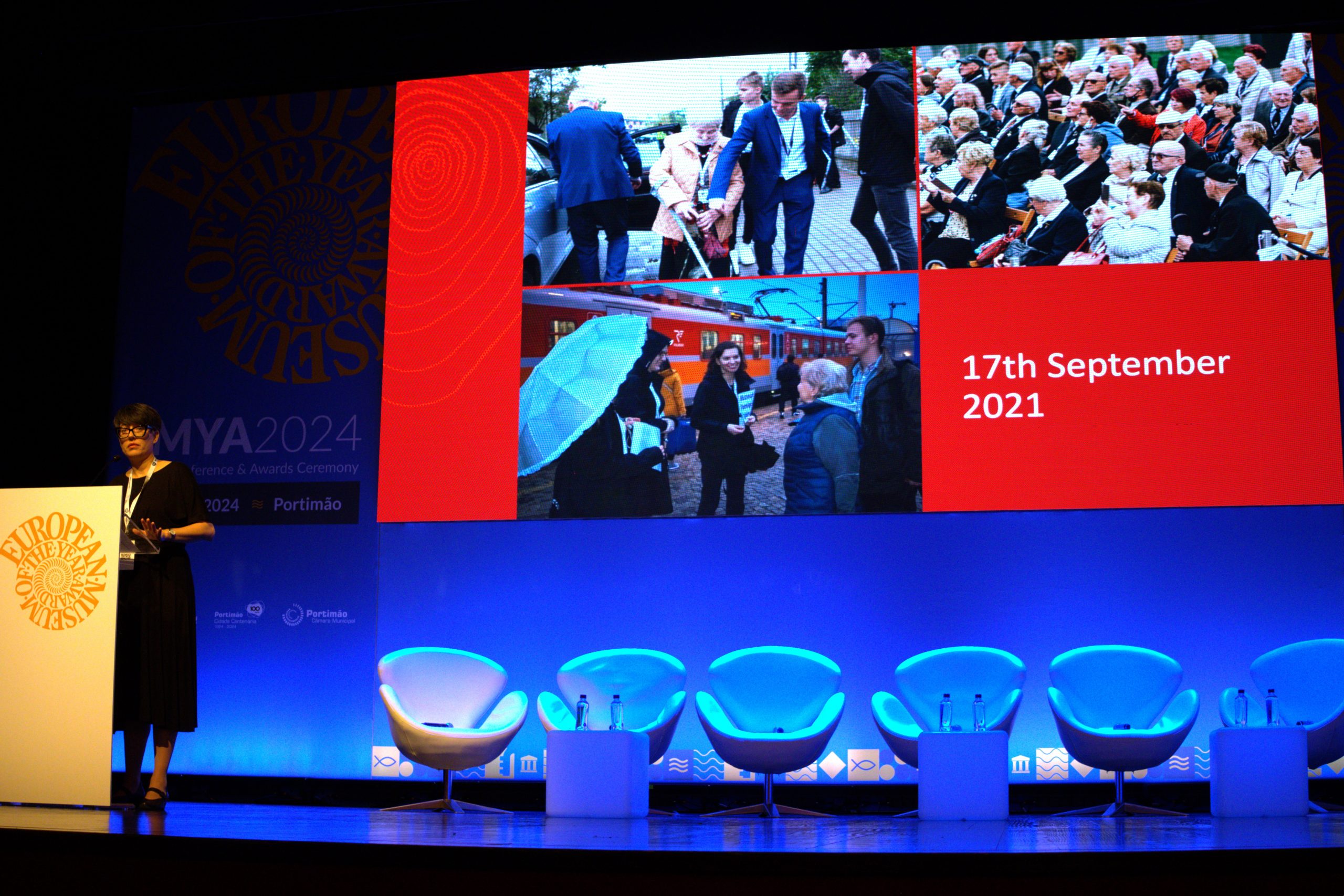
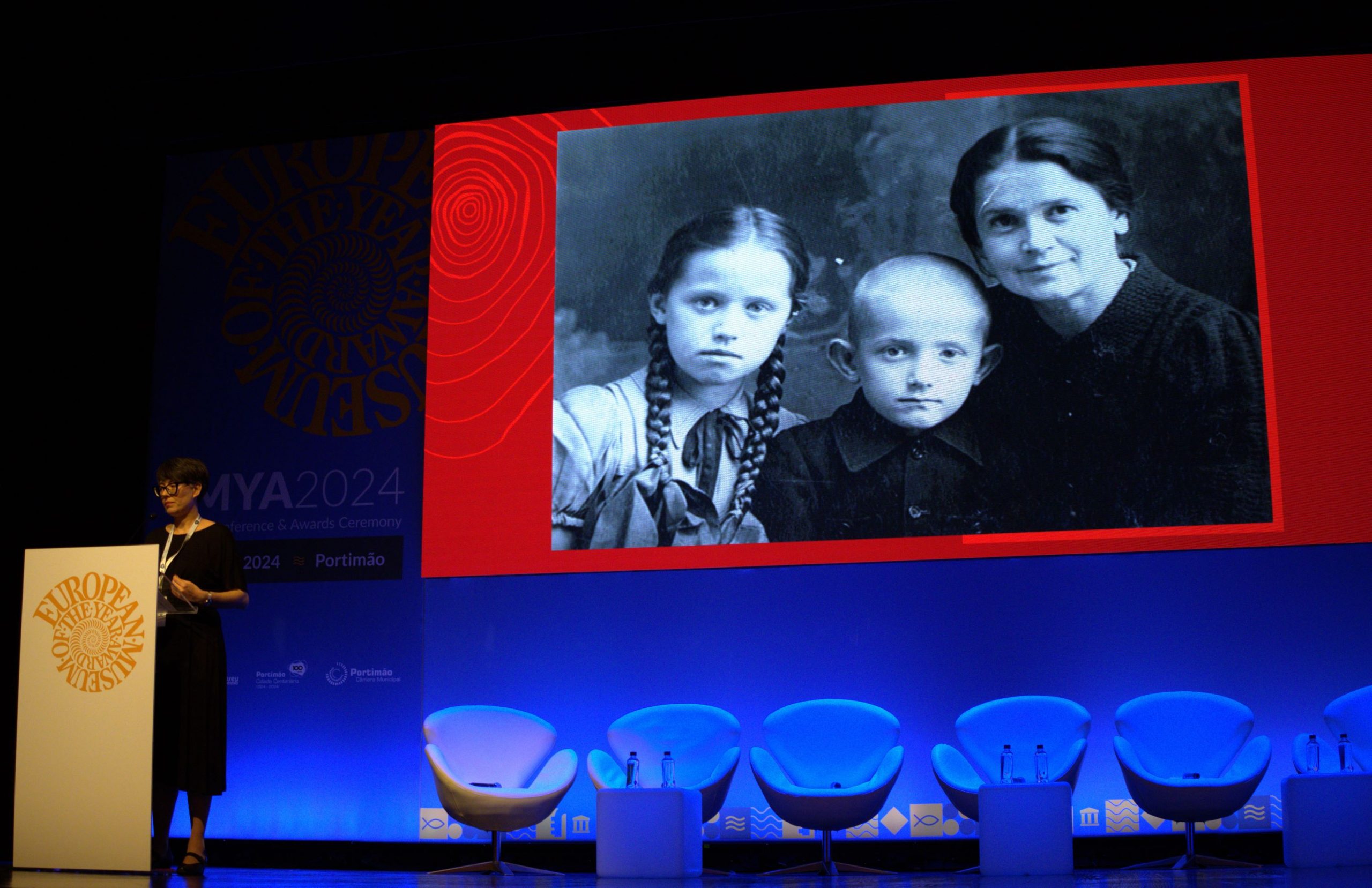
The audience reacted vividly to the moving and emotional story. Participants learned about projects such as the Sybir Memorial Run and the “I Run for a Sybirak” campaign, watched a film about the “Package for a Sybirak” initiative, and heard about Sybiraks who share their personal experiences with museum visitors. They also learned about young travellers who follow in the footsteps of their ancestors and later share their journeys with audiences at the museum. There was also a presentation of the Siberian Ambient Salon, which attracts young people, as well as the temporary exhibition “Only Pain Is Mine”, with its rich thematic programme and accompanying events.
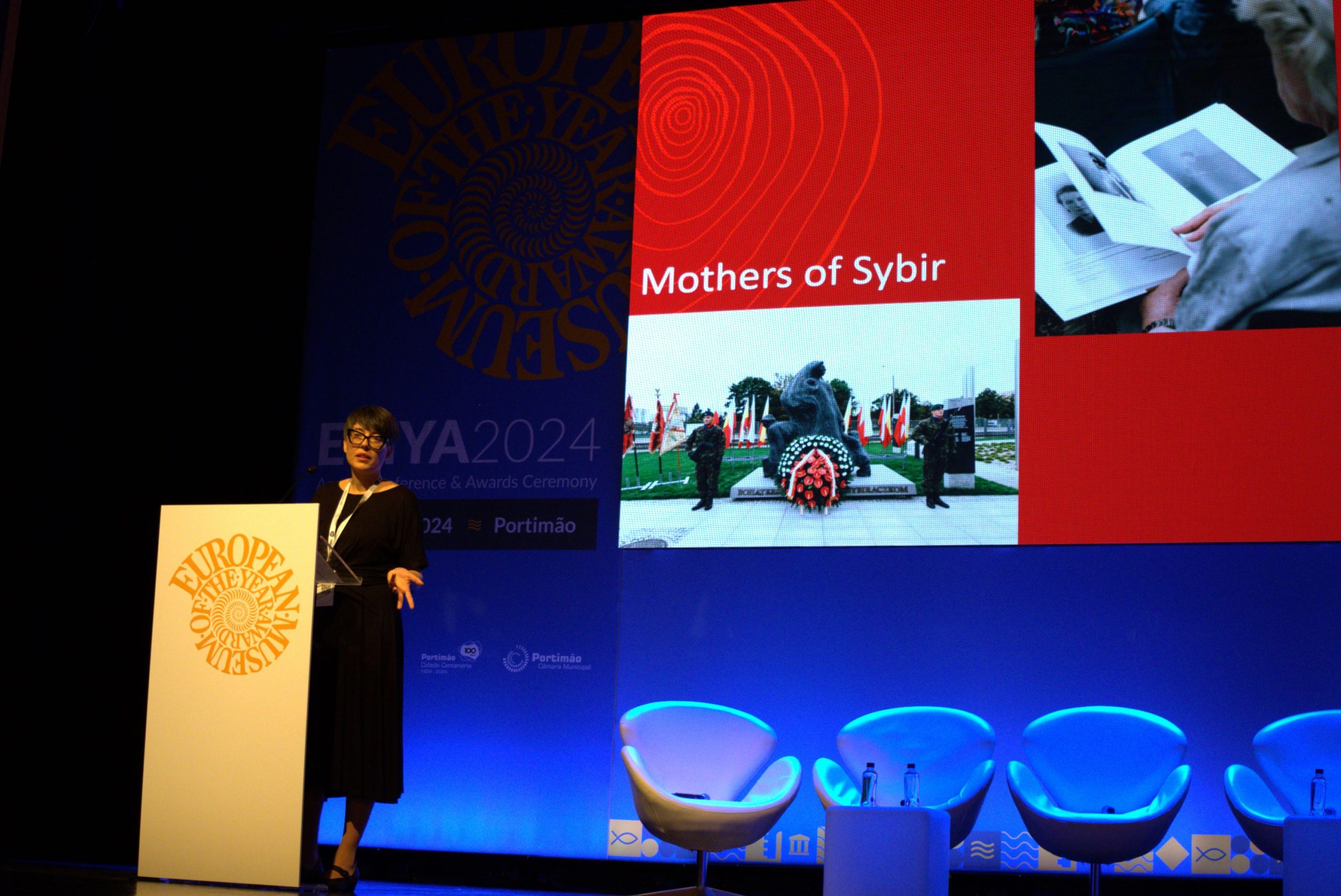
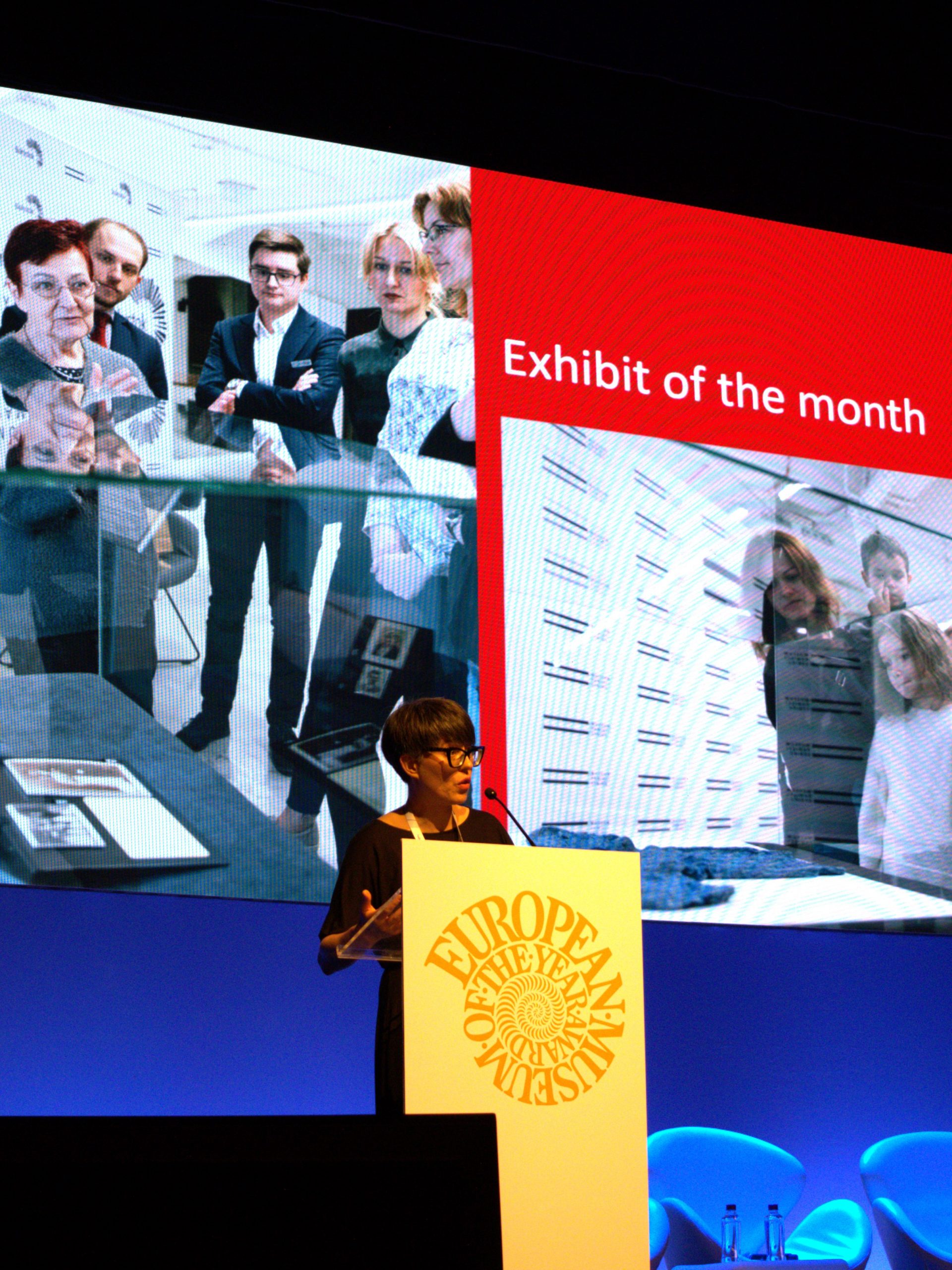
“We use many forms – from conferences, publications and exhibitions (including those co-created by Sybiraks), through artistic installations, performances and concerts, to events combining sport with commemoration,” said Paulina Cylka. “In this way, we try to connect the residents of Białystok, the region and the whole of Poland with Sybiraks and their stories.”
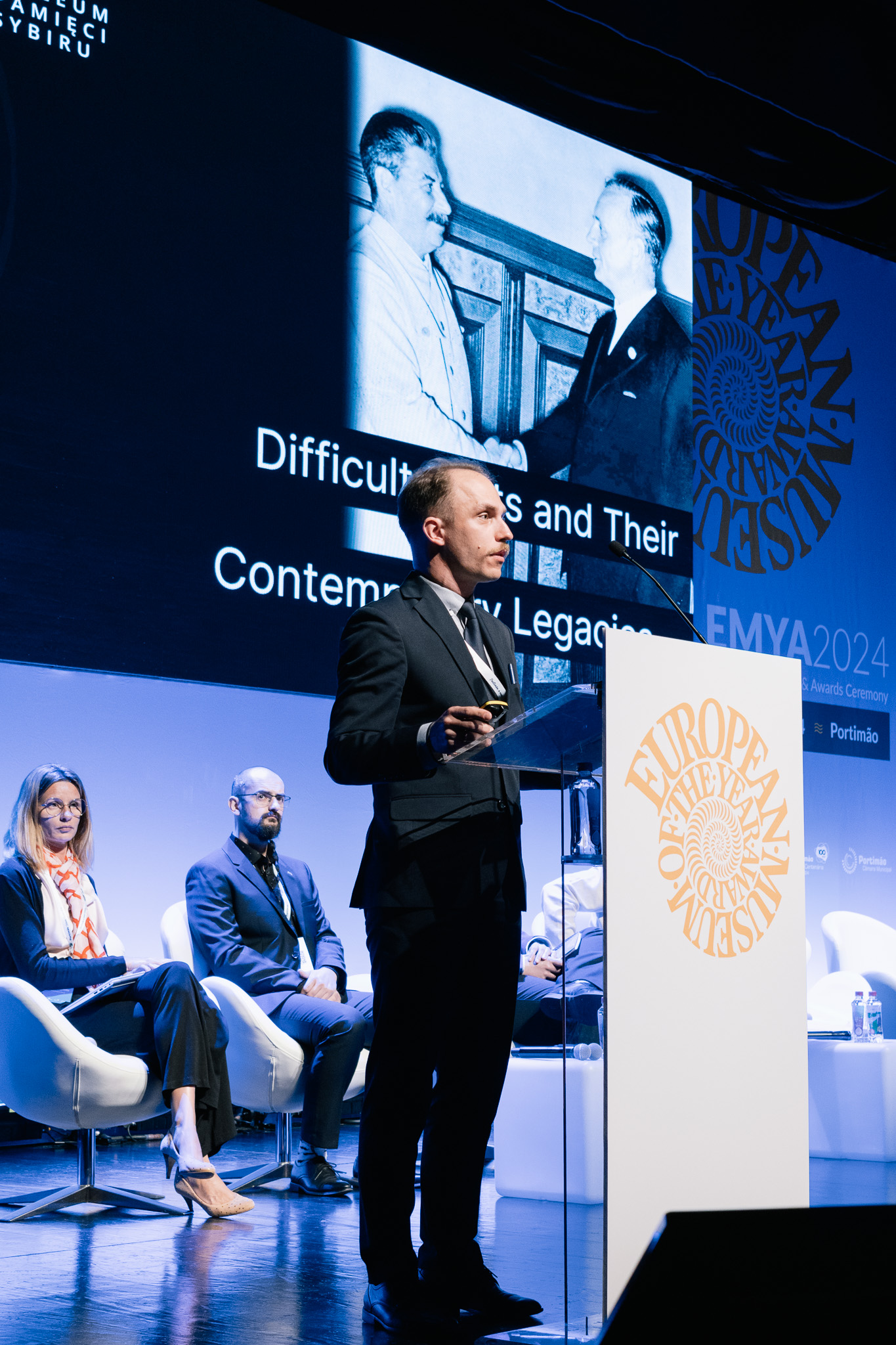
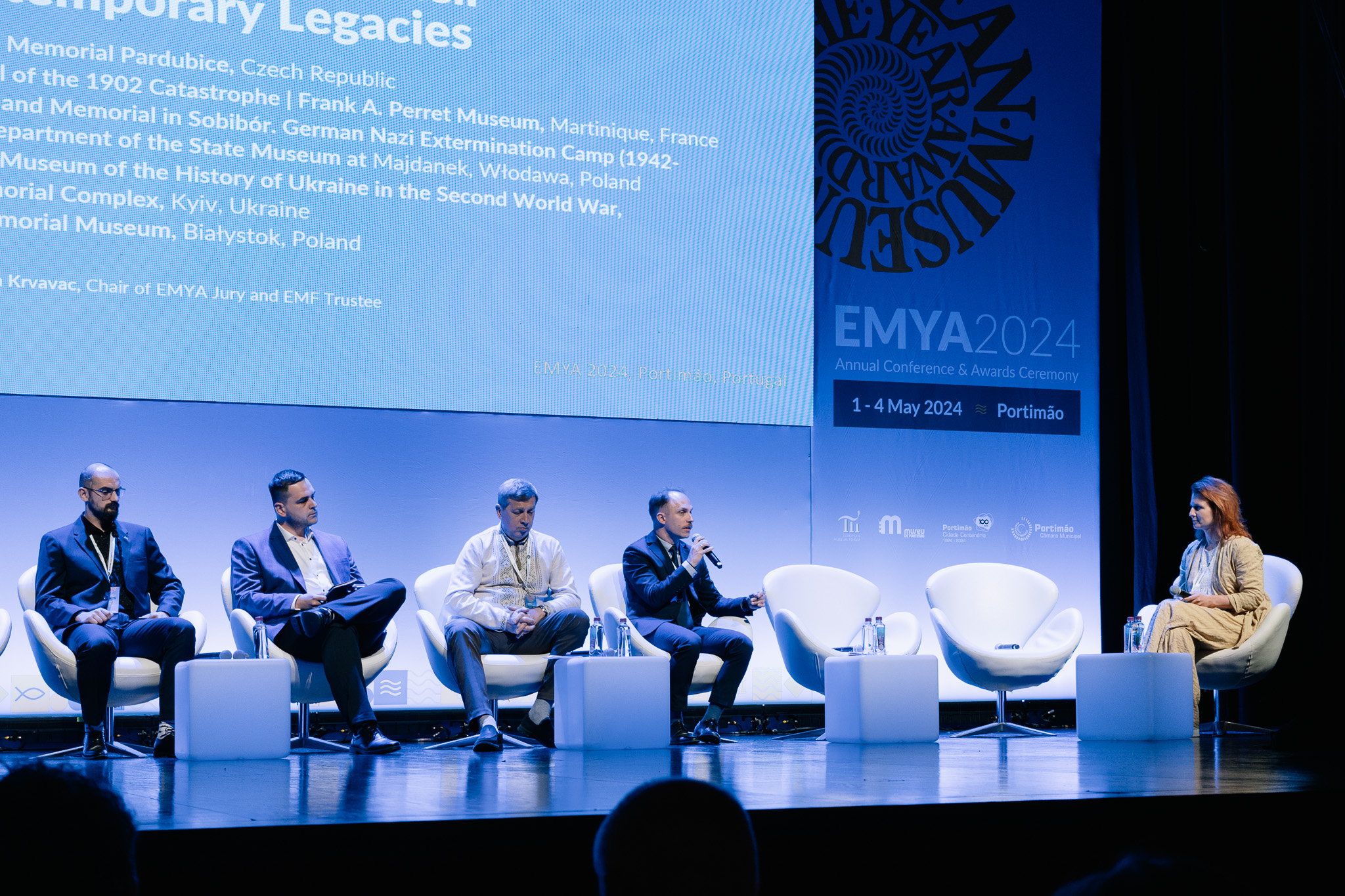
The presentation by representatives of the Sybir Memorial Museum received a standing ovation. From that moment on, we were showered with congratulations – not only for the awards, but also for our well-prepared presentations. During the breaks between panels, many participants approached us with interest and questions. Admiration for the Białystok institution grew even further after the presentation by Piotr Popławski, PhD in the panel devoted to “The Difficult Past and Its Contemporary Legacy.”

As part of this panel, the Zámeček Pardubice Memorial was presented – a site of Nazi crimes that was only properly developed after the fall of communism. Today, a small but dedicated team carries out extensive educational activities there.

Another example was the 1902 Disaster Memorial – the Frank A. Perret Museum in Martinique, which commemorates the catastrophic volcanic eruption that decimated the island’s population in 1902. An American geologist founded the museum years ago, and the exhibits once included skulls of the victims. After a recent renovation, the museum now tells the story of the tragedy through objects – melted bottles and even church bells make a powerful impression. A separate memorial section lists the victims of the disaster, paying them the respect they deserve.
Excellent Polish Presentations
An excellent presentation was delivered by Łukasz Mrozik, representing the Museum and Memorial Site in Sobibór – German Nazi Extermination Camp. He began with a powerful question: “How can we show the horror of an extermination camp in a place where virtually nothing of the camp remains?”


The audience fell silent as he spoke about extensive archaeological research and the design of the space so that visitors can understand the structure of the camp and the path taken by victims to the gas chambers despite the absence of original buildings. Finally, he presented photographs of objects that helped restore the identities of some of the victims. The sight of rusty keys and nameplates from apartment doors was particularly moving. “Dutch Jews took these plates with them, believing they would attach them to their new homes, which they were convinced they were travelling to,” said Mrozik.
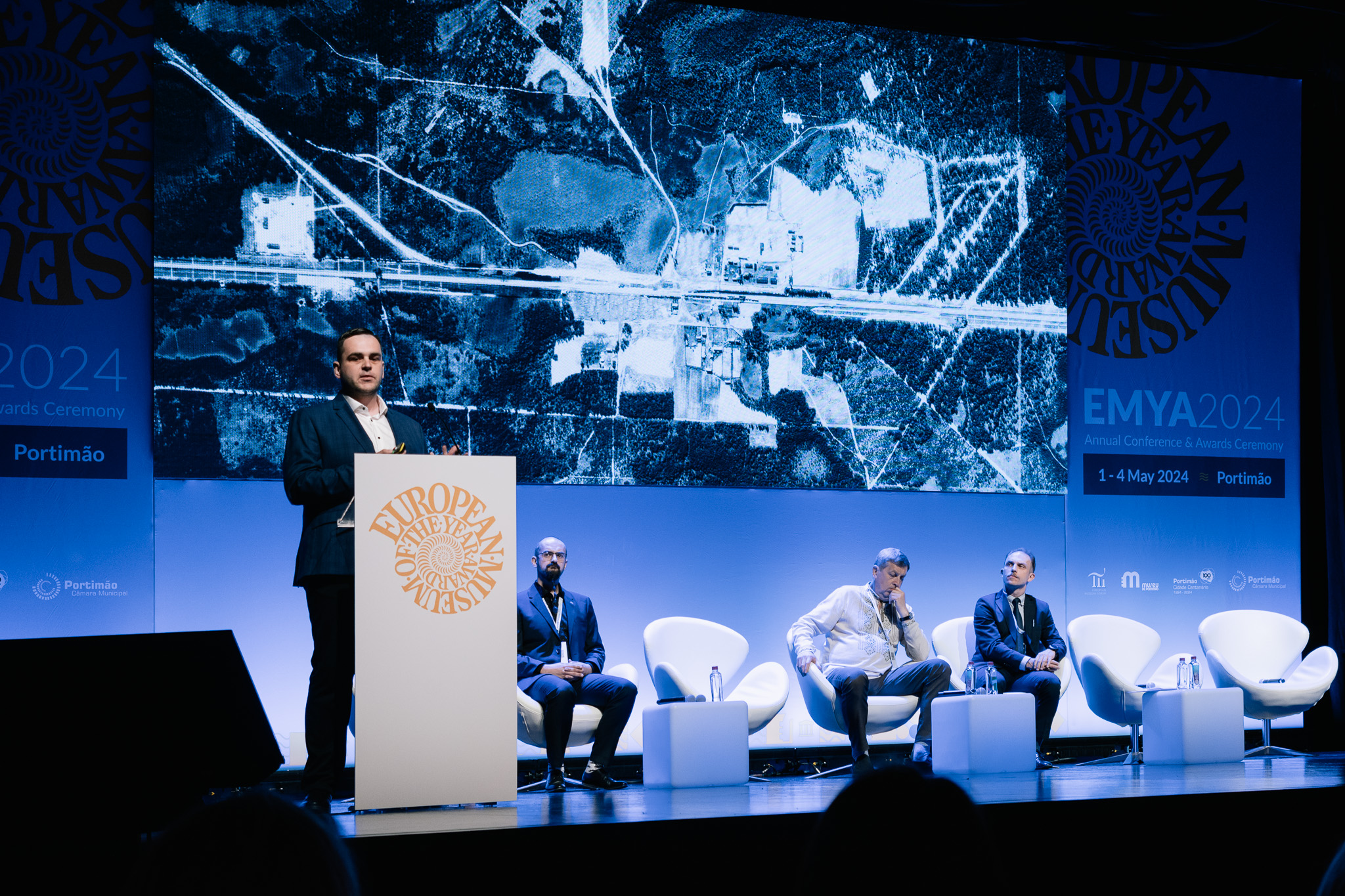
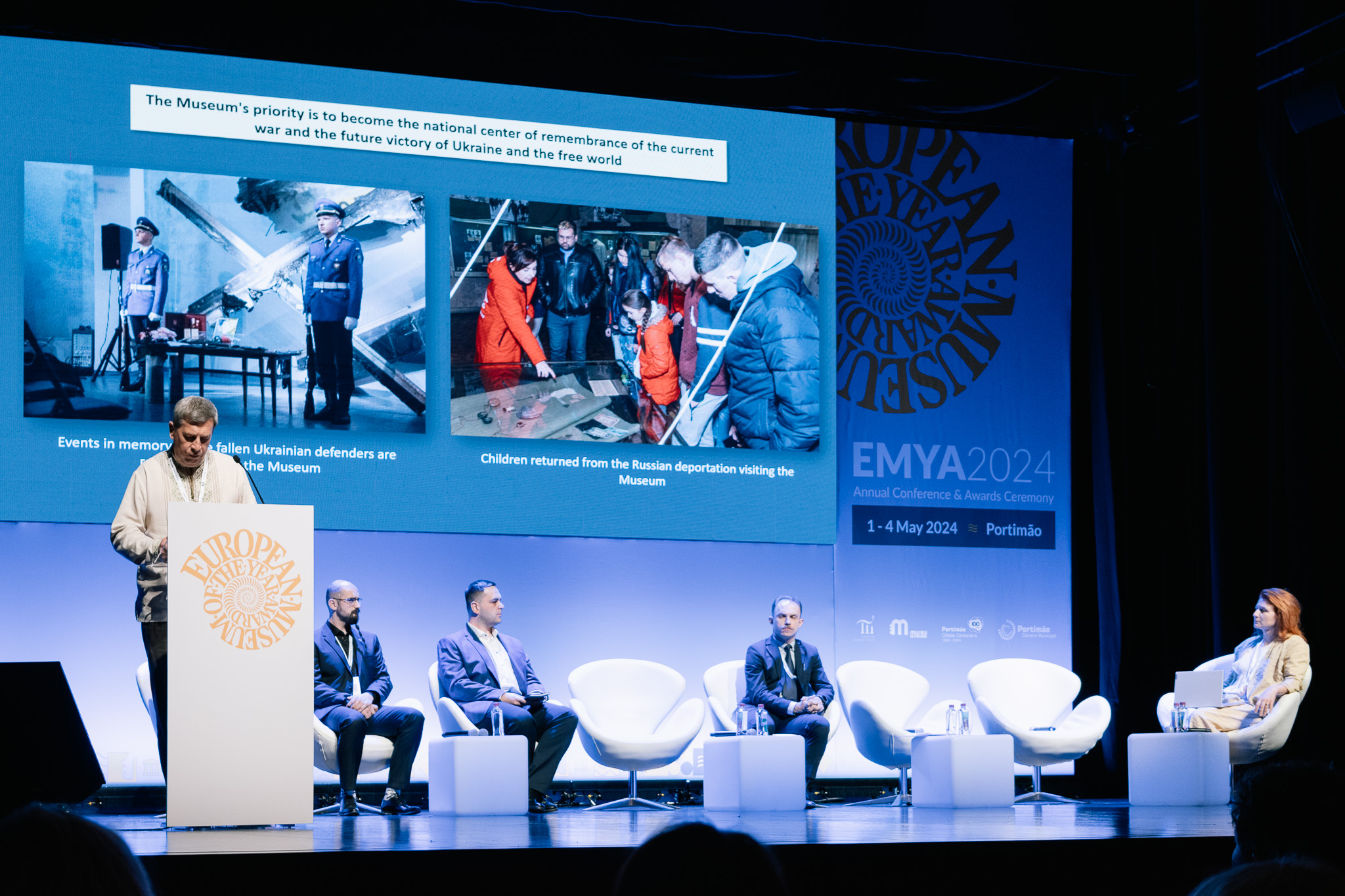
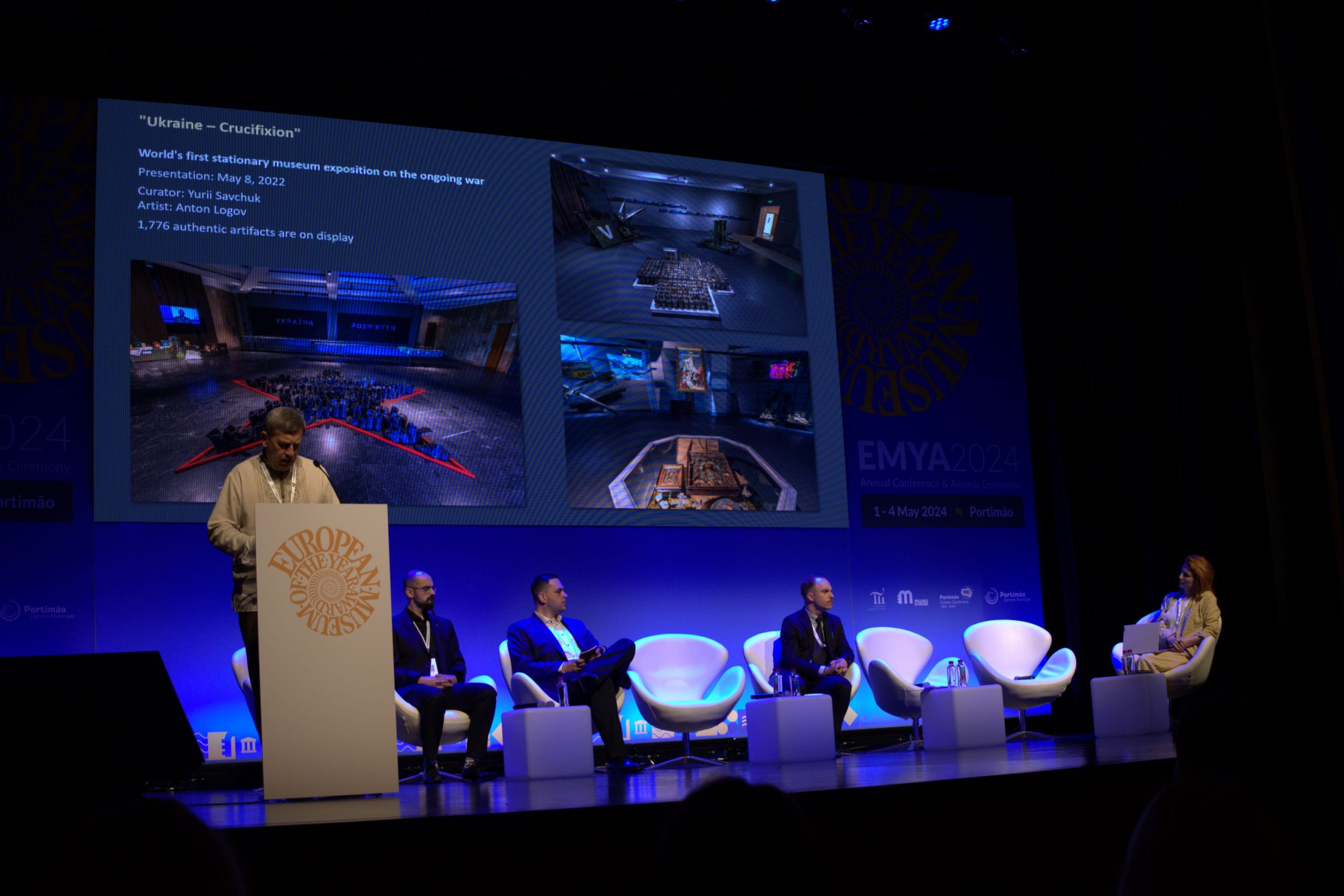
The atmosphere in the audience at the TEMPO Theatre was equally tense during the presentation of the National Museum of the History of Ukraine in the Second World War in Kyiv. Its director, Yurii Savchuk, showed how the museum has responded to the ongoing war – by securing its collections, honouring the fallen, and organising temporary exhibitions that combine documentation of Russian war crimes with contemporary artistic installations.
Sharing a Success Story
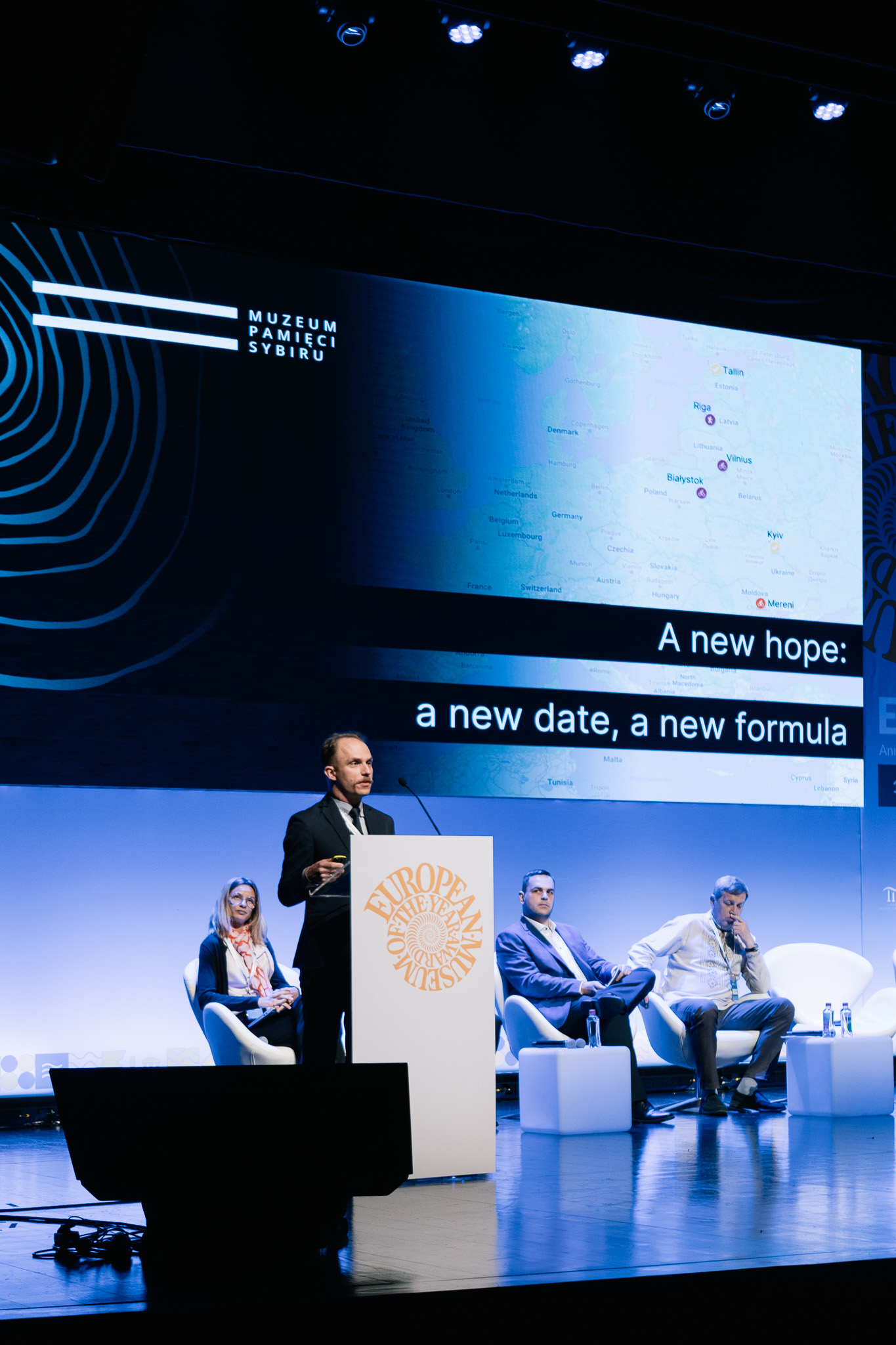
When it was time to present the Sybir Memorial Museum, Piotr Popławski, PhD made spectacular use of his seven minutes. He focused on a case study and presented Peleton Pamięci (Memorial Peloton), a project he has been developing for four years.
He described how the initiative grew from a small bicycle ride through the city with a few participants into an international event involving several countries. The audience responded with great interest – and even gratitude – as Popławski, PhD spoke with energy and balanced humour about the challenges of working with local communities.
“The work of museum professionals can be extremely demanding, and the results are not always immediate. The key to success is openness, flexibility and cooperation. In the case of the Memorial Peloton, these elements not only contributed to the development of the event but also became values that inspire people in different countries who share similar historical experiences.”
During the break after the panel, Popławski, PhD received numerous congratulations for his excellent presentation.
Connecting the Past with the Future…
On the same day—Friday—the panel “Museums in Search of New Connections” also took place. Institutions such as the National Museum in Lublin, the Museum of Czech Literature in Prague, the Museum of Border Folklore (MUSEF) in Mouscron (Belgium), Villa Bernasconi in Grand-Lancy (Switzerland), and the Östergötland Museum in Linköping (Sweden) presented their work.
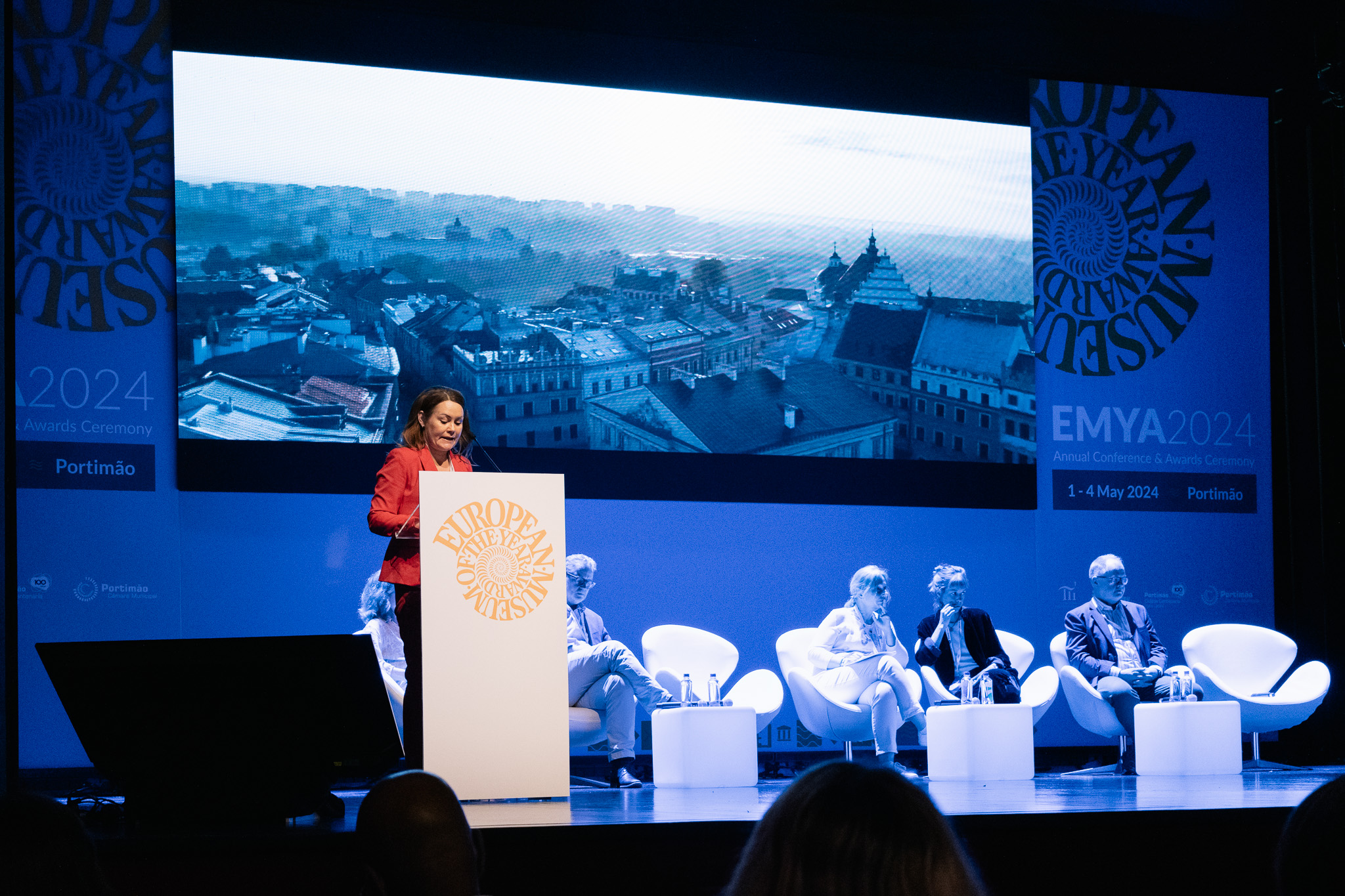
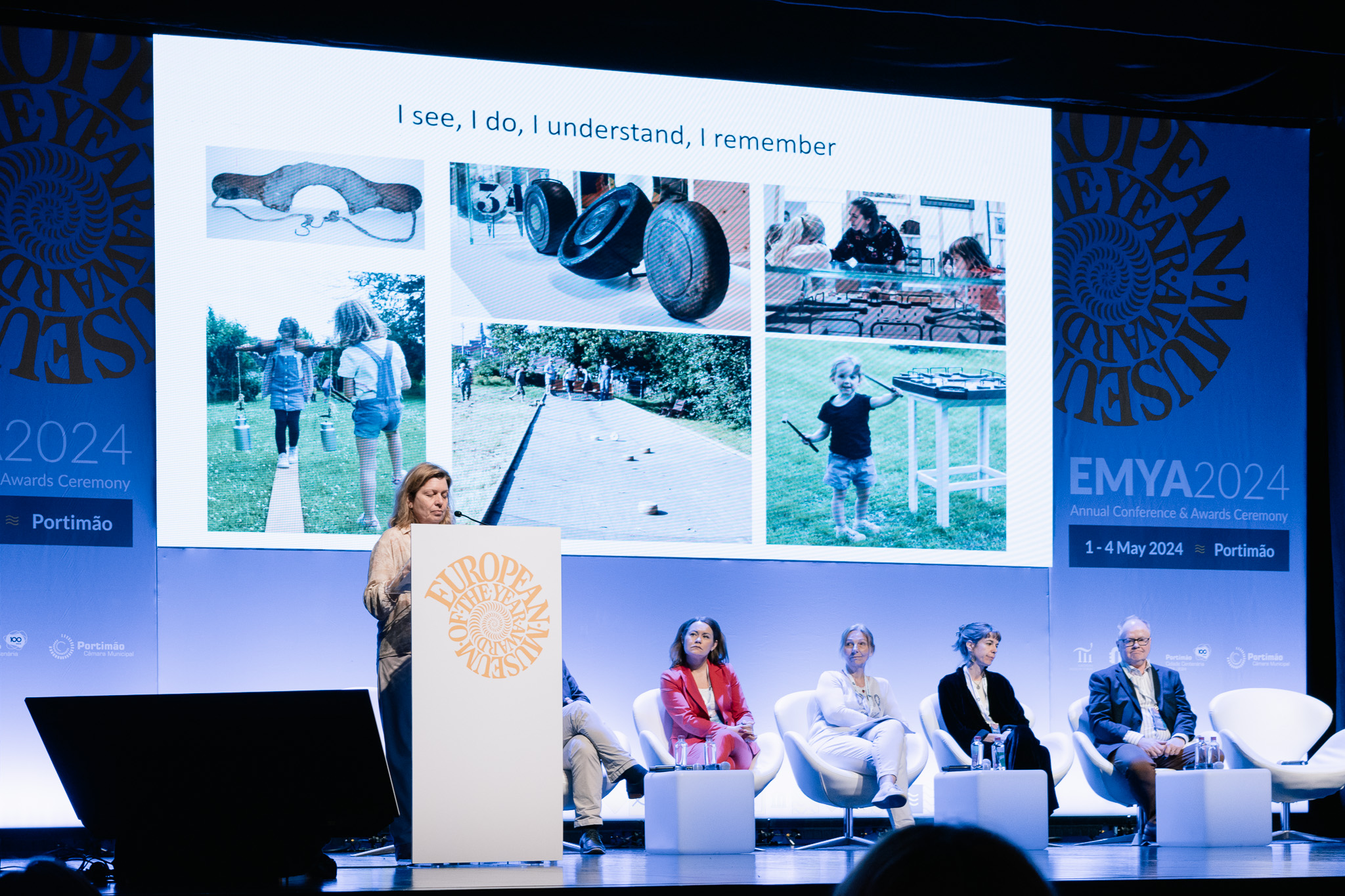
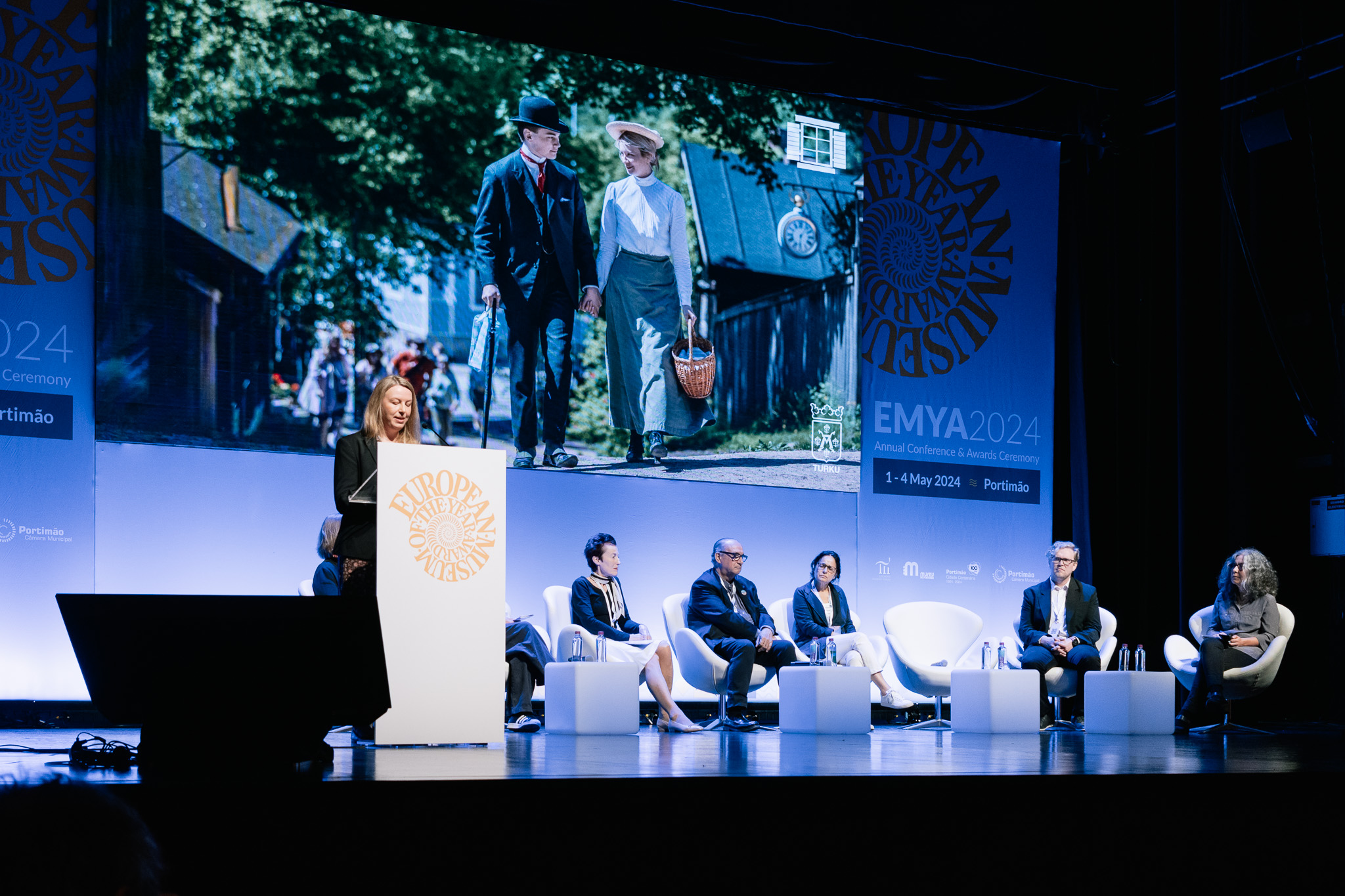
Under the theme “Space, Place, Agenda,” presentations were given by Villa Freischütz – House Museum in Merano (Italy), the Centre Dürrenmatt in Neuchâtel (Switzerland), the Museum of the Home in London, and the Pau Casals Museum in El Vendrell (Spain). Our attention was particularly drawn to the Luostarinmäki Crafts Museum in Turku, Finland. This is an engaging open-air quarter with typical wooden buildings, now located in the heart of the city—although the richness of its programme and its accessibility do not necessarily correspond with the word “open-air museum.” It immediately brought to mind the Bojary district in Białystok…
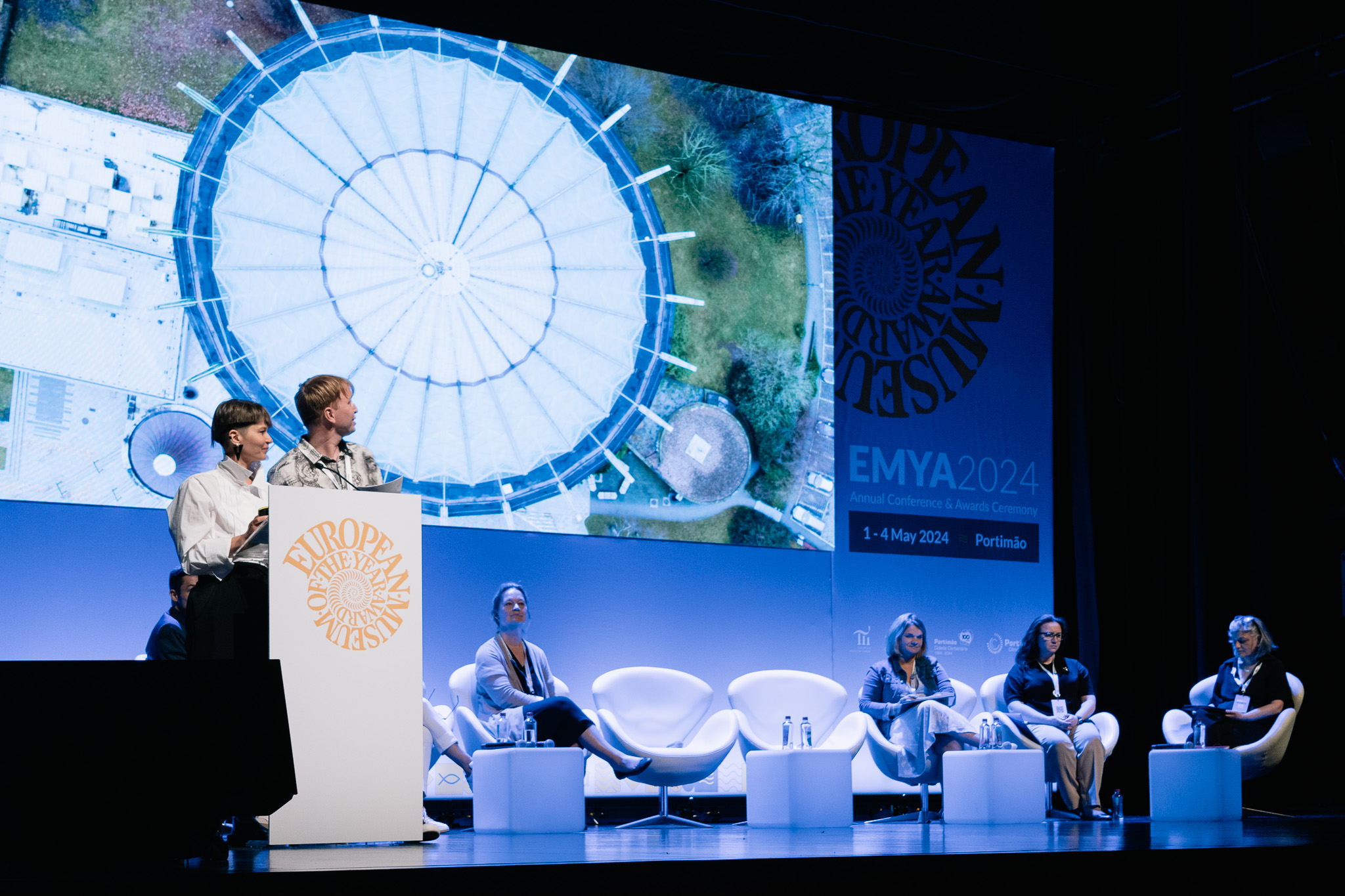
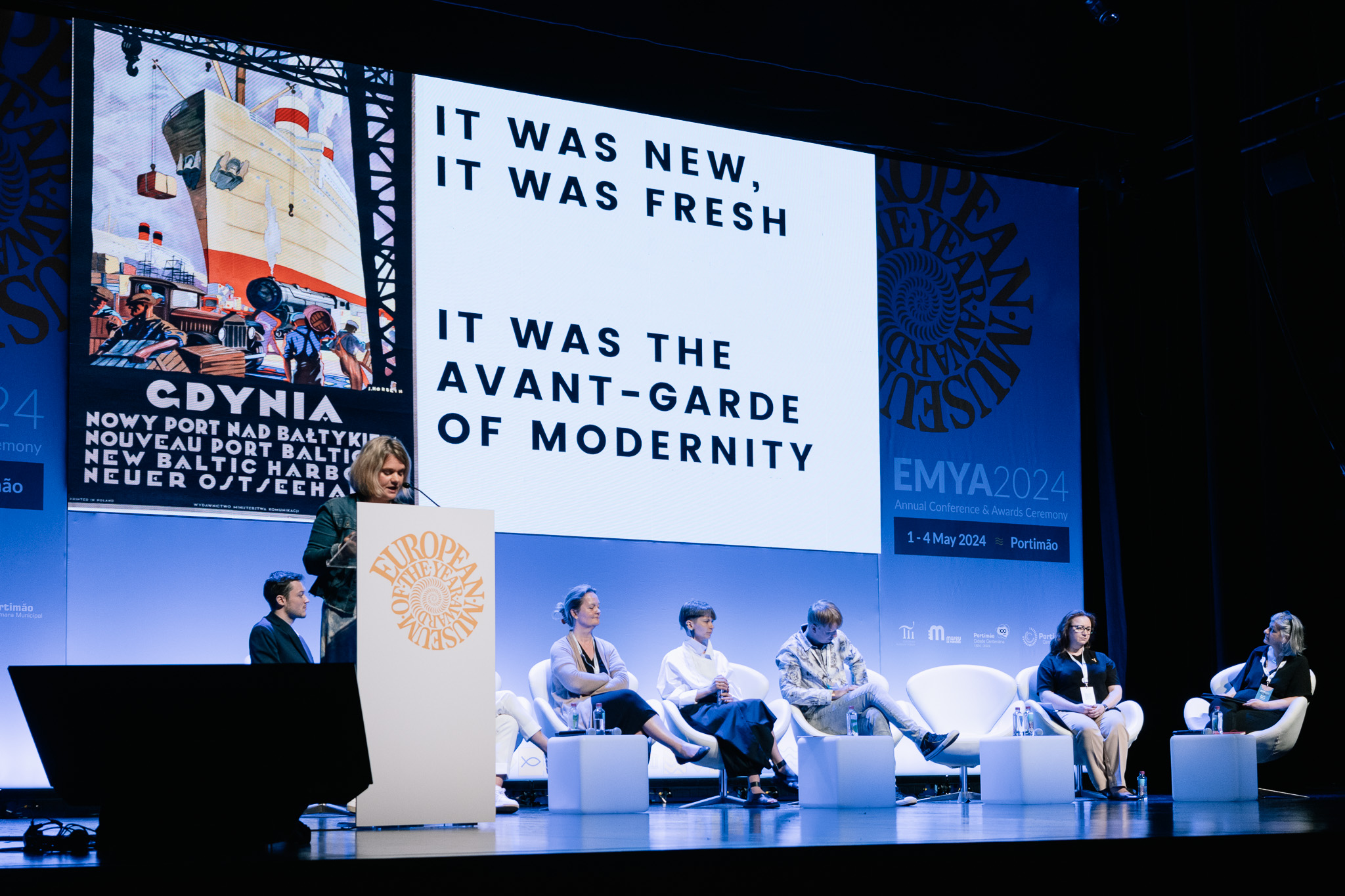
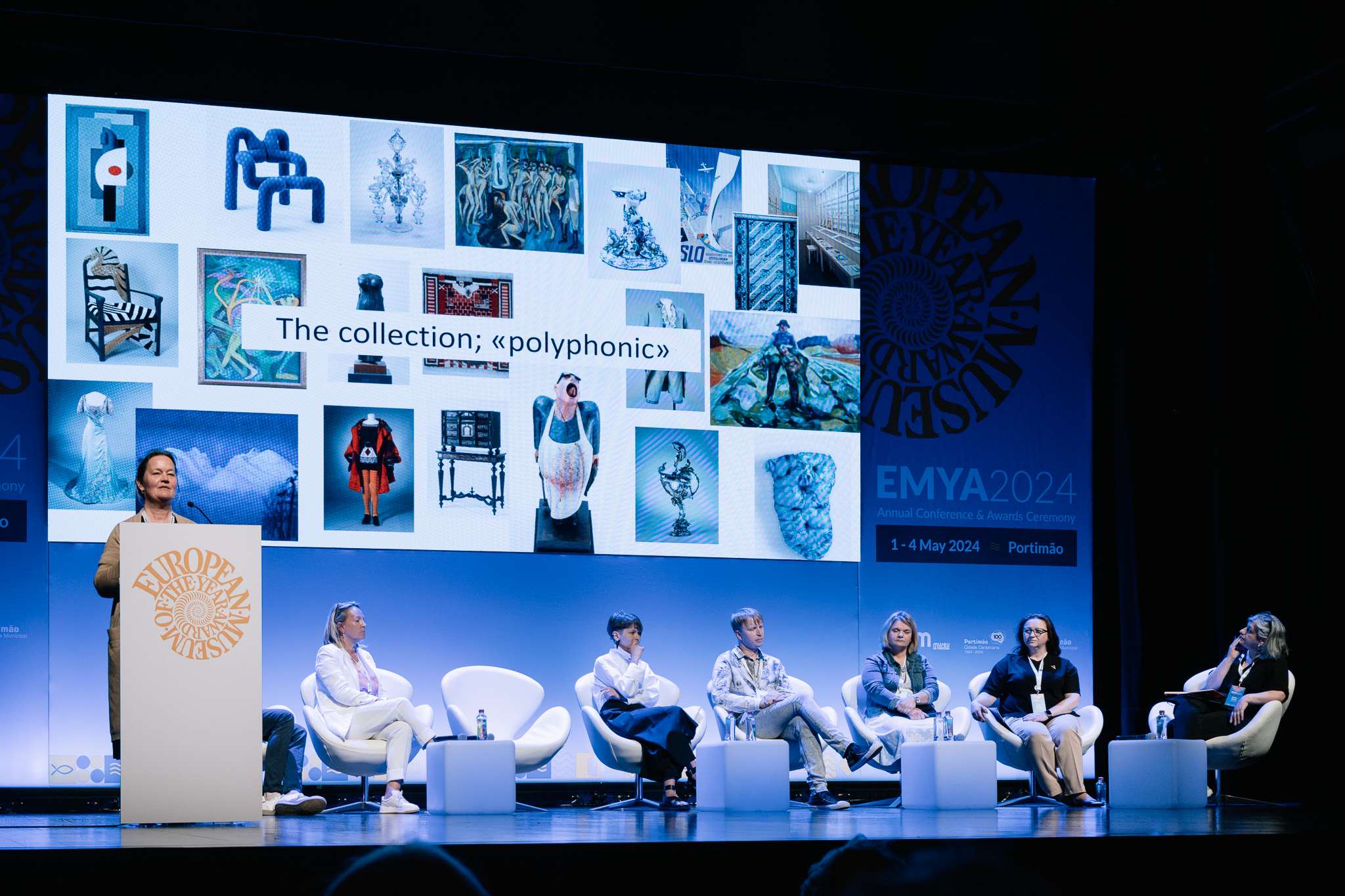
Strong highlights also appeared in the panel “Return to Art: The Past in the Present.” Two Polish institutions were featured: the Racławice Panorama Museum (a branch of the National Museum in Wrocław), which showcased a spectacular renovation of its building carried out without relocating the famous painting, and the Mazovian Museum in Płock, with its beautiful new permanent exhibition of Art Deco art. In addition, we saw the National Museum of Art, Architecture and Design in Oslo, which has “reinvented itself” as a “polyphonic museum,” as well as treM.A. – the Museum of Ancient Art in Namur (Belgium), which carried out its renovation… essentially with the hands of its own staff.
…and attracting audiences
An interesting programme was presented by the Royal Museum of Fine Arts Antwerp, which not only displays masterpieces of European art but also confronts them with modern works, while encouraging children to visit by installing playful elements in its dignified galleries. It reaches for unconventional solutions—for example, it implemented a project in which visitors had the opportunity to discuss art with visually impaired individuals, whose questions made sighted visitors aware of issues they had previously overlooked.
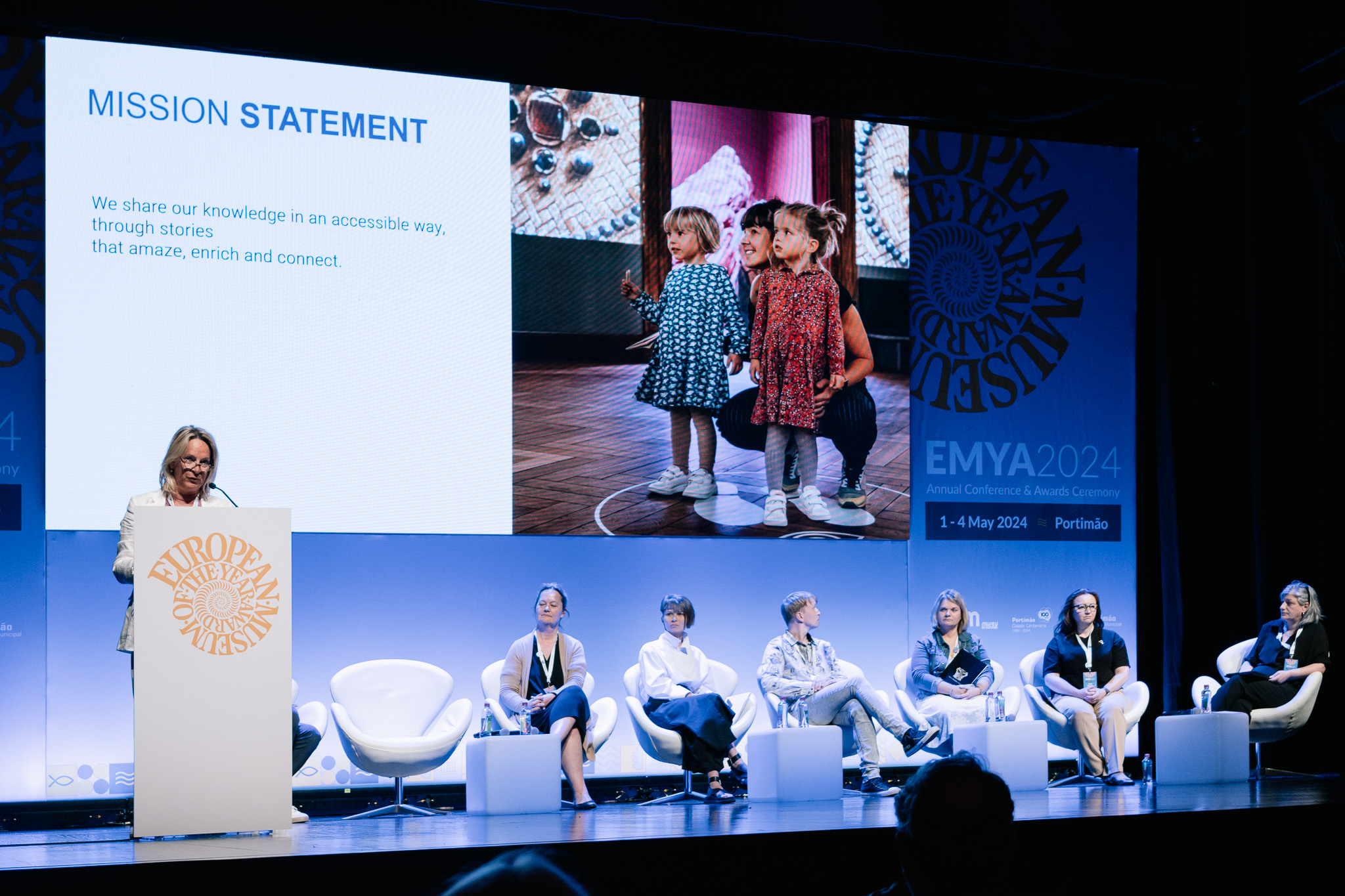

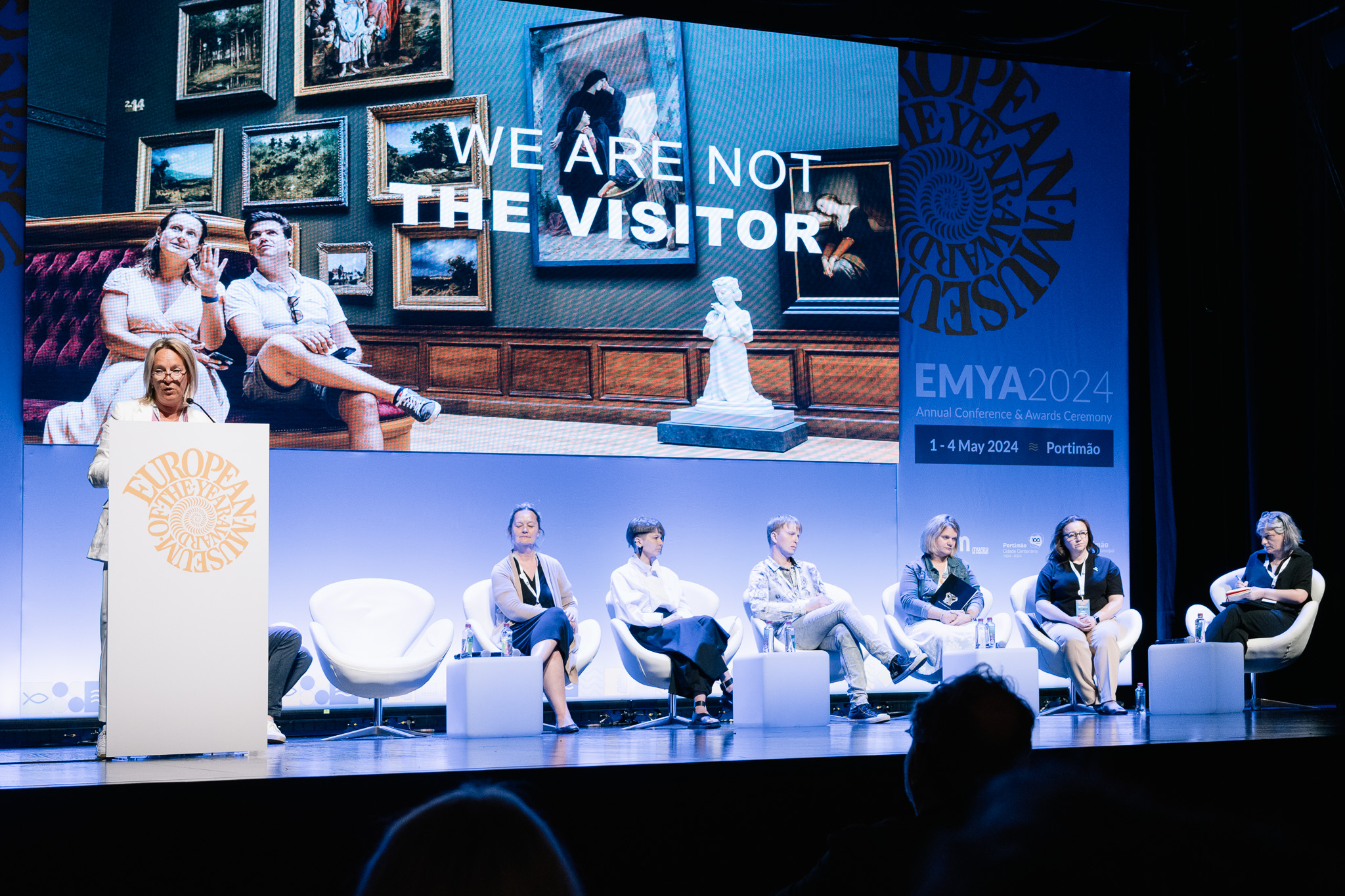
KMSKA does not shy away from social problems either. “Young people from various backgrounds used to hang around the museum, and there were issues, including drug use. We hired young staff members who reached out to them with a programme through which they found a space for themselves in the museum. They take part in creative workshops and regularly organise concerts and other events for others,” said Director General Carmen Willems.
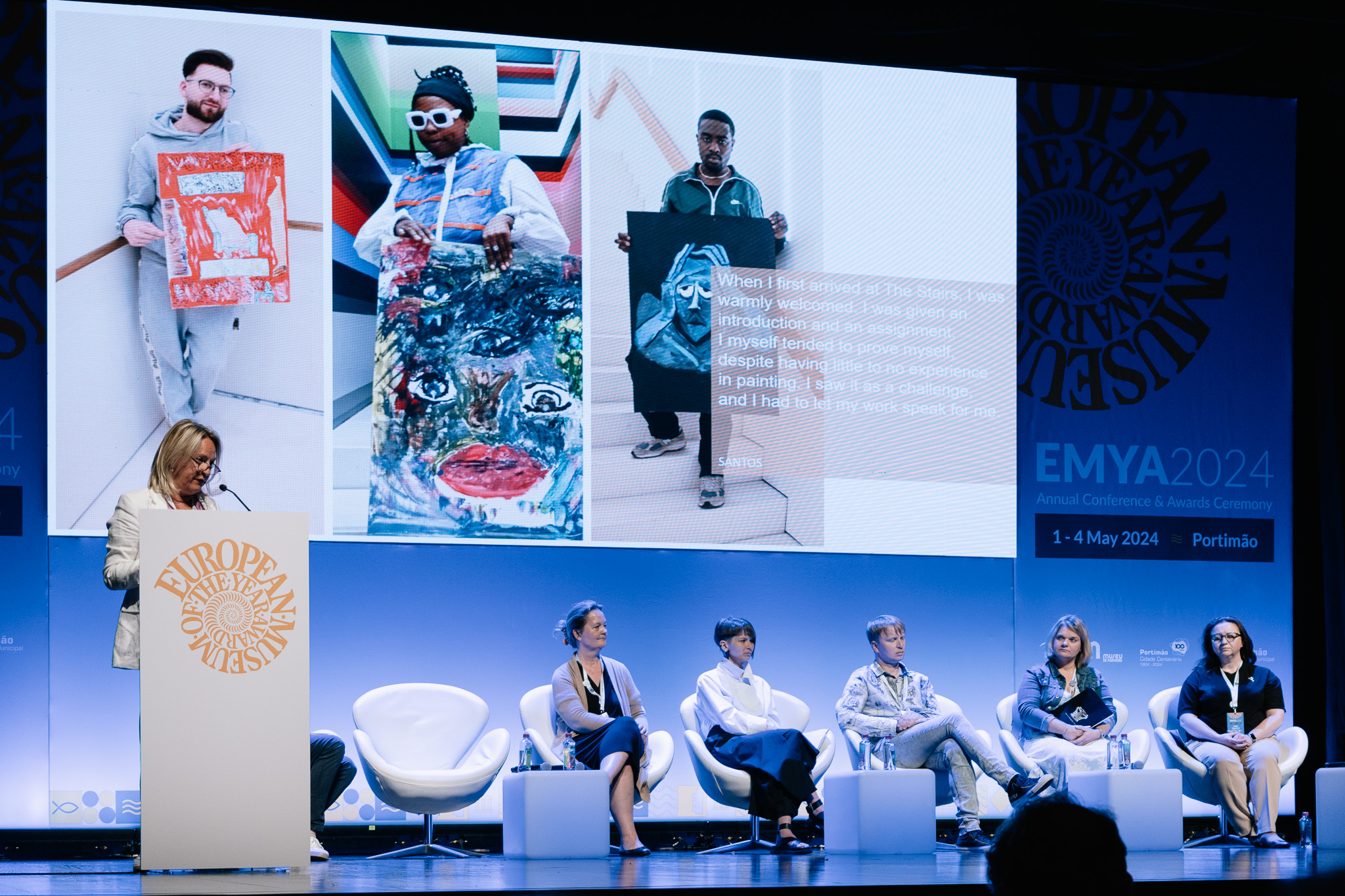
The tragedy of Ukrainian museums and museum professionals
A deeply moving presentation was given by a representative of the Khanenko National Museum of Arts in Kyiv, who admitted that she struggled to find the strength and enthusiasm to come to the Forum and speak about her museum:
“I am grateful to be here, but before leaving for Portugal it was very difficult. I asked my colleagues: what am I supposed to tell them? We have empty walls and a damaged building. They said: ‘Exactly that. Tell them how we do not give up.’”
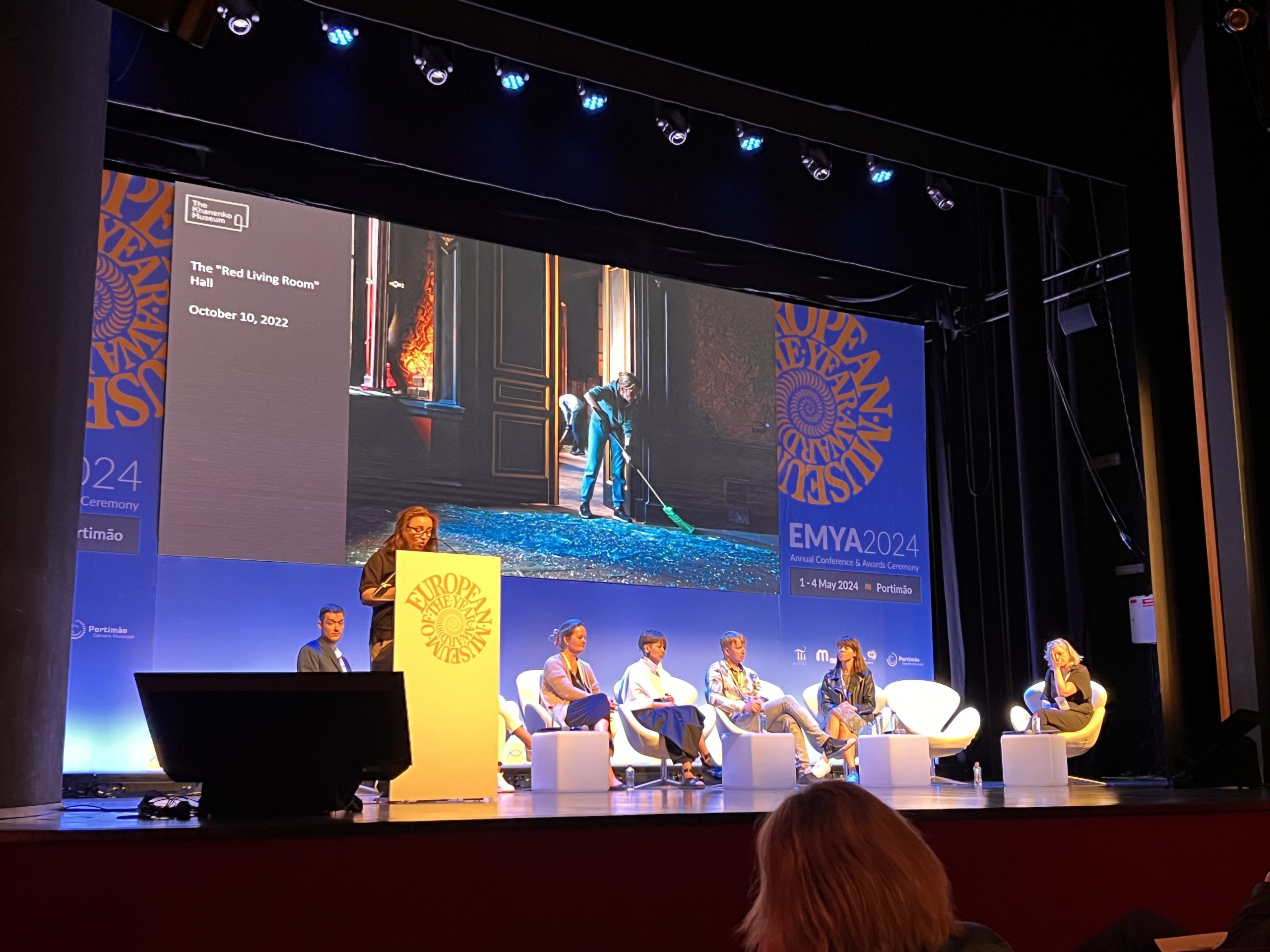
Her presentation did not include images of smiling families in galleries filled with artworks. Instead, we saw walls marked by dark rectangles where paintings had been removed, museum professionals sweeping up shattered glass… There was no colourful promotional clip, but rather black-and-white security footage showing how a shockwave from a nearby explosion forced broken windows, clouds of dust, and long, torn curtains into the gallery interior.
Friday at the conference concluded with the panel “Science Matters,” featuring museums dedicated to the popularisation of knowledge: the Giovanni Poleni Museum in Padua, Forum Wissen in Göttingen, the ARTIS-Groote Museum in Amsterdam, and the Neanderthal Museum in Mettmann (Germany).
The final highlight of the day was a gathering in a former… fish market on the banks of the Arade River, near the Museu de Portimão.
Time for diplomas!
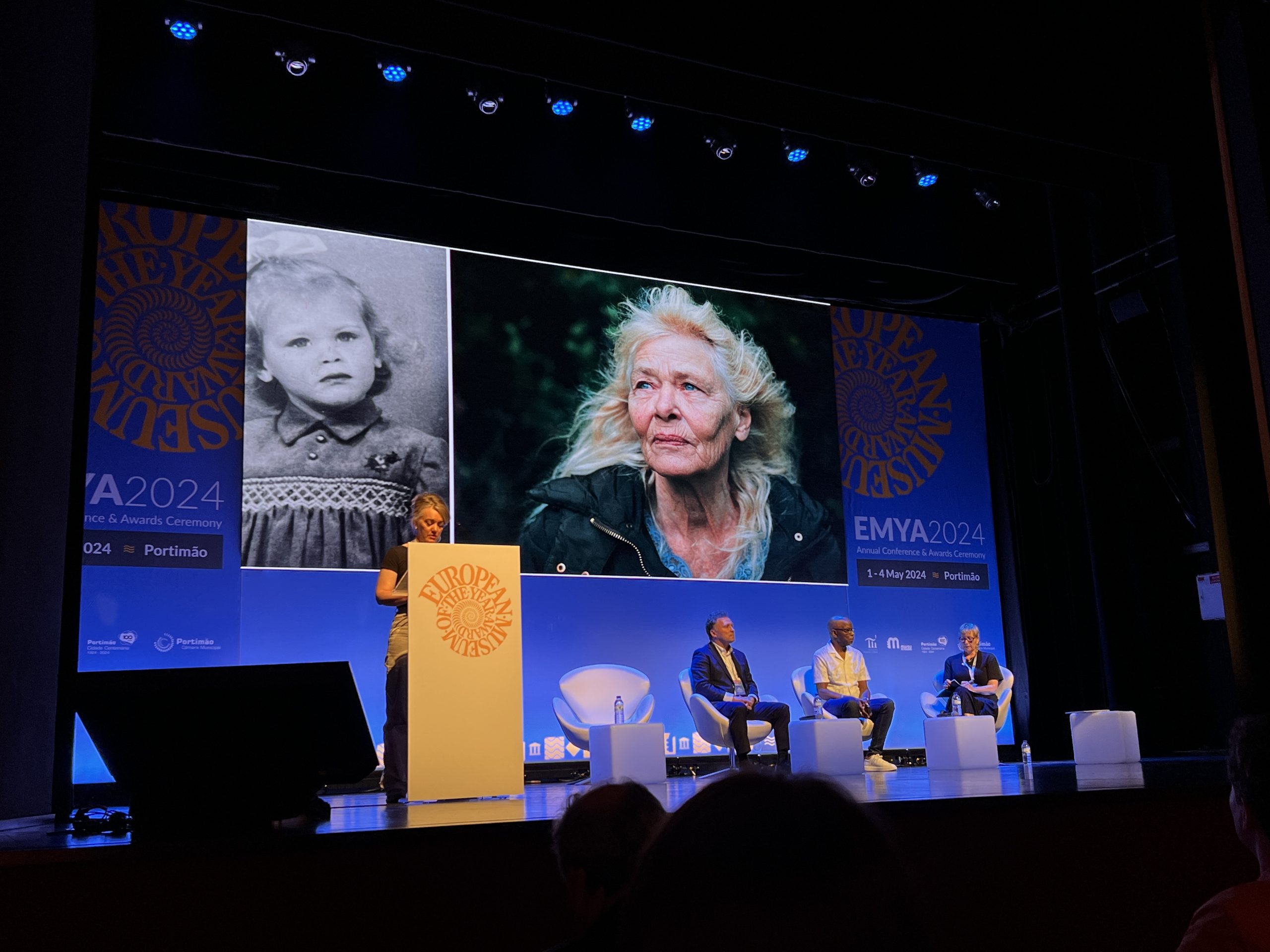
On Saturday morning, 4 May, the final debate took place—on social justice in museums—along with a presentation of last year’s Kenneth Hudson Award winner: the 23.5 Hrant Dink Site of Memory. The site commemorates Hrant Dink, a journalist and founder of the newspaper Agos, murdered in 2007, who was actively engaged in the democratisation of Turkey.

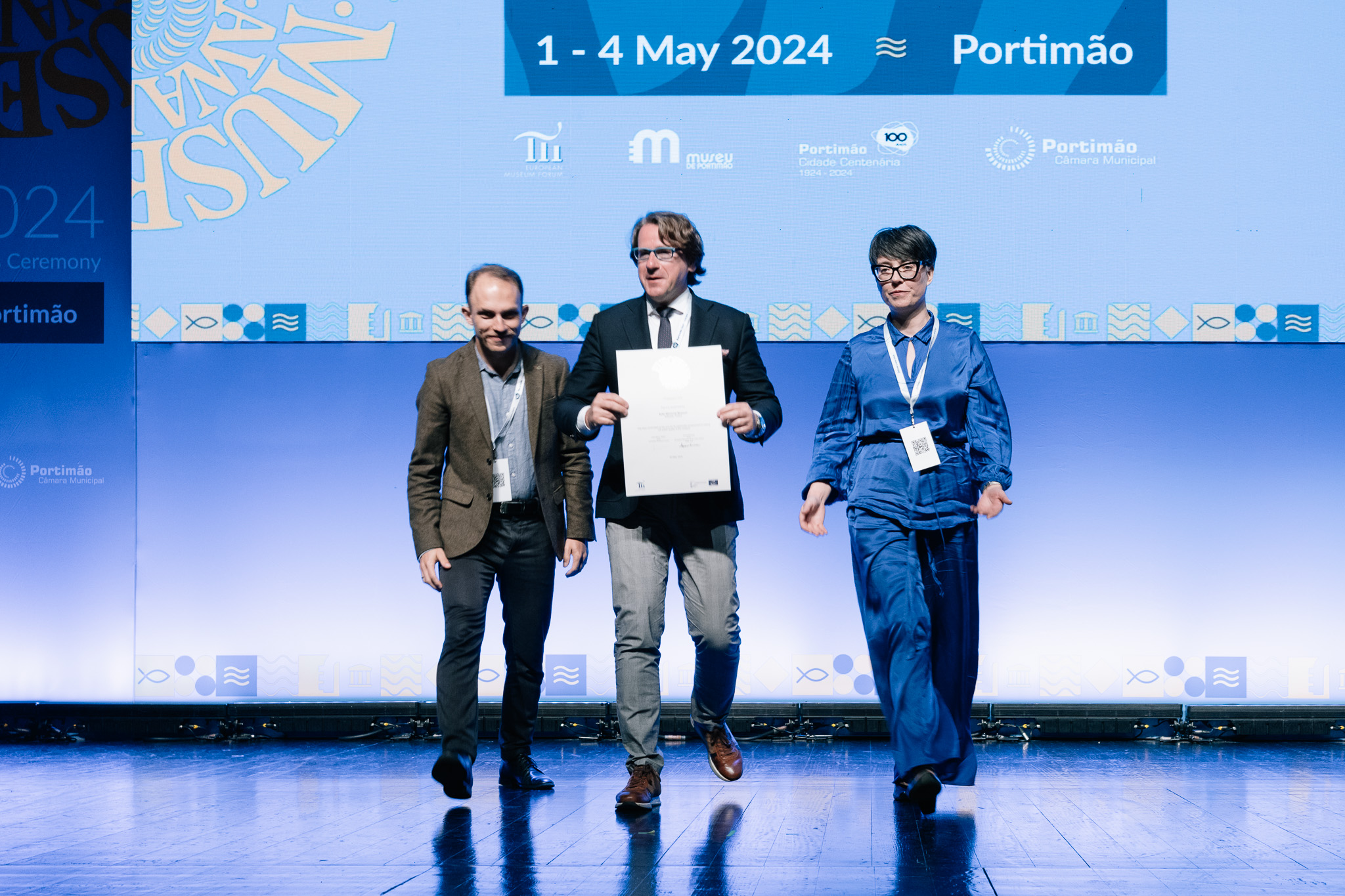
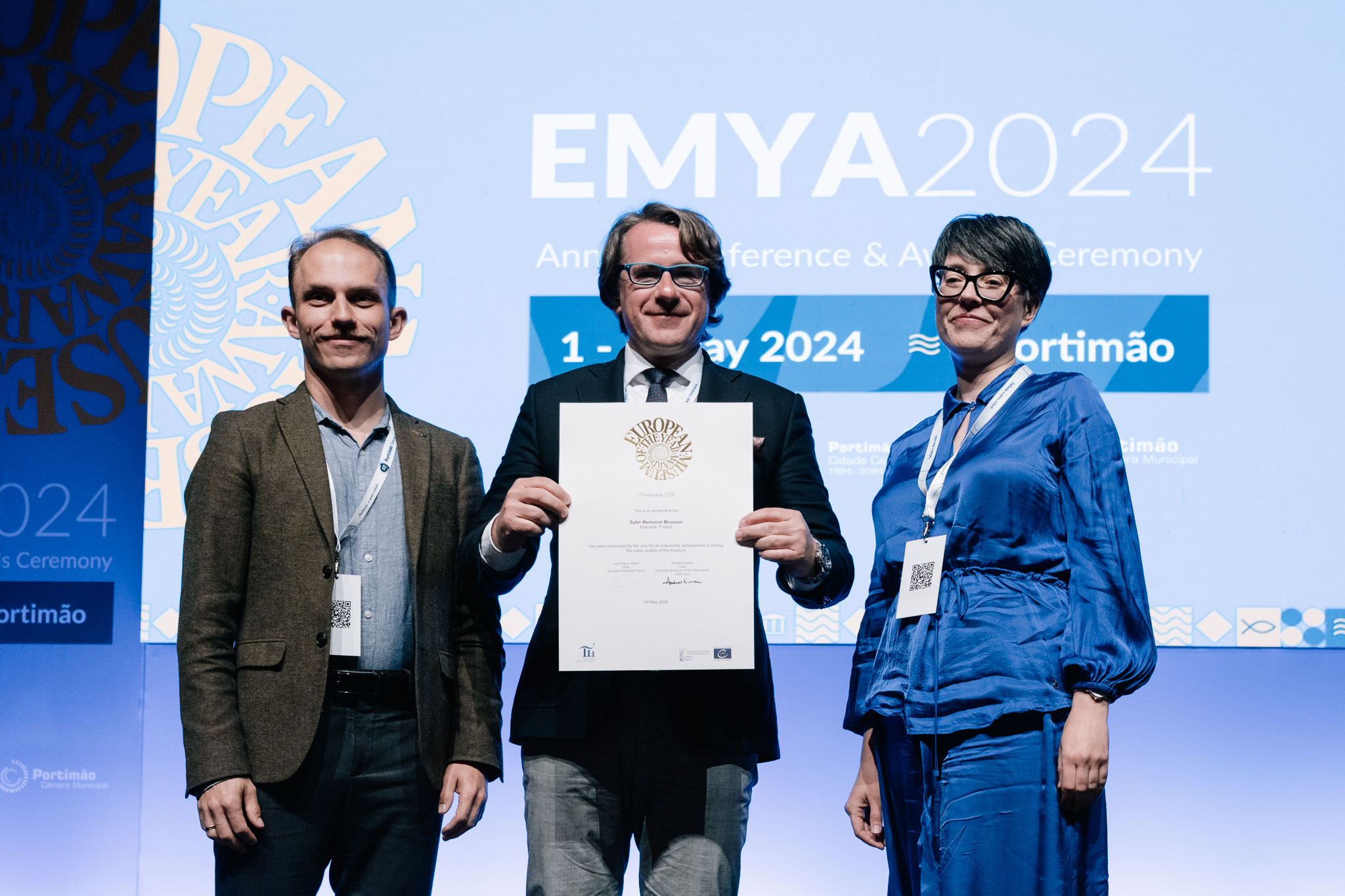
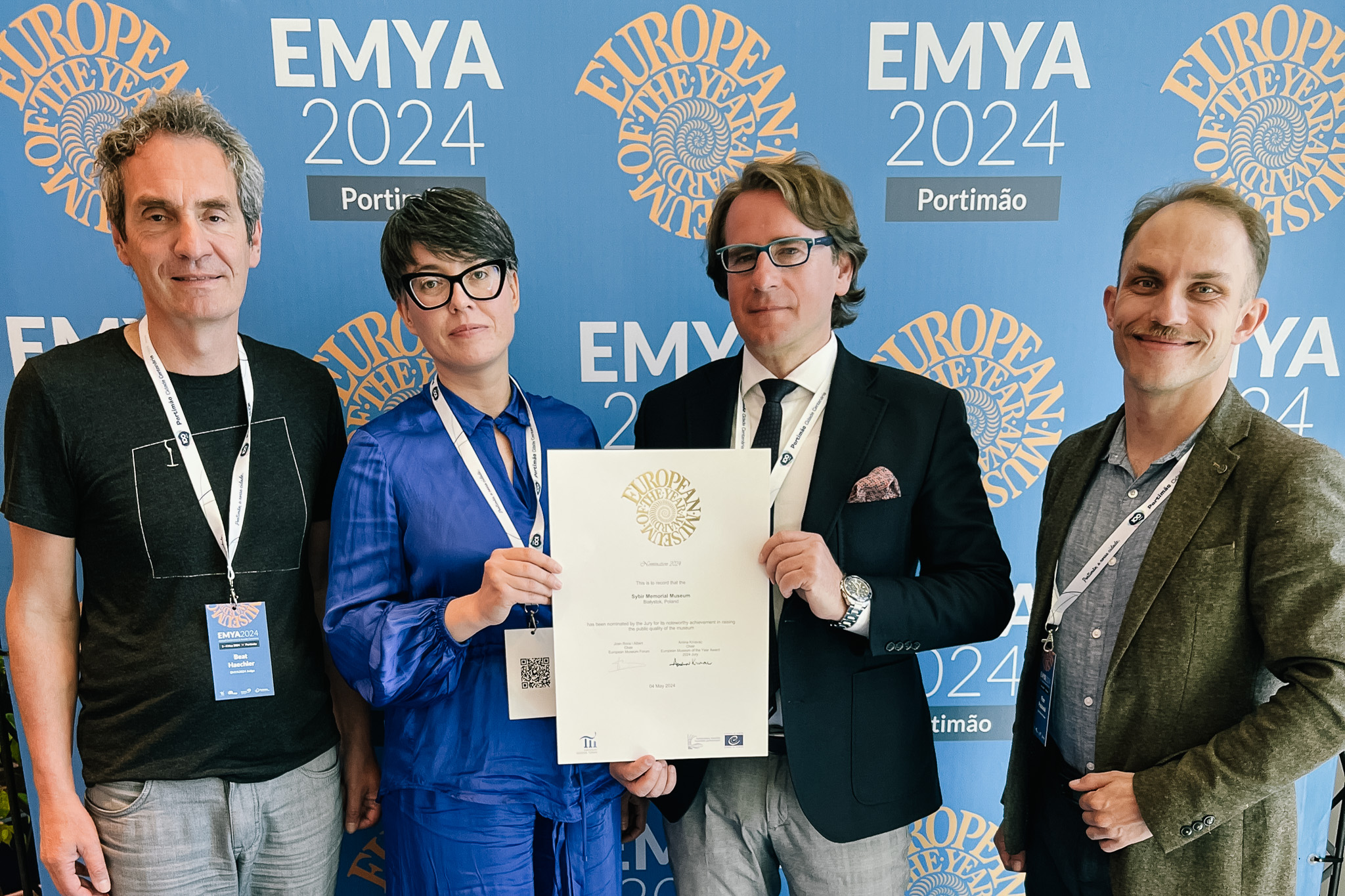
At noon, certificates of nomination for EMYA 2024 were presented. One by one, representatives of the nominated museums came onto the stage to receive their gold-embellished diplomas and pose for commemorative photographs.
Our workshop: What are our limits?
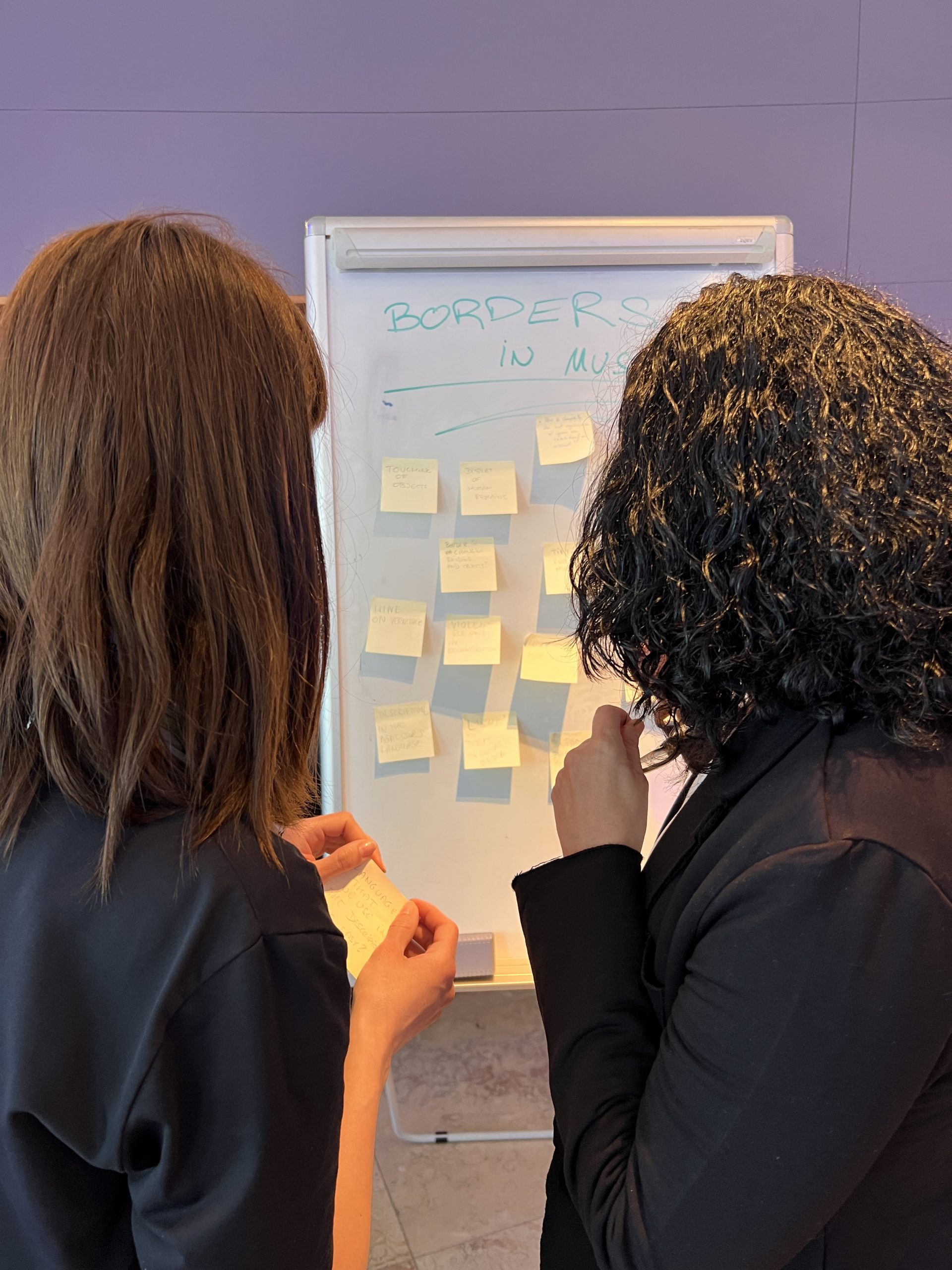
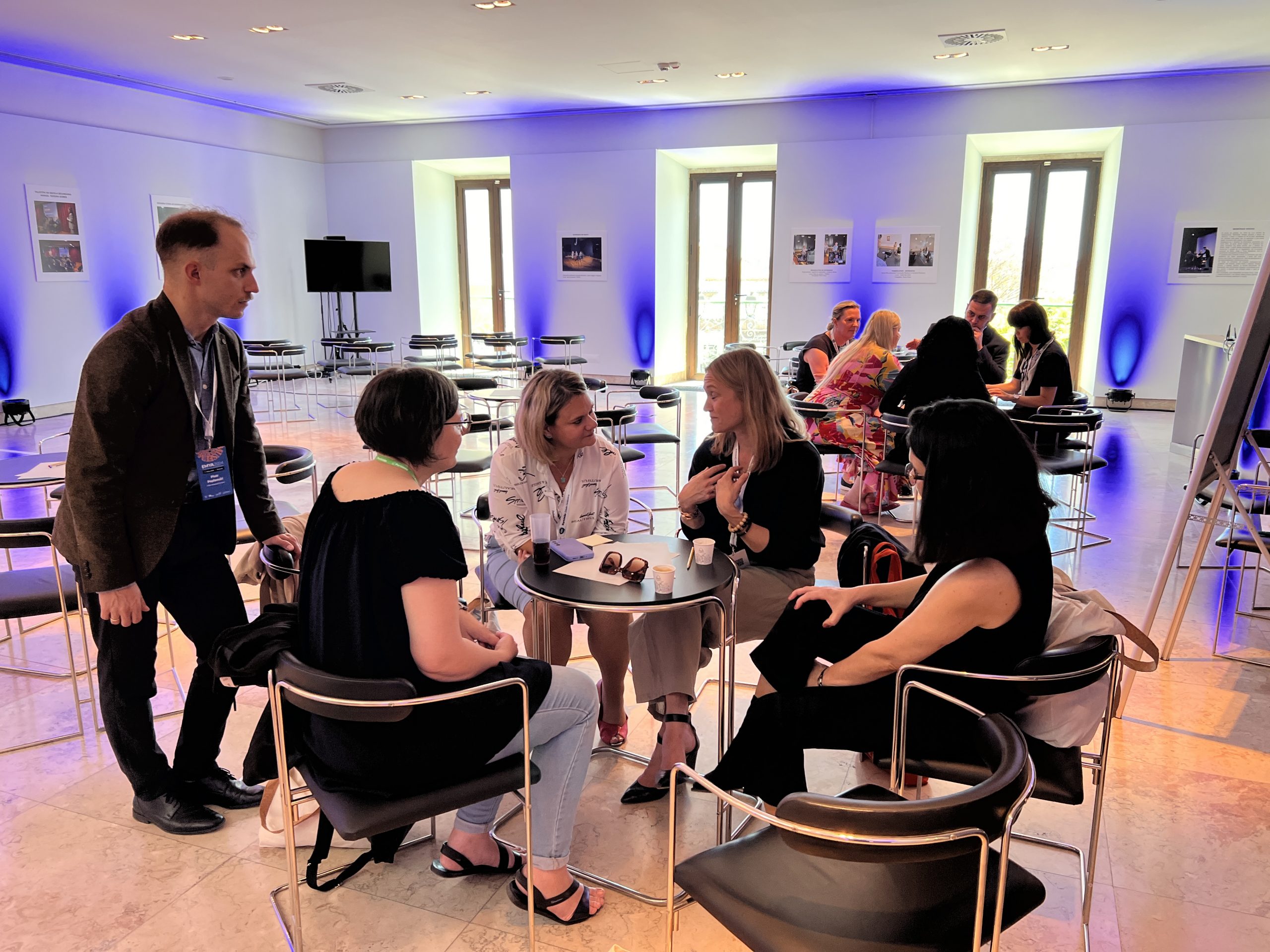
After this part of the programme, most participants of the now concluding conference chose to leave the theatre to enjoy the beautiful weather or rest before the evening awards gala. Some, however, took part in workshops offered, among others, by the Sybir Memorial Museum. The session led by Paulina Cylka and Piotr Popławski was titled “The Thin Line Between Popularisation and Popularity: How Can/Should Museums Talk About Difficult Topics?” Thanks to the engagement of participants, the meeting became a space for discussion about the boundaries that museums and museum professionals set for themselves and others: what is appropriate (in) a museum? What can we agree to in order to attract audiences, and what would we never do? Which forms of popularisation fall within our limits, and which cross them? What can provoke controversy, and should we be afraid of it?
After the workshop, we received many expressions of gratitude from participants for creating a space for discussion and exchange of ideas. At the same time, everyone agreed that the nature of museum work is universal across all latitudes. Regardless of country or type of institution, we face insufficient budgets, the need for one person to perform tasks across many areas, pressure to attract audiences, and political influences.
Spotlight once again on the Sybir Memorial Museum
Saturday evening brought the long-awaited awards ceremony. The gala, held at the TEMPO theatre, had a truly Oscar-like atmosphere. There was no red carpet or flashing cameras, but the carefully directed event kept the audience in suspense until the very last moments.
The evening began with speeches—from representatives of the European Museum Forum as well as the authorities of Portimão. The EMYA jury chair, Amina Krvavac, also took the floor.
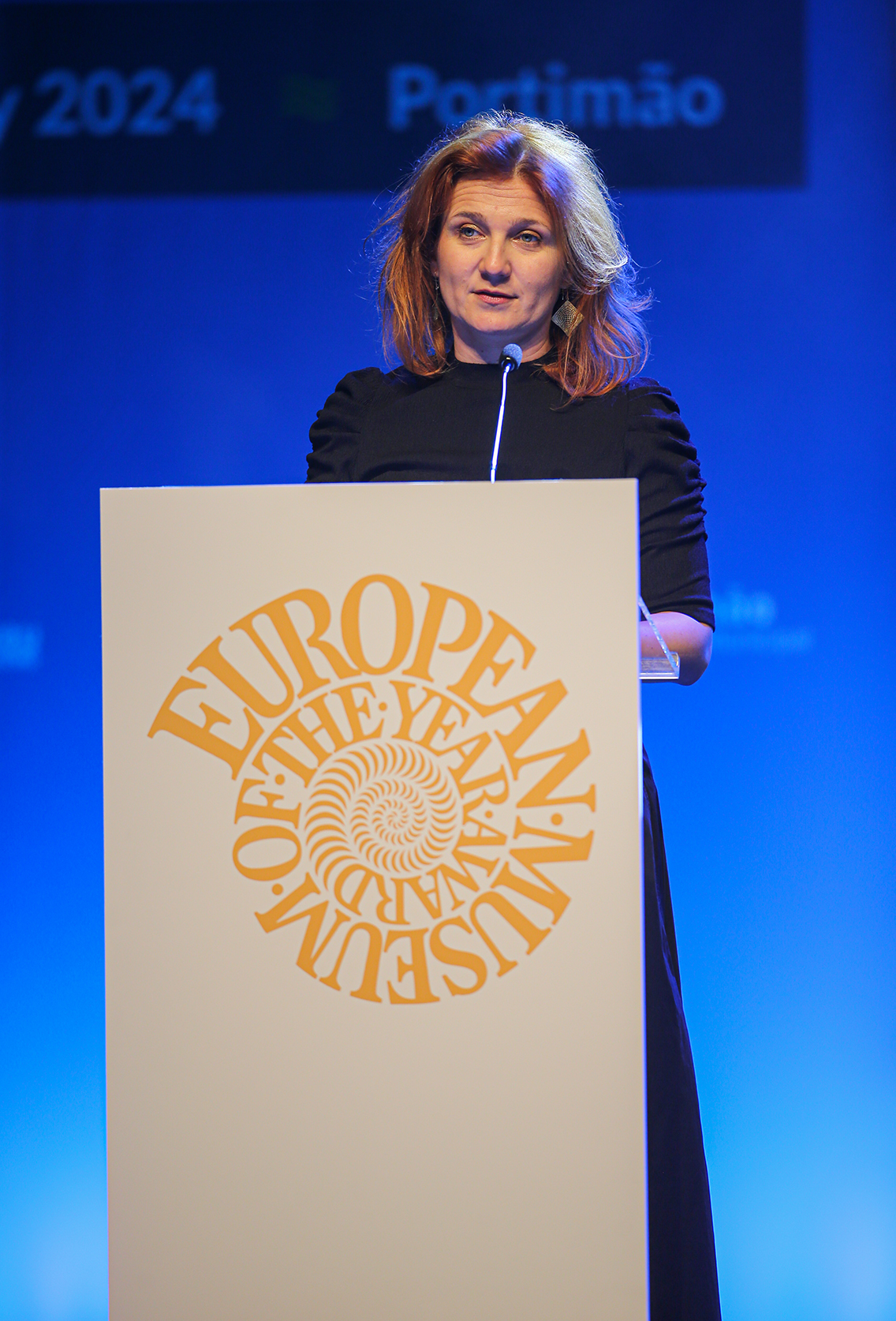
The presentation of the winners began with a renewed introduction of the Sybir Memorial Museum, this time by Luz Martínez Seijo, a member of the Committee on Culture, Science, Education and Media of the Council of Europe.

“It is a privilege to be part of the first European institution safeguarding human rights and human dignity,” she began. “Today, I share with you my concern for these fundamental values, as once again we are witnessing open wars in the world. The world does not learn, but we must not give up. And here lies the great role of museums, because of the memory they preserve.”
“Today, I am proud to present the Sybir Memorial Museum in Białystok. I warmly congratulate Professor Wojciech Śleszyński and his team. This is a remarkable museum that presents stories, memories, and values so close to the Council of Europe. This is why the Committee on Culture selected it as this year’s winner. It offers a powerful image of history and reconciliation, one that resonates with younger generations and helps them understand their history so that it may never be repeated in the future,” she added.
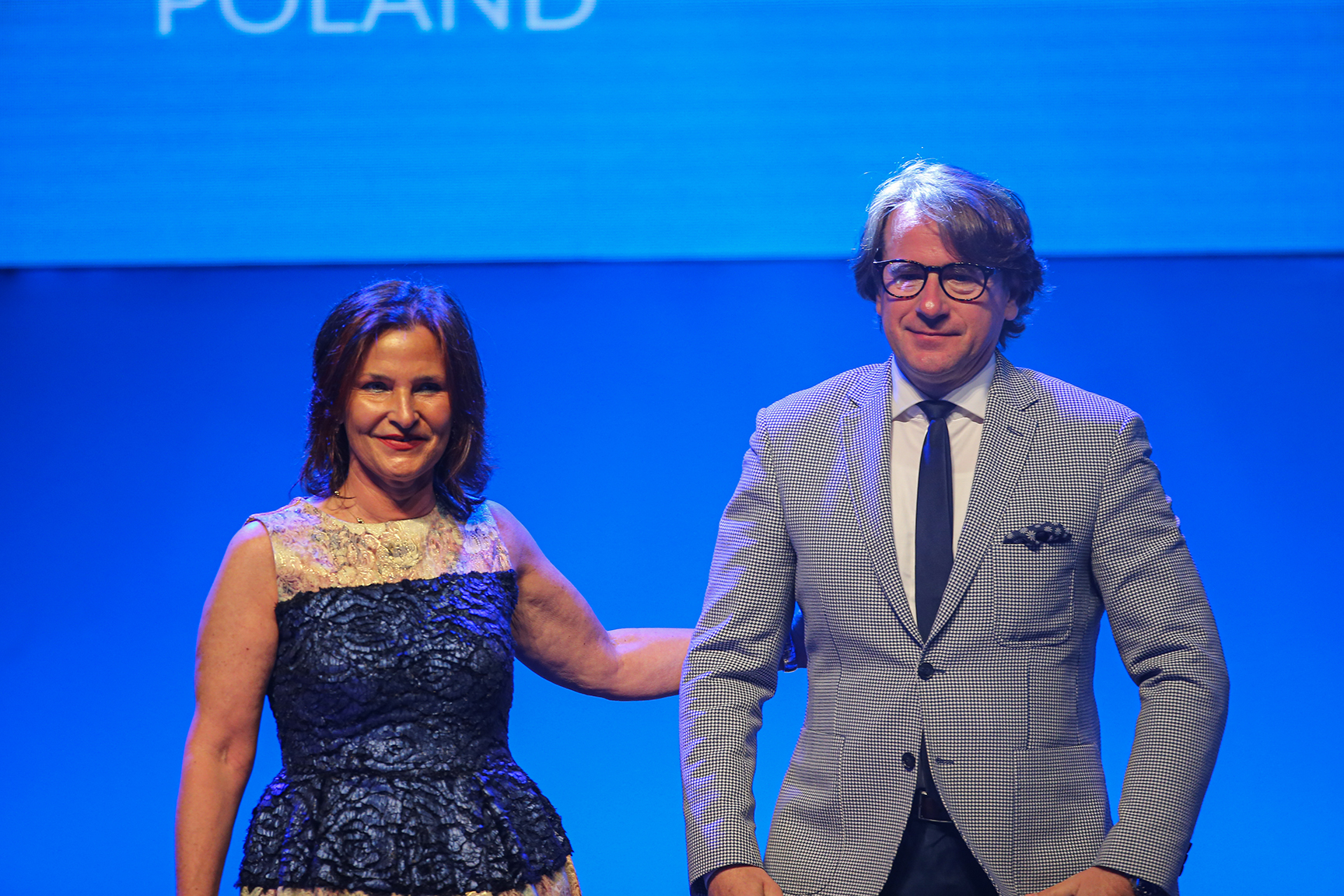
Professor Wojciech Śleszyński, Director of the Sybir Memorial Museum, once again took the stage.
“It is an honour and a distinction for our entire team. I would like to express my gratitude to every person who has contributed to our museum,” he said.
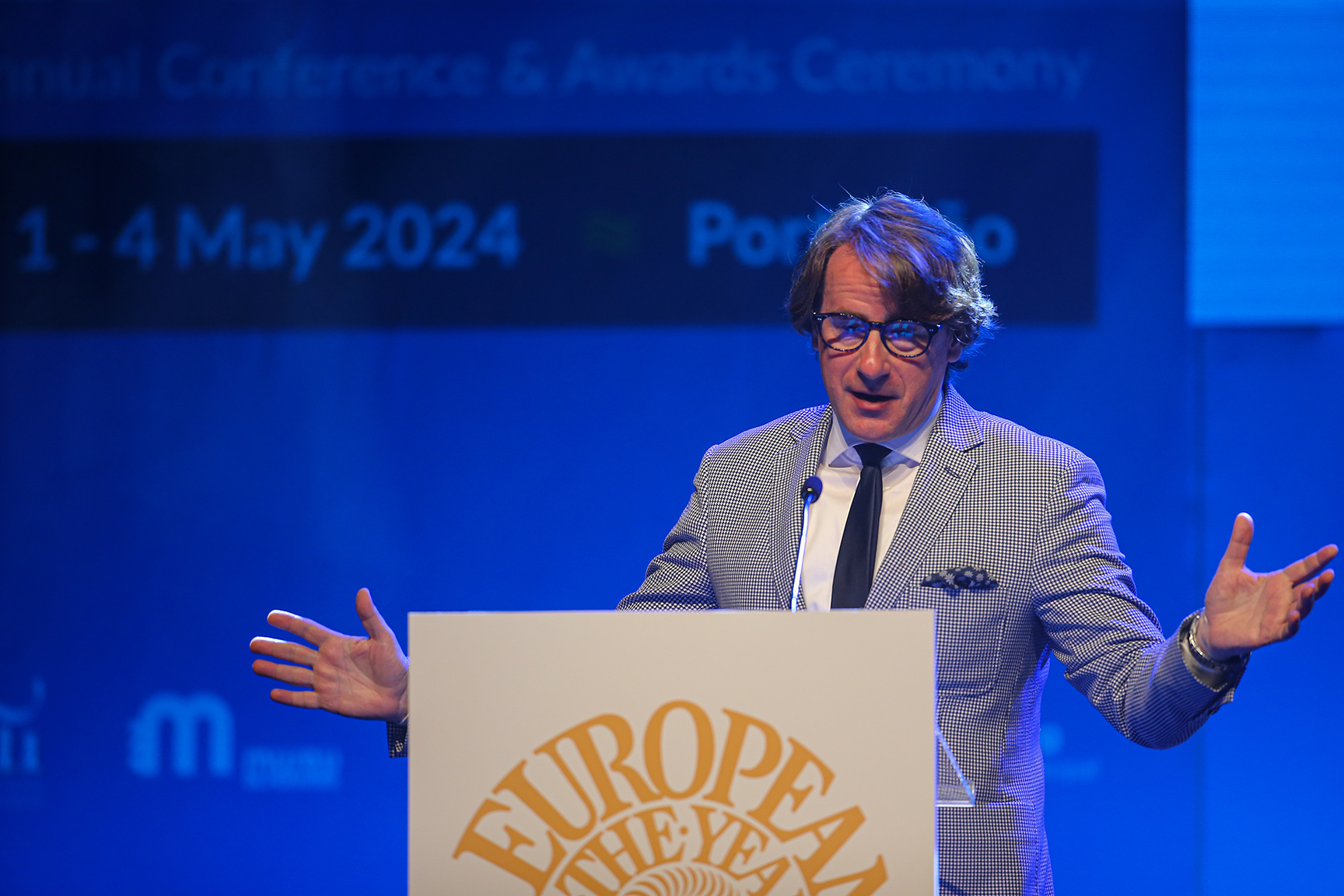
“Although the Sybir Memorial Museum is a Polish institution, it tells the story of all of Eastern Europe, shaped by the criminal communist regime. This is our shared heritage, which we must not forget,” he emphasised.
Tension is rising…
Finally, the moment came to reveal the previously unknown winners of EMYA 2024.
Six commendations were awarded first. They went to ZOOM Kindermuseum in Vienna, KMSKA (the Royal Museum of Fine Arts Antwerp), the Memorial of the 1902 Catastrophe – Frank A. Perret Museum in Martinique, the National Museum of Art, Architecture and Design in Oslo (Nasjonalmuseet), the Museum of Making in Derby, and the Museum and Memorial Site in Sobibór (a branch of the State Museum at Majdanek).
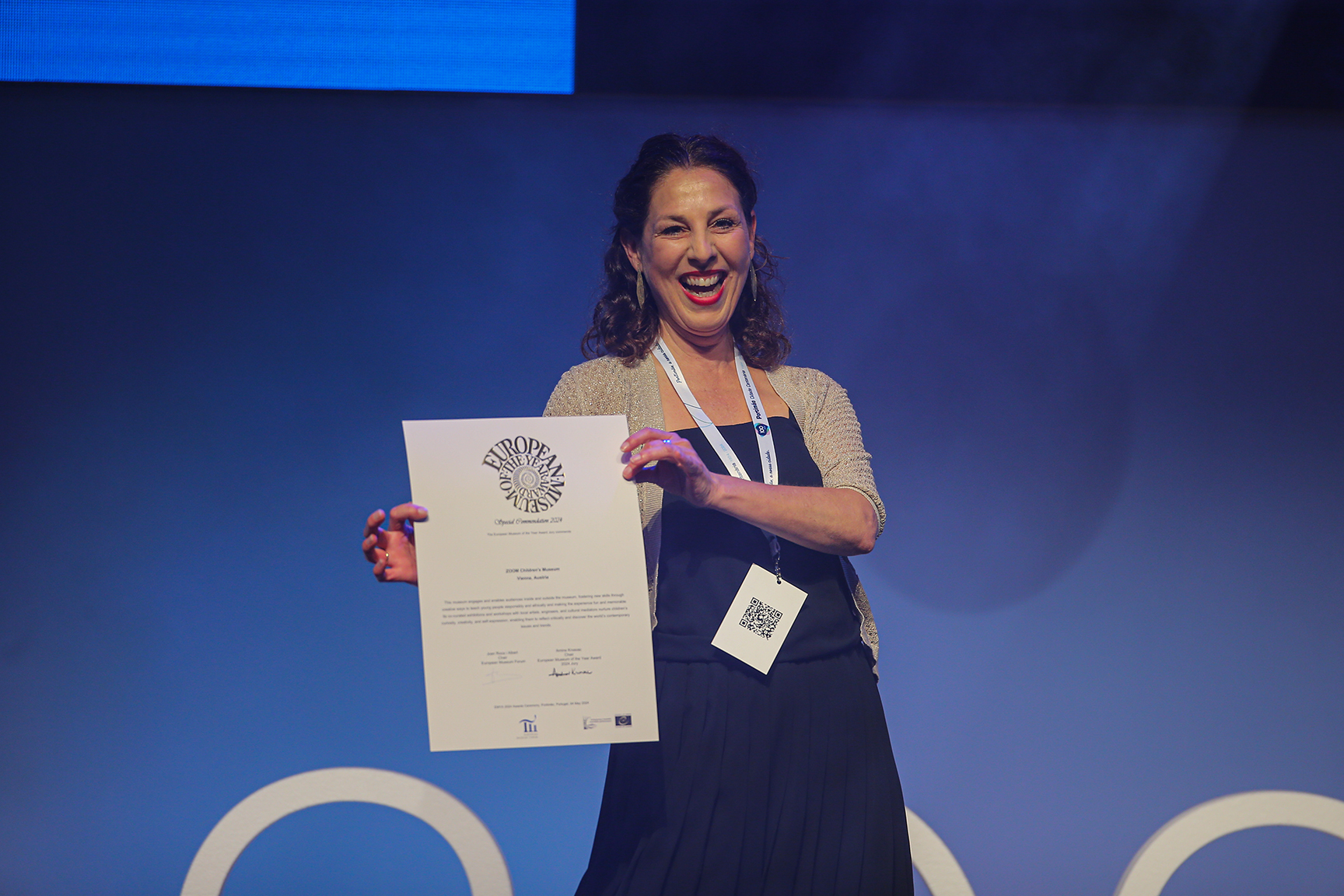
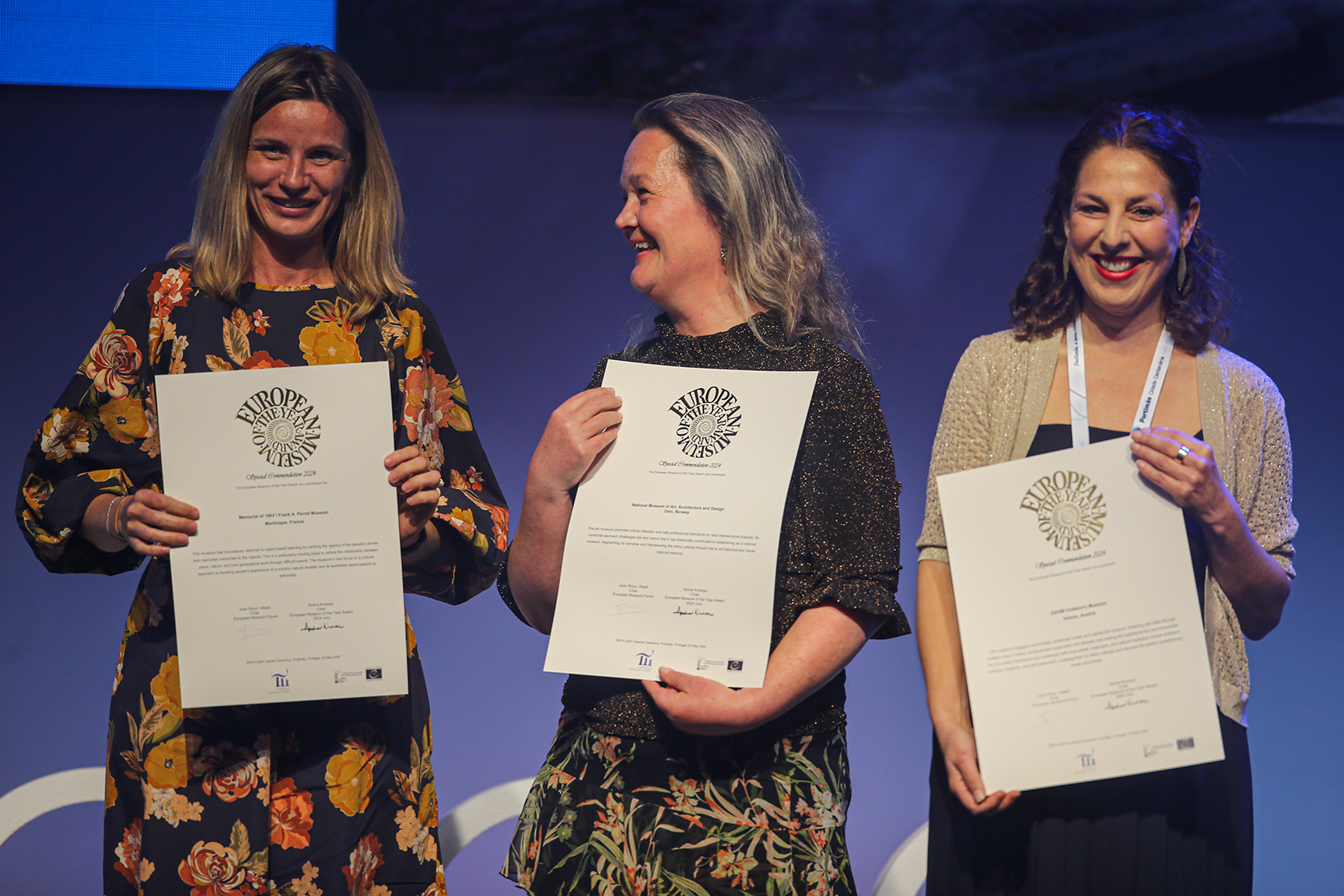
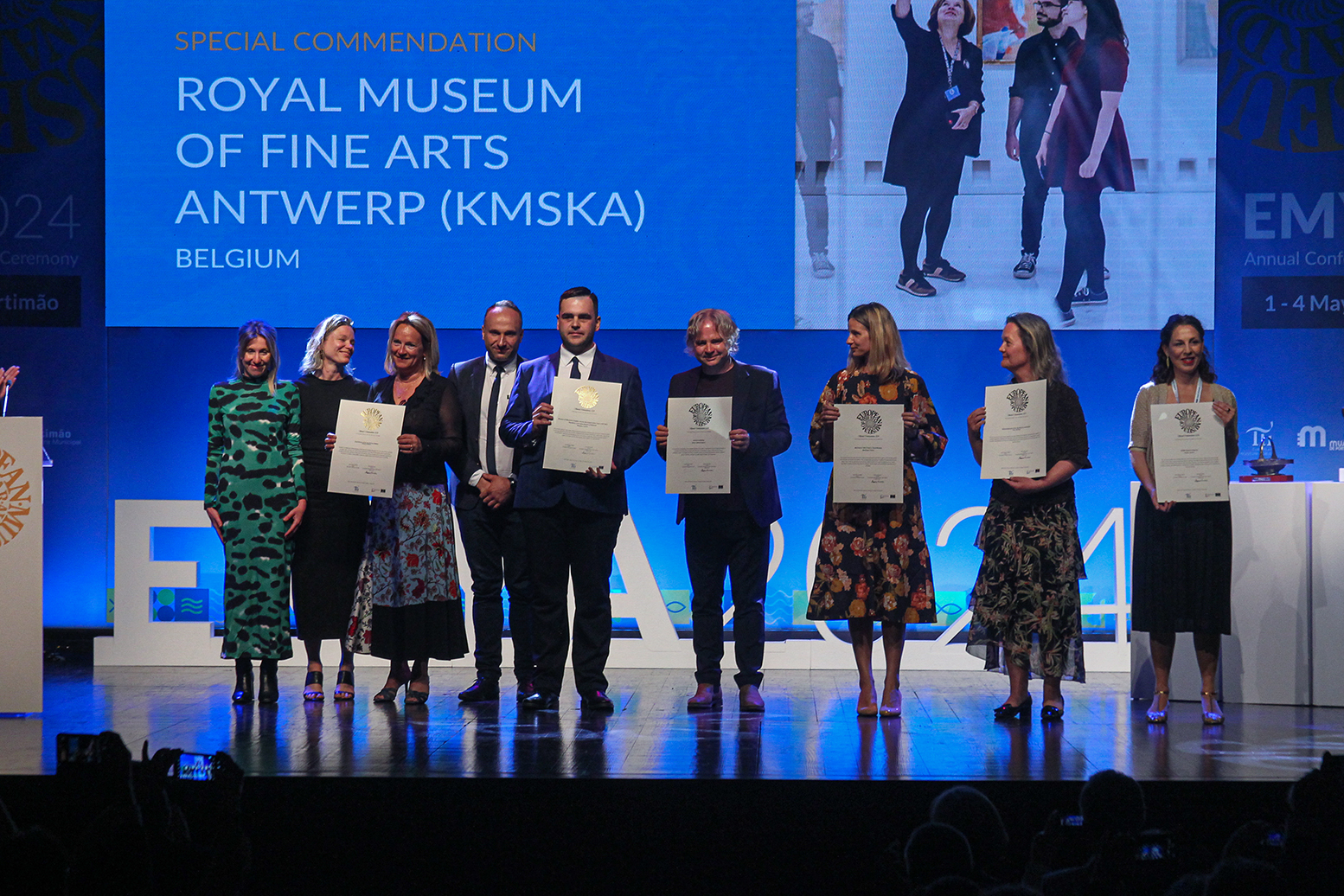
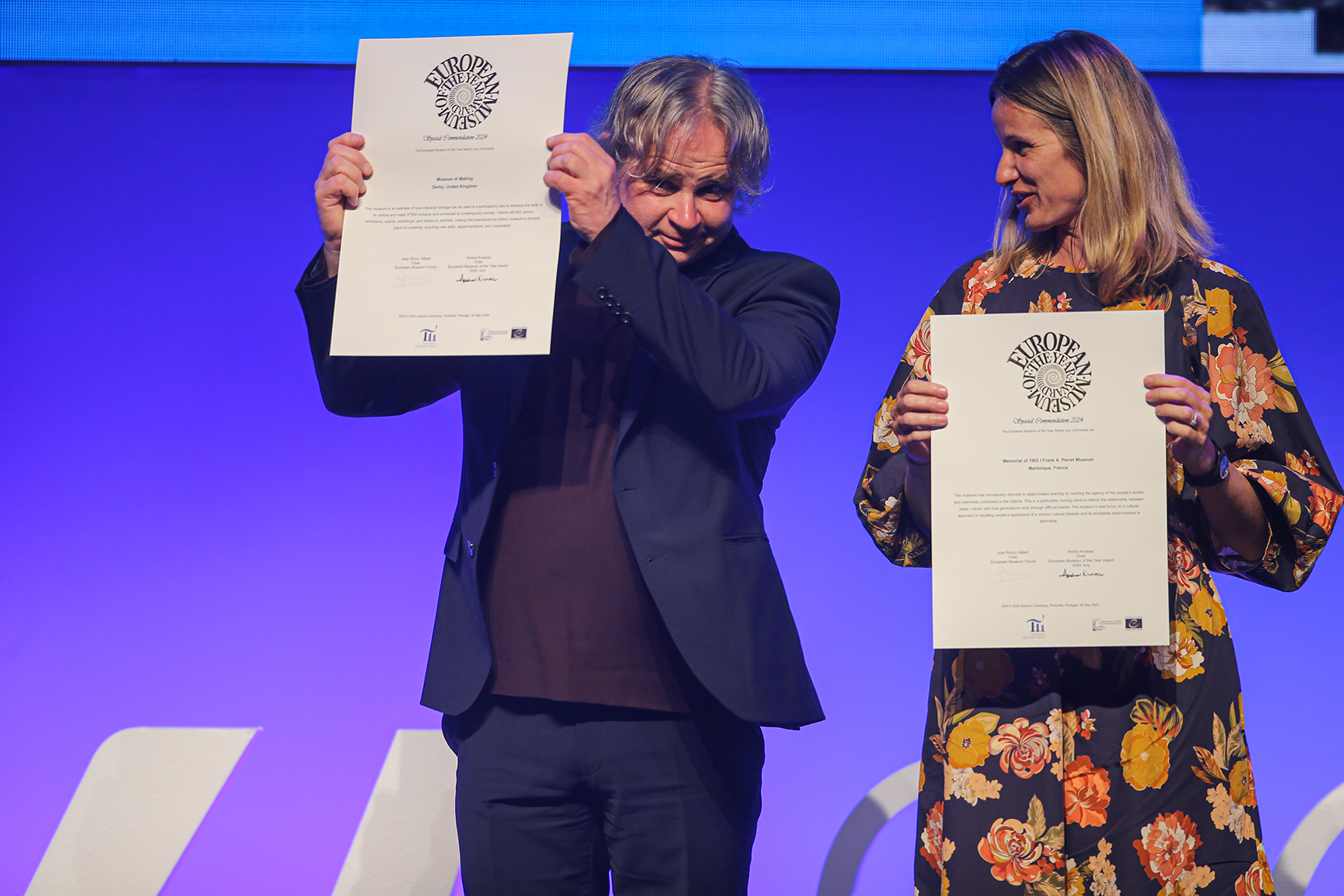
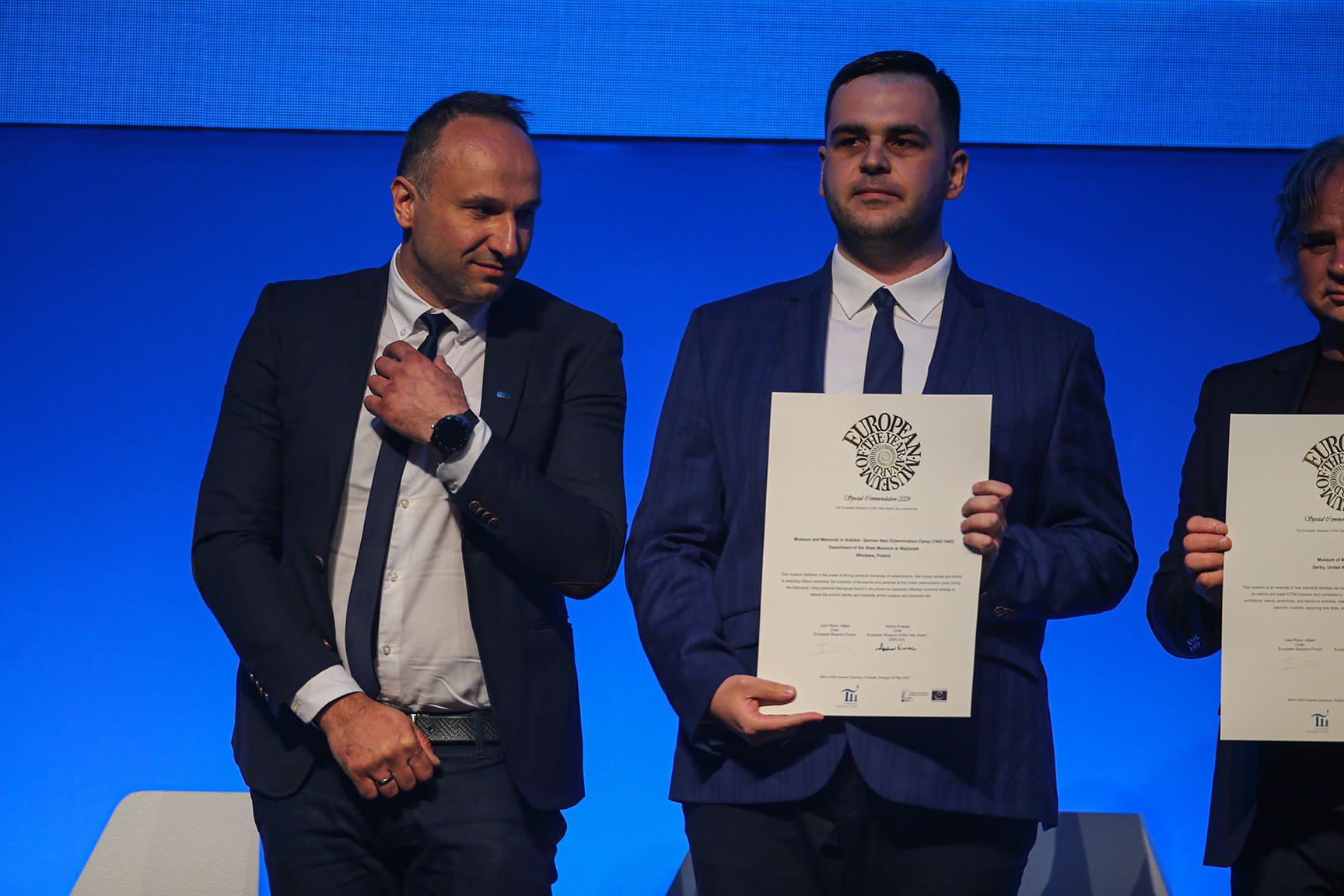
In the justification for the Sobibór memorial, the jury emphasised the efforts of museum professionals to restore dignity—and, as far as possible, identity—to the victims of this Nazi extermination camp.
After a musical interlude, the accompanying EMYA 2024 awards, funded by partner organisations of the European Museum Forum, were presented.
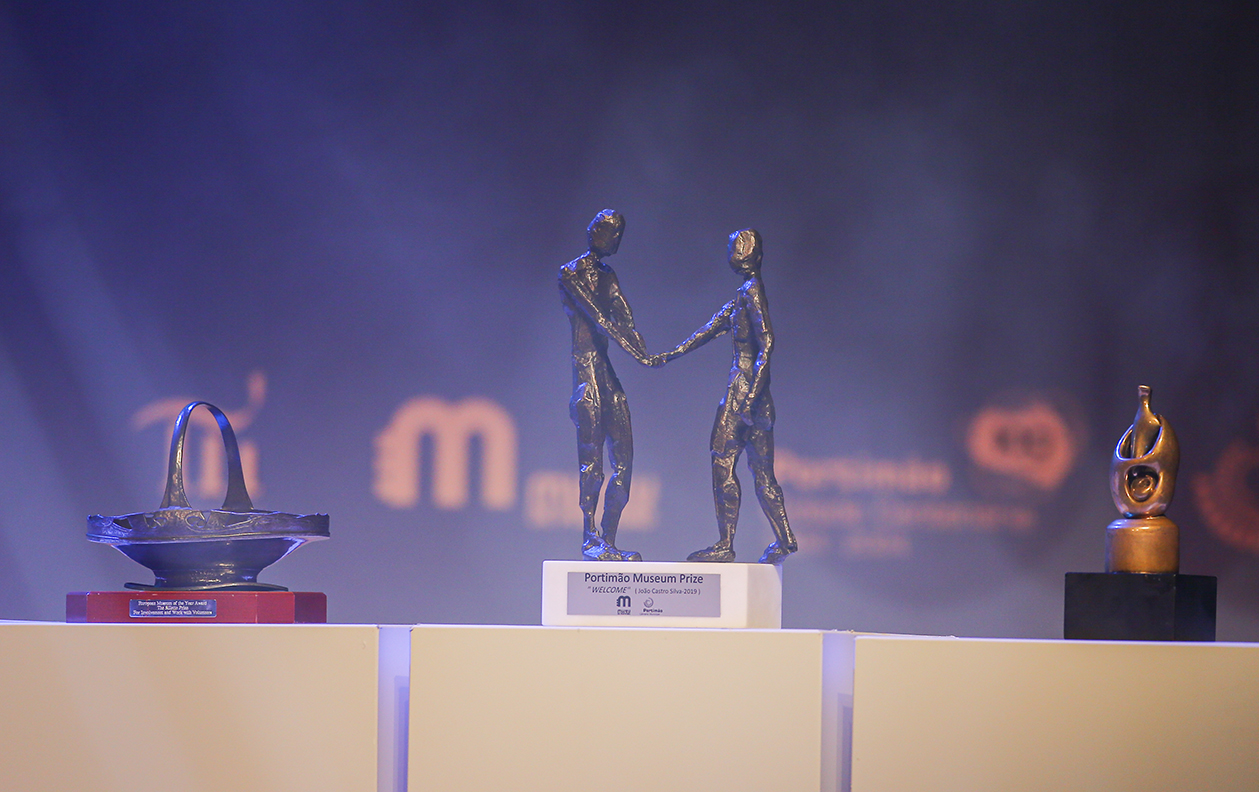
Who cares for the environment, who focuses on visitors
The Meyvaert Sustainability Award went to the Museum of the Home in London. The institution has transformed from a traditional presentation of everyday life in period interiors into a place for discussion about the idea of home, daily habits, housing, and homelessness. Its staff emphasised how important social and educational activities—as well as cooperation with the local community—have become, especially after the pandemic. One manifestation of this was opening the museum garden to everyone as a shared space for activities.
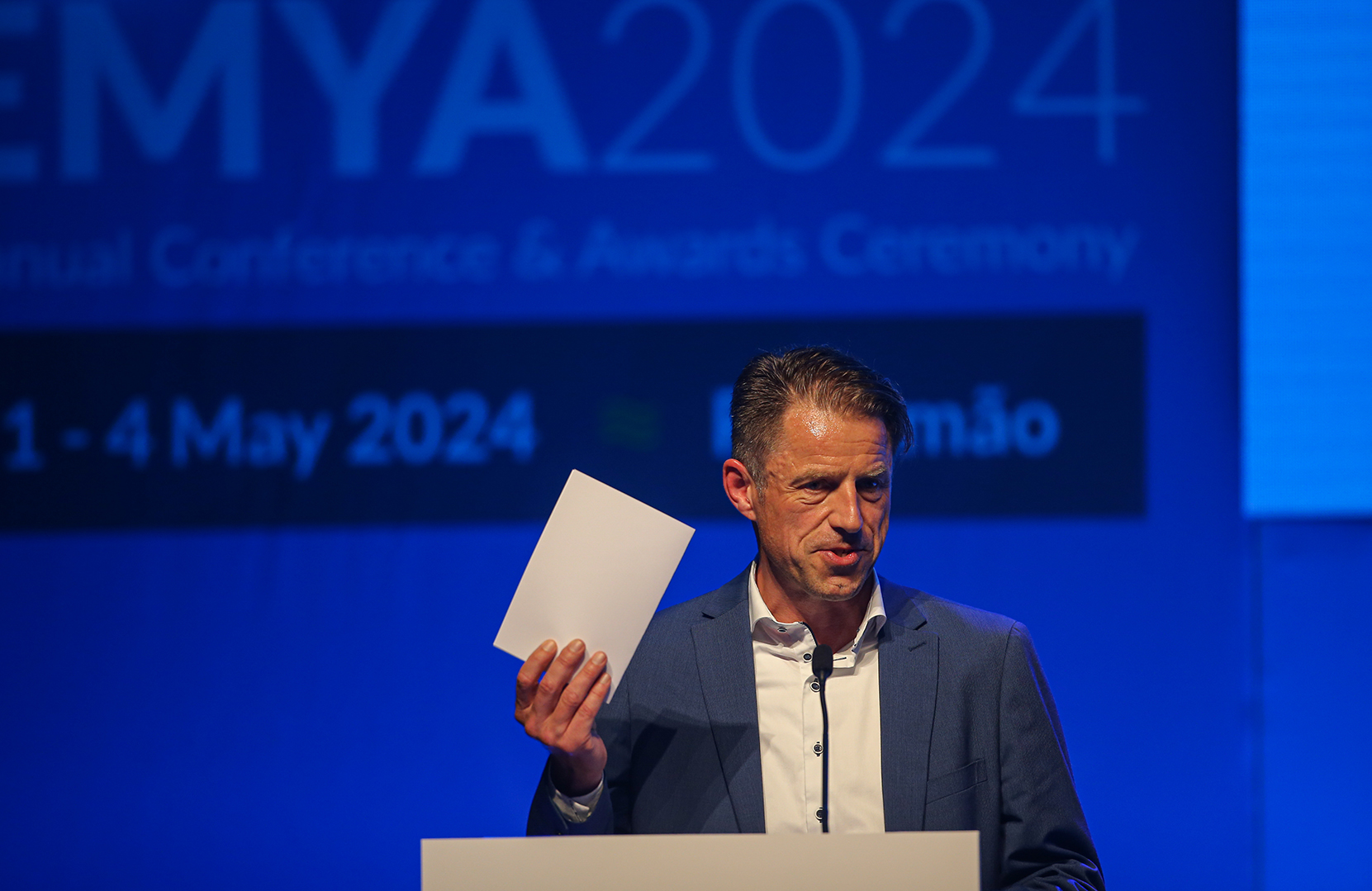
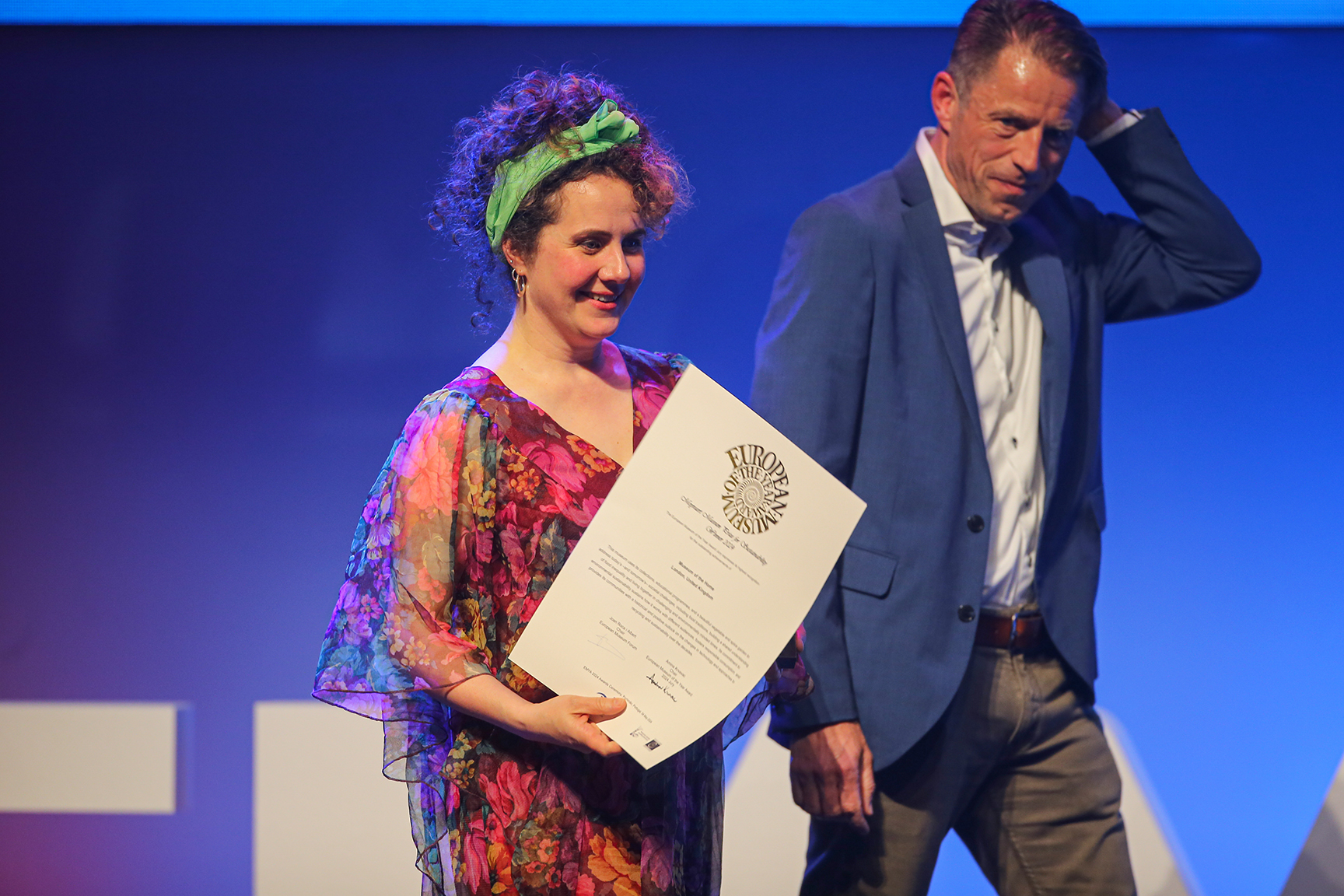
The Portimão Museum Award for Hospitality, Inclusion and Belonging went to the Salt Museum in Messolonghi (Greece). Located in a saltworks operating for centuries, in a lagoon on the Ionian Sea coast, it is rich in both natural and cultural heritage. The museum’s co-founder, while receiving the award in the form of a sculpture depicting greeting figures, struggled to hold back his emotions.
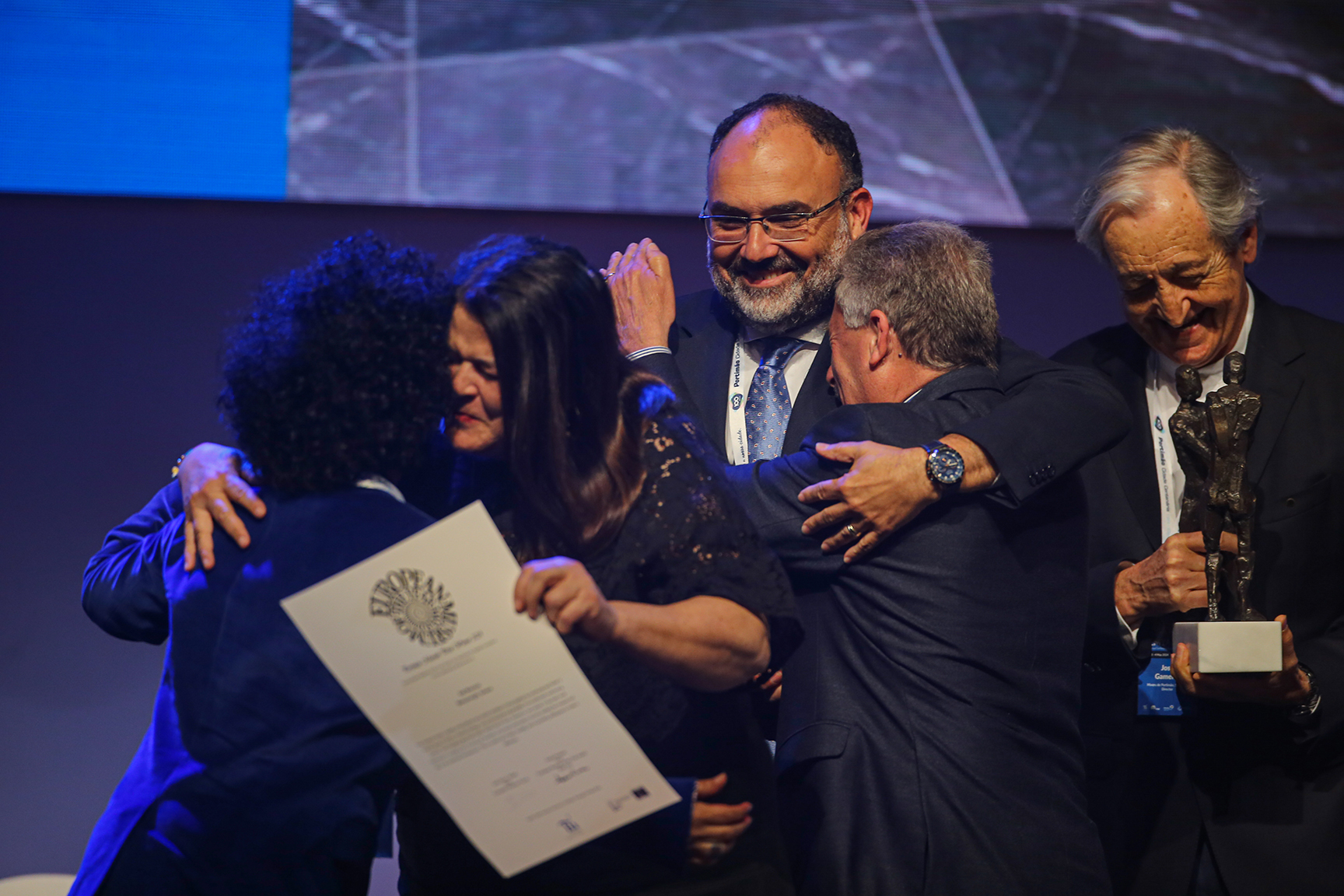
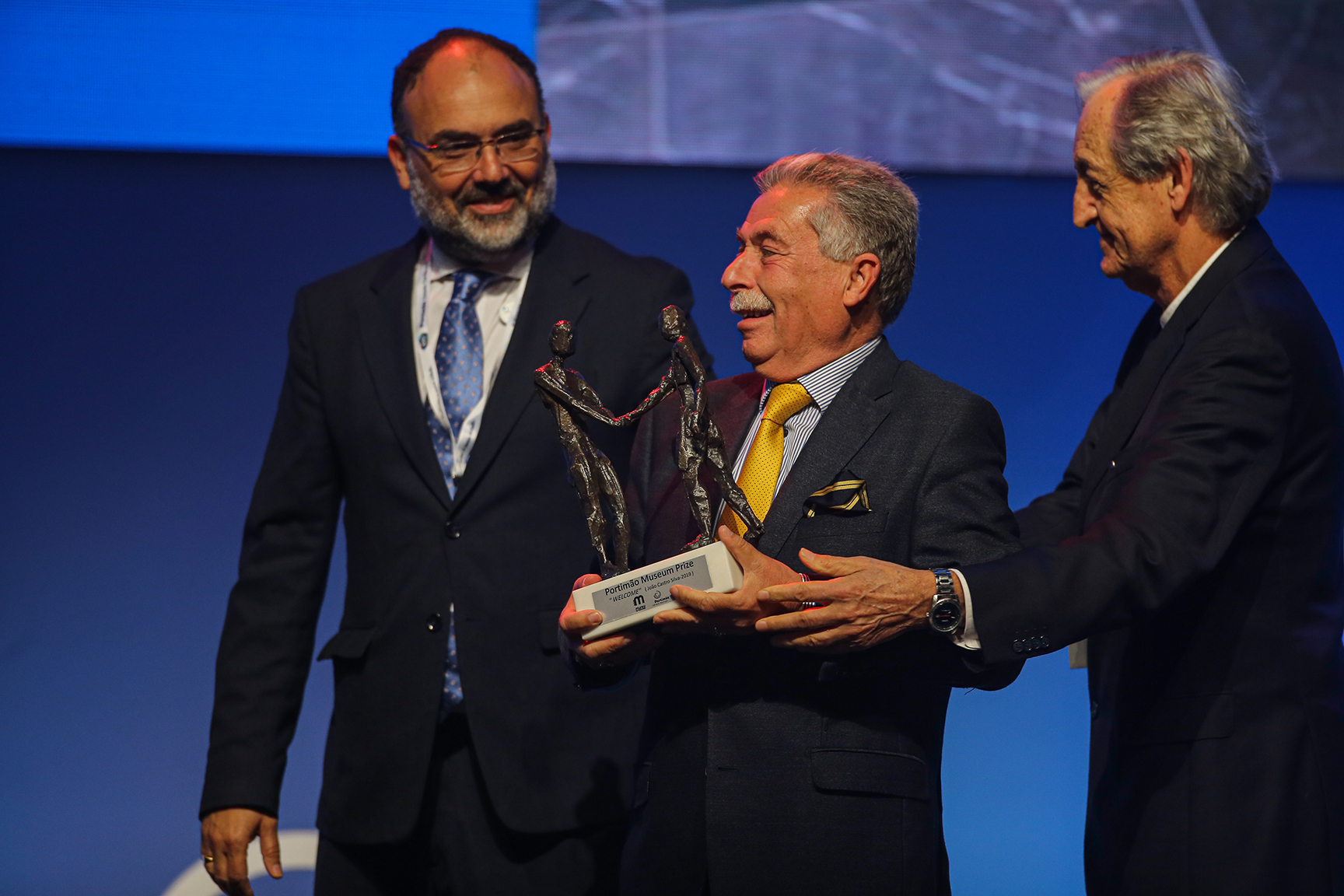

Out of breath, Nikos Kordosis was replaced at the microphone by his wife: “This is his life’s work. The museum was created out of his love for the place, the landscape, the culture, and salt. He put all his money into it, expecting nothing in return. He loves it more than me!” she joked, amusing the audience. The jury emphasised not only the museum’s extraordinary hospitality and appreciation of visitors, but also its activities supporting the local community and natural environment.
Not just visitors, but friends
The Silletto Prize for Community Participation and Engagement went to the Kalamaja Museum in Tallinn. This is a small institution focused on preserving the cultural heritage of the Kalamaja district. From the very beginning, it has been co-created with the local community. Sociological and ethnographic research accompanied its development, and residents themselves decided on the shape of the permanent exhibition and the institution’s visual identity. They also initiate temporary exhibitions, workshops, and thematic walks around the district. The curators follow the needs of the residents, thanks to which the museum has become a centre of the local community.
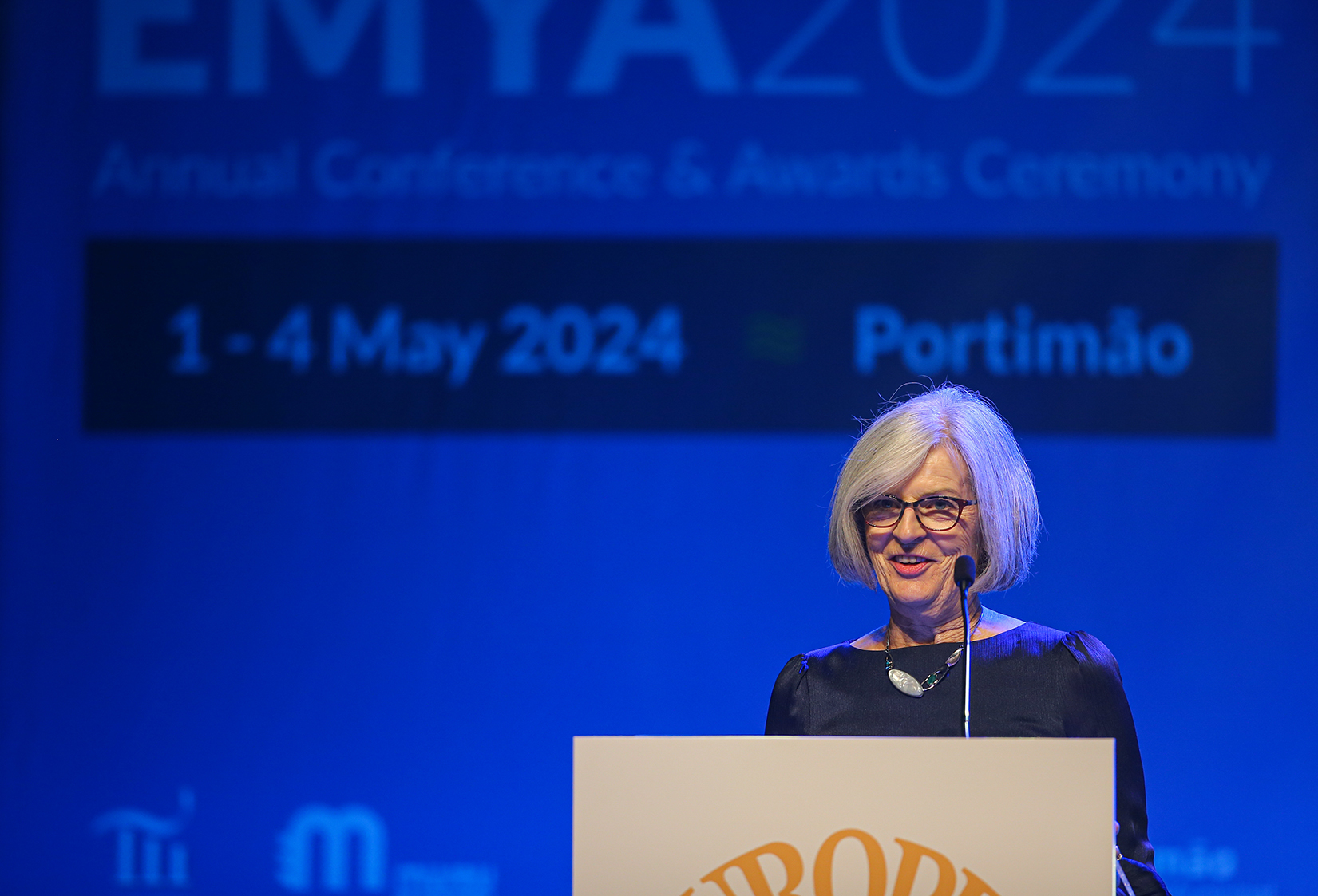
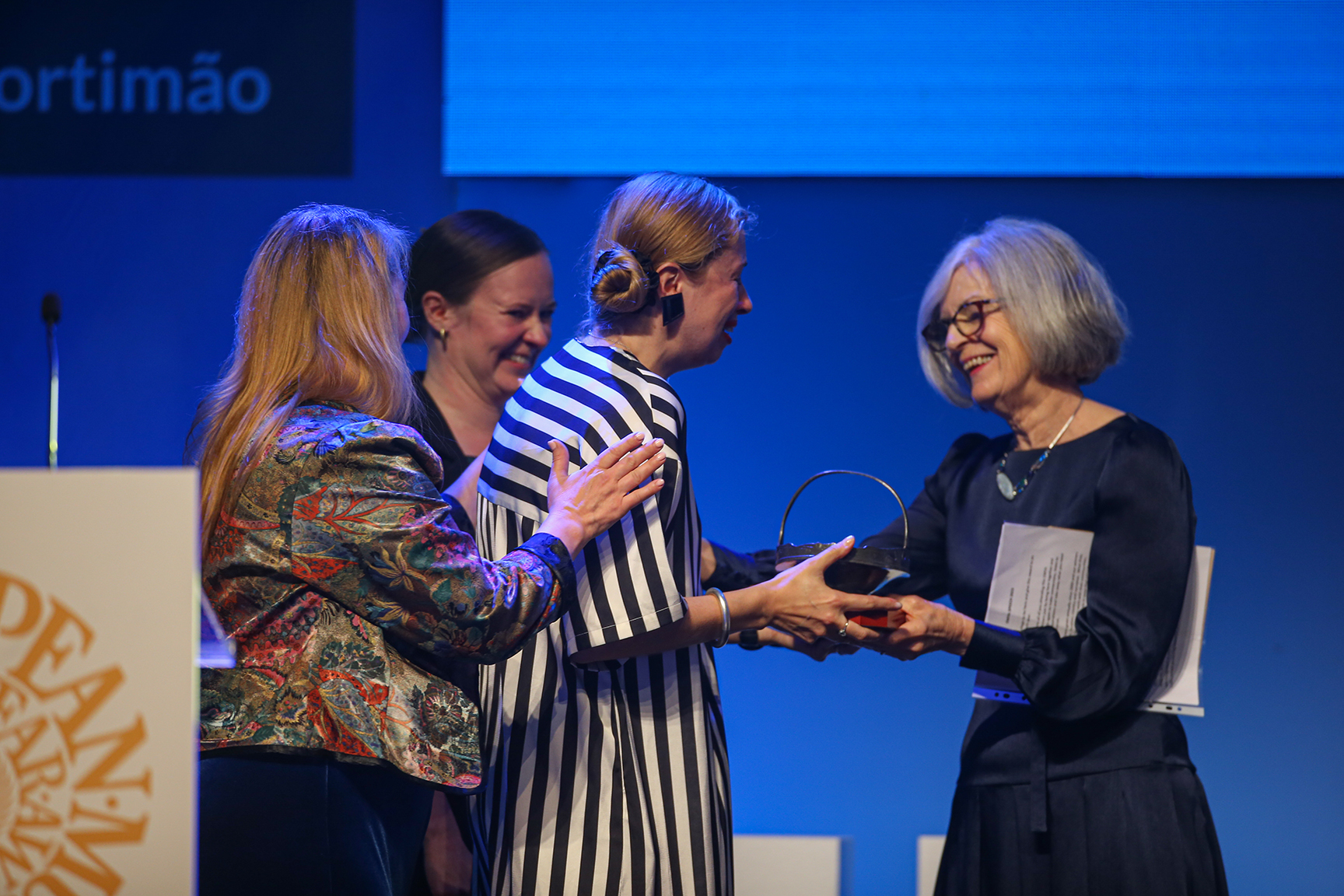
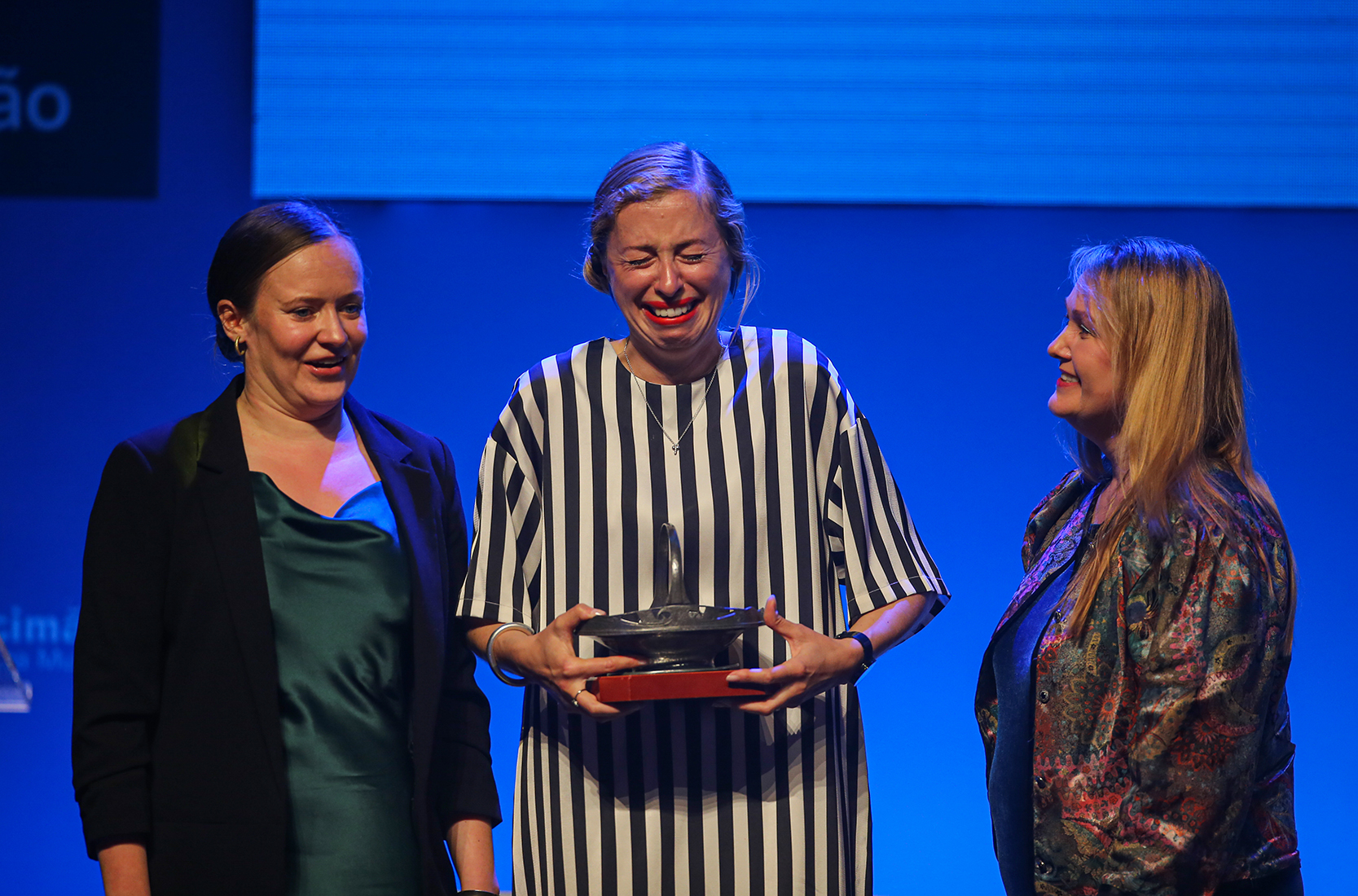
“We are grateful to the people of Kalamaja for sharing their stories with us—it is an honour,” said one of the three team members. “The Kalamaja Museum was created as a home. For us, it has never been just a workplace or a profession, but a way of life—a choice to live with the passion we have. I assure you that the Kalamaja Museum is not a finished work; every day we begin anew.”
Heroes from museums
The final special award is named after the founder of the European Museum Forum and the initiator of EMYA, Kenneth Hudson. It is awarded—by agreement with the jury—by the Board of Trustees of the European Museum Forum. It may honour individuals, museums (including those not nominated for EMYA), or institutions. In 2024, the Kenneth Hudson Award for Institutional Courage and Professional Integrity was awarded to Ihor Poshyvailo, a Ukrainian ethnologist, museologist, curator, and cultural manager, and Director of the National Museum of the Revolution of Dignity in Kyiv (the Maidan Museum).

In February 2022, when Russia launched its attack on Ukraine, he took on the coordination of efforts to protect Ukrainian heritage from destruction. “He became the driving force behind numerous initiatives to safeguard museums and cultural heritage sites in Ukraine,” emphasised Joan Roca i Albert, head of the European Museum Forum.
“He worked tirelessly to document, digitise, and secure valuable objects and sites affected by the armed conflict, and to promote the role of cultural heritage both in resistance and in reconciliation. His determination highlights the strength of resistance and hope that will inspire future generations,” the Catalan museologist concluded, his voice breaking.
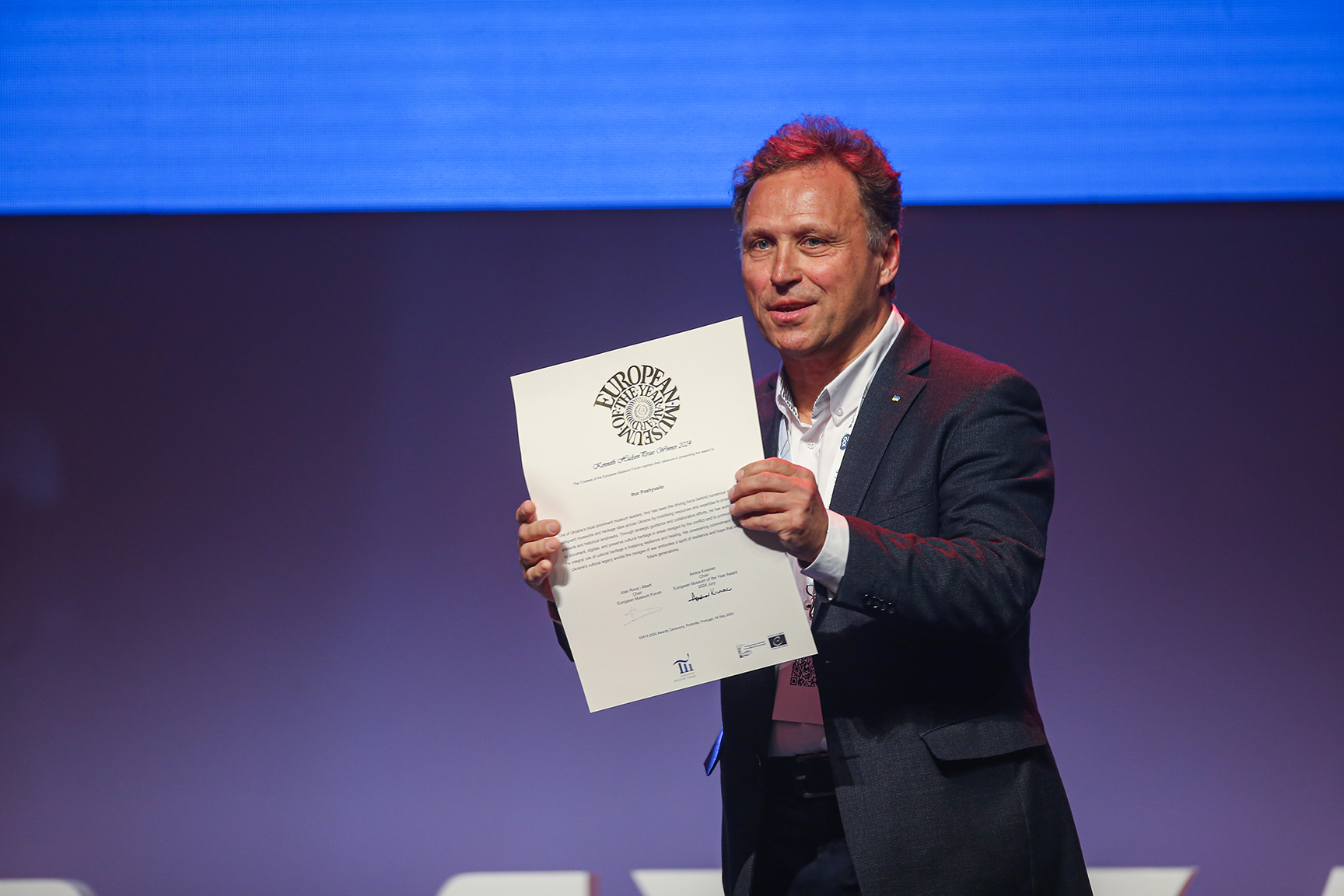
In his speech, Poshyvailo stressed that the award was not for him, but for the thousands of people risking their lives to protect Ukrainian heritage. “International support for Ukraine is the greatest reward for all those involved in protecting and promoting our heritage, which is part of Europe,” he said. “We understand that this war is not only about territory or political ambitions, but also about identity and heritage. It is a war between autocracy and democracy.”
“I must also mention colleagues who lost their lives while saving museum collections. One director and her deputy were killed in Russian shelling while preparing exhibits for evacuation.”

And the EMYA goes to…
After this deeply moving part of the gala, emotions reached their peak. Amina Krvavac, chair of the jury, took the stage to announce the winner of the European Museum of the Year Award 2024.
“The awareness of the value and potential of culture in shaping civic attitudes, strengthening political resilience, and building responses to contemporary challenges is growing, and the public value of museums and their contribution to society is increasingly recognised,” she emphasised.
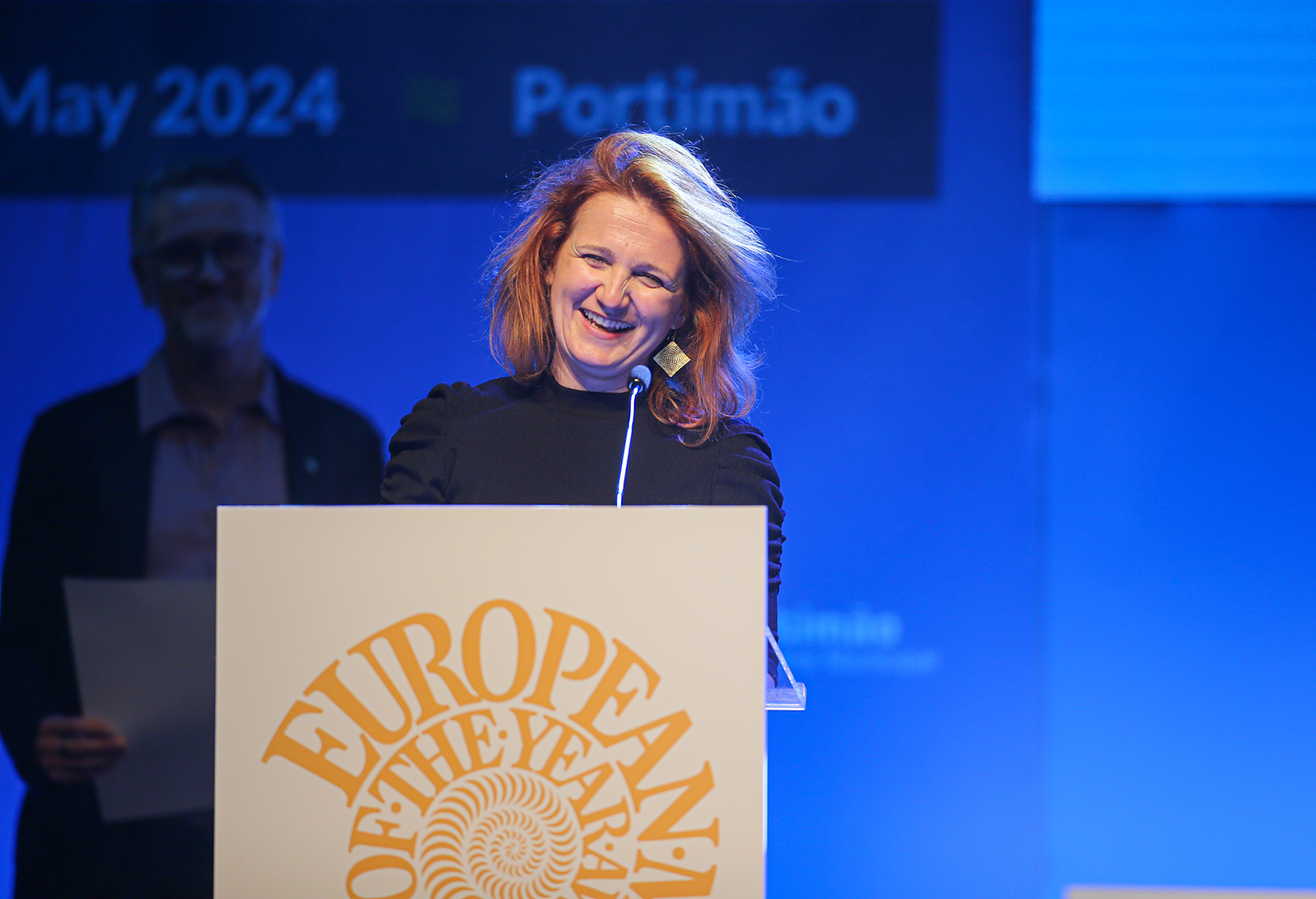
increasingly recognised,” she emphasised. “This year’s winner is a museum distinguished by enabling ethical participation and inclusive conservation practices. It has demonstrated excellence through its open, participatory, and transparent integration process, creating new opportunities for local communities and wider audiences to connect the past and the present,” she read from the jury’s statement. “The museum effectively enables citizens to understand cultural dialogue and provides professional leadership in connecting cultures through ethical restitution and redress in the field of heritage protection.” “The EMYA 2024 is awarded to the SIIDA Sámi Museum in Finland!” she announced.
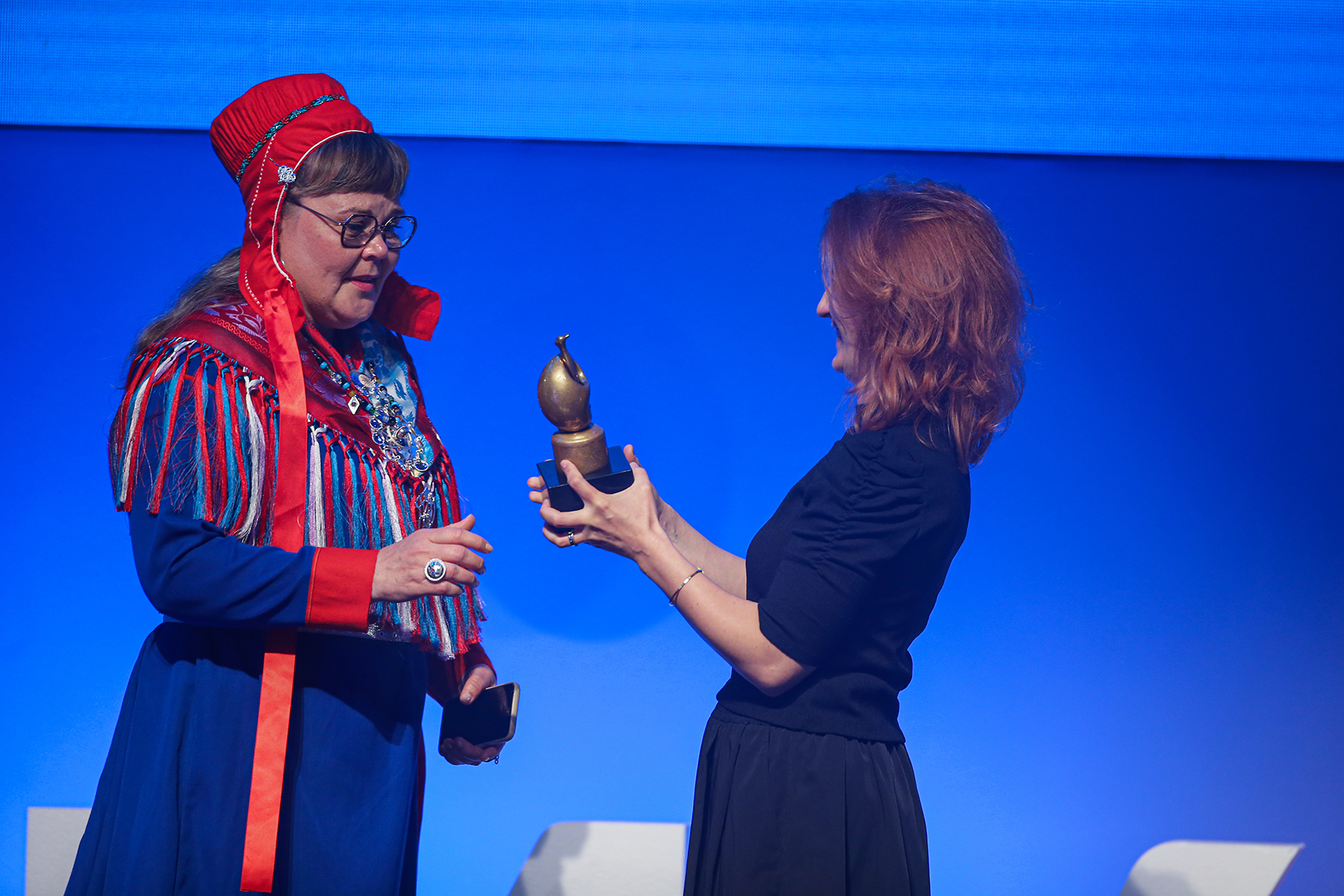
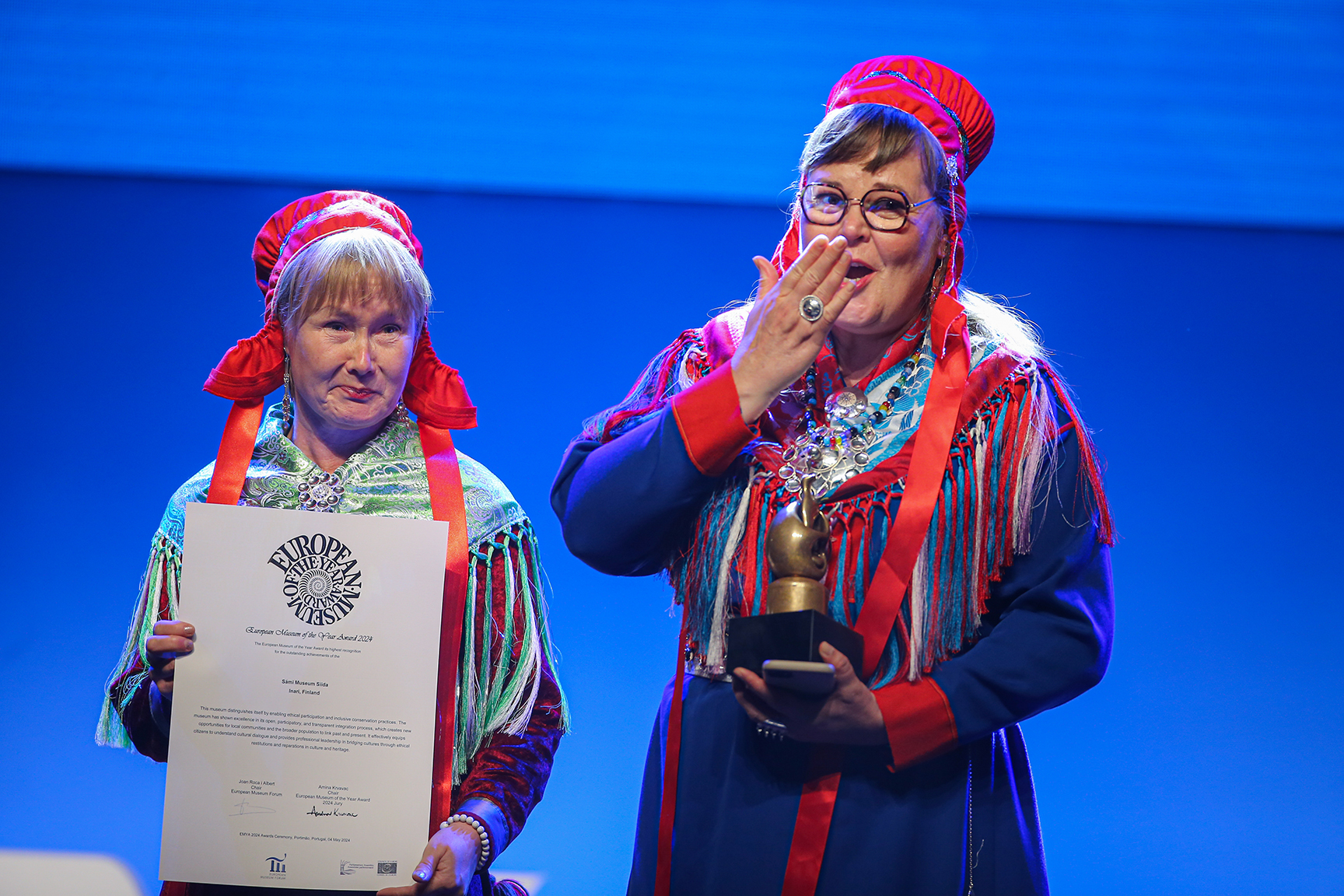
Representatives of the SIIDA Museum once again appeared in traditional, colourful attire. Director Taina Pieski, receiving the diploma and the Henry Moore sculpture, said: “We are delighted that our diverse activities for the Sámi people and their culture have been recognised at the European level. The SIIDA Museum was created primarily for the Sámi themselves, but we are happy that our story resonates across Europe and the world.”

“This award belongs entirely to the Sámi community, and I would like to thank them,” she added, continuing her speech in Sámi before concluding in English: “We hope this award will give us the strength to continue our important work on the restitution of our community’s heritage. We need the support of the entire European museum community so that objects belonging to our ancestors can return home.” she ended.

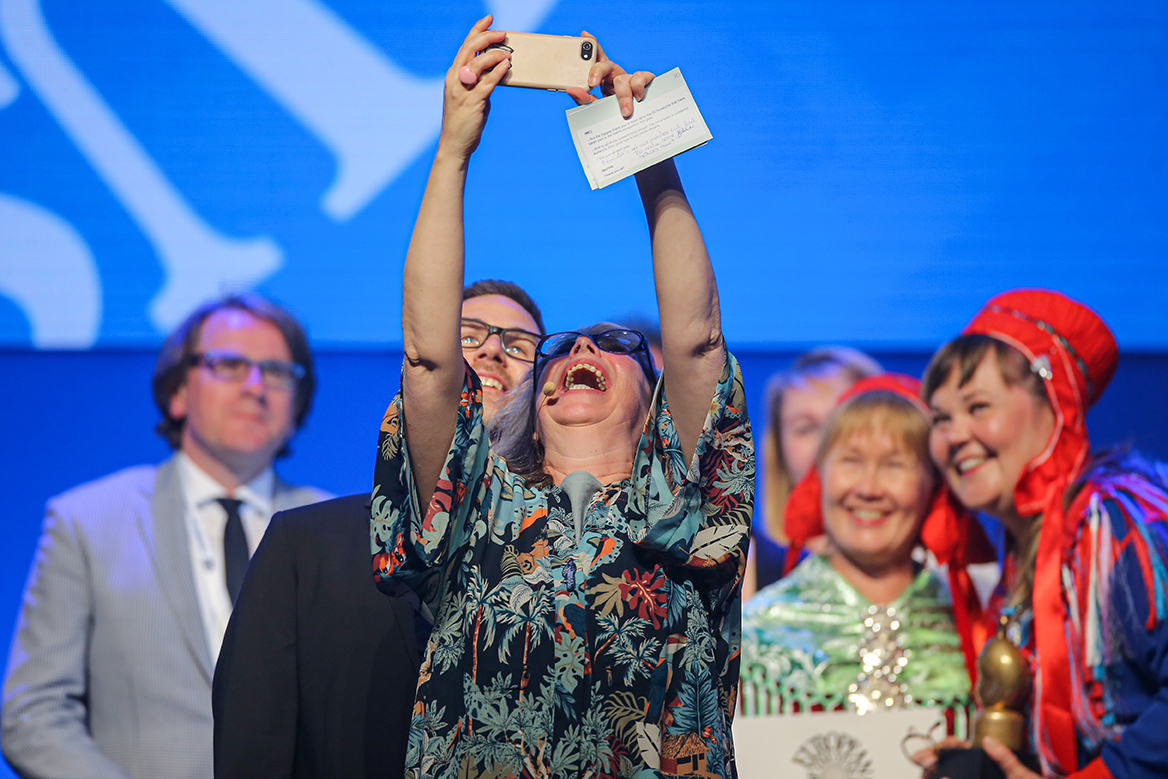
More about this year’s winners can be found on the European Museum Forum website (in English).
The full recording of the gala is available on the Museu de Portimão YouTube channel:
At the (Portuguese) end of the world
The final day of the annual conference and the EMYA 2024 awards ceremony concluded with a gala dinner on the banks of the Arade River. The following day, participants were offered study visits to museums in the region. Representatives of the Sybir Memorial Museum visited the town of Vila do Bispo, where a small but well-designed museum opened this year.


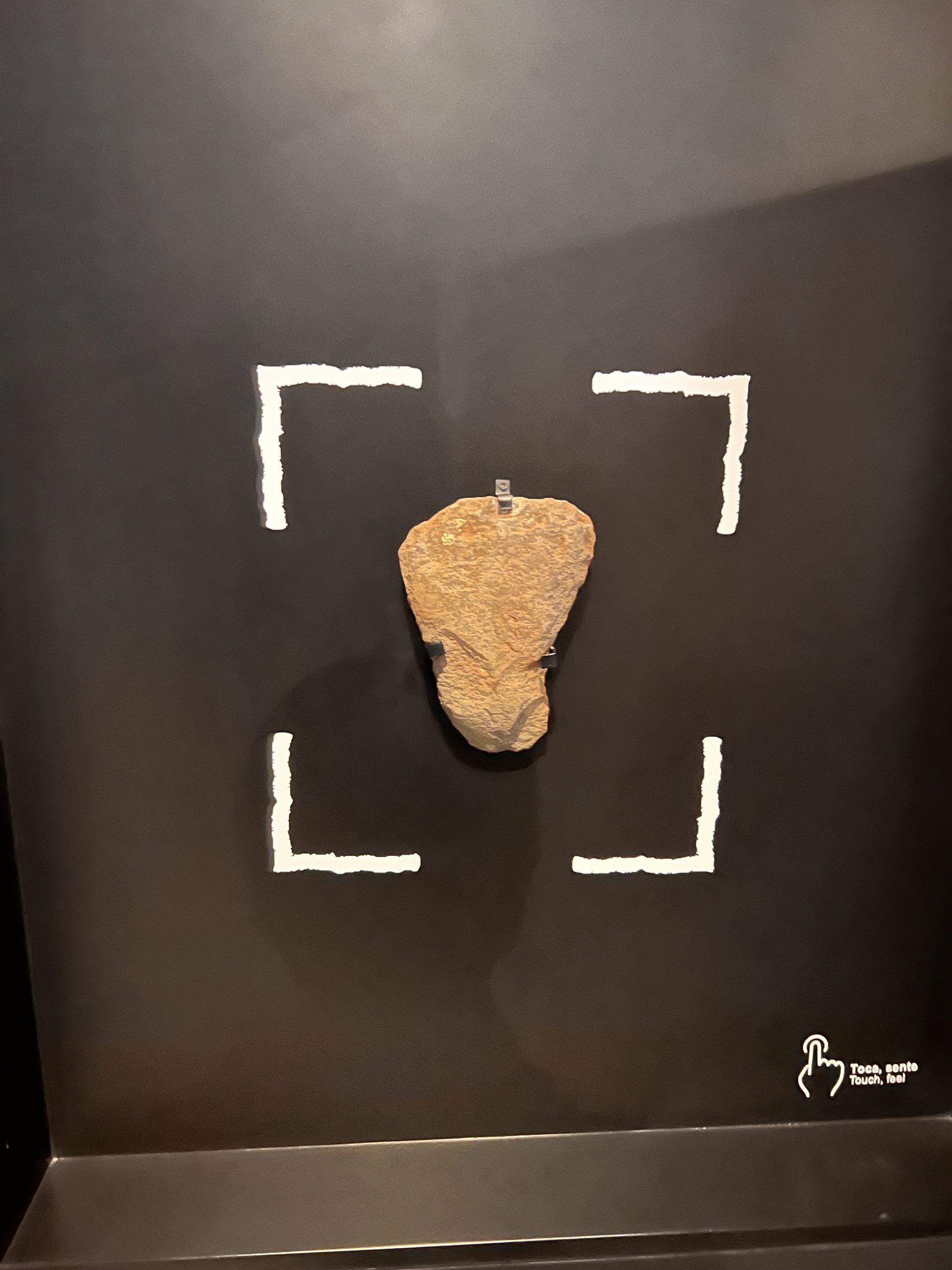

It is called the “Barn of History,” as for decades residents referred to the former grain warehouses located there as “barns.” The agricultural past of Vila do Bispo is still reflected in the remains of windmills and in the museum’s exhibition, which focuses on close cooperation with the local community. A sign of its success is the many objects brought in by residents. “This ancient oil lamp was found by children on the beach and brought to us. It is a valuable find,” the museum staff told us.
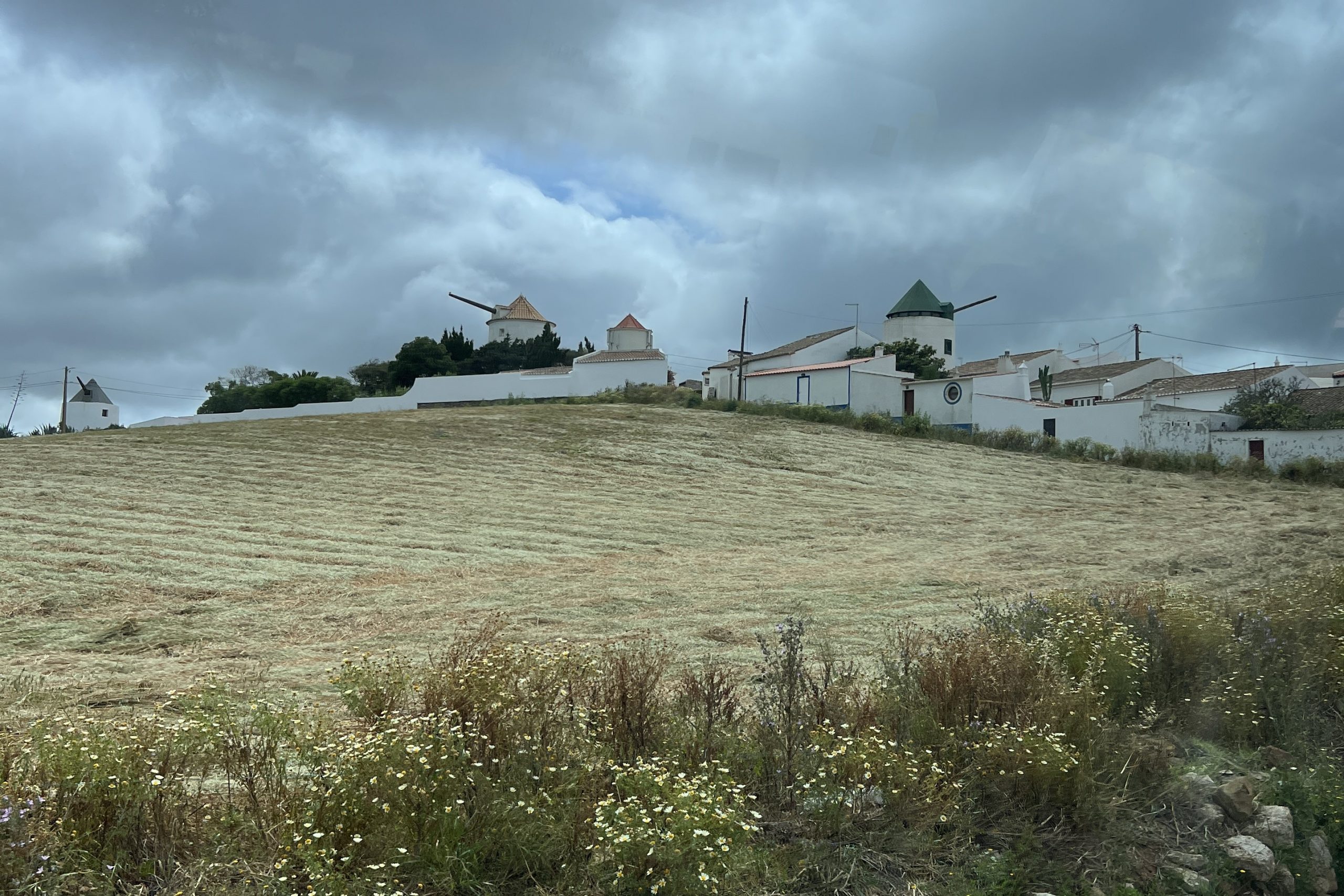
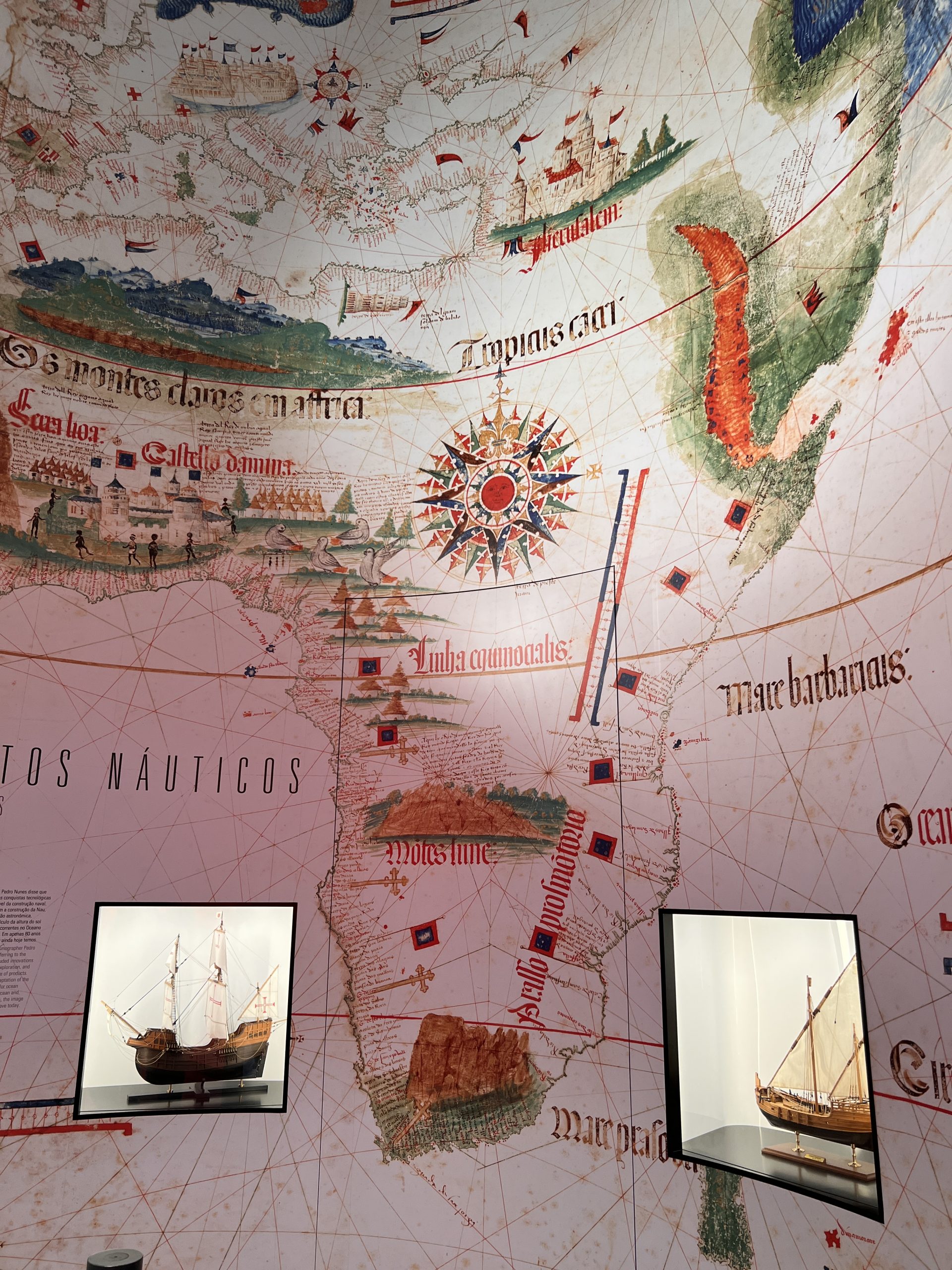
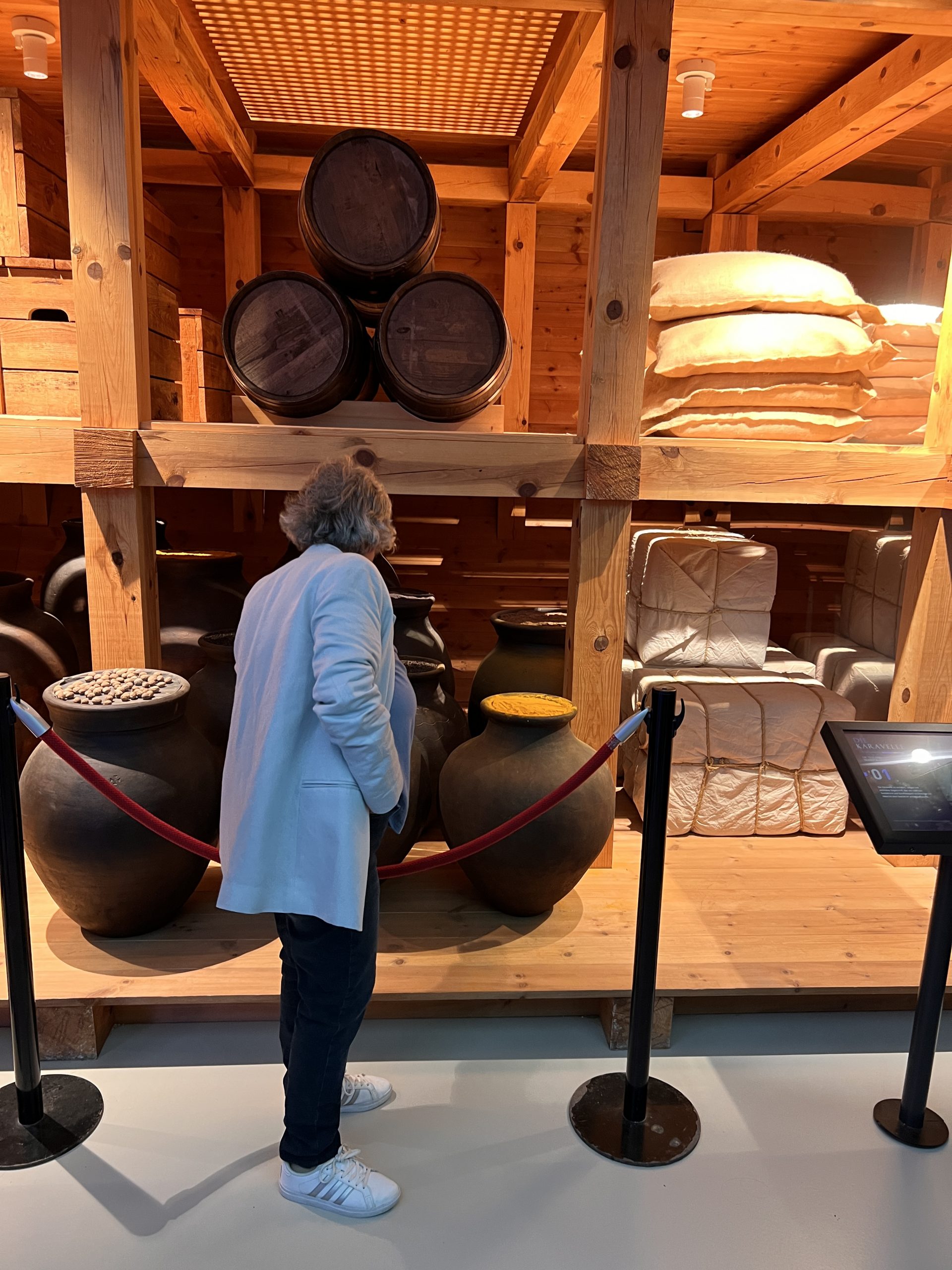
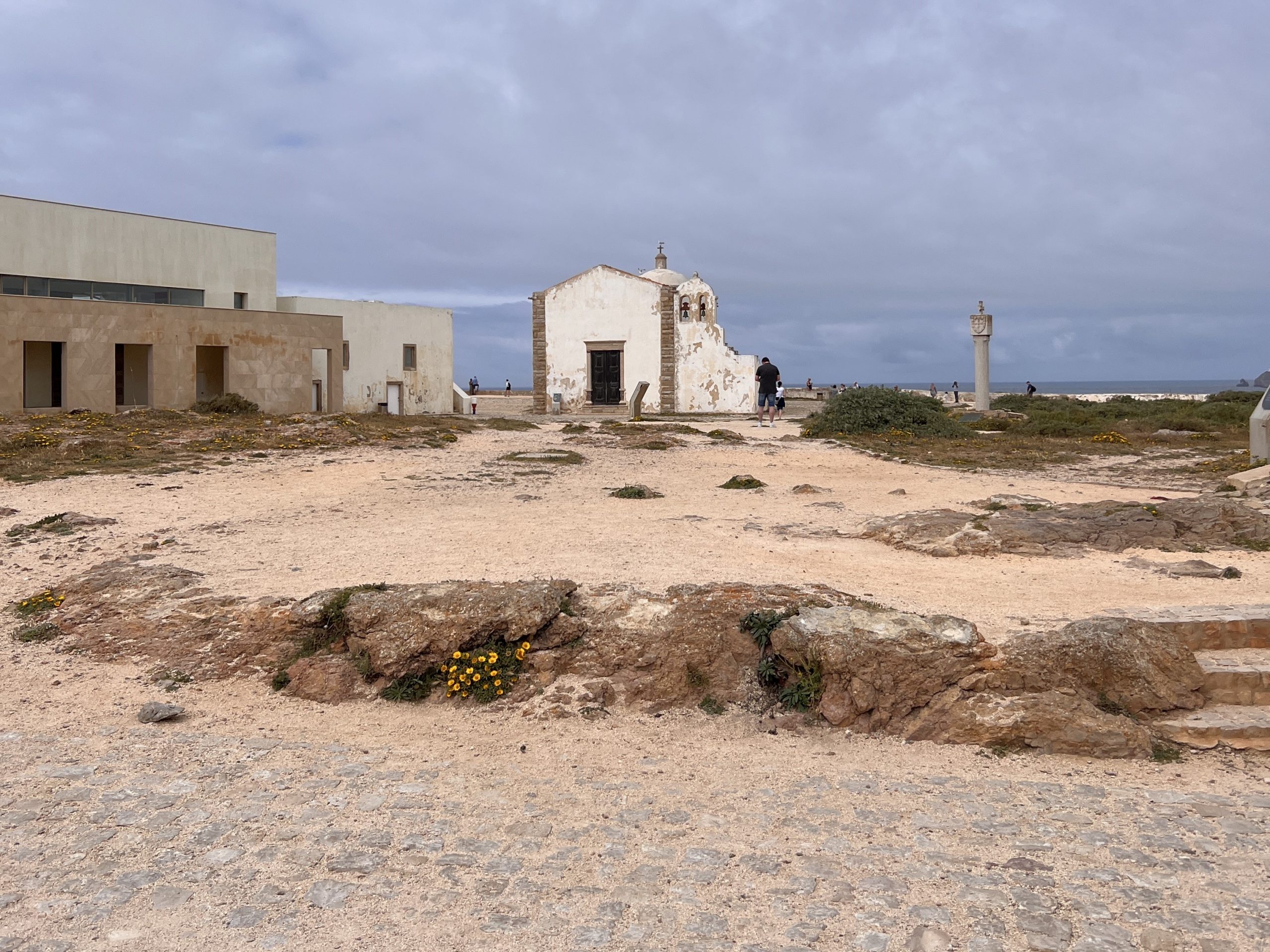
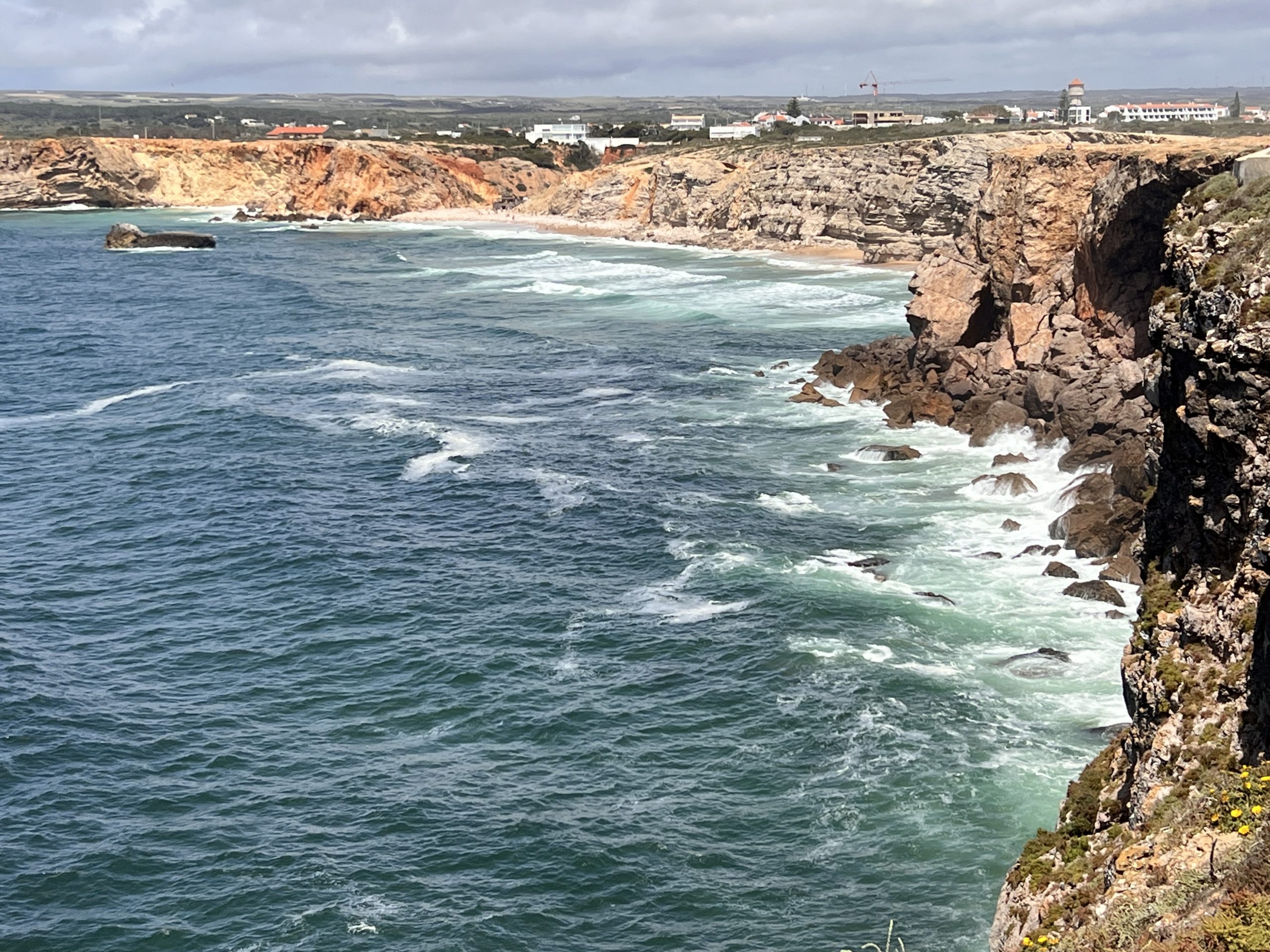
The second site we visited was the fortress in Sagres, the Portuguese “end of the world” (or its beginning, as locals like to say). A small multimedia exhibition presents Portugal’s overseas expansion, while the cape itself offers a breathtaking view of the ocean.


Participation in the annual European Museum Forum conference was an important step in further developing international cooperation for the Sybir Memorial Museum and strengthening its presence on the European stage. If we are to believe the words of Forum chair Joan Roca i Albert, our stay in Portimão will continue to bear fruit for many years to come.
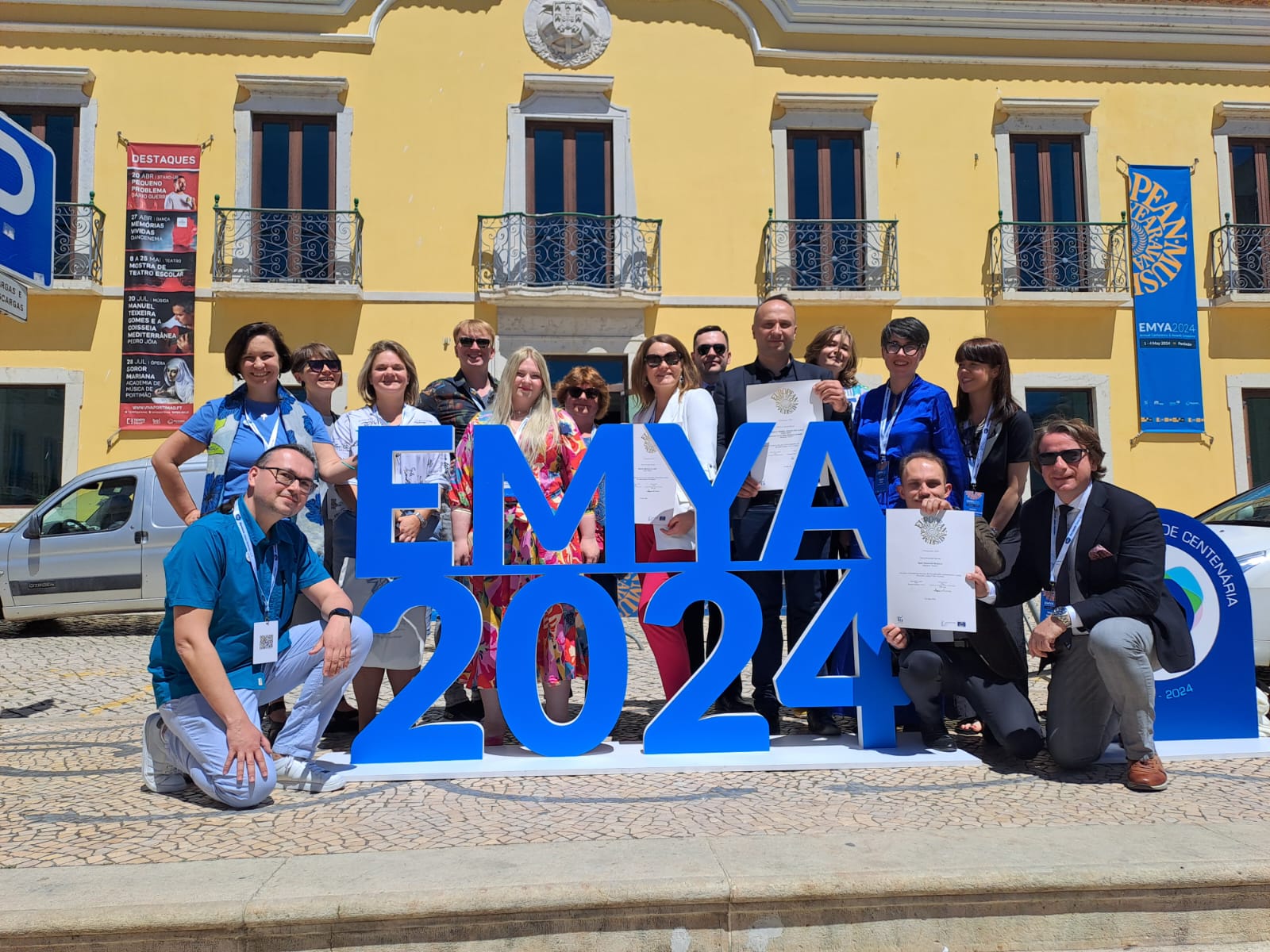
We would like to thank the European Museum Forum for the recognition and excellent organisation of the conference, the Museu de Portimão and the city of Portimão for their hospitality, the team of the National Institute for Museums for their support not only during the conference, the entire Polish “team” at EMYA 2024—and everyone for whom the Sybir Memorial Museum matters.
Thank you for being with us!
Paulina Cylka