


The Sobolewski family lived in the village of Krzyżyki near Czarna Białostocka. In June 1941, Soviet authorities arrived at their family home and ordered them to take only the most essential belongings.
Alfons Sobolewski, his wife Stanisława, their two young daughters, as well as his father and brother, became victims of the fourth mass deportation of citizens of the Republic of Poland deep into the Soviet Union.
Following the signing of the Sikorski–Mayski Agreement, Alfons Sobolewski and his brother joined General Anders’ Army, with which they followed the entire combat route. Mrs. Stanisława also joined the army; after leaving the USSR with Anders’ forces, she was sent to a Polish camp in Africa. She was reunited with her husband two years later in England. Their daughters died on the so-called “inhuman land.”
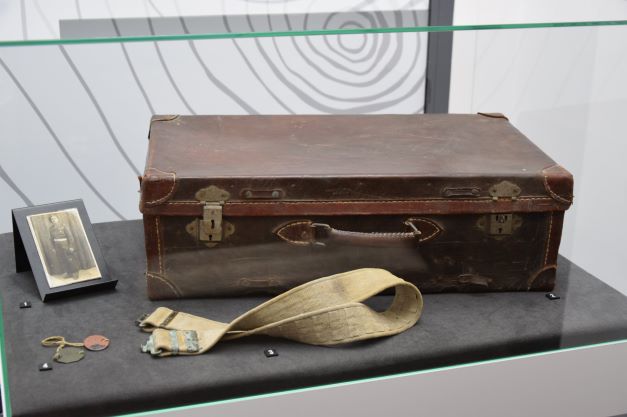
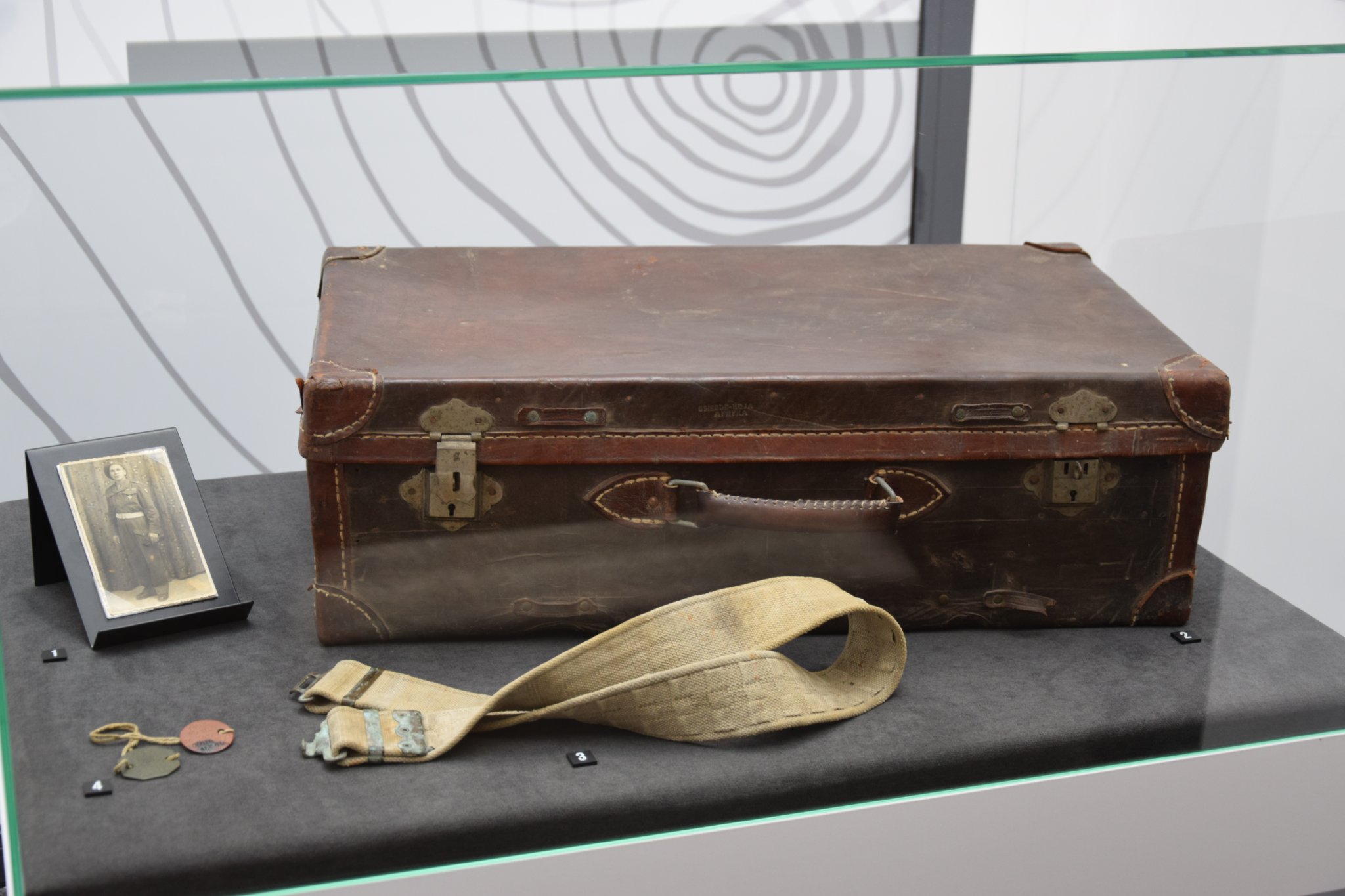
The mementos were donated to the Sybir Memorial Museum by Mr. Wiesław Sobolewski, the son of Alfons and Stanisława. Among the items are his father’s dog tag and belt—elements of his military uniform—as well as a suitcase purchased by his mother in Kampala while preparing for the journey to England. The objects are accompanied by a photograph of Alfons Sobolewski wearing the uniform of the 3rd Carpathian Rifle Division.
Mr. Wiesław was born in Poland after his parents’ return to their homeland. However, he became well acquainted with his family’s history through his mother’s accounts. “I decided to record my mother’s story in the 1980s,” Mr. Wiesław recalls. “At that time, many Sybiraks still lived with a daily fear connected to deportations. I remember my mother repeatedly telling me not to show the recordings to anyone, fearing that I too might be deported…”
“This is a microhistory,” explains Piotr Popławski, PhD of the Sybir Memorial Museum. “Rather than focusing on the fate of all deported Poles—as we do in the permanent exhibition—we concentrate on a single family: how they survived the hell of Siberia, what happened to them on their journey back, who survived, and who remained forever on the inhuman land.”
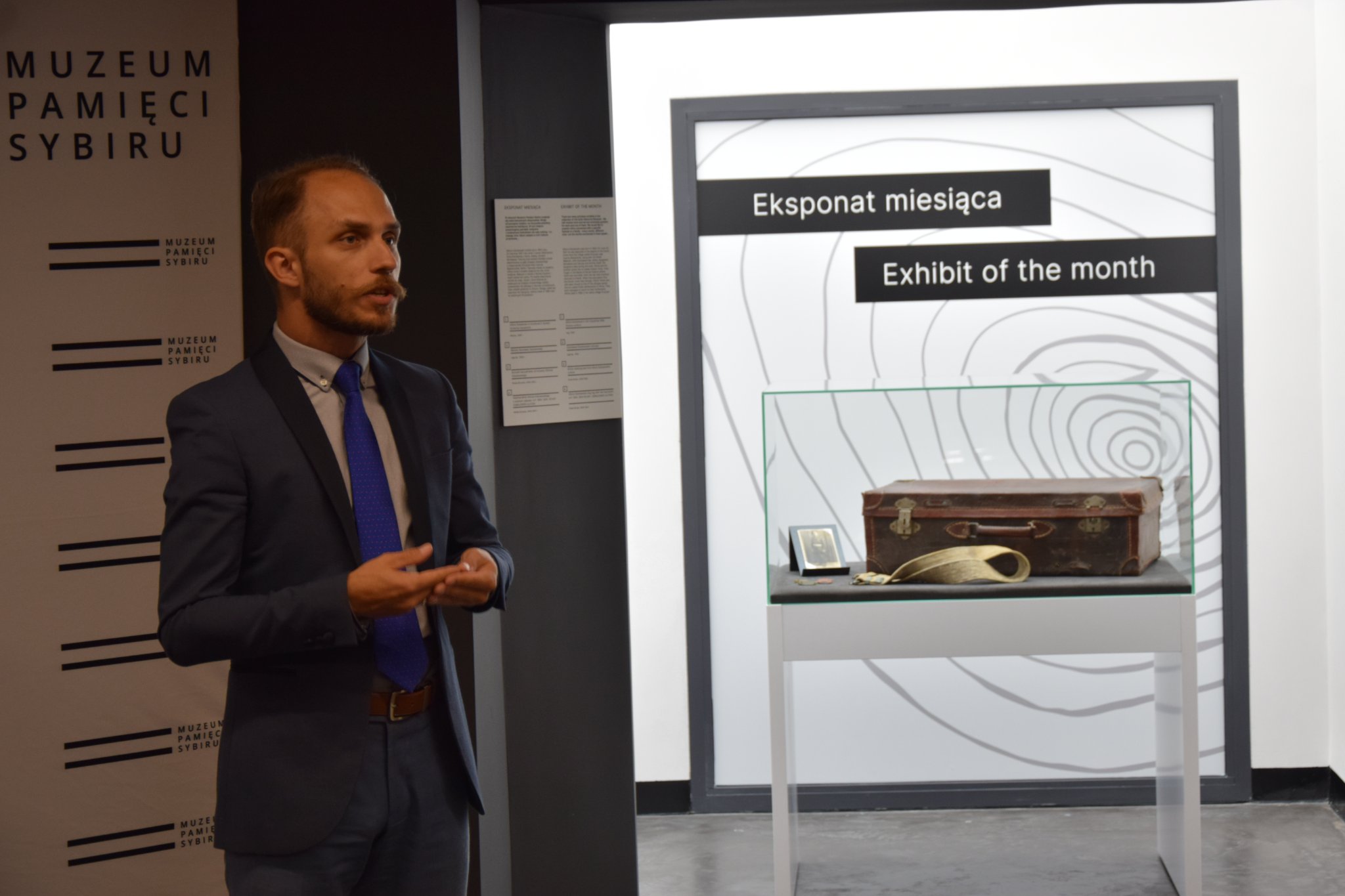
“We aim to honour Sybiraks who donate their family mementos to our Museum and to encourage other families to do the same. There will always be a place for Sybiraks at the Sybir Memorial Museum,” adds Popławski, PhD.
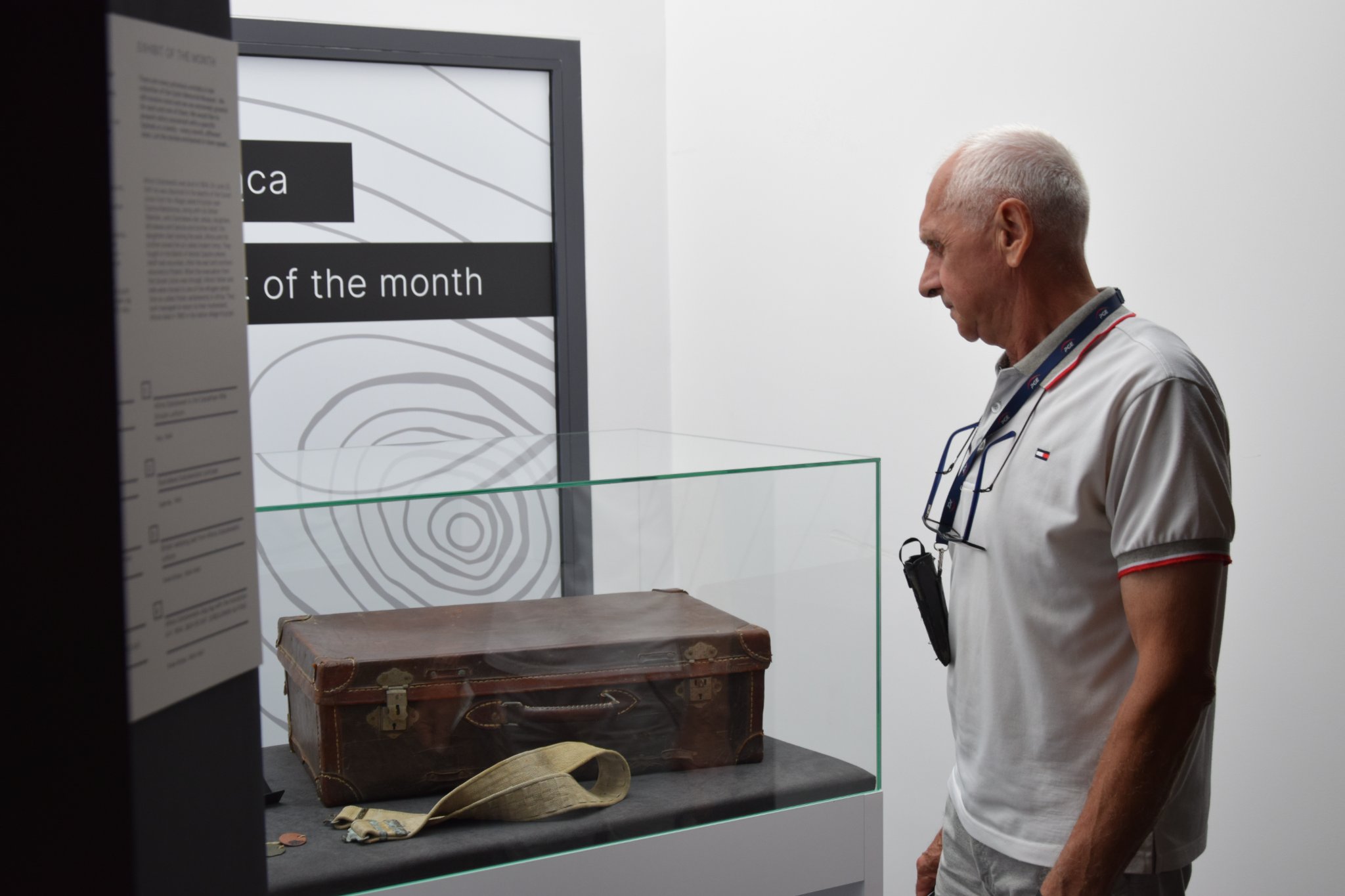
The mementos of the Sobolewski family can be seen at the Sybir Memorial Museum until the end of July. We warmly invite you to visit.