


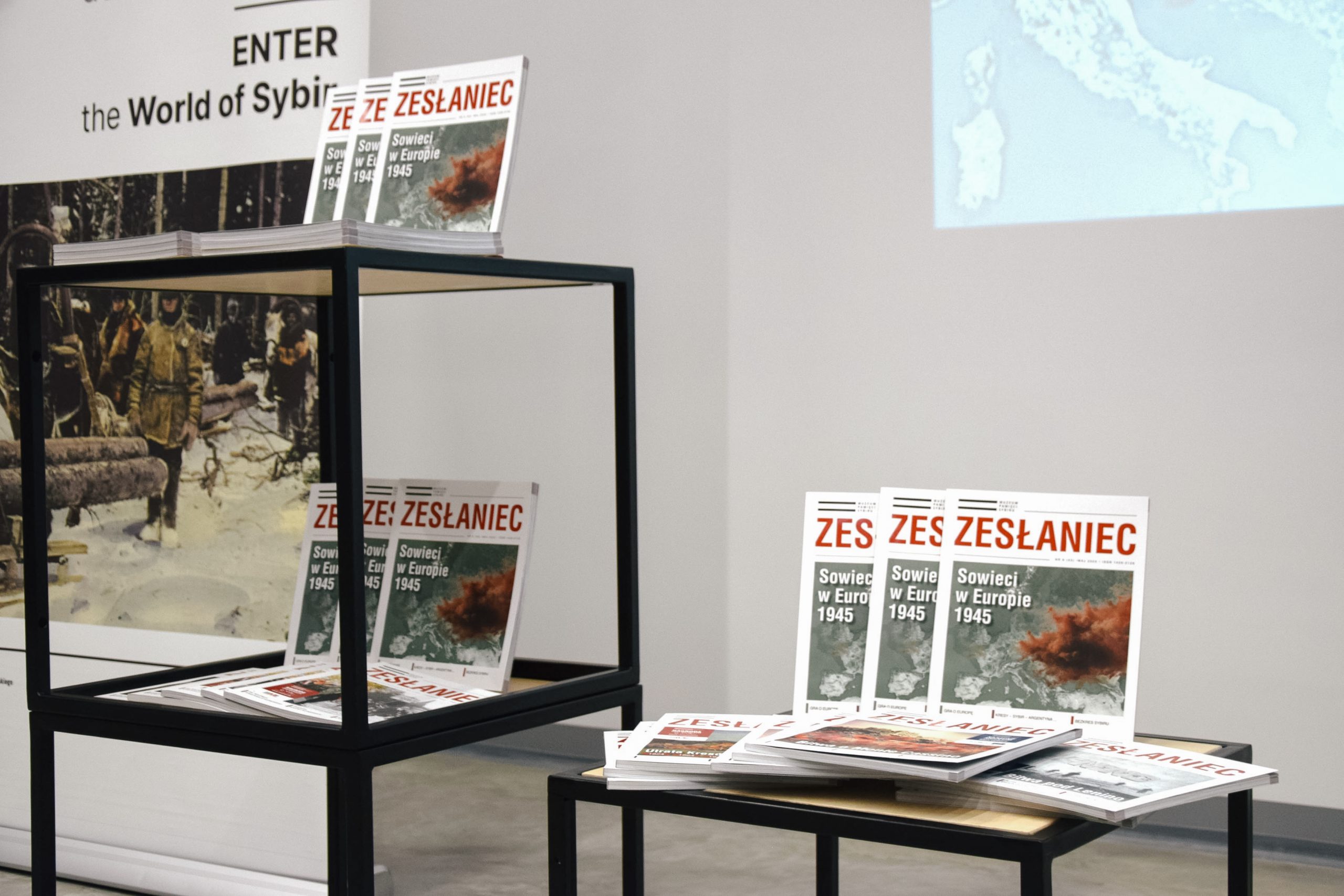
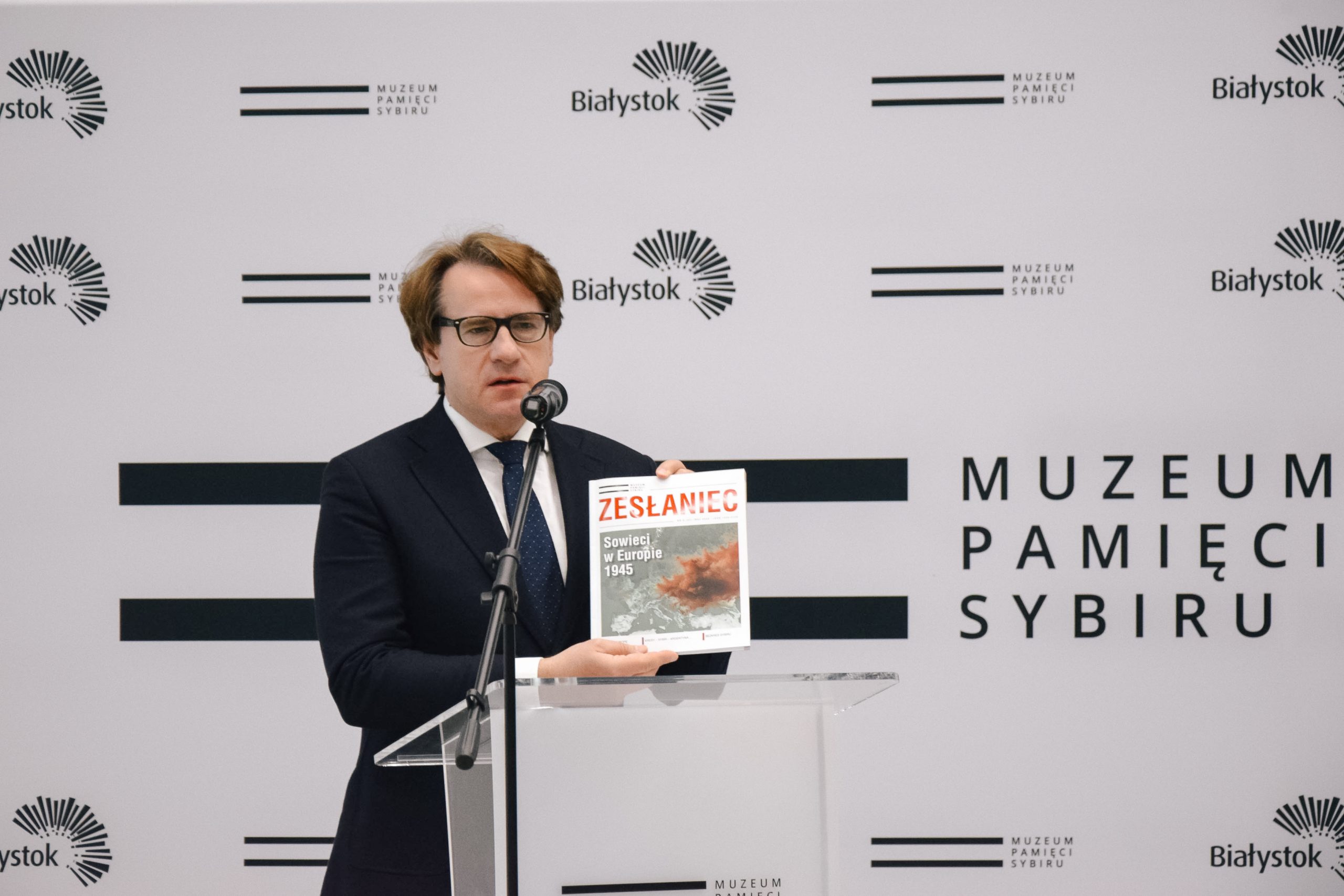
“We cannot agree with the thesis that the Red Army brought freedom to Central and Eastern Europe. In reality, a new occupation began. There is no exaggeration in saying that the year 1945 was one of the most important moments in the history of the world,” said Professor Wojciech Śleszyński, Director of the Sybir Memorial Museum, during the presentation of the latest issue of Zesłaniec.
At the end of World War II, Stalin improvised. Some territories that had been conquered or liberated from the German occupation were incorporated into the Soviet Union. Others were turned into powerless state entities, granted only limited margins of autonomy. Soviet tanks stood guard over the new ‘Russian order’ (russkiy mir). Western countries observed this process with silent agreement. They only managed to protest when it was already too late. The ‘Iron Curtain’ descended, separating a significant part of Europe from the free world for over four decades.
On the 80th anniversary of the end of World War II, the Sybir Memorial Museum is launching a series of popular science articles exploring how the post-war order was shaped in Europe – in Austria, Bulgaria, Czechoslovakia, Romania, Hungary, and Poland. The articles, published in both Polish and English, will appear over the next five weeks on the website www.swiatsybiru.pl. All articles in Polish can already be found in the latest issue of Zesłaniec.
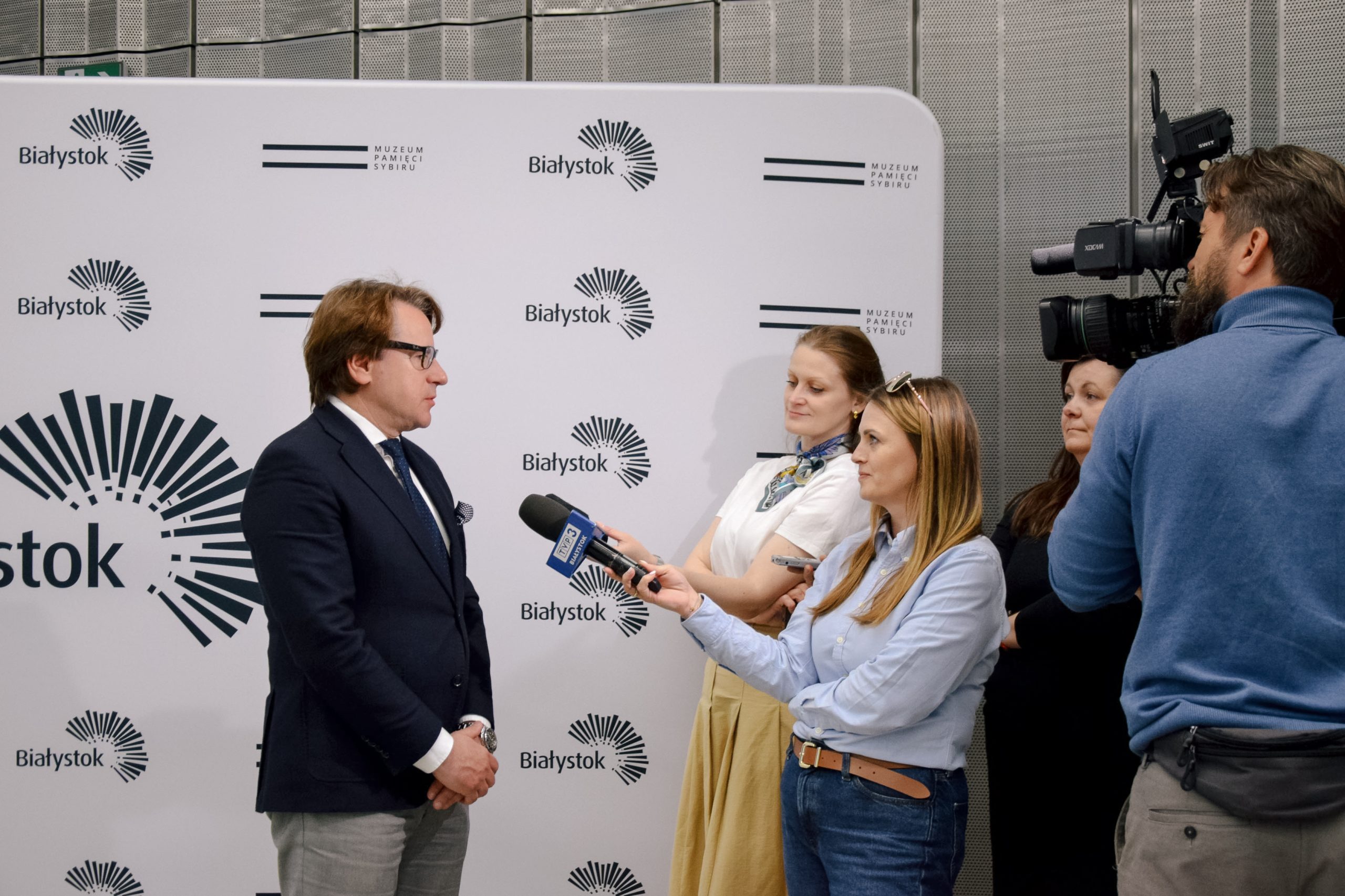
“For this issue of the magazine, we managed to bring together a group of experts from Poland, Romania, the Czech Republic, Austria, Bulgaria, and Hungary. The outcome exceeded our expectations. It turned out that the image of the Soviet occupation of Central Europe after the end of World War II is quite different from the one we had when examining the subject solely from the Polish perspective,” said Marcin Zwolski, PhD, editor-in-chief of the magazine.
“The contents presented on our web portal ‘The World of Sybir’ – including those that are discussed today – have one thing in common: they show Russian policy’s continuousness. Continuity, dating back to the 15th–16th centuries and lasting to modern times. It is a policy based on force and authoritarianism, inseparably connected with repressions – deportations, persecution, and other forms of violence. In this context, the contents we are discussing today, prepared on the occasion of the 80th anniversary of the outbreak of World War II is of particular importance. In the current socio-political situation, it has a chance to reach audiences in countries where people are interested in Russia’s contemporary policy, but where its historical roots are not known. We try to show those roots,” emphasized Tomasz Danilecki, PhD, editor-in-chief of the World of Sybir.
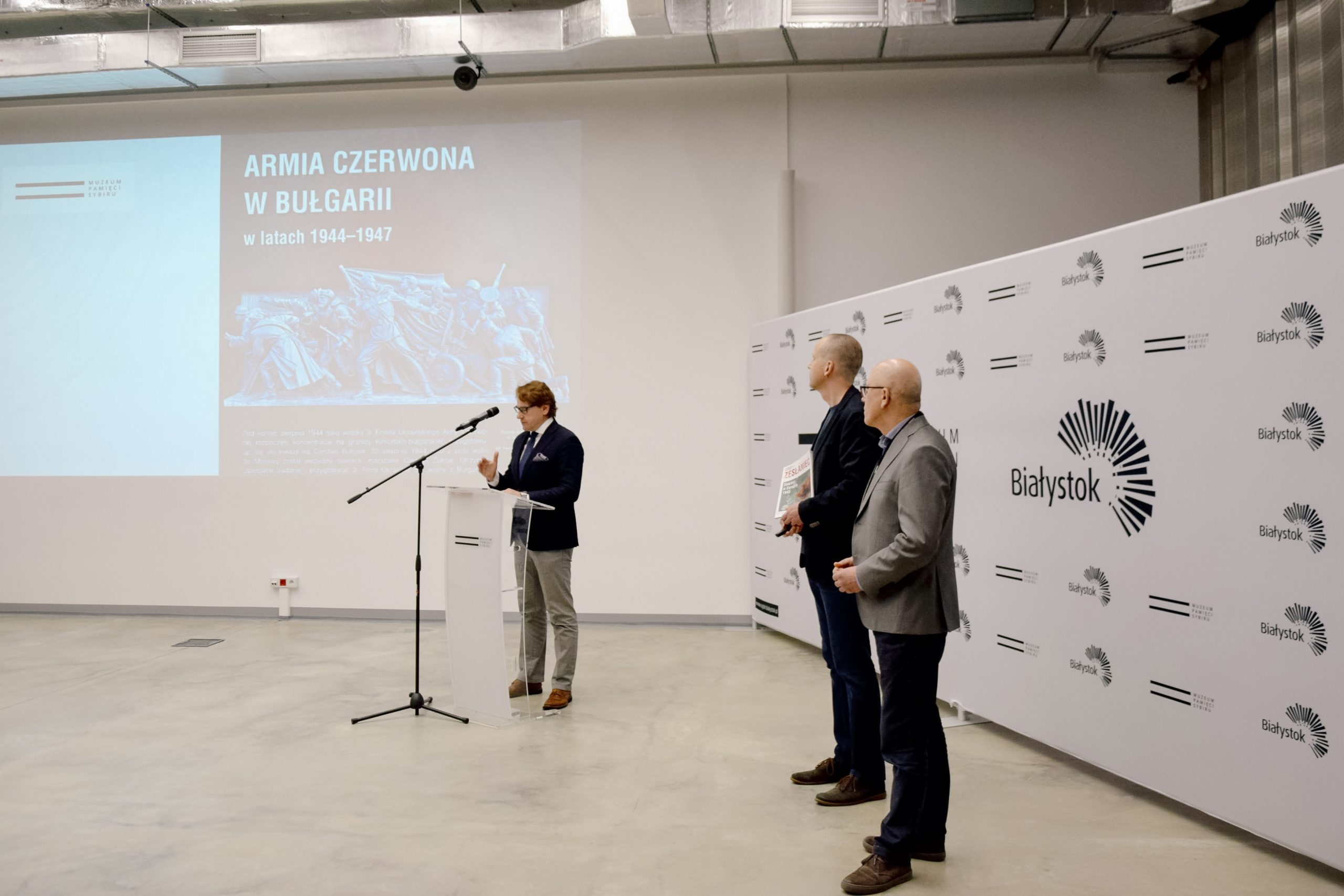
The first of the articles, entitled “The Red Army in Romania – From Enemy to Friend and Back Again”, the author of which is Cosmin Budeancă, DSc, from the University of Bucharest, is already available on the website www.swiatsybiru.pl. The next one, about the situation in Czechoslovakia, will be published on Monday, May 5.
The magazine is available for purchase at the Sybir Memorial Museum and at the link: www.sklep-sybir.pl/produkt/zeslaniec-nr-6-93-2025