



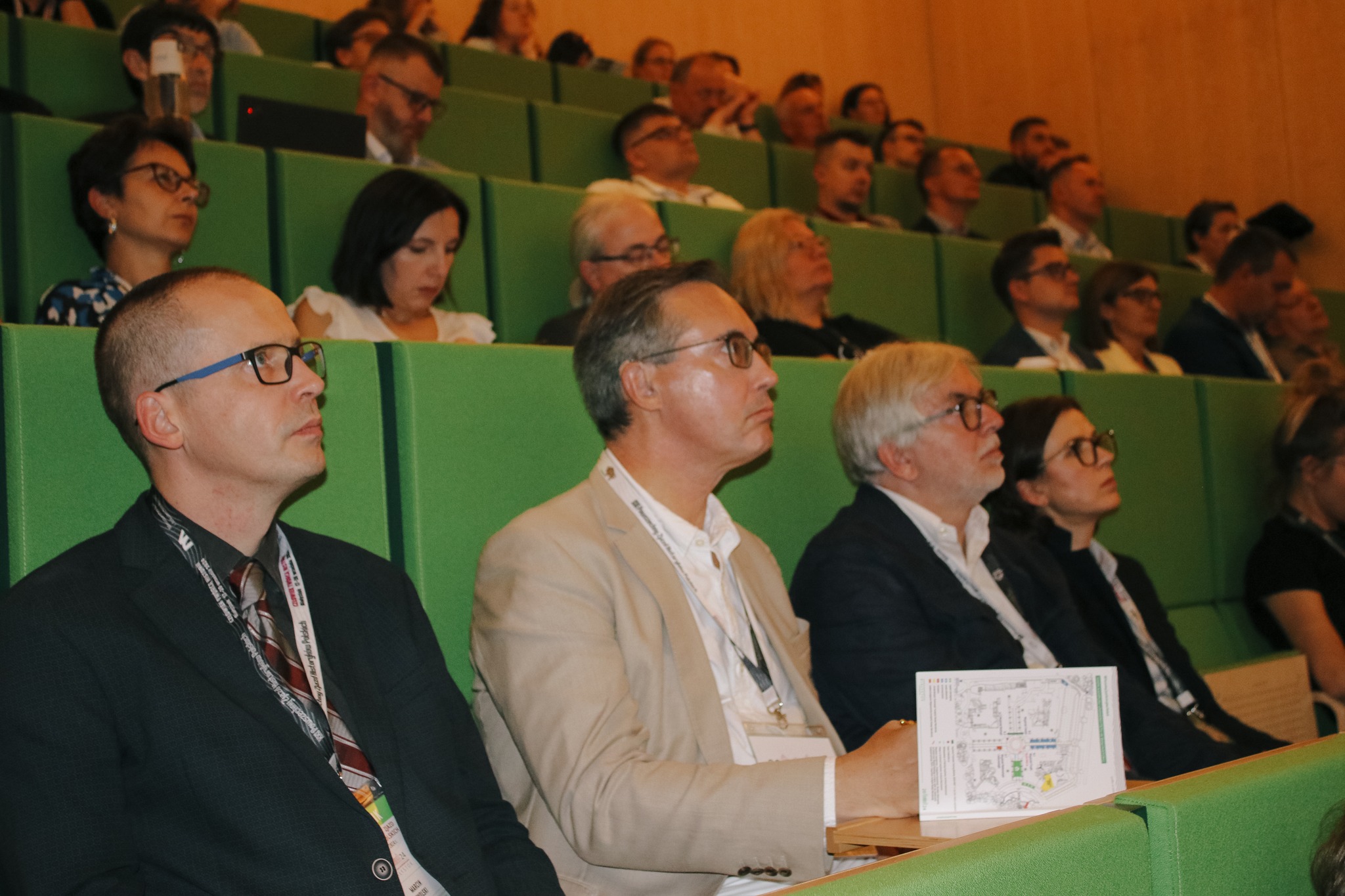
The title of the panel was “The ‘Hybrid’ Historian — On the Future and Role of Historians in Museums.” The event was organized by the Sybir Memorial Museum and the Polish History Museum. The audience included numerous museum professionals and historians who, after the introductory papers, engaged in an animated discussion.
The meeting opened with two introductory lectures. Joanna Wojdon of the University of Wrocław spoke about the benefits and challenges of public history — beginning with the observation that the term itself is difficult to define. The concept emerged in the United States in the 1970s, when the post-war baby boomer generation entered the job market. An ‘overproduction’ of history graduates and PhDs made it difficult to secure employment in schools and universities. Many had to look elsewhere. Expanding tourism, interest in genealogy, and preparations for the U.S. Bicentennial provided opportunities for these young historians. They found work in federal and state institutions tasked with organizing anniversary celebrations. At the same time, grassroots initiatives emerged focused on the history of workers and lower social strata — and private individuals began hiring historians to conduct such research.
At the turn of the 21st century, academic historians also became interested in public history. The University of California, Santa Barbara played a pioneering role in this regard. It quickly turned out that the traditional academic model of training was poorly suited to public history — that is, to the use of history in public and private life. The rise of the internet and the emergence of digital humanities further broadened the field. Today, public history encompasses state policies of memory, museums, cultural institutions, monuments, commemorations, films, and books (top-down public history), as well as oral history, family history, local chambers of memory, grassroots archives, and Wikipedia (bottom-up public history).
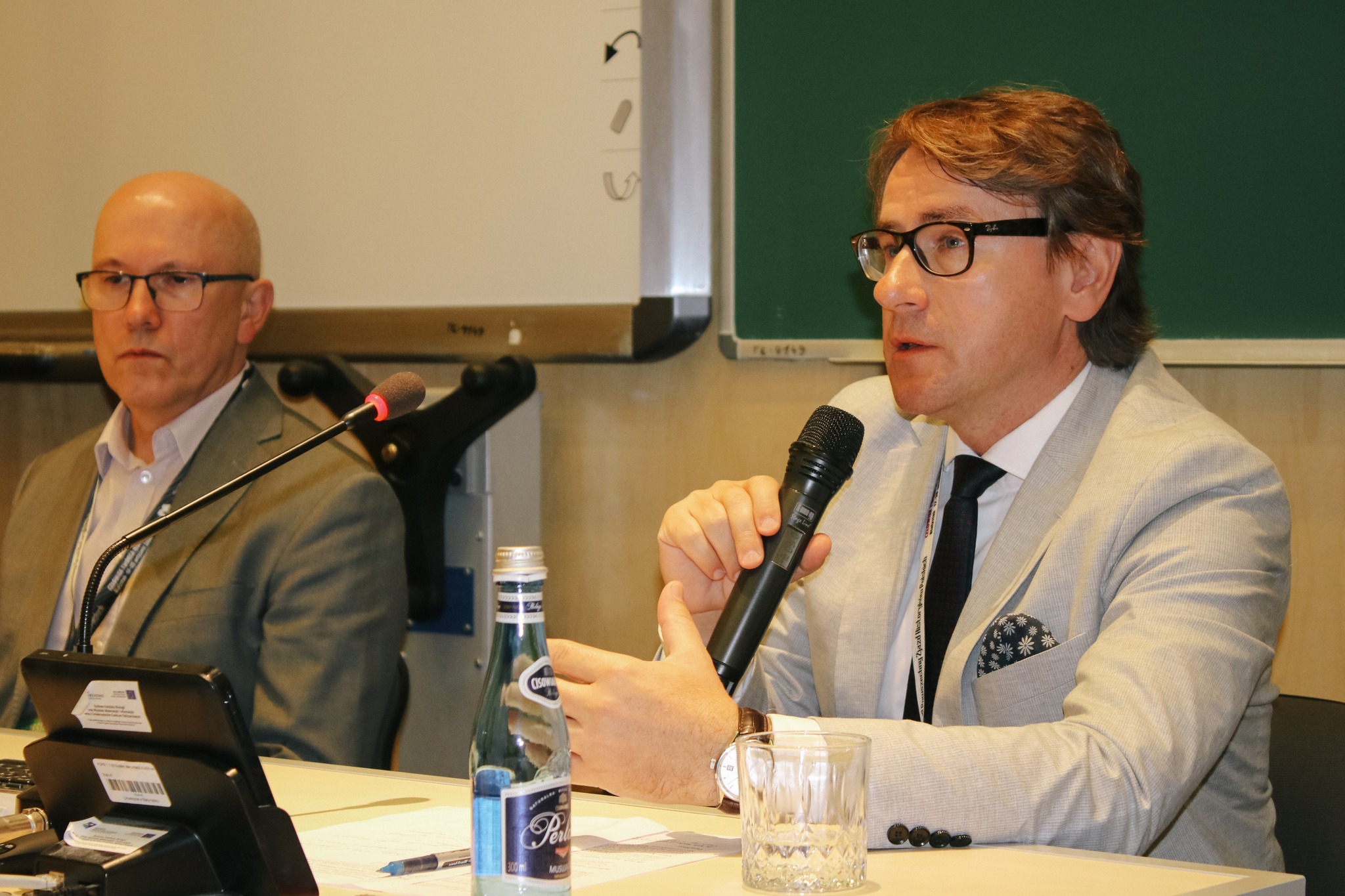
”The essence of public history is its focus on society: history for people, by people, about people, and with people. “The academic historian is not automatically an authority here, because they often do not know how to ”sell” history. Universities do not teach how to work with audiences,” Wojdon explained.Public history is, in her view, a form of “applied history,” in which the academic historian encounters the popularizer of history.
Alicja Knast (National Gallery in Prague) spoke about her long experience working in institutions such as the Silesian Museum and POLIN Museum of the History of Polish Jews. She argued that the “hybrid historian” is one who combines different modes of work. A historian employed in a museum operates by integrating traditional and new tools and practices. Exhibition-making is always a negotiation between historian and architect — and even when agreement is reached, the final reception of the display by visitors may diverge from the creators’ intentions.
Knast also stressed the importance of visualization in encouraging visitors to engage with exhibitions. The placement of a particular object in a particular space matters, she argued, and designing exhibitions from the outset in visual terms enhances their effectiveness. Museums should, she added, make use of the resources readily available to them.
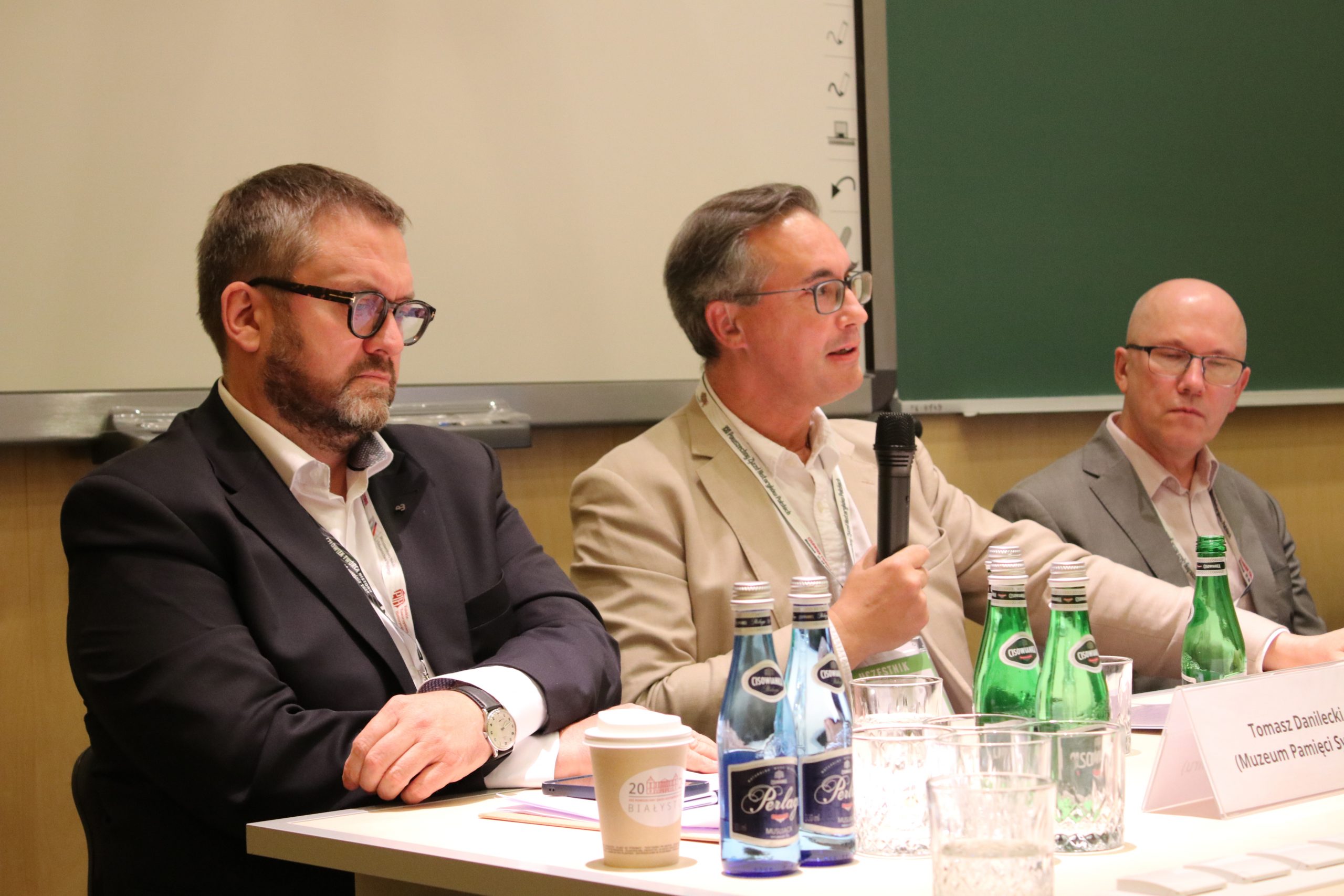
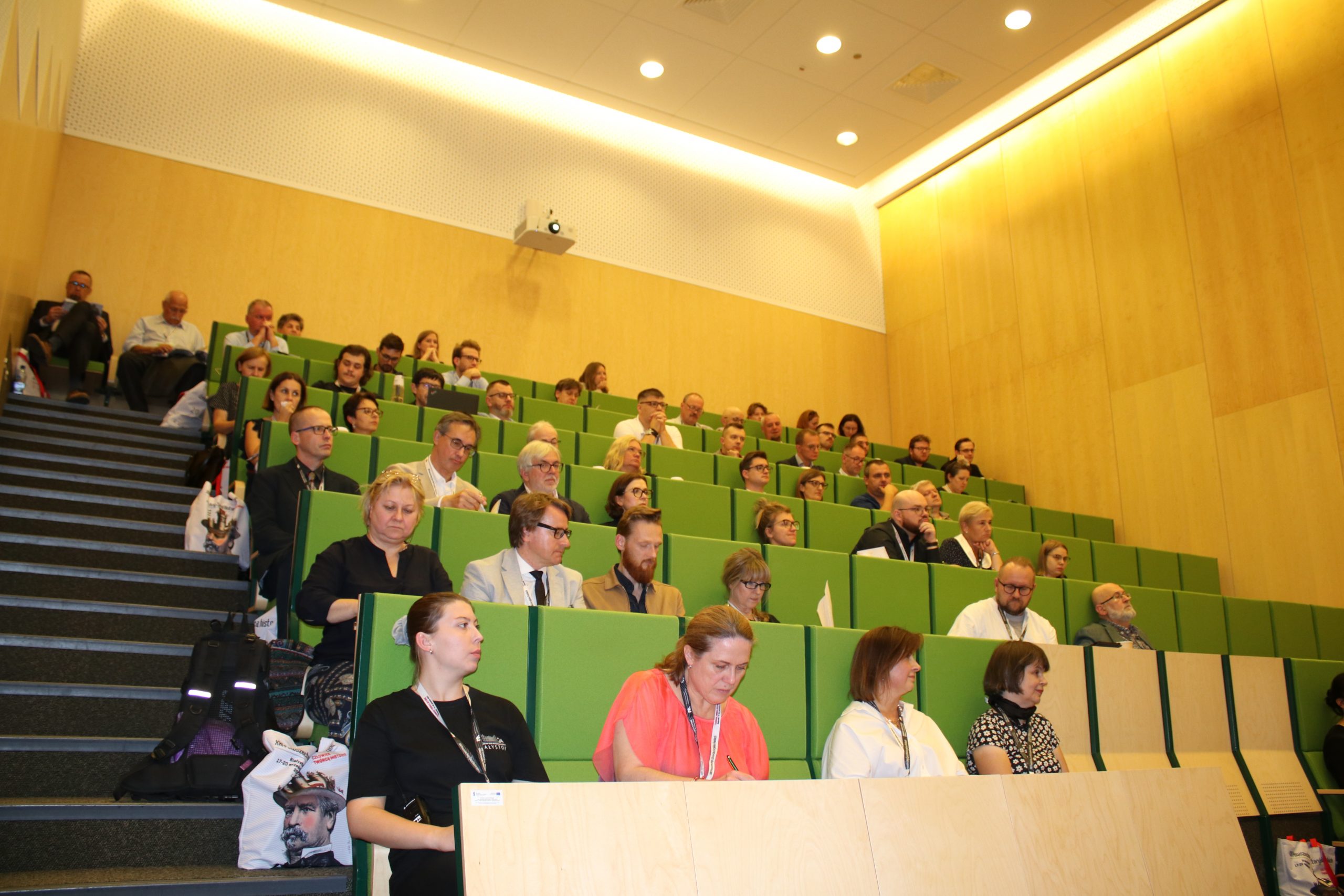
The discussion phase of the panel was initiated by Wojciech Śleszyński (the Sybir Memorial Museum). He suggested that staffing in modern museums can, in theory, be significantly reduced. Does this mean that the historian of the future will merely supervise exhibitions? Or — after the initial fascination with multimedia — will museums return to a more traditional model? Or perhaps the museum historian’s essential role is popularization?
According to Śleszyński, museums currently find themselves in a relatively strong position — certainly stronger than university institutes. Museum directors enjoy greater operational flexibility and do not have to focus on collecting academic points. Russia’s aggression against Ukraine has hindered the work of many historians by limiting access to archives, complicating the completion of grants and research programs. Meanwhile, the Sybir Memorial Museum shifted its research interests toward Kazakhstan and Uzbekistan — an example of how museums can react quickly to changing circumstances while remaining focused on a specific thematic field.
Richard Butterwick (Polish History Museum) noted that museums bring together researchers who frequently seek support and resources outside the museum environment. Staff members at the Polish History Museum are also affiliated with institutions such as the University of Warsaw or the Polish Academy of Sciences, gaining academic authority that strengthens the museum’s public mission. Presenting content in a credible yet accessible way is, in his view, essential. “A museum is always the result of cooperation between historians, museum professionals, and people working in communication,” Butterwick explained. Having taught at universities in Oxford, Belfast, and London, he emphasized that museums should collect objects, draw on academic strengths, and make this knowledge available to the public, avoiding both glorification and self-flagellation. Credibility and accessibility — this is the historian’s task if they do not wish to remain confined to the archive.
Jan Ołdakowski (Warsaw Rising Museum) focused on narrative museums, a rapidly developing model that is not always well received by academic historians. Such institutions foreground emotion and communication with the visitor, deliberately stepping away from academic formality. Narrative museums employ various theatrical and artistic means to convey difficult experiences. For years, they were associated primarily with multimedia and affect, but the debate over how to define them remains unresolved.
Narrative museums must continuously adapt to changing media languages. Lists of names, private photographs, and personal mementos forge emotional connections with visitors — even when those visitors have no direct family link to the individuals represented.
“Collective memory frequently diverges from historical truth. After Wołyń (Volhynia), perpetrators were commonly associated with ‘the Ukrainians.’ Here the historian has an enormous role to play: enforcing rigor, explaining and interpreting the past, presenting the state of research, and correcting family narratives where they diverge from fact. This is the hybrid historian: a translator and interpreter. What builds the bond with the public must be true,” Ołdakowski argued.
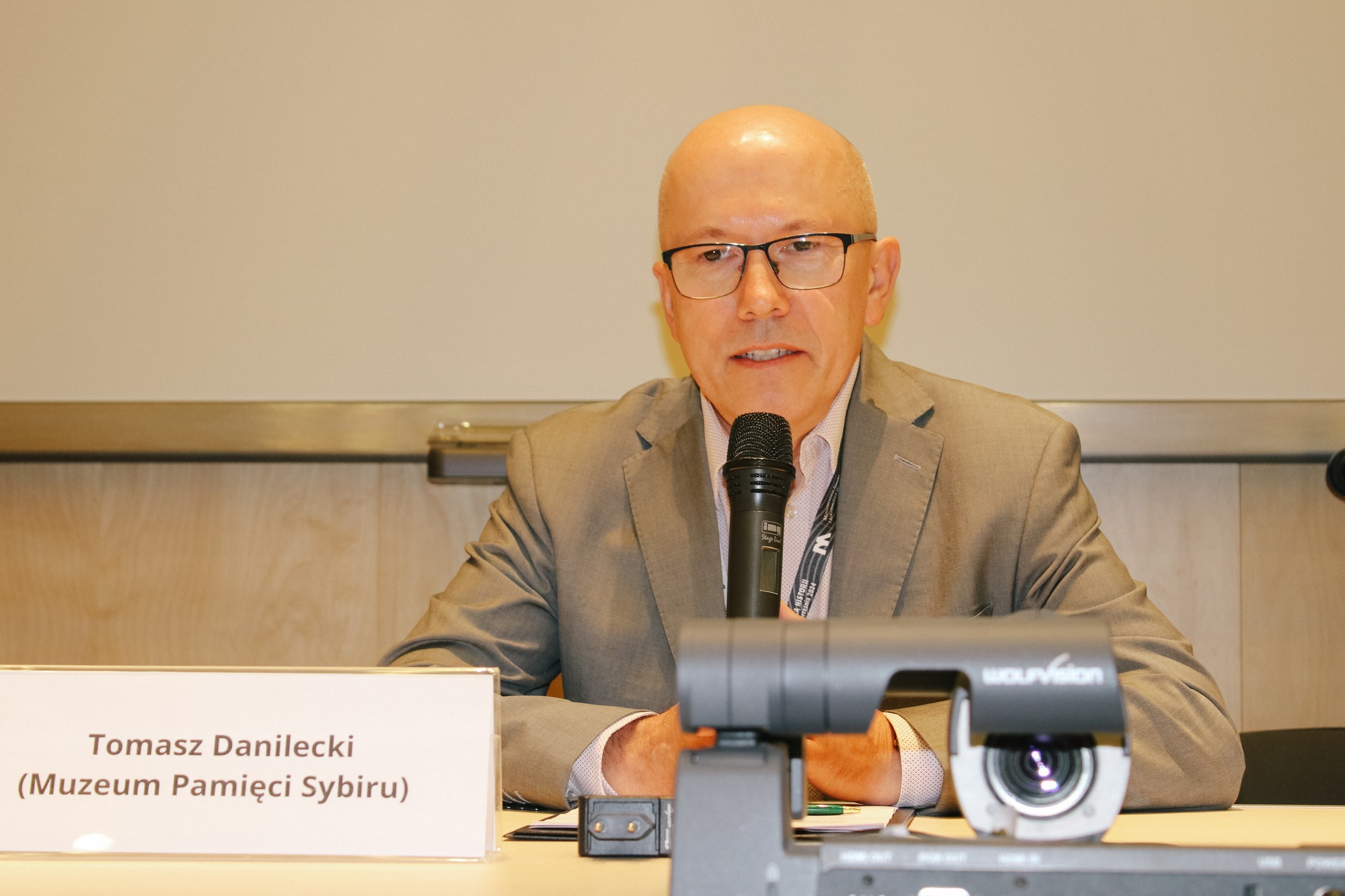
The panel concluded on an optimistic note for historians: participants agreed that historians are indeed necessary in museums — but they must follow their audiences and respond to their needs, uniting authority with clarity. And although, as moderator Tomasz Danilecki (the Sybir Memorial Museum) observed, in an age of democratized access to historical knowledge practically anyone can claim to be a historian (especially since witnesses of history “know their own truth” and often challenge the historian’s interpretation), people continue to visit museums in search of the past — near or distant — and in search of truth. Helping them navigate this pursuit may well be the museum historian’s essential role.