


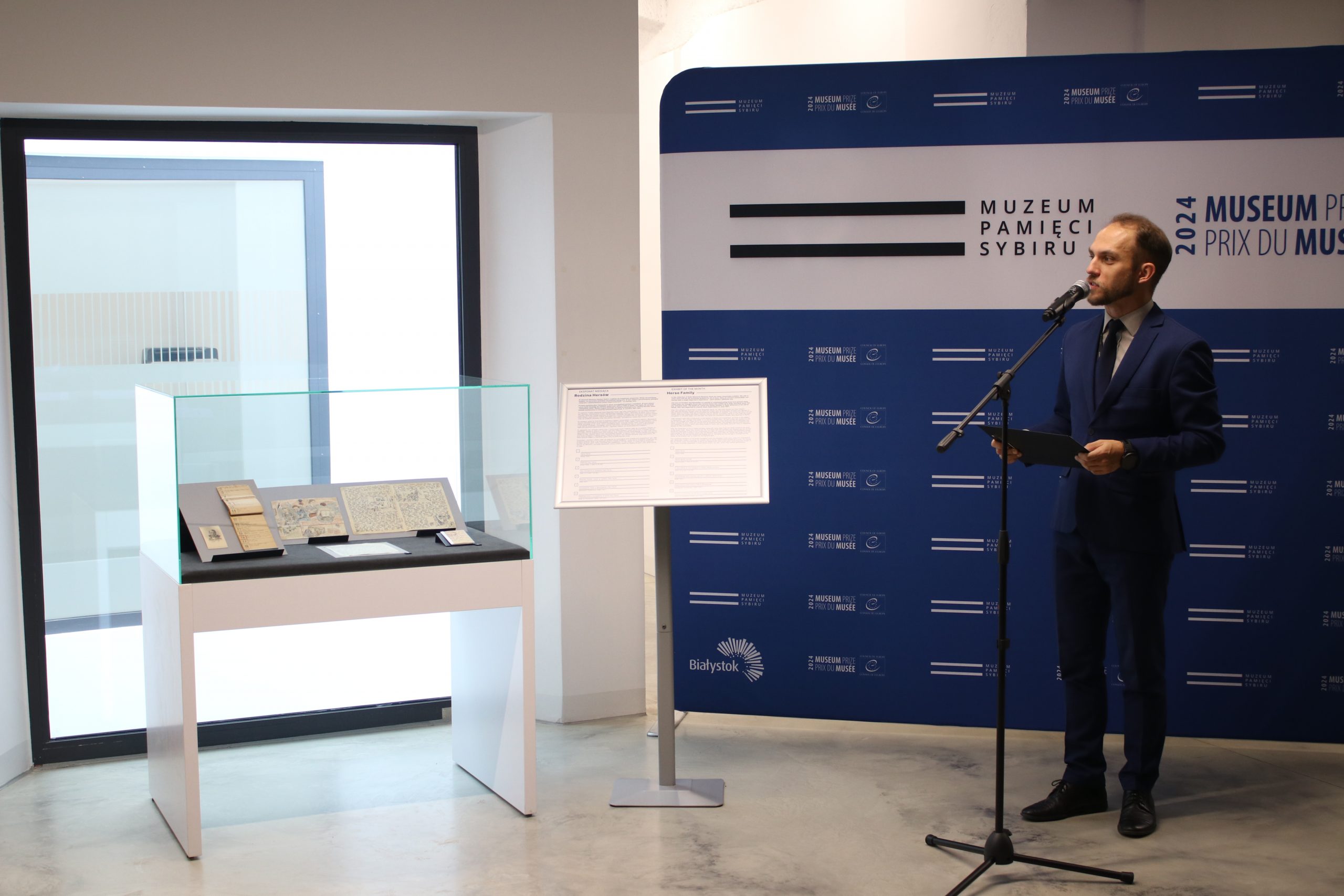
The inauguration of the October Exhibit of the Month was attended by Mike Piet, Hanna Piet’s son, along with his partner, Jane Fontana, and family friend Professor Jack Lohman. Guests were welcomed by Piotr Popławski, PhD, Head of the Department of Educational and Cultural Projects, who emphasized the contributions of Hanna Piet, who could not be present:
“The heroine of today’s meeting is Ms. Hania Herse, who, though is not with us here in person, supports us in spirit from the UK. She greatly helped us prepare descriptions for these exhibits, providing us with a rich history of her family. What is extraordinary about this story is that we have memories here written in a diary as well as drawings created during their time there, in exile. We have little of such collections in our archive,” he said.
What is the story of the Herse Family?
After the outbreak of World War II, Adam Bogusław Herse, his wife Zofia Paulina, and their children: ten-year-old Ryszard, thirteen-year-old Hanna, and fifteen-year-old Bogusław fled from Warsaw to Vilnius, which was incorporated into the Republic of Lithuania in October 1939. In June 1940, Soviet occupation of Lithuania began, and one year later, the Herse family was deported to Siberia.
Their transport reached Rubtsovka on the border of Siberia and Kazakhstan, and from there, they were sent to the kolkhoz in Veselojarsk. The Soviets assigned Adam to manage the kolkhoz’s accounts, while Zofia and their son Bogusław worked in the fields. Hanna created drawings, which she sometimes traded for food, helping to support the family. The youngest son, Ryszard, was tasked with keeping a fire going under boiling grains and standing in omnipresent queues. When amnesty was declared the family with a large group of other Poles, went to the south of the Soviet Union. Upon reaching the neighborhood of the Amu Darya River, their transport was stopped, and the Soviets forced deportees to take up a job, which was building a dam. Harsh conditions led many to fall ill, including twelve-year-old Ryszard. After some time, the Soviets sent those who worked on the dam on a further journey by train. During transportation, Ryszard’s health deteriorated. The family left the train in Jambyl, where, despite receiving treatment, Ryszard passed away.
The other family members managed to join the Polish army being formed under the command of General Władysław Anders. Together with the army, the Hers family left the Soviet Union and made their way to the Middle East and set up home in the United Kingdom after several years.
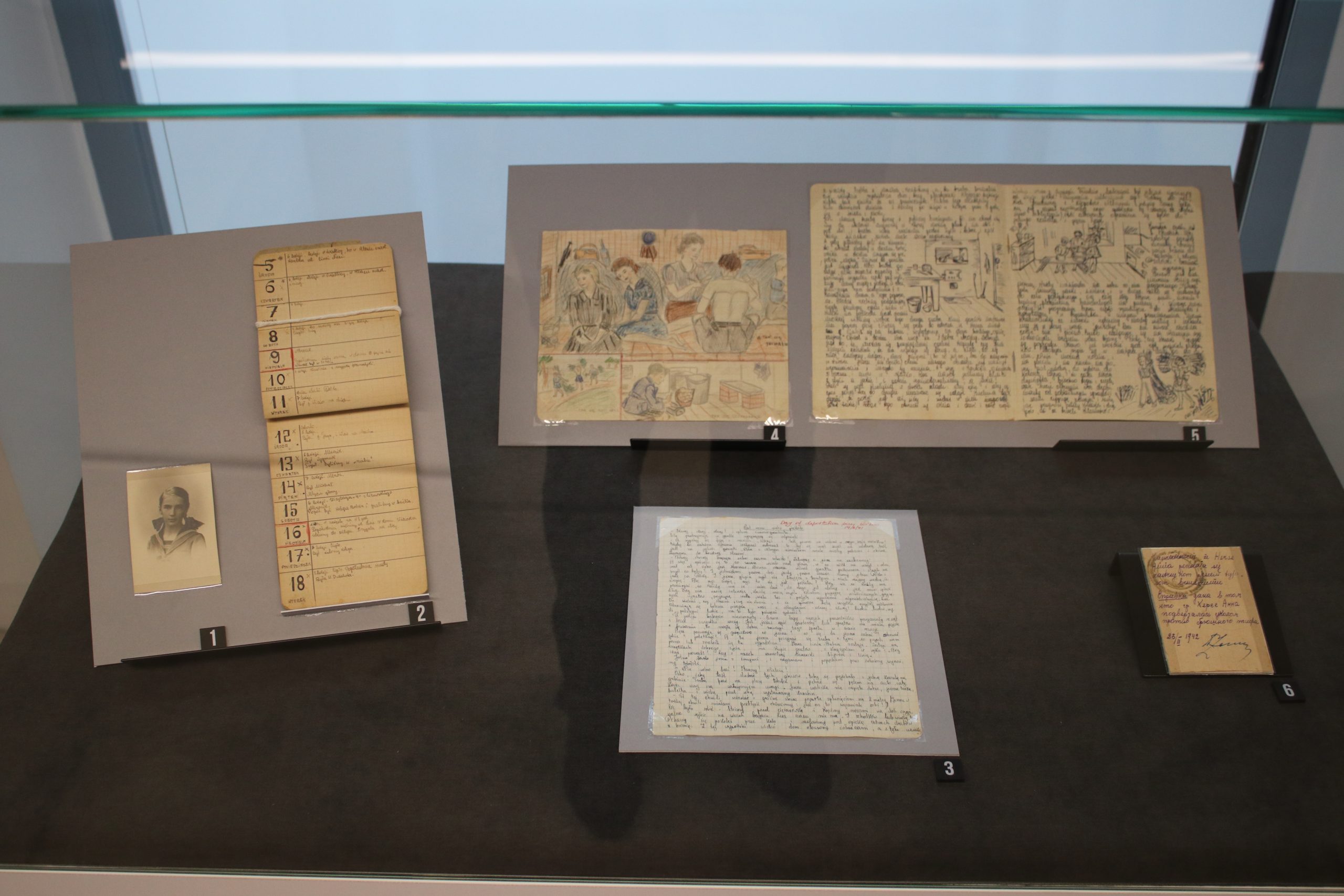
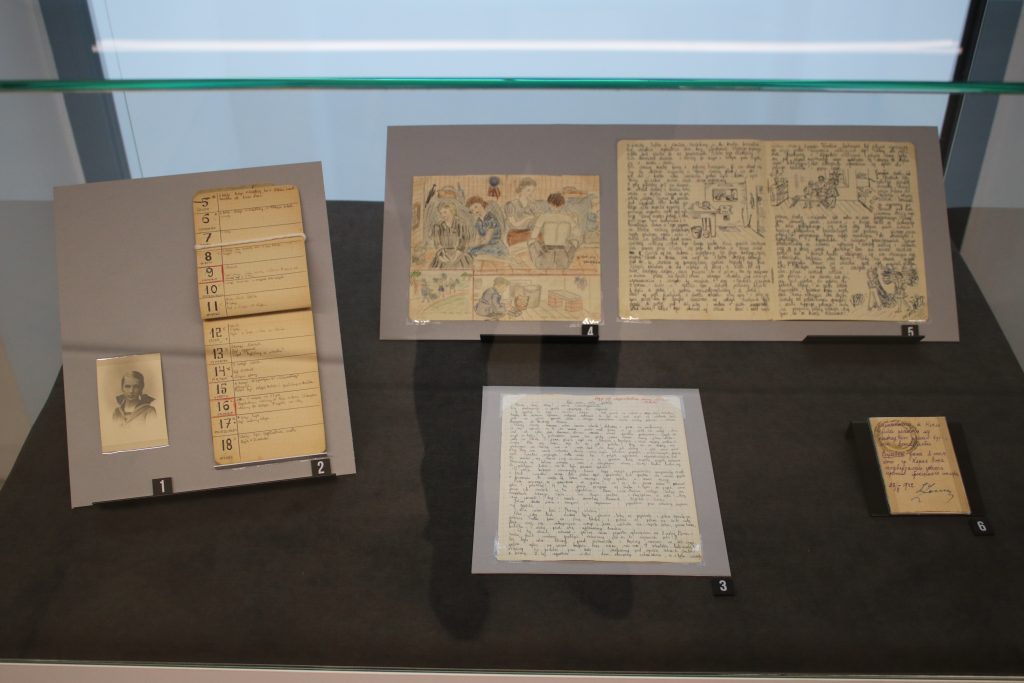
Among the exhibits donated by Hanna Piet were: her pre-war portrait, a handmade drawing entitled “Journey and Life in Exile”, description of the trip, her diary, a story she wrote entitled “Life in Veseloyarsk” and a document confirming Hanna Herse’s inclusion on the list of individuals departing for Iran.
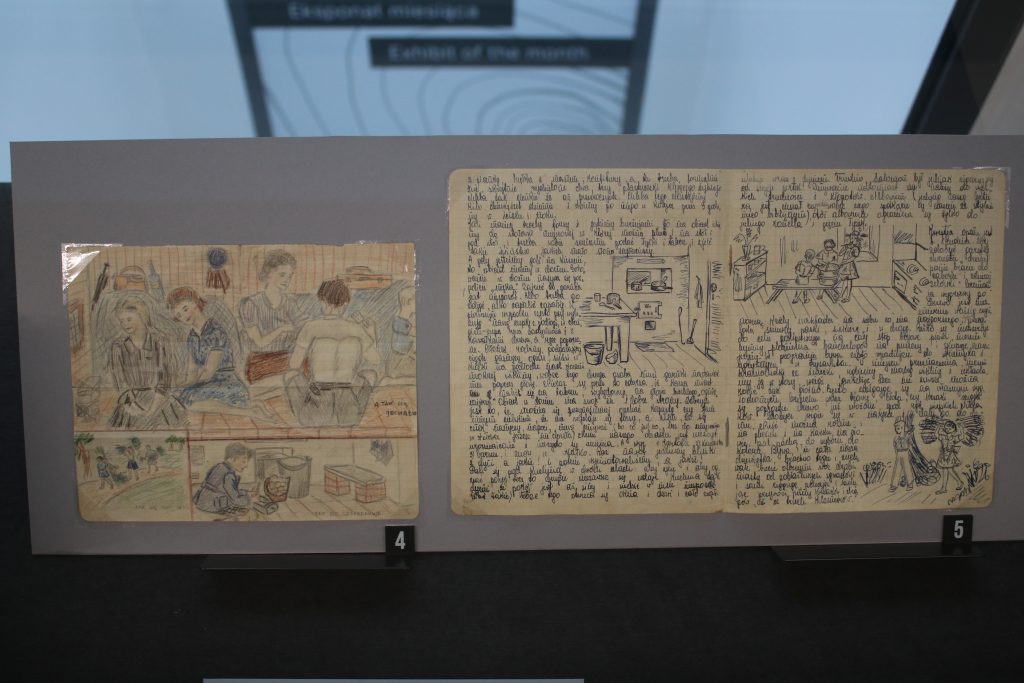
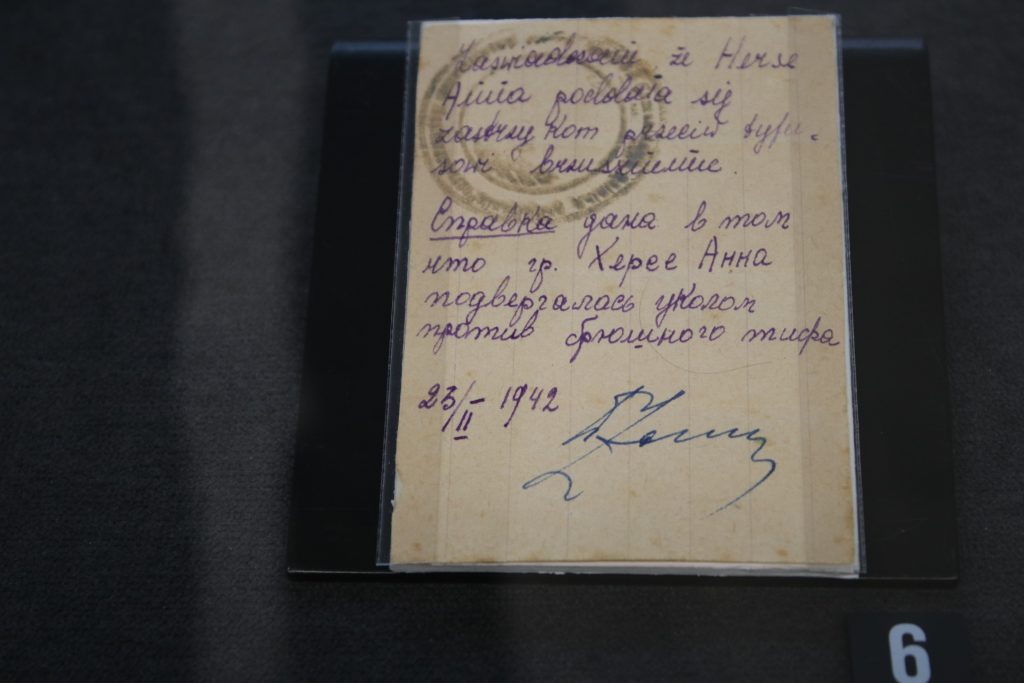
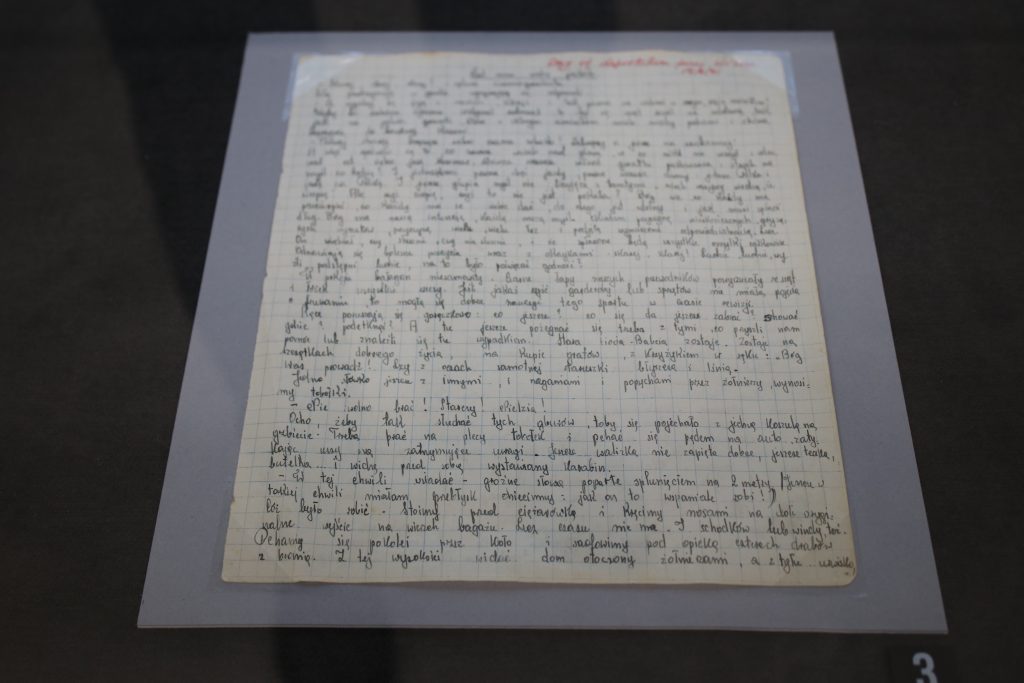
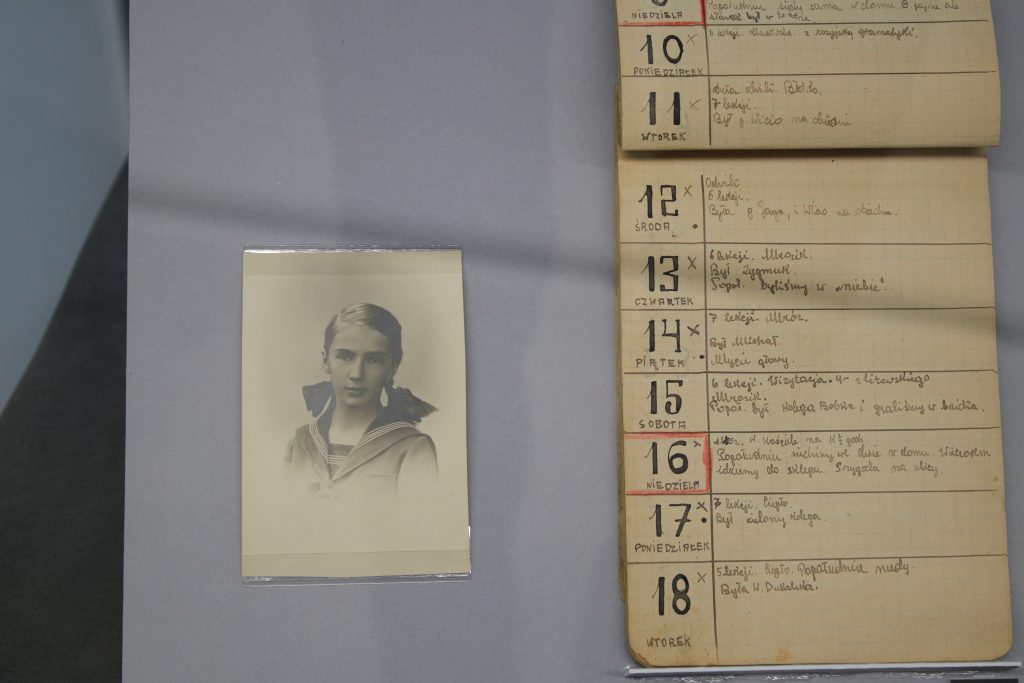
The presentation of these valuable items, as well as the opportunity to visit our museum, were a moving experience for our guests. Mike Piet, although born in the UK, he understands Polish and wanted to deliver some part of his speech in Polish:
“I speak a little Polish, though it’s been almost 50 years since I left my family home. It’s not easy for me, but I’ll try. Thank you for inviting me to Białystok. My mother, Hania Herse, was one of many deported to Siberia. During her journey to Siberia, then Persia and the Middle East, she kept a diary and made notes, which have been handed over to the Sybir Memorial Museum. Being nearly one hundred years old, she remains very active, though coming to Poland is, unfortunately, too far for her,” he said.
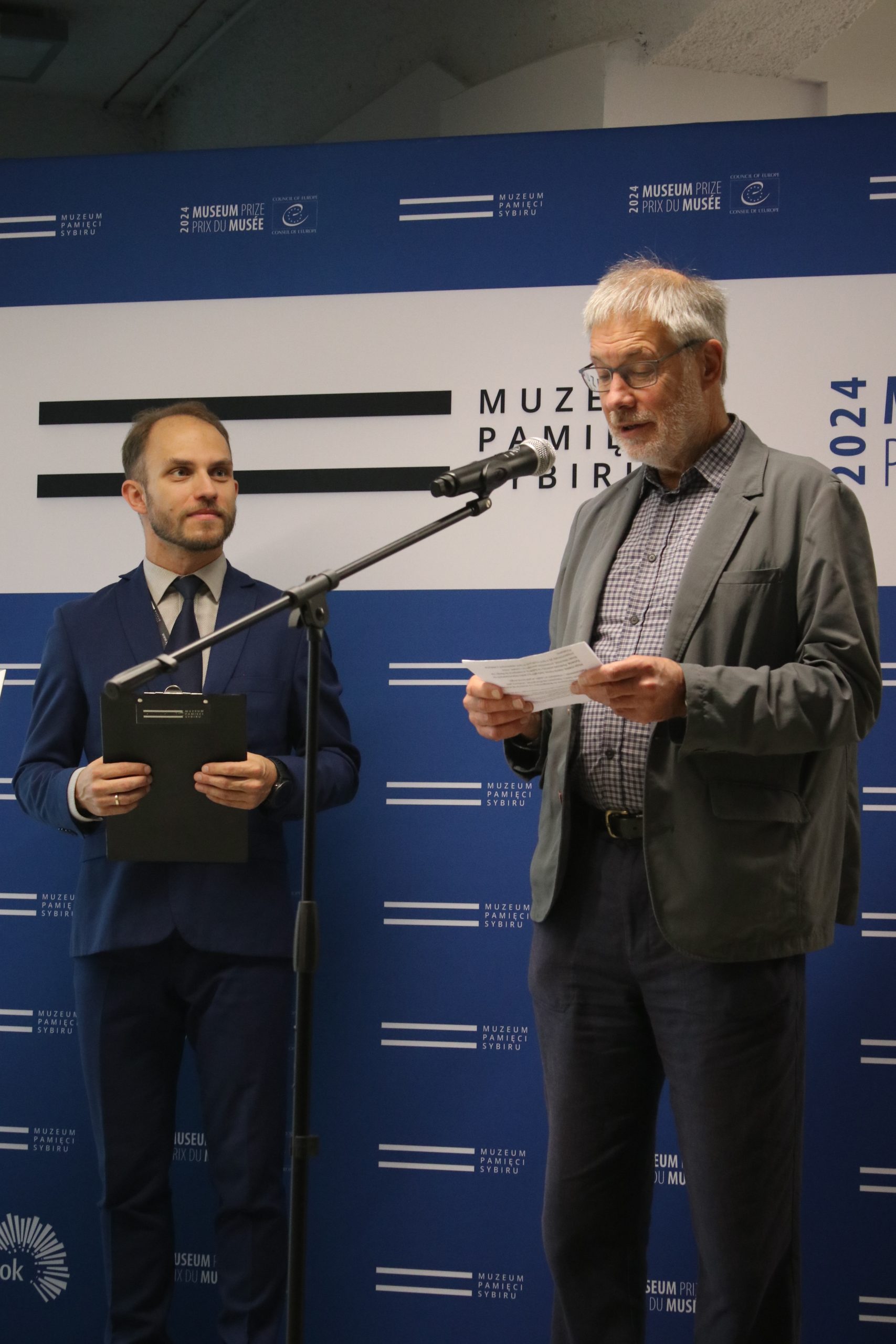
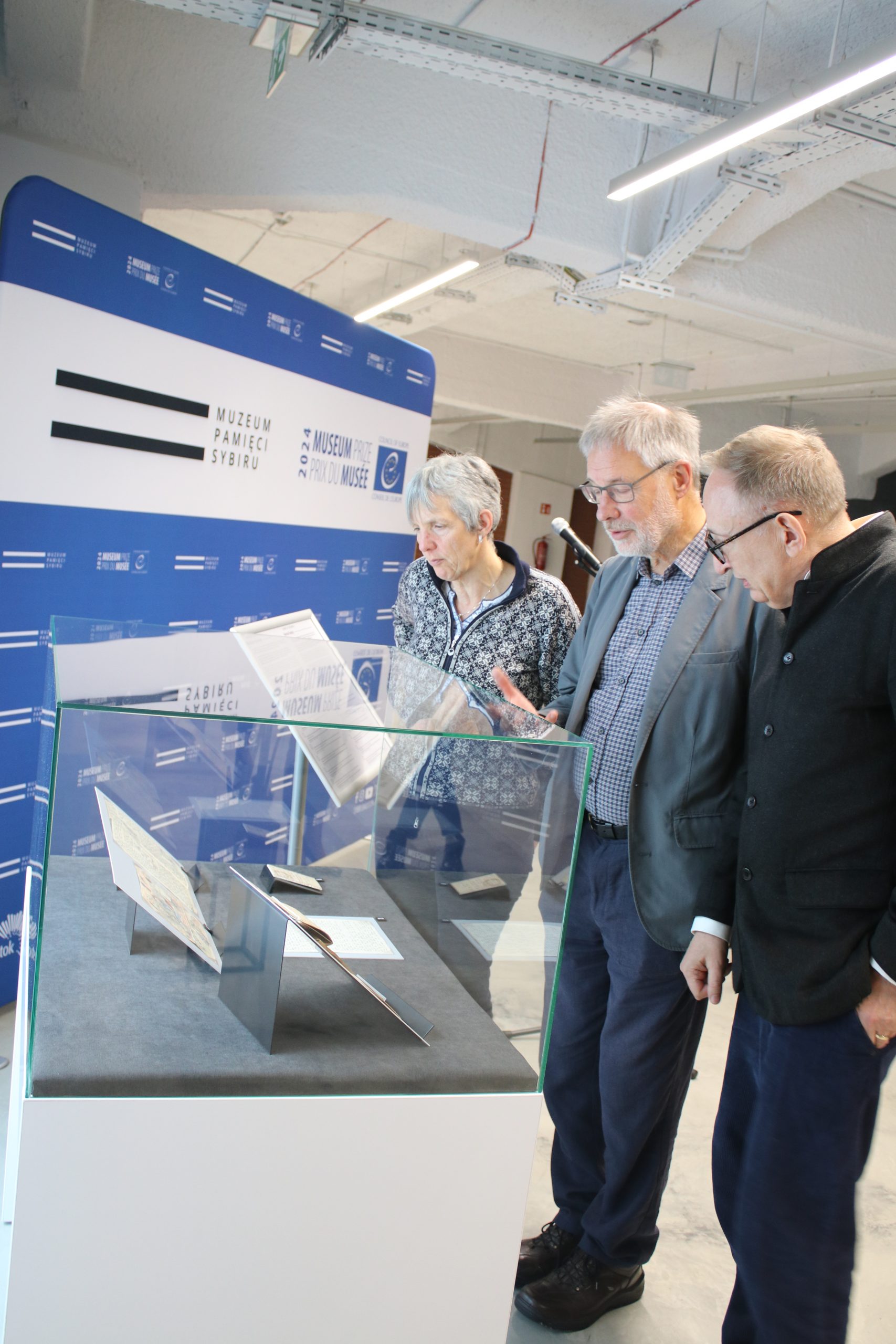
Visit to the museum was a unique experience for our guests, who stressed that even the sight of the building located right next to the railway tracks made a strong impression on them. The gathering also provided an opportunity for many conversations, during which both sides emphasized the importance of preserving our common history and passing it on to future generations.
The display case featuring our Exhibit of the Month is located in the upper hall of the Sybir Memorial Museum. The Herse family memorabilia will be presented for the next month.