

Paulina Cylka: You are the author of the concept behind the “RzeczyViste” installation, and you worked on its development together with Paweł Kalisz from the Permanent Exhibition Department. What did you want to achieve while designing “RzeczyViste”?
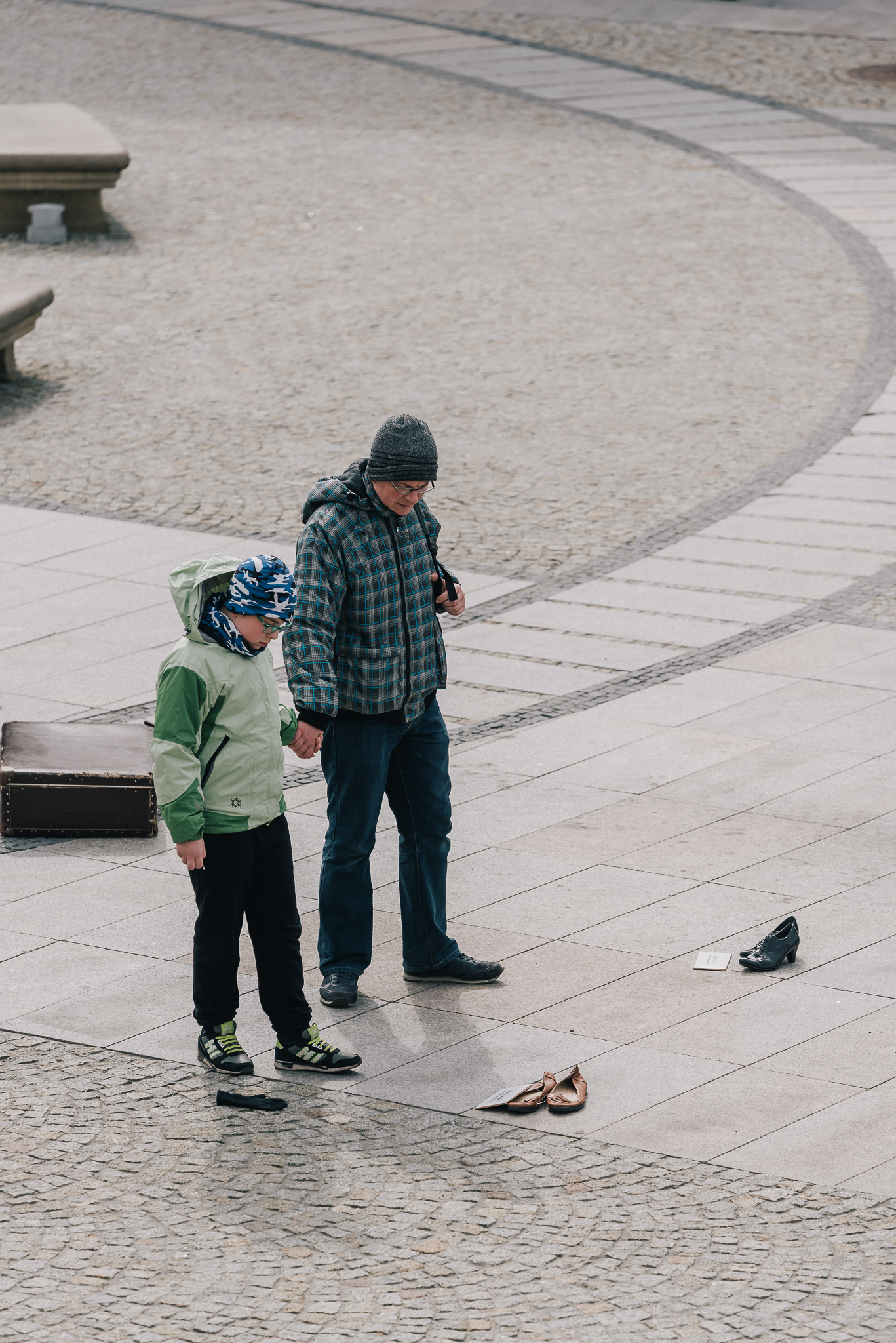
Karolina Mosiej-Zambrano: We wanted to tell the story presented in our Museum in a way that would move people and awaken empathy. History is absorbed differently when it is enclosed within walls, behind glass. “RzeczyViste” responds to the human need for direct contact — here there is no barrier between the viewer and the object. These items lie directly under our feet; you almost stumble over the history they carry.
The core idea behind “RzeczyViste” was surprise. When one visits a museum, there is an inner motivation — curiosity — we want to learn something, so we go to an exhibition. With “RzeczyViste,” history comes to people first. They encounter it unexpectedly. In a way, we impose that encounter — but at the same time it touches something deeper, prompting people to stop, look closely, even touch — and ultimately to reflect on what the installation communicates.
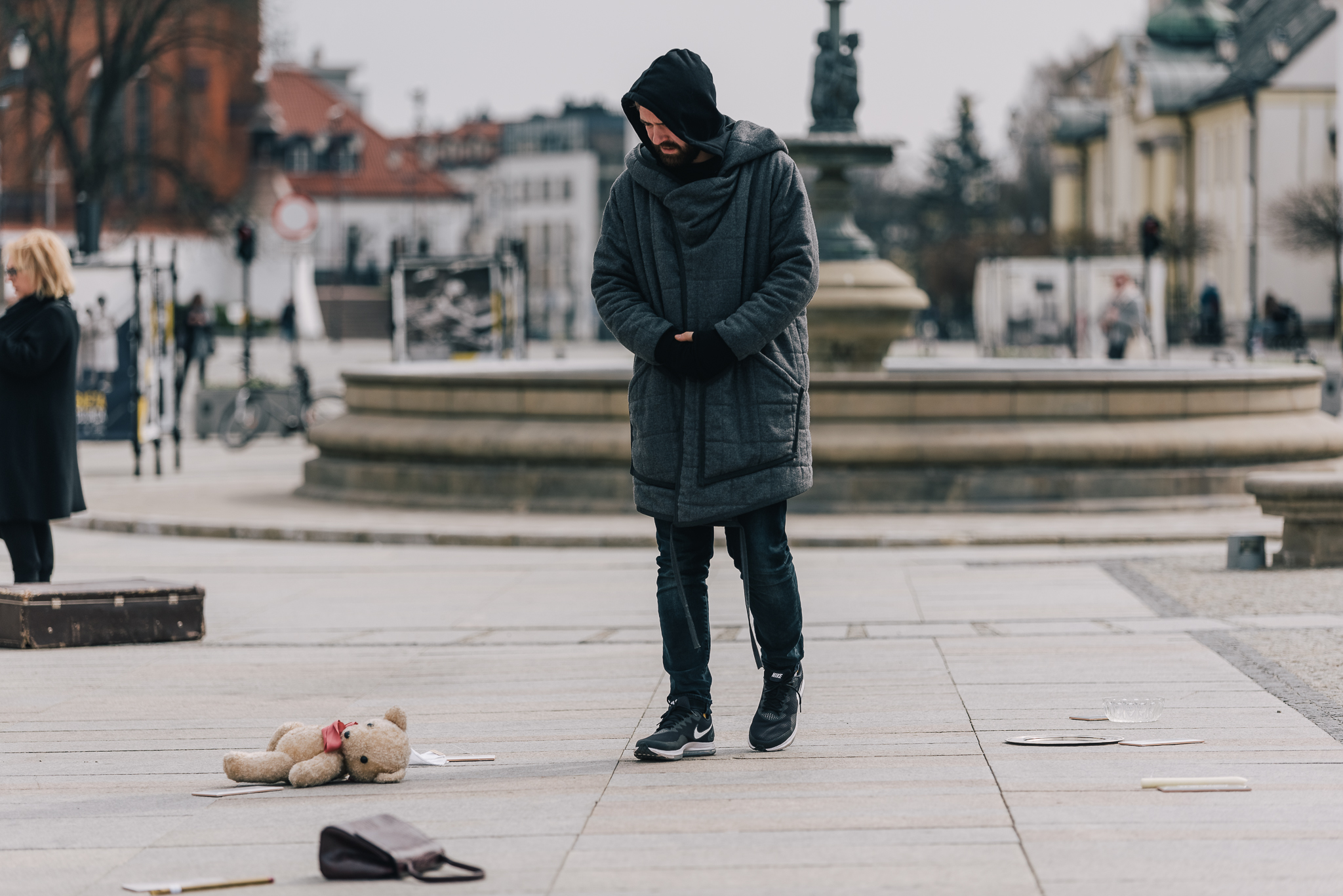
“RzeczyViste” most often appears in public spaces that local communities know well. Its presence disrupts the routine.
When designing the installation, we assumed that it would be set up early in the morning. Public spaces come to life at that time — people go to work or school. As the city wakes up, so does the space. The idea was to introduce “RzeczyViste” at that moment, adding an element of unexpectedness. This creates a slight dissonance — people know the place, pass through it daily, and suddenly something disrupts their rhythm. This refers directly to the events of 1940–1941. At dawn, in the eastern borderland towns and villages, people would awaken to find evidence that something had happened during the night — suddenly someone or something was missing. The shock was profound; the trauma immediate.
You mean those who were not deported but woke up to find their neighbours gone?
Exactly. By that time, those who had been deported were already locked inside railcars or traveling into the unknown. But others remained. We constantly speak about memory — and this is the moment when memory begins to form. Those who stayed behind became the first to shape remembrance of what had taken place.
I did not intend to traumatize contemporary audiences, but I wanted to bring them closer to that moment and allow them to feel, even slightly, the astonishment experienced by communities affected by Soviet deportations.
How do people react to “RzeczyViste”?
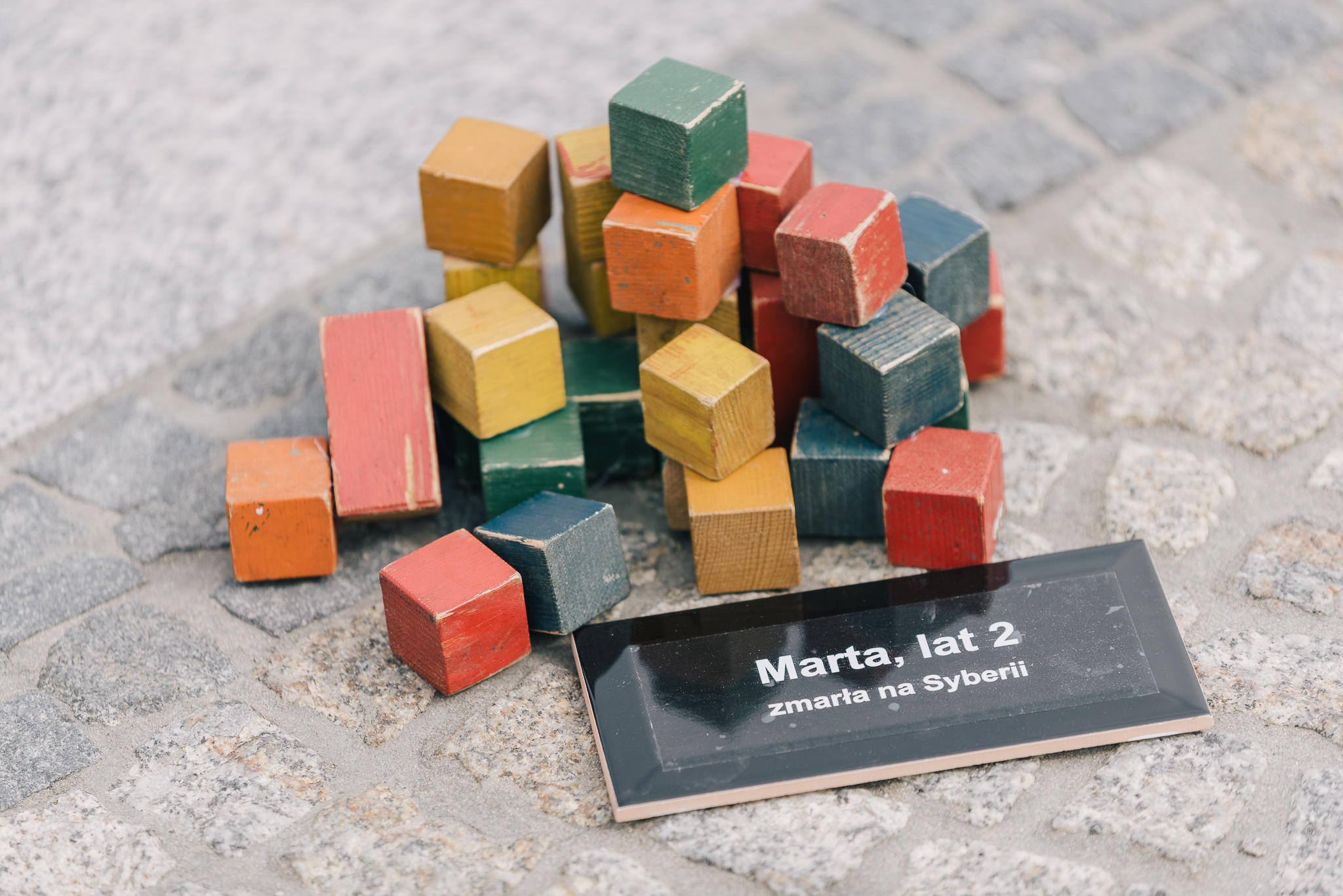
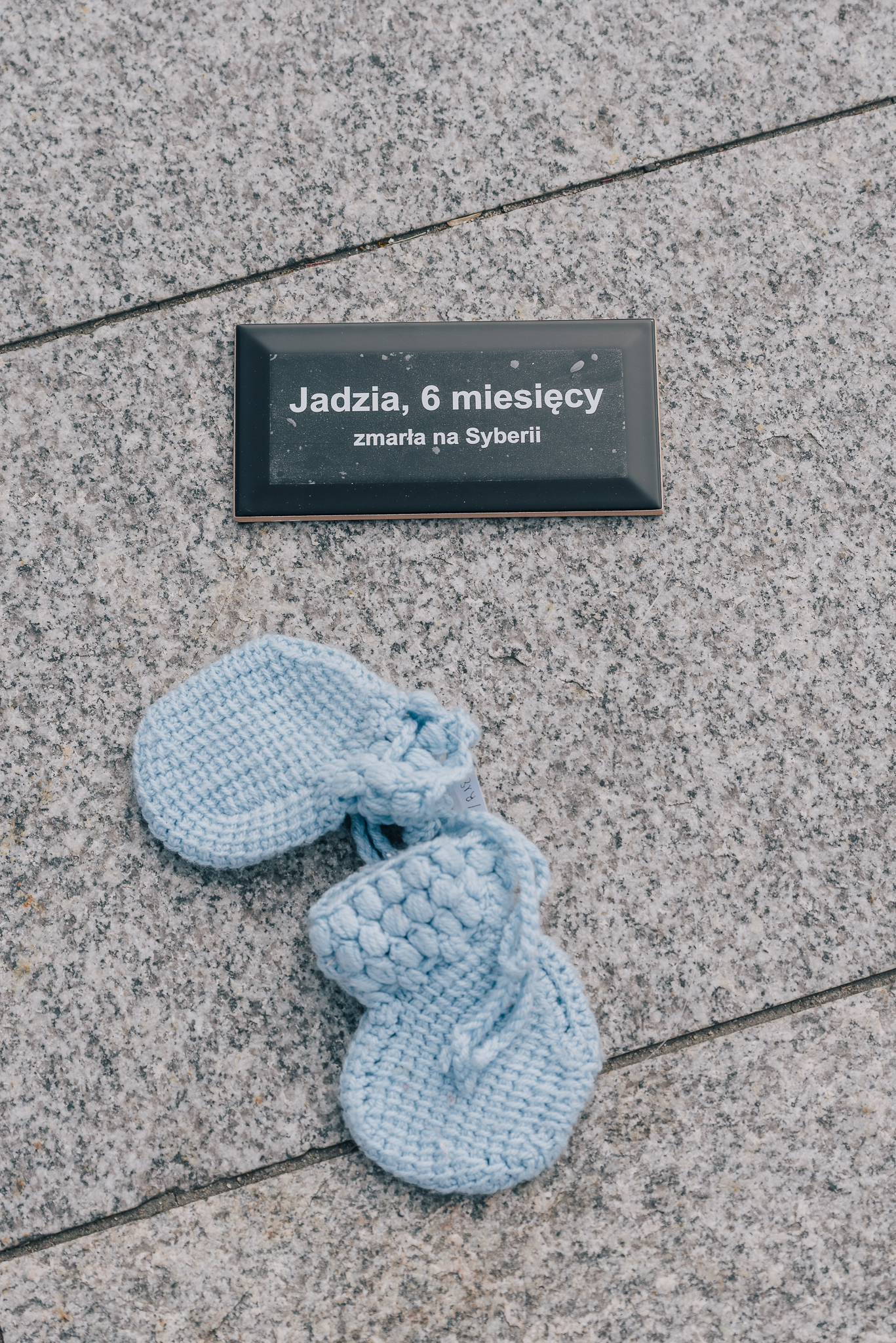
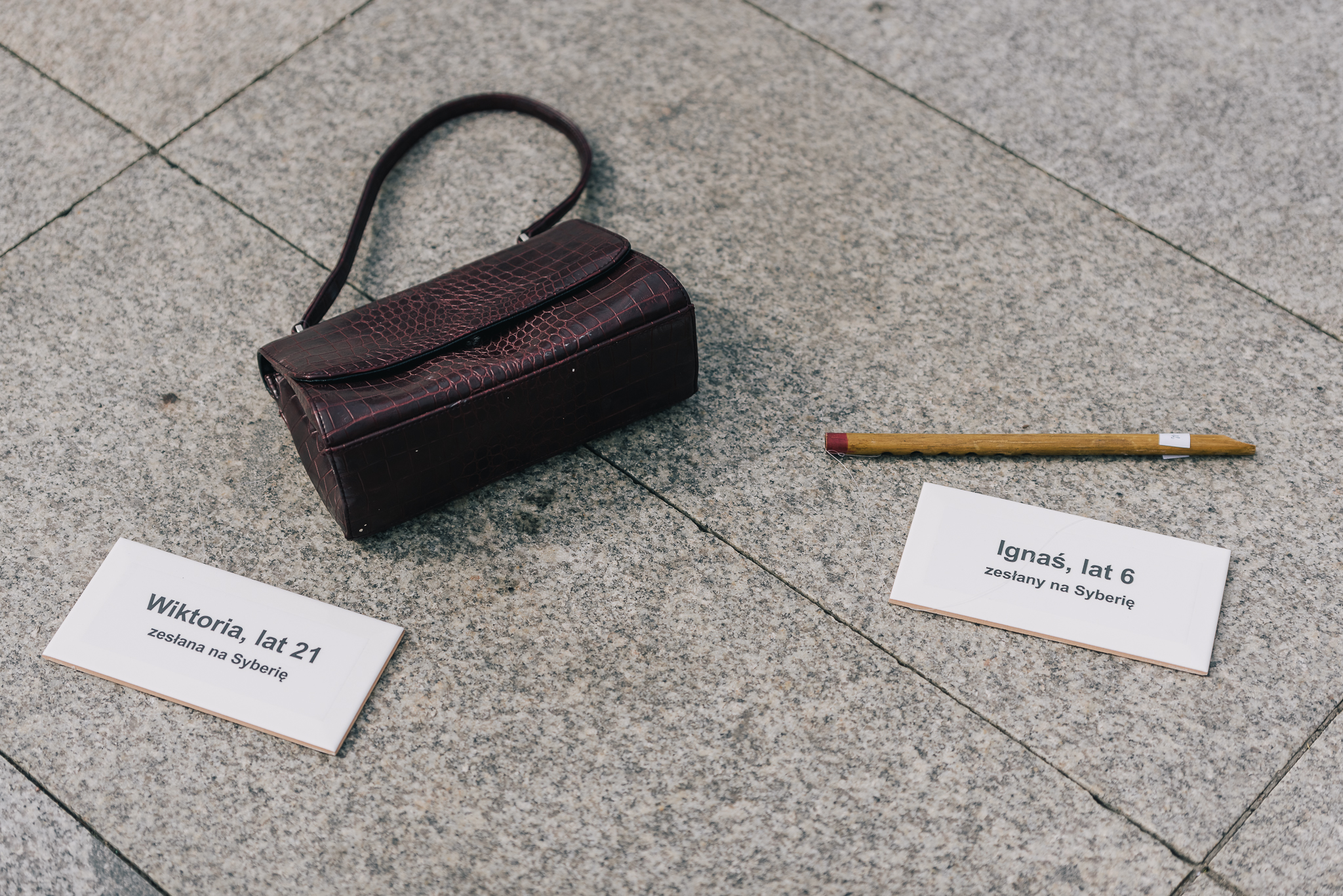
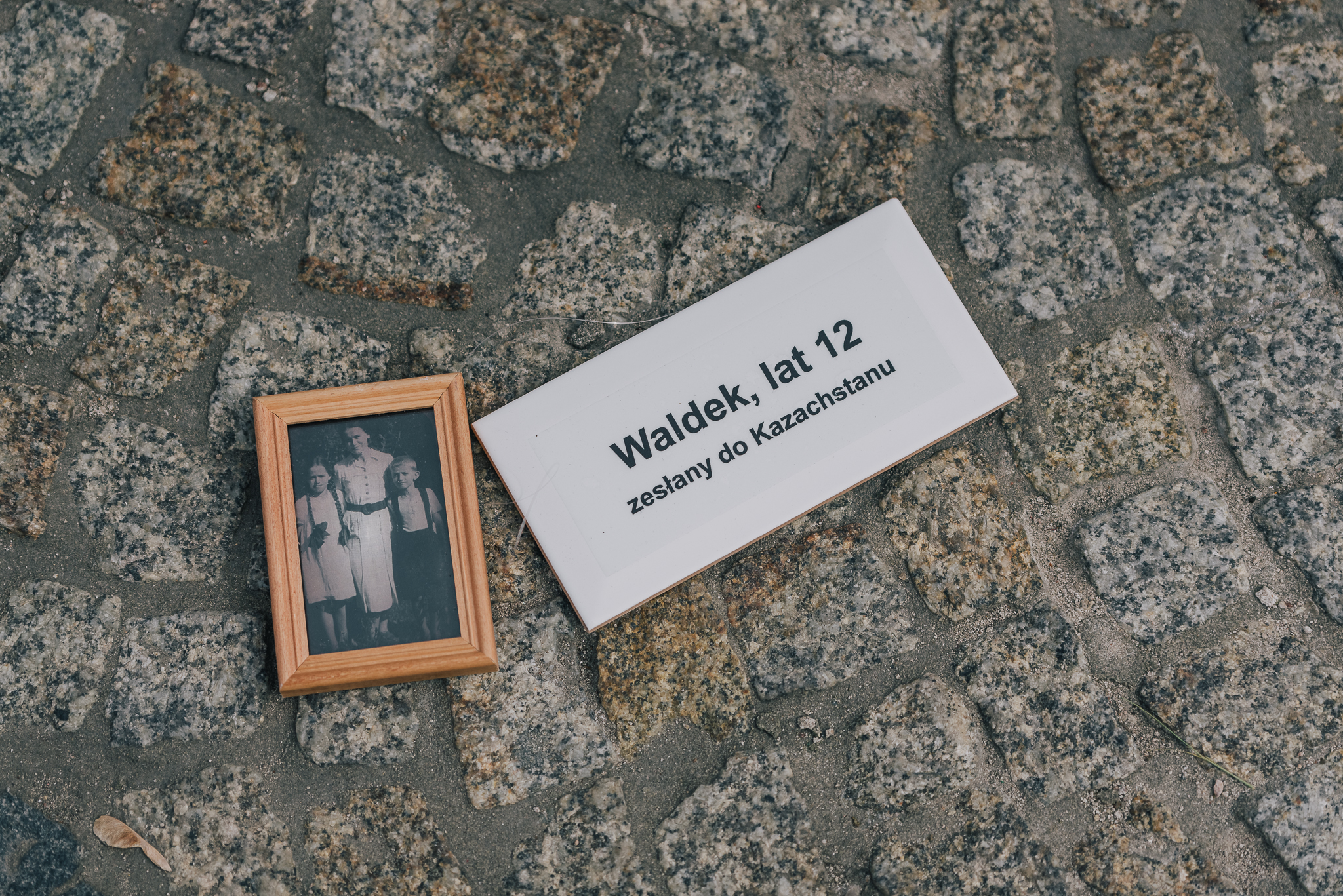
At first, especially when the installation is placed in a very open, visible space, people assume someone has dumped rubbish. There is even indignation: What is this? Why hasn’t anyone cleaned it up? But as they approach the “rubbish” — and this is both fascinating and deeply moving — they notice a small plaque. It is plain, black or white, with nothing but a name. In that instant the object ceases to be rubbish — it becomes someone’s personal belonging. Something familiar — a pot, a toy, glasses — but tied to a specific person. That is the moment when viewers begin to engage emotionally and uncover the story behind the installation.
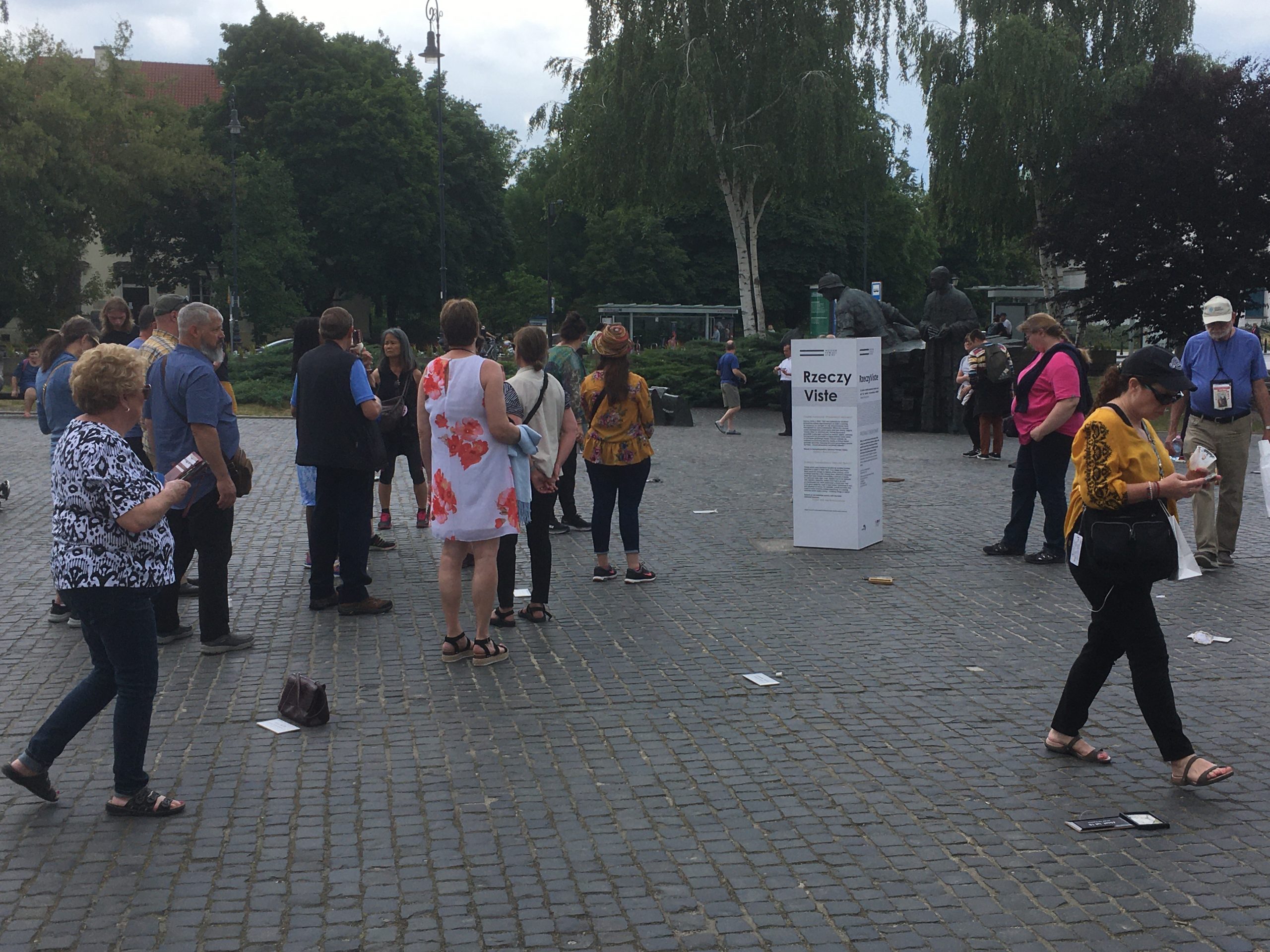
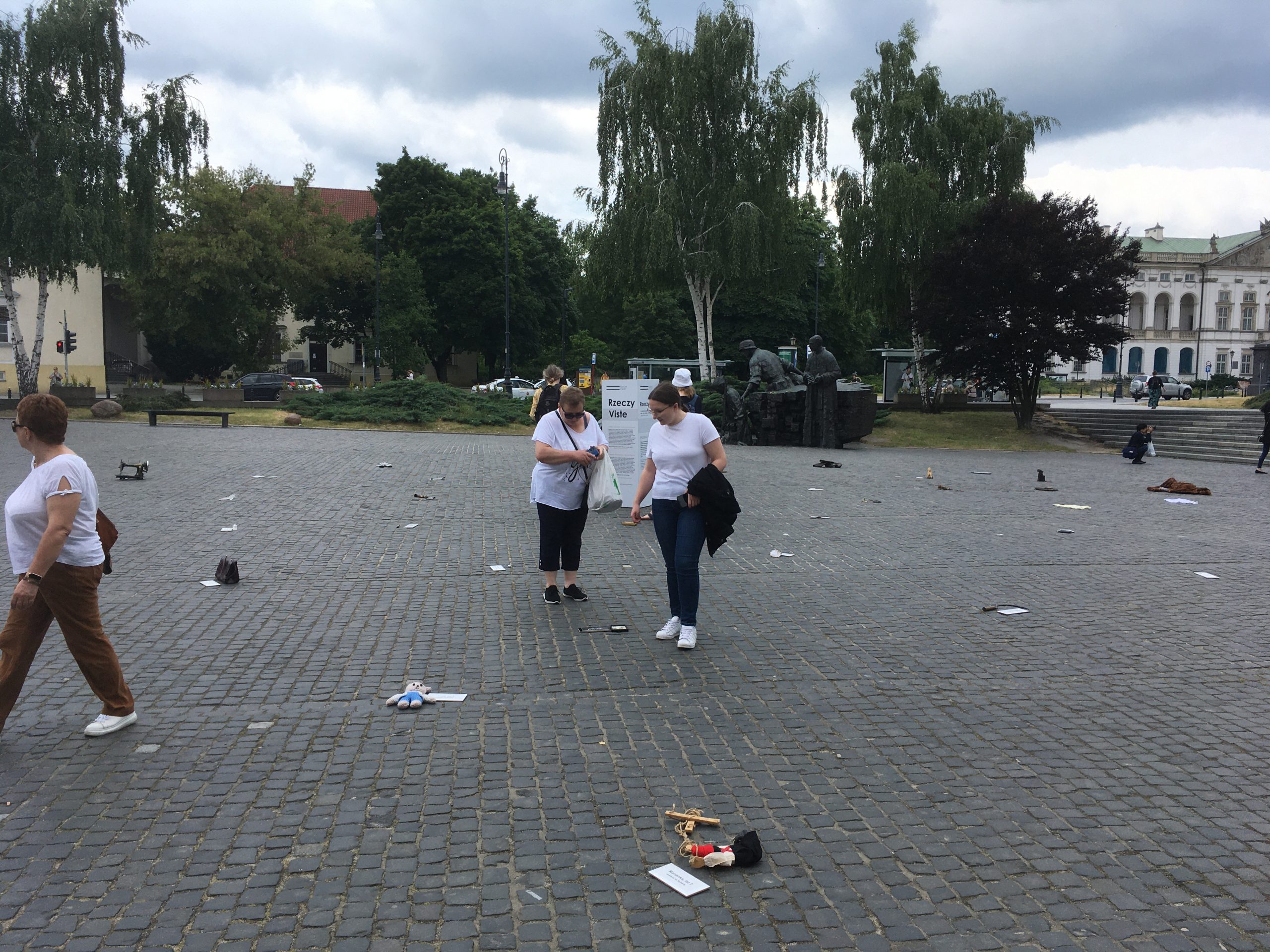
A mother will respond differently to a toy with a child’s name, while an elderly man may resonate with a cane belonging to an older woman. Our aim was to shorten the distance, to allow viewers to approach the objects freely and enter the story at their own pace.
The installation is intentionally free of explanatory panels or guided narration. There is information that the objects belonged to deported individuals, and a central cube providing contextual details. Placed in the middle, it becomes a point where all who explore the installation eventually meet.
I assume the next step is conversation with a Museum educator who is always present on-site?
Yes, staff members are always nearby, and we provide leaflets — but we intentionally remain off to the side.
So the idea is to give viewers a choice — to think in silence, or speak and share?
Exactly. For many people, it awakens the need to talk about their own emotions or family stories. Everyone reacts differently, and my goal was to give freedom in how the installation is experienced.
How did you select the objects for “RzeczyViste”?
While working on the permanent exhibition, I became familiar with our collections. I based the selection of objects on items preserved in the Museum.
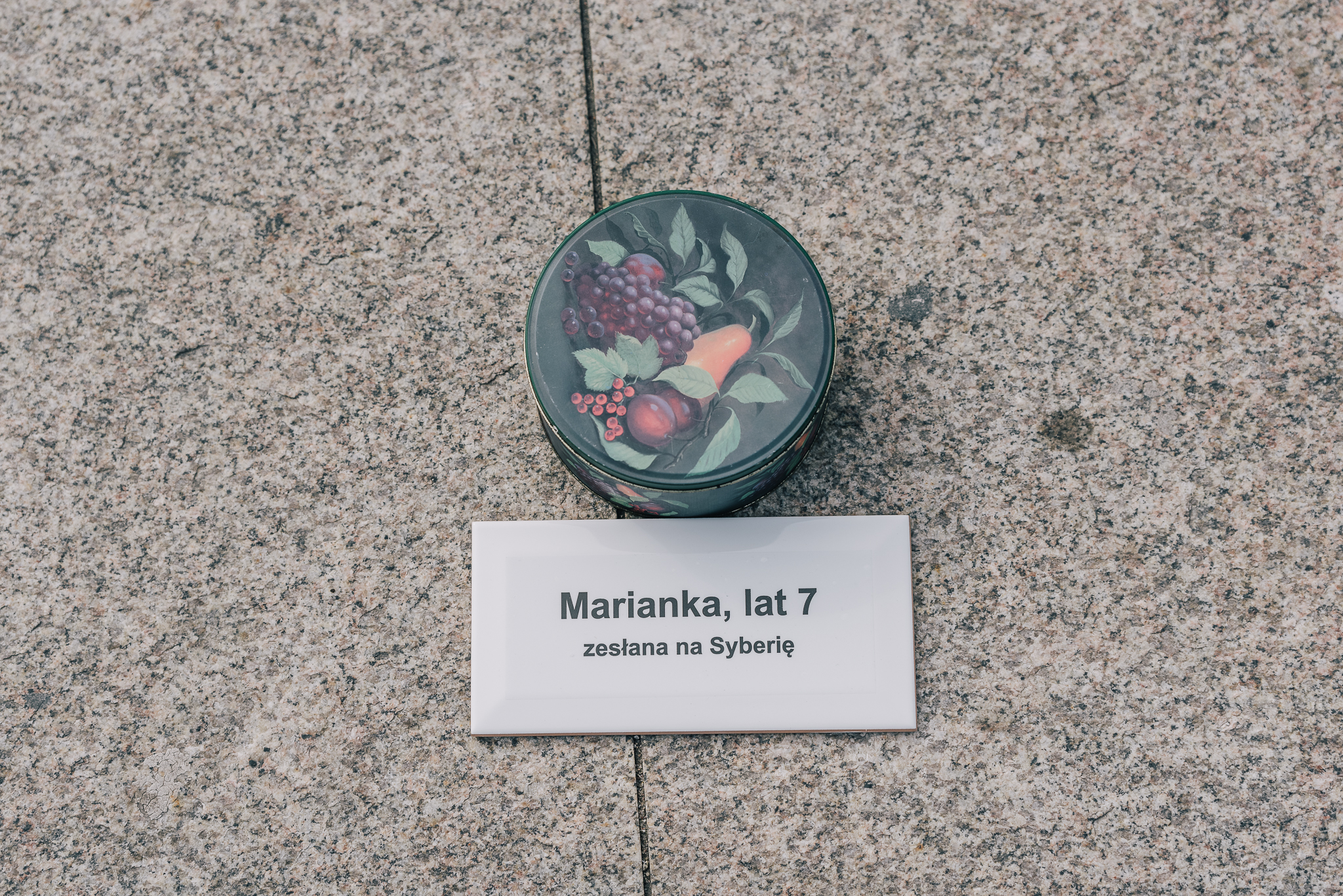
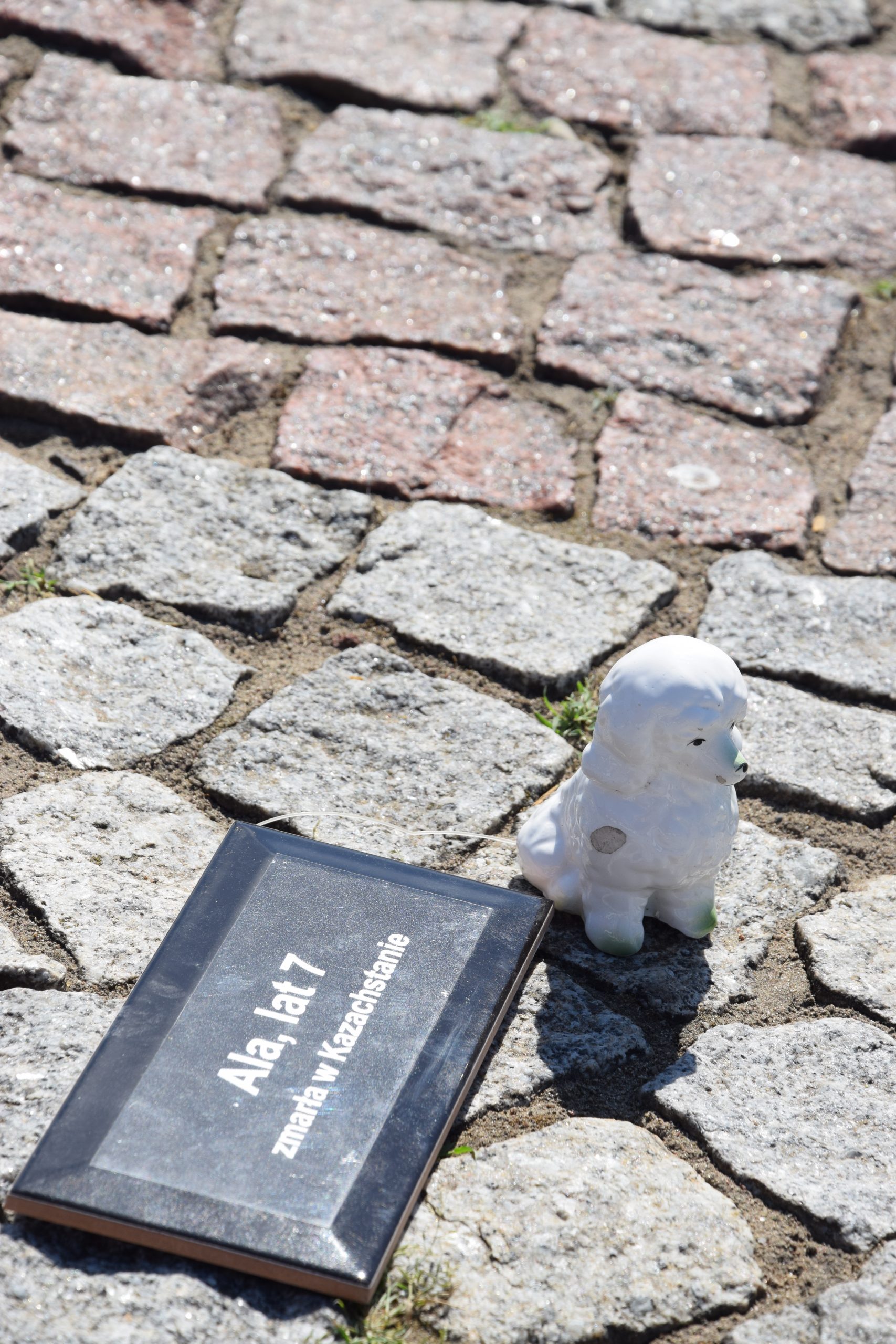
So these are replicas of real objects?
Some are very close — not original artifacts, but nearly identical. Others replicate items described in testimonies or visible in archival photographs. Each element has a substantive rationale behind its inclusion.
Do the plaques refer to real people?
Sometimes yes, though creating a perfect match between name and surviving object is rare in museum practice. In a few cases, we succeeded — for example, we know that “Krysia, age n,” took a doll with her. In other cases, we use authentic personal data and match objects by gender, age, etc.

The installation has been touring for several years now. Would you change anything?
No — it remains faithful to the idea. The only planned evolution is expanding the number of objects. We currently have around 80–100, though not all are used at once — it depends on space, weather, and context.
“RzeczyViste” has been shown in cities like Poznań and Lublin. Does scale matter?
Very much. A vast square may swallow the objects; a cramped space may hinder movement. Scale shapes the encounter from the very first glance.
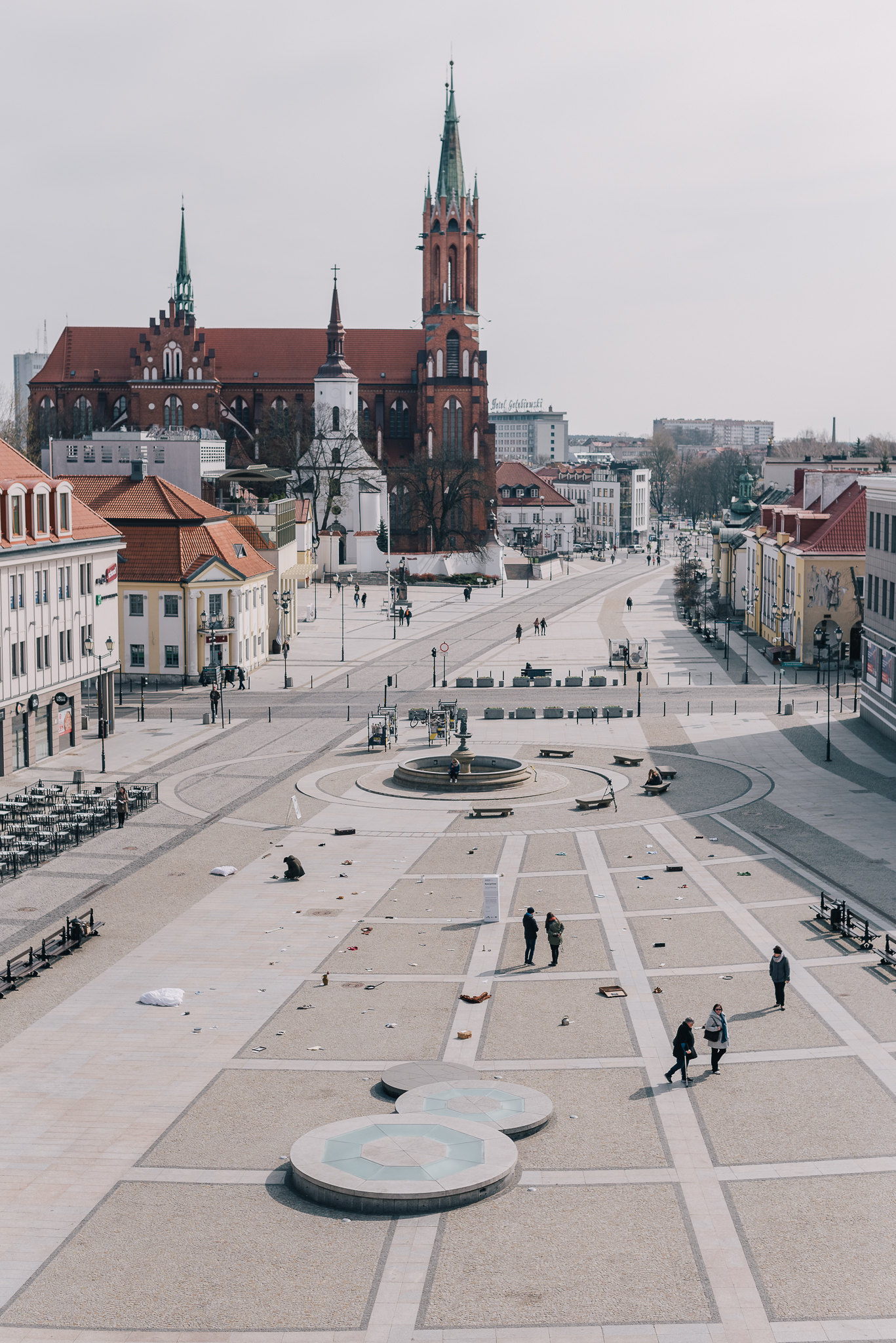
The installation seems intriguing: instead of inviting visitors indoors, the Museum brings its story out into the city — through objects rather than screens.
Exactly. Its strength lies in its simplicity and accessibility. Regardless of age, education, or cultural background, viewers possess all the tools necessary to engage with it.
You specialise in accessibility. Did you account for audiences with particular needs?
Yes. Although the installation has limitations, I have ideas for improving accessibility — it will require further work and resources.
I prepared detailed setup guidelines for colleagues — for example, the distances between objects. Larger items must appear first, while smaller ones — like rings or glasses — are placed nearest the central cube, allowing those with visual impairments to adjust gradually. The black-and-white plaques are deliberate: besides symbolic meaning (black for those who died in exile), avoiding a multitude of colours prevents sensory overload.
Objects may be touched — that choice remains with the viewer. This is especially important for individuals with visual impairments. I hope that in the future we will add an audio guide with audio description.
Interview by Paulina Cylka