



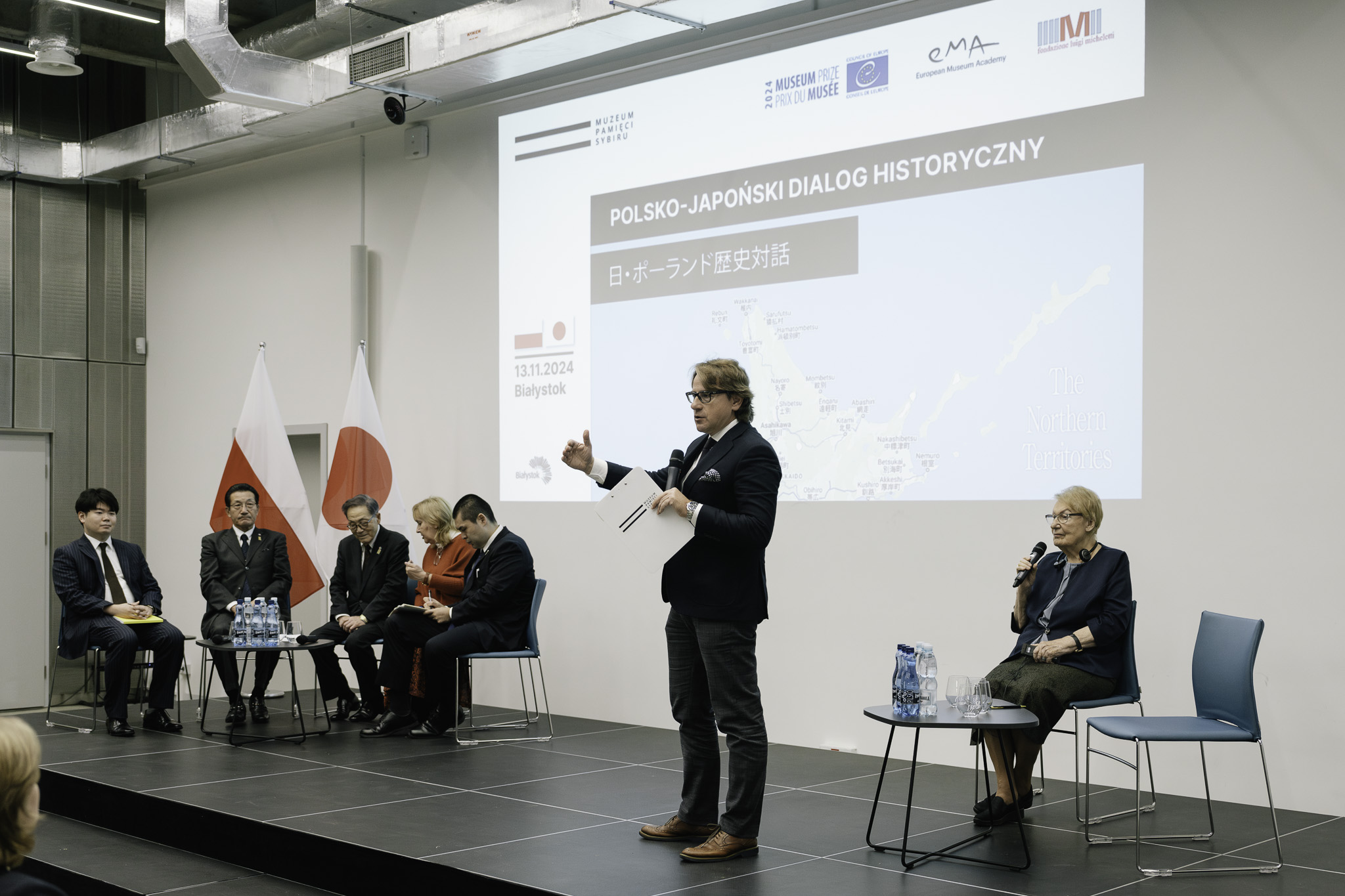
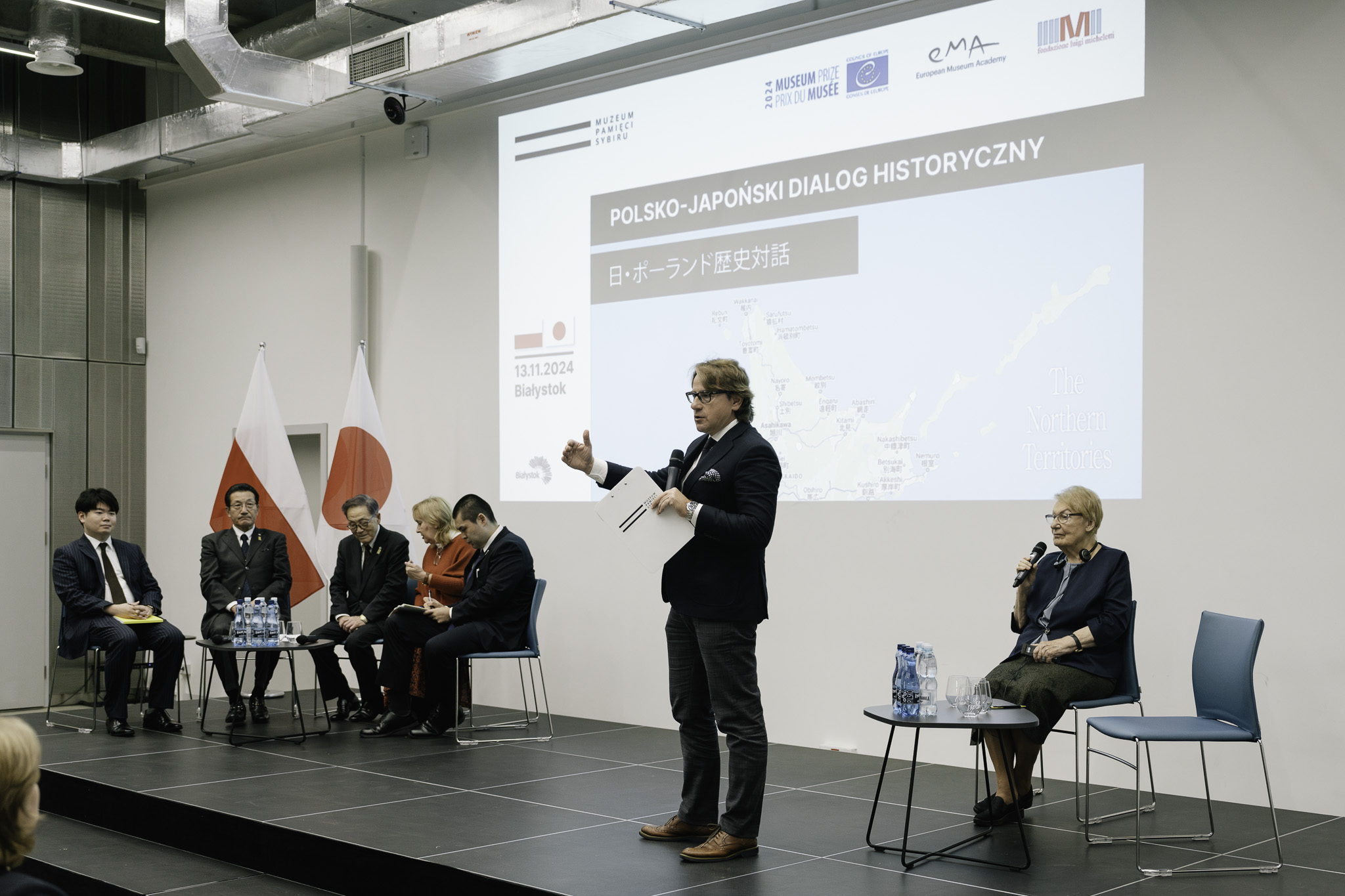
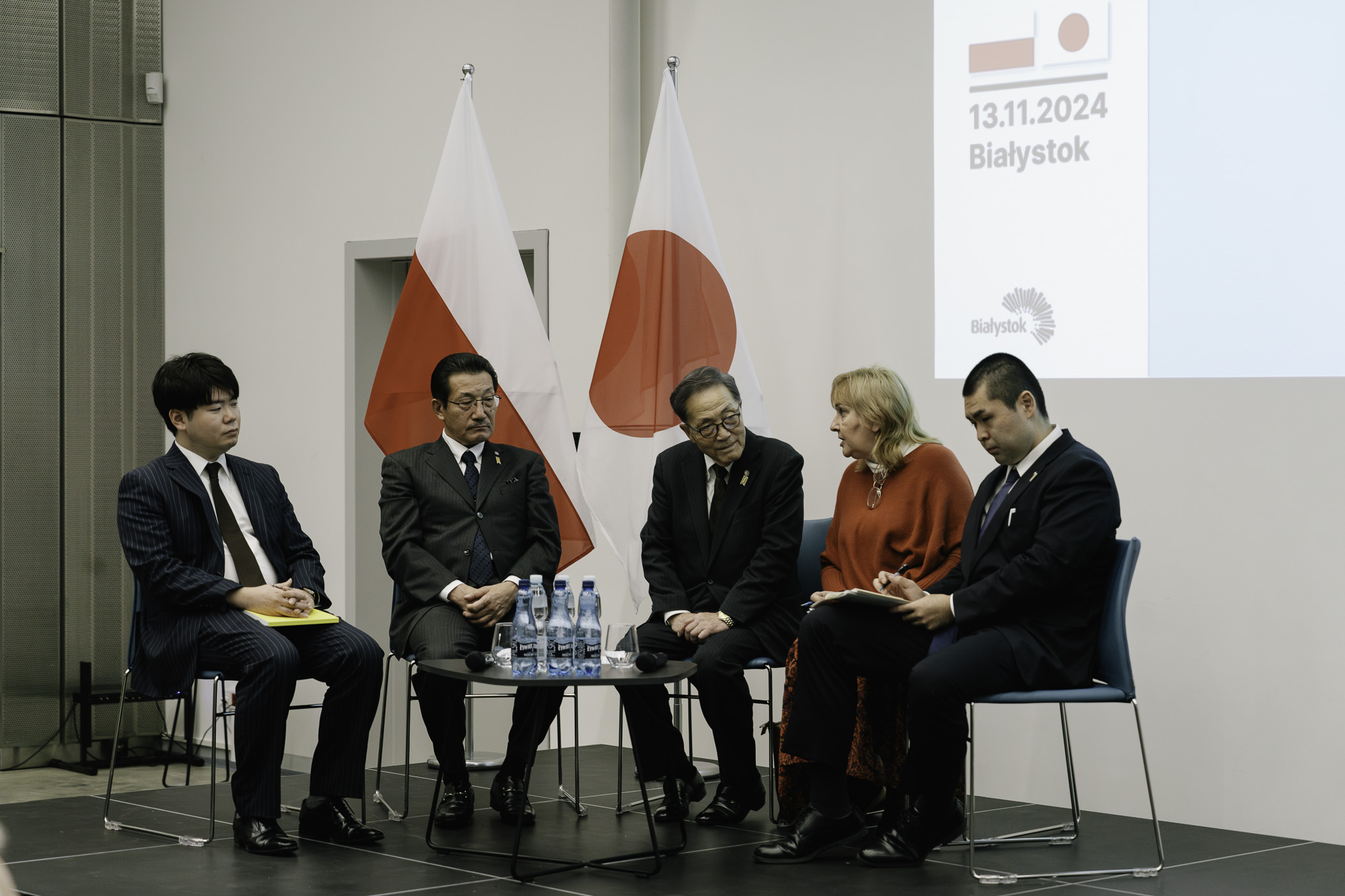
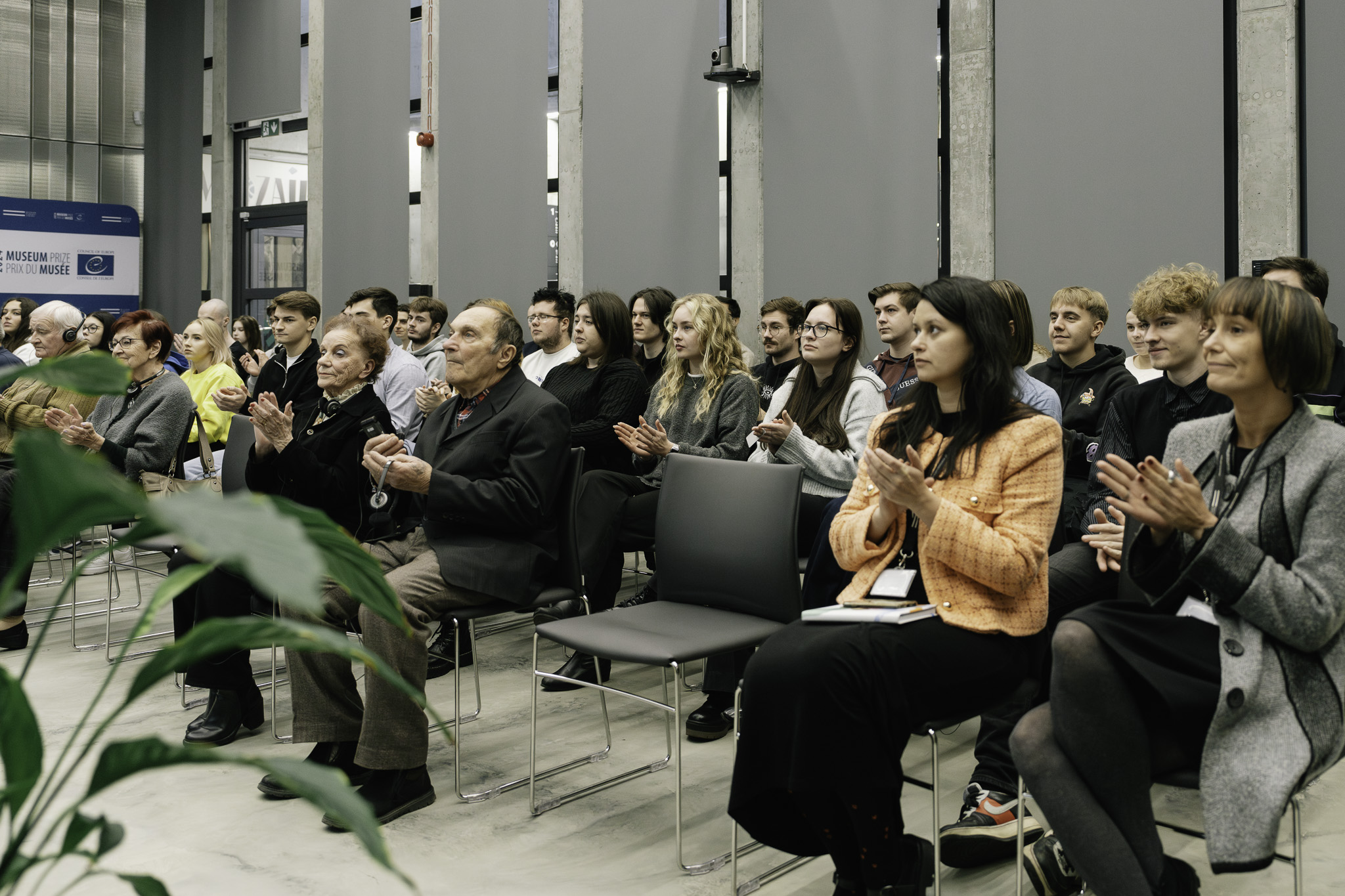
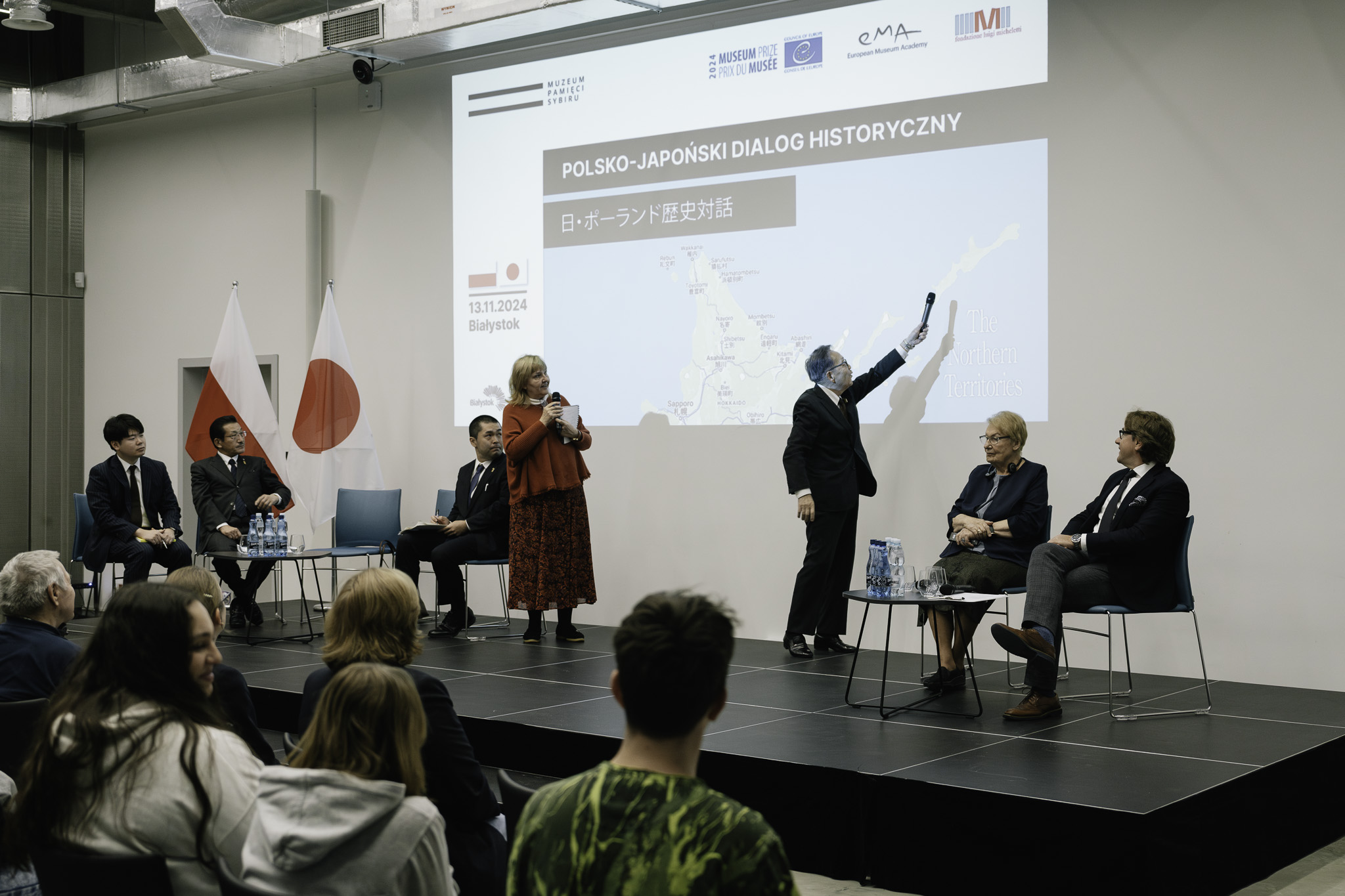
Members of the Residents’ Association of Hashima and the Habomai Islands – President Matsumoto Yuzo and Vice President Nogata Tatsuhiko – shared their stories with the residents of the city of Białystok. The meeting was also attended by Konno Yuki, Secretary of the Japanese Embassy, Arima Junichi, Deputy Director of the Russian Office for European Affairs at the Ministry of Foreign Affairs of Japan, and translator Anna Omi. Among the audience were Sybiraks, including Jolanta Hryniewicka, President of the Białystok Branch of the Association of Siberian Deportees, a group of students from the University of Białystok, and the Museum staff.
Russia and Japan have been at odds for centuries over the Kuril Archipelago, which stretches over 1,200 km in the Pacific Ocean between Hokkaido and Kamchatka. Since 1945, this territory has been occupied by Russia, which is why no peace treaty has been signed between the two countries until today. The islands are of strategic importance and are rich in natural resources.
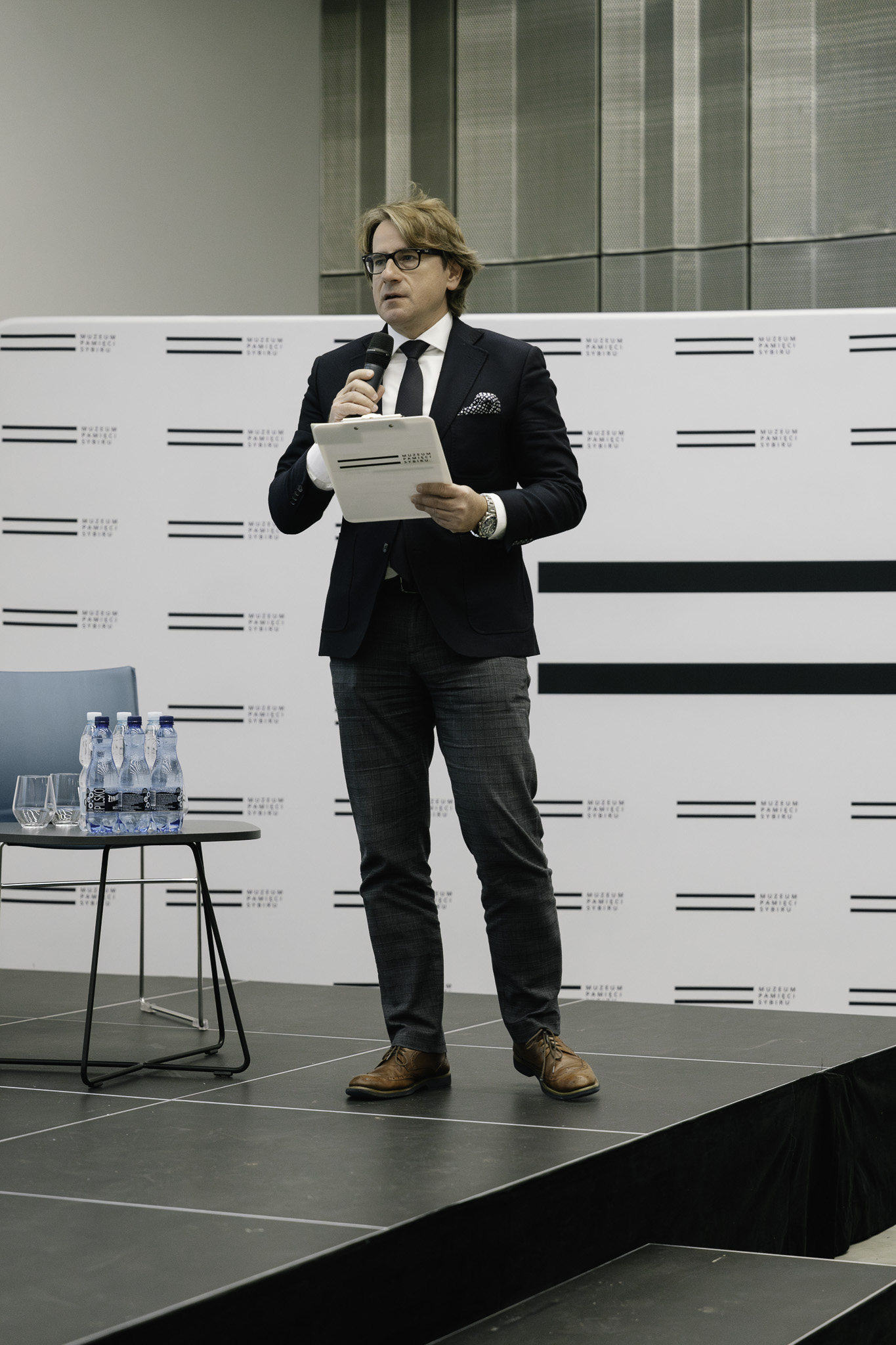
During his speech, Professor Wojciech Śleszyński, Director of the Sybir Memorial Museum, spoke about different experiences of Poles and Japanese people regarding the Russian invasion of both countries.
President, Matsumoto Yuzo recalled:
“I come from Iturup, the largest island, located easternmost. After the Soviet Union occupied our homeland, we were deported to various places. Depending on the group, we spent one to three years in internment camps. Some of us were deported to Sakhalin, and from there, we ended up in Hokkaido, the second-largest island of Japan. On September 29th, 1945, Soviet troops entered our island and took over my family home. The post office where my father worked was turned into a publishing house for the Soviet newspaper ”Pravda”. We regard this occupation as illegal and view the stripping of everything we owned as an extraordinarily cruel act. After Russia’s invasion of Ukraine, we are not even allowed to visit these four islands. We are recognized by Russia as an organization non grata.”
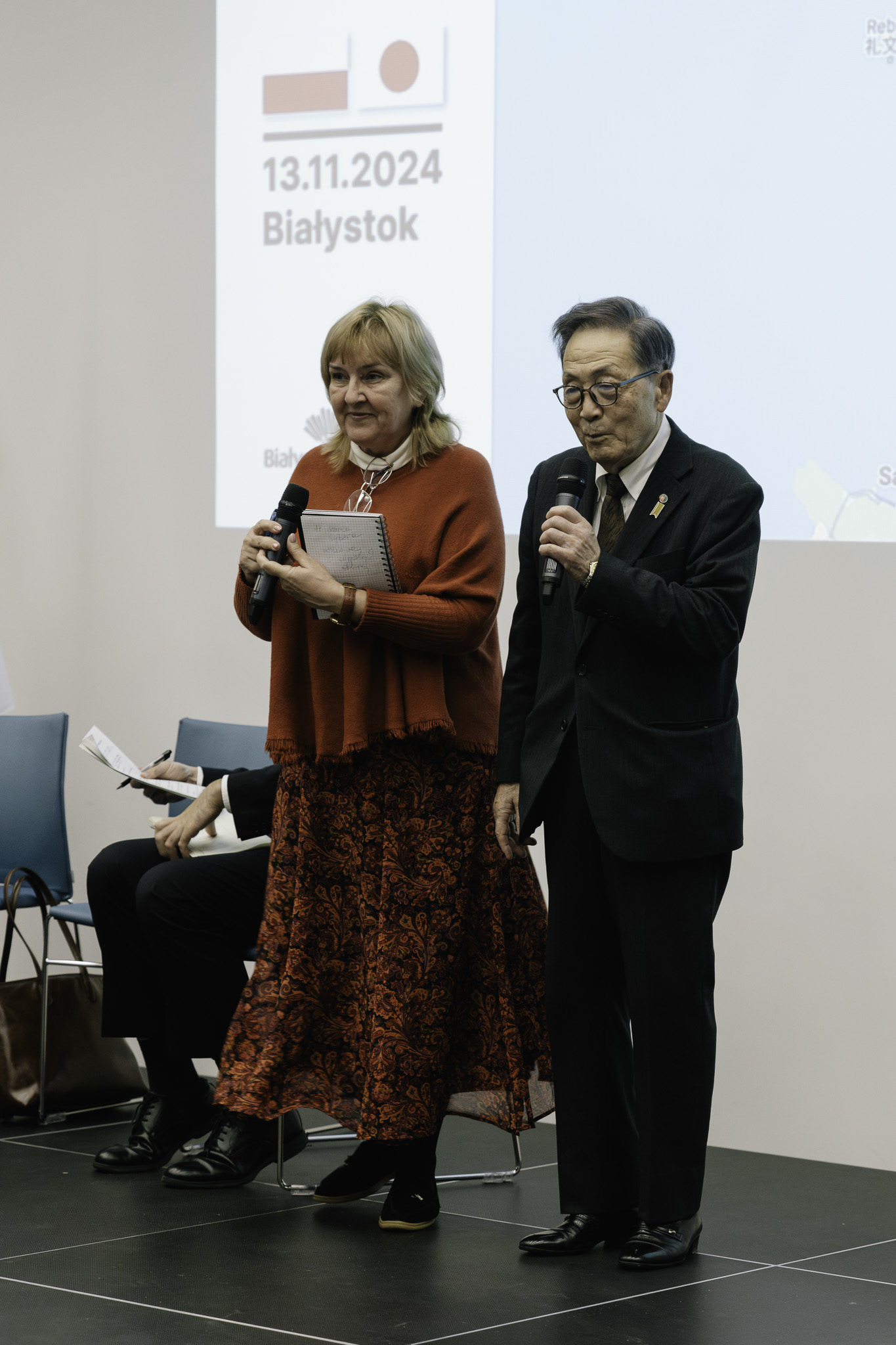
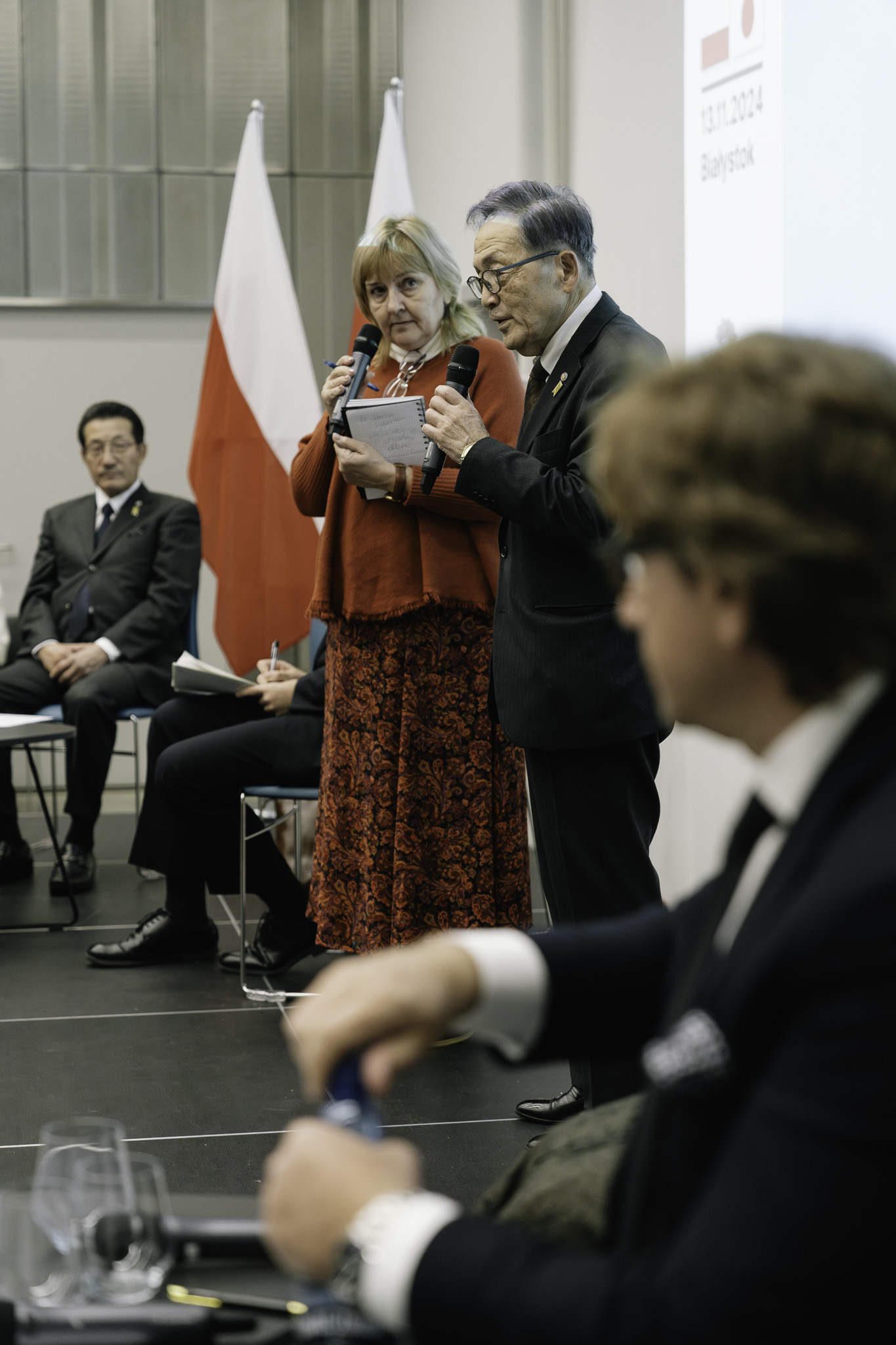
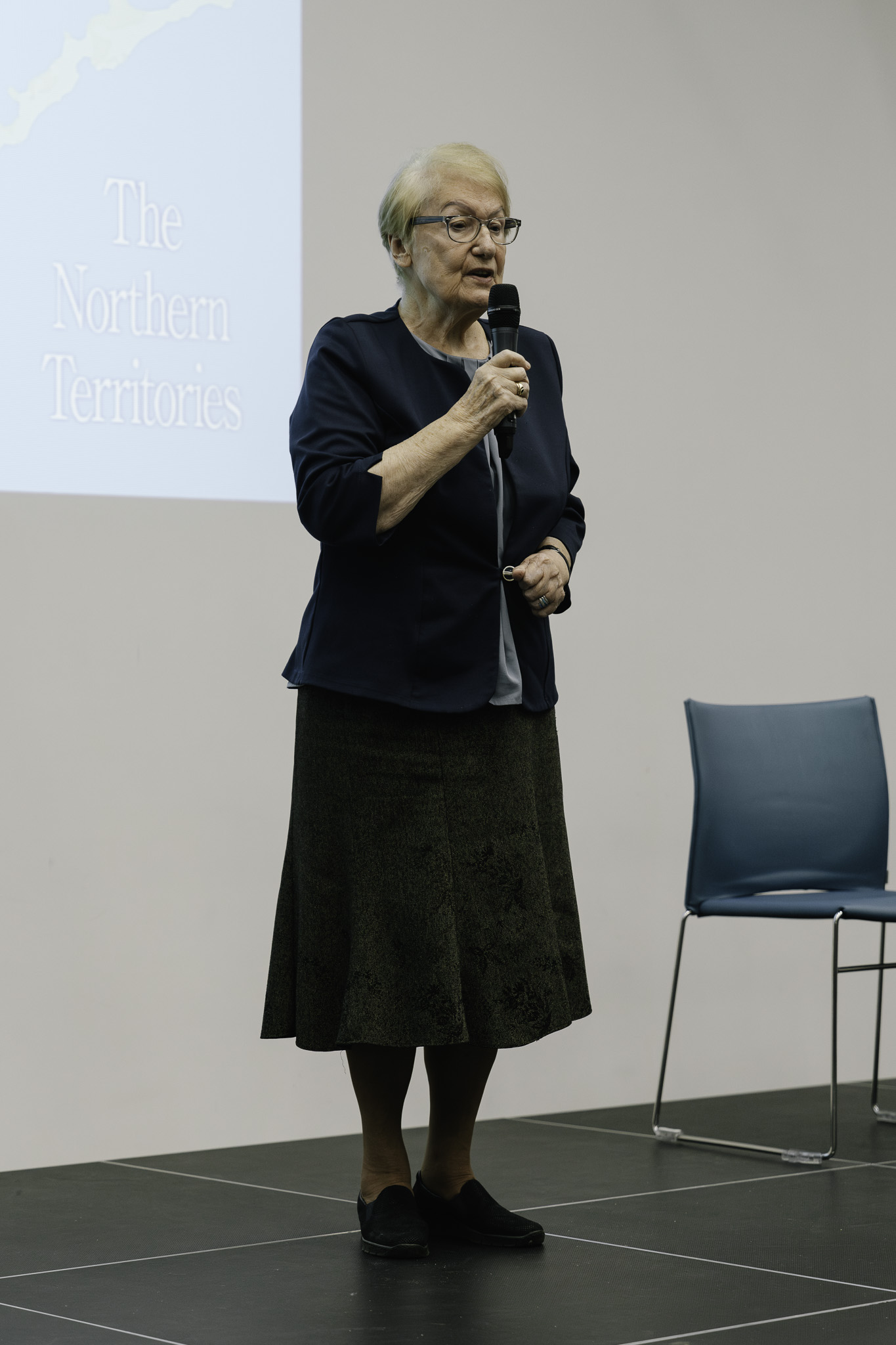
Jolanta Hryniewicka, President of the Białystok Branch of the Association of Siberian Deportees, also spoke, sharing the history of her family deported deep into the Soviet Union:
“The previous speaker’s memories were very similar to our wartime experiences. In June 1941, at 3 a.m., there was a loud bang on our door and a loud scream: open up! Soviets and their local collaborators burst into our house and ordered us to pack within half an hour. At the time, my father was imprisoned in Białystok, leaving my mother alone with five children. They took us to the station, loaded us into cattle cars, and the journey lasted six weeks. We were taken to the Altai Krai near Mongolia, where we stayed until 1943. Later, we were able to move to warmer regions of the Soviet Union. As members of the Association of Siberian Deportees, we strive to familiarise younger generations of our experiences, so as long as we are here, our stories are not forgotten,” she concluded.
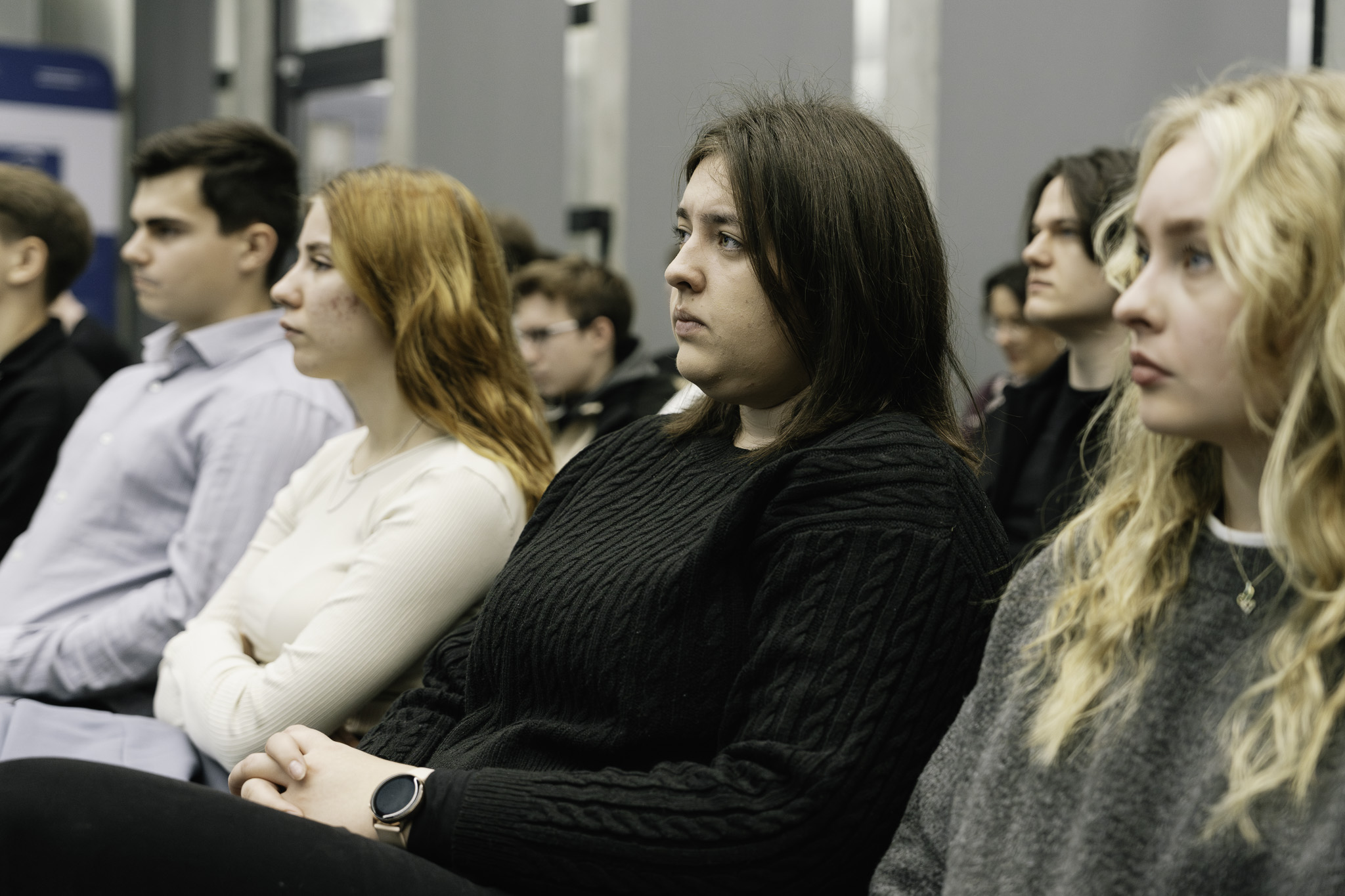
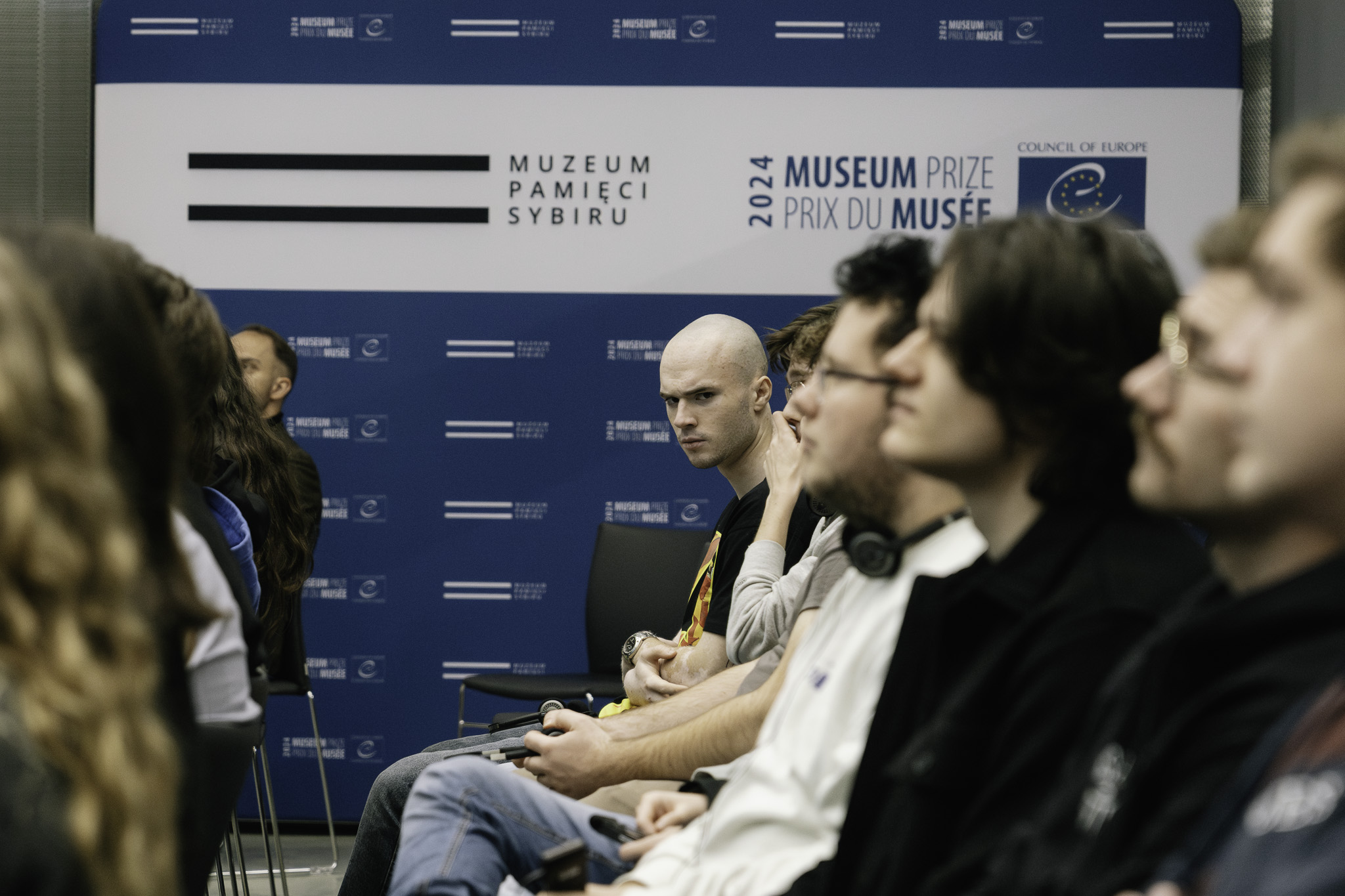
The students, who participated the event were eager to speak and asked many questions. The event was a great opportunity to exchange experiences and talk about history and the fates of our families.