



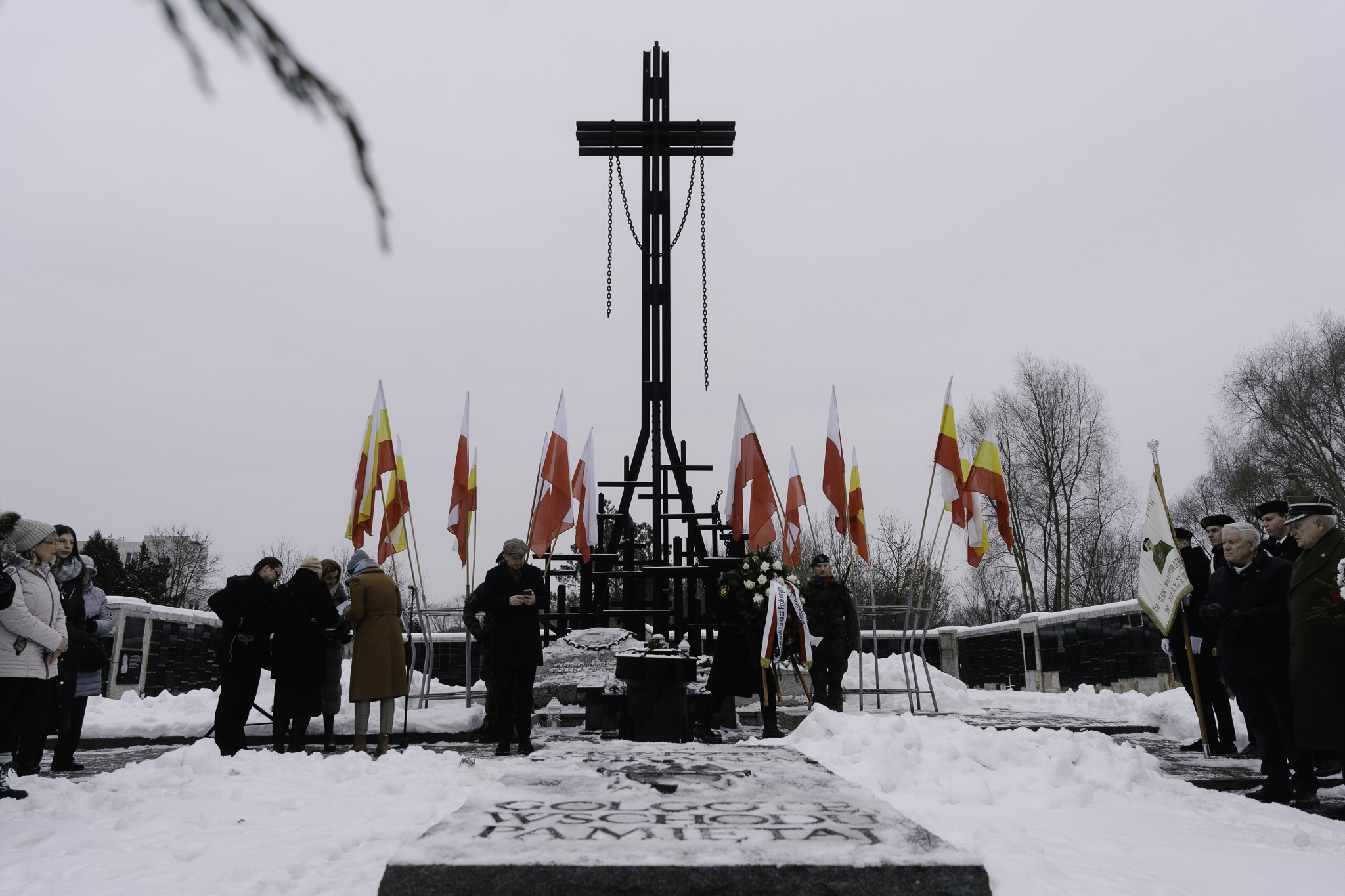
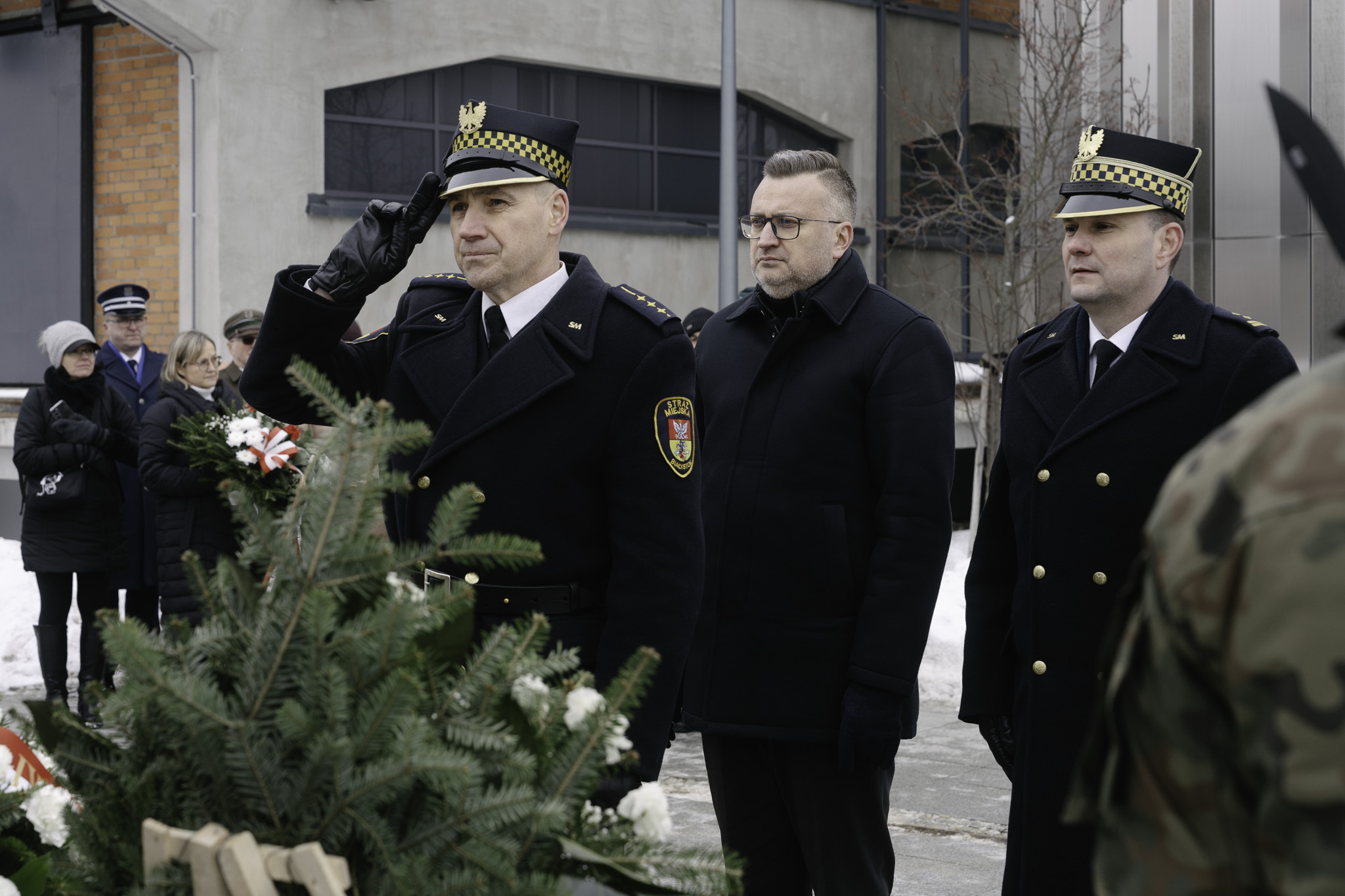
The official ceremony began at 12:00 p.m. at the Grave-Monument of the Unknown Sybirak located next to the Church of the Holy Spirit. Among those present were Rafał Rudnicki and Tomasz Klim, Deputy Mayors of Białystok; Paweł Krutul, Deputy Voivode of Podlaskie; Katarzyna Jamróz, Chairperson of the Białystok City Council; Edyta Mozyrska, Director of the Department of Culture, Promotion and Sport at the Białystok City Hall; Prof. Wojciech Śleszyński, Director of the Sybir Memorial Museum; as well as Sybiraks, led by Jolanta Hryniewicka, President of the Białystok Association of Sybiraks.
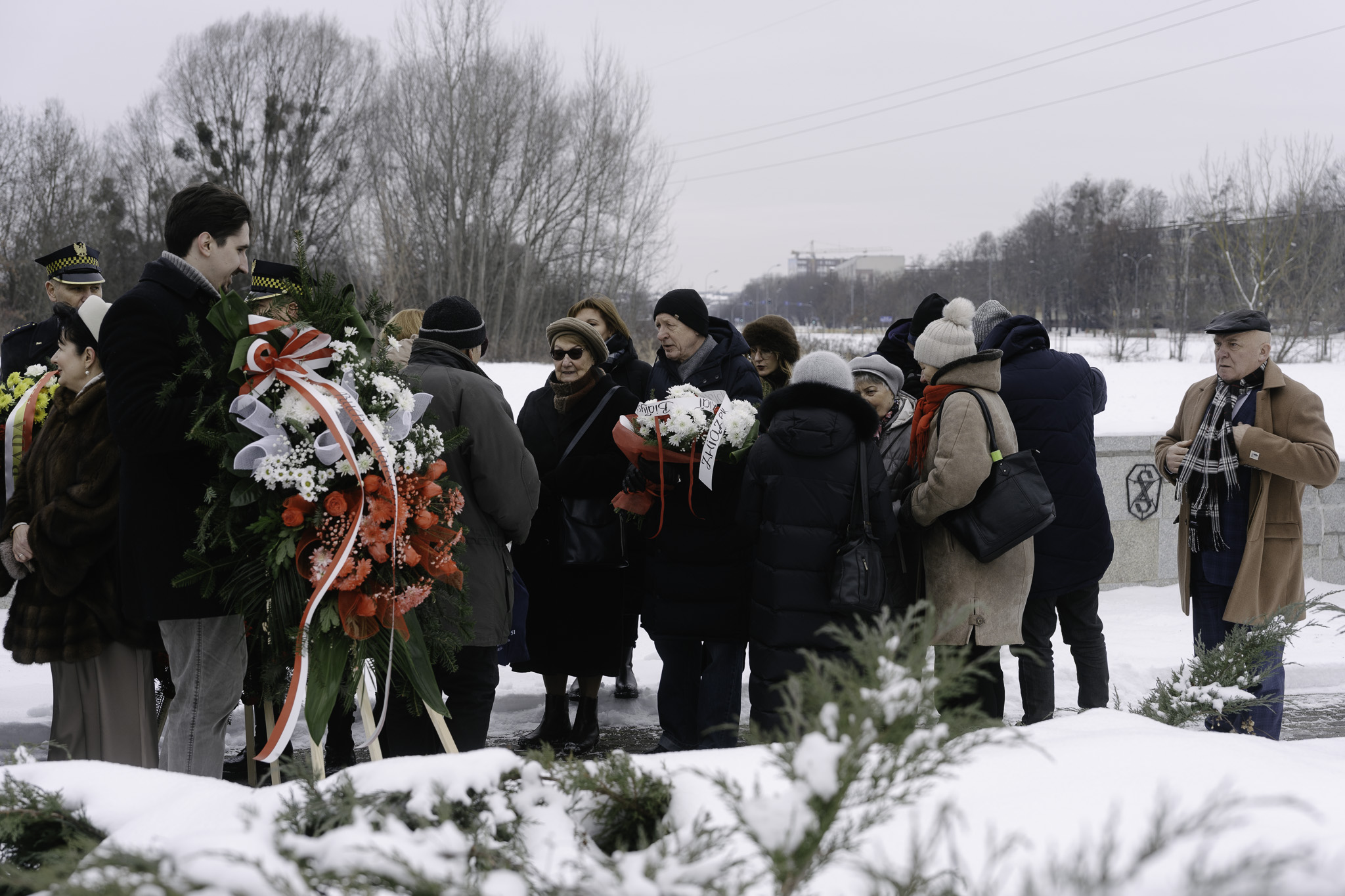
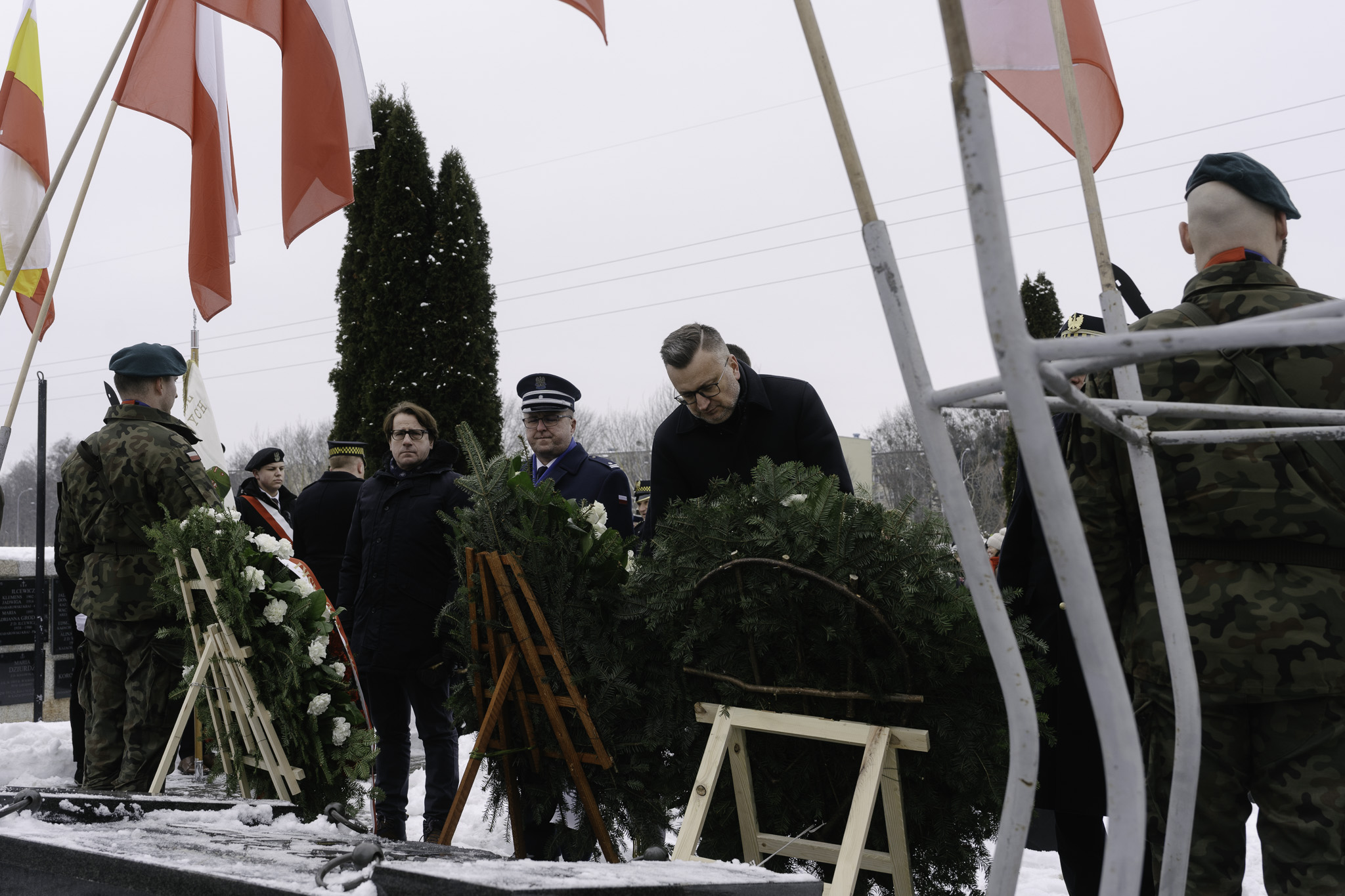
The participants then proceeded to the monument commemorating the victims of Soviet deportations on Traugutta Street. Afterwards, they gathered at the Monument of the Sybirak Mother in the square in front of the Sybir Memorial Museum, where wreaths were laid and candles lit in tribute to the thousands of families affected by the tragedy of deportation.
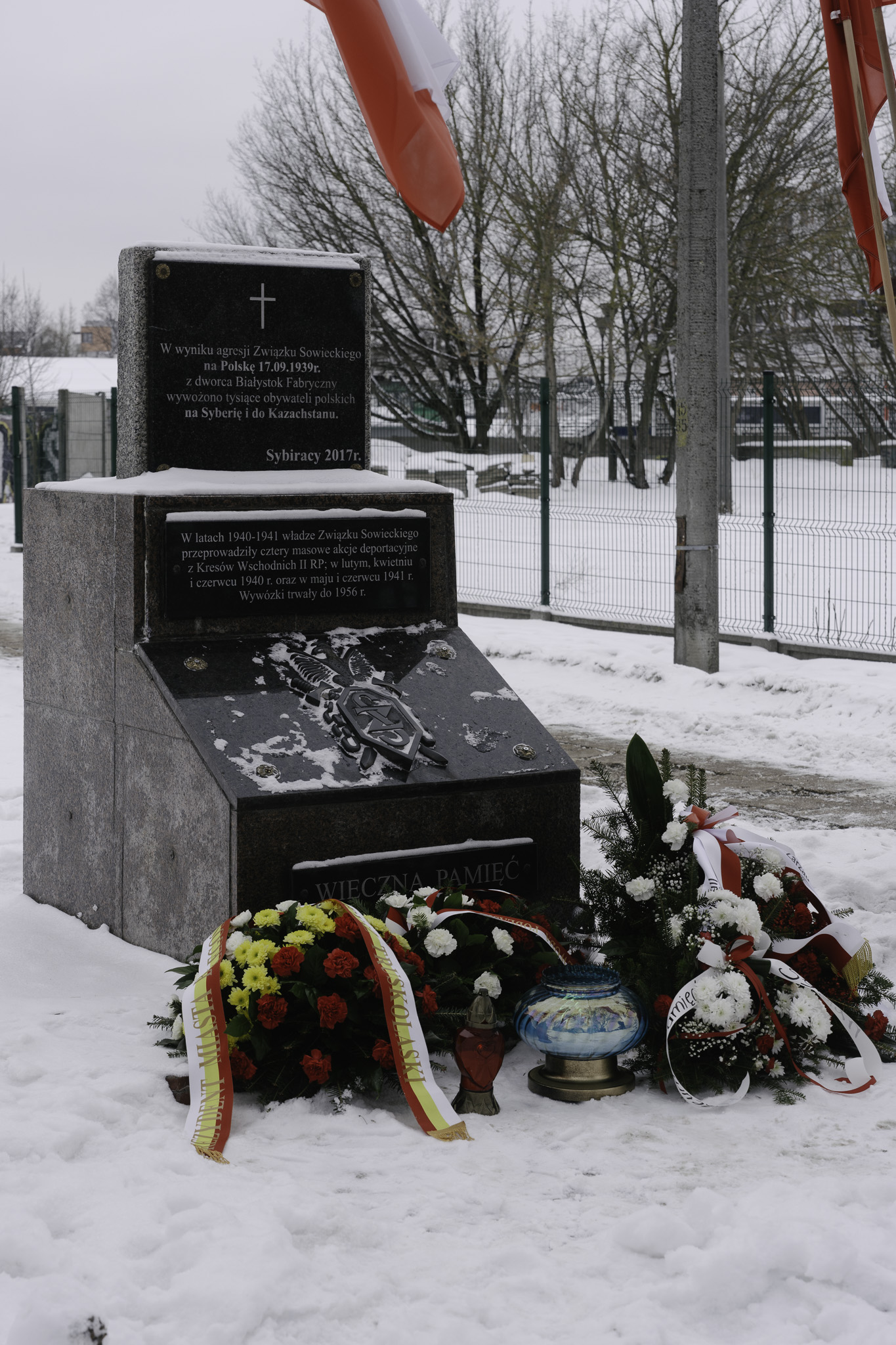
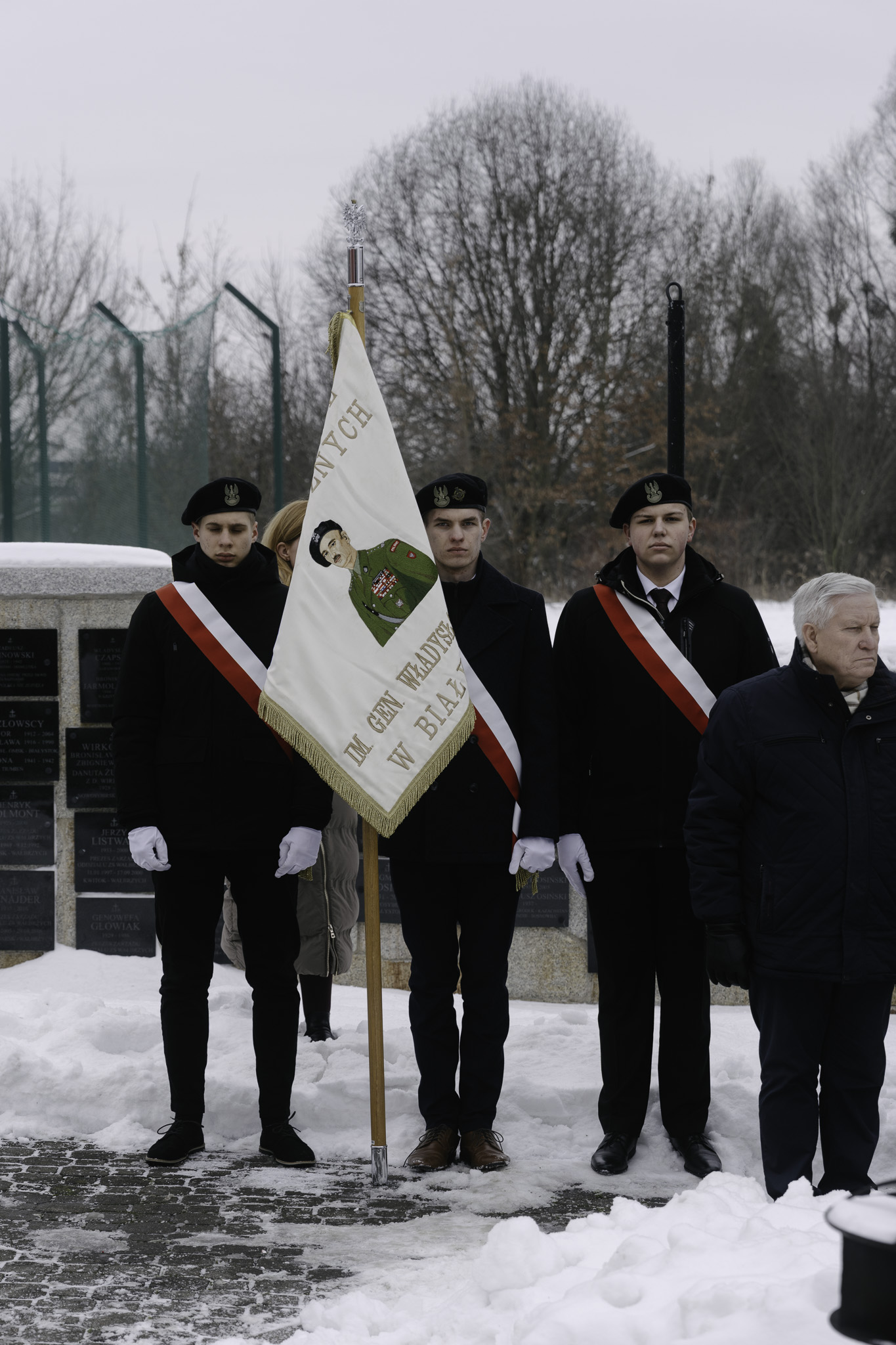
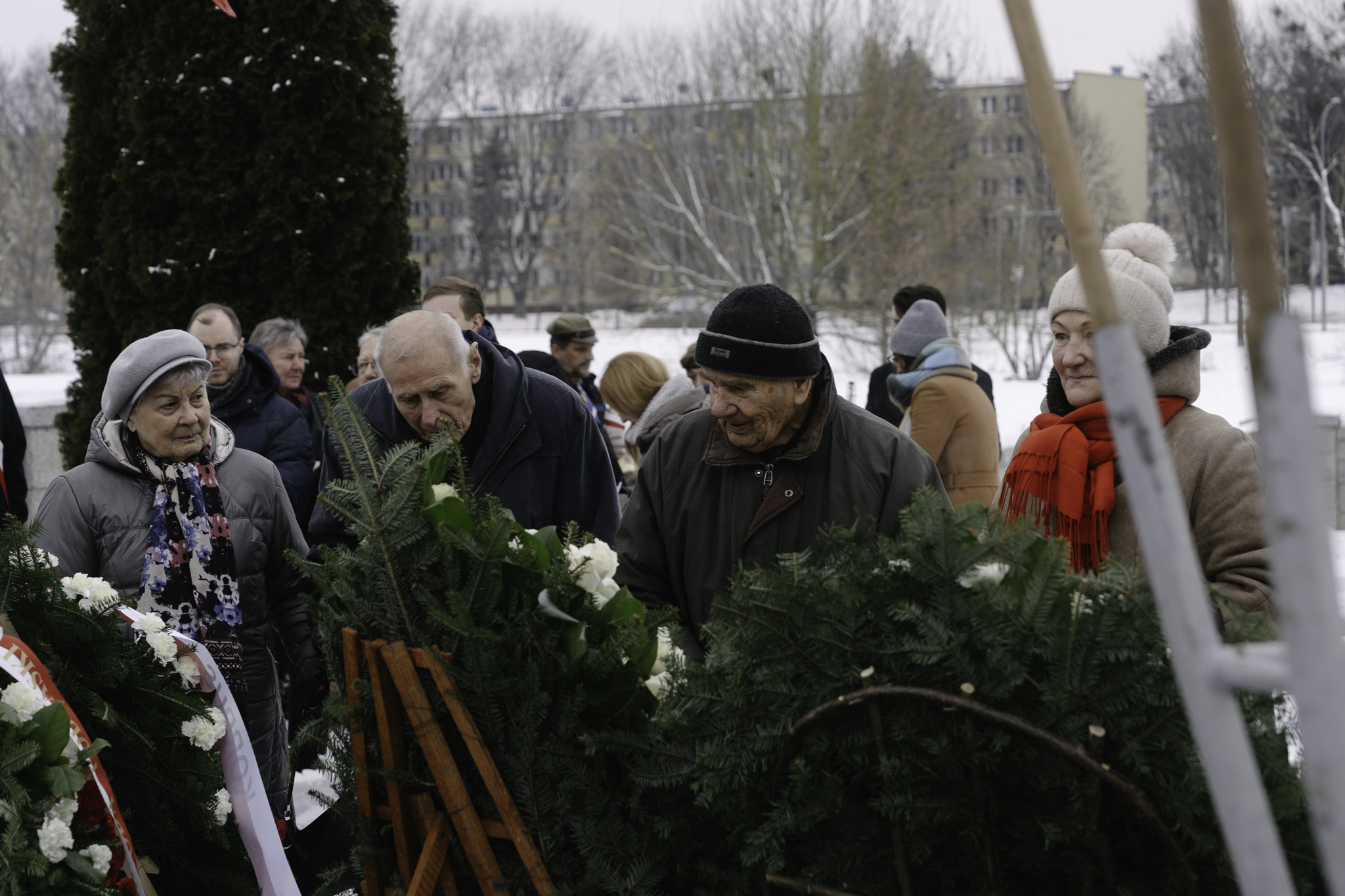
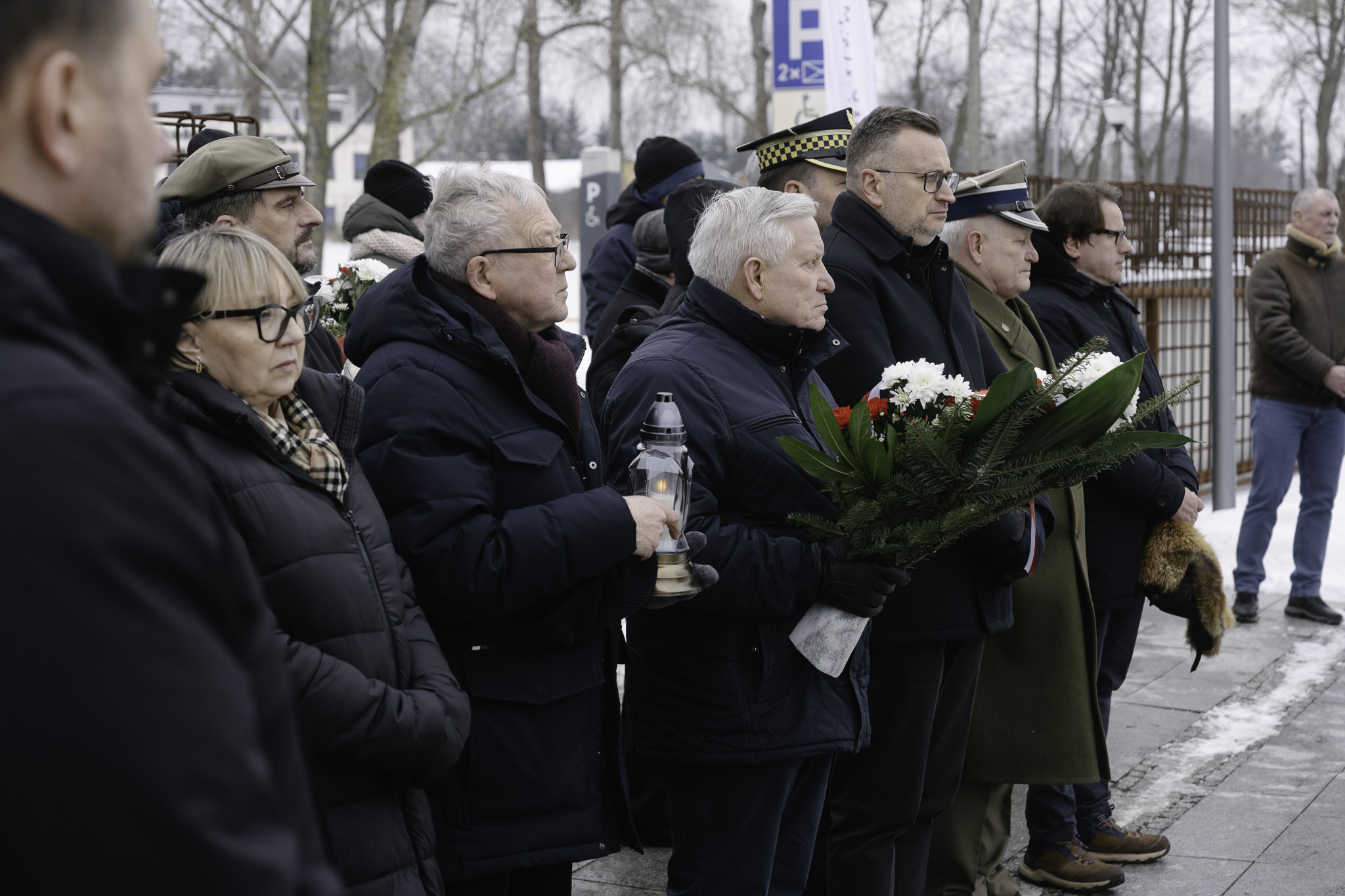
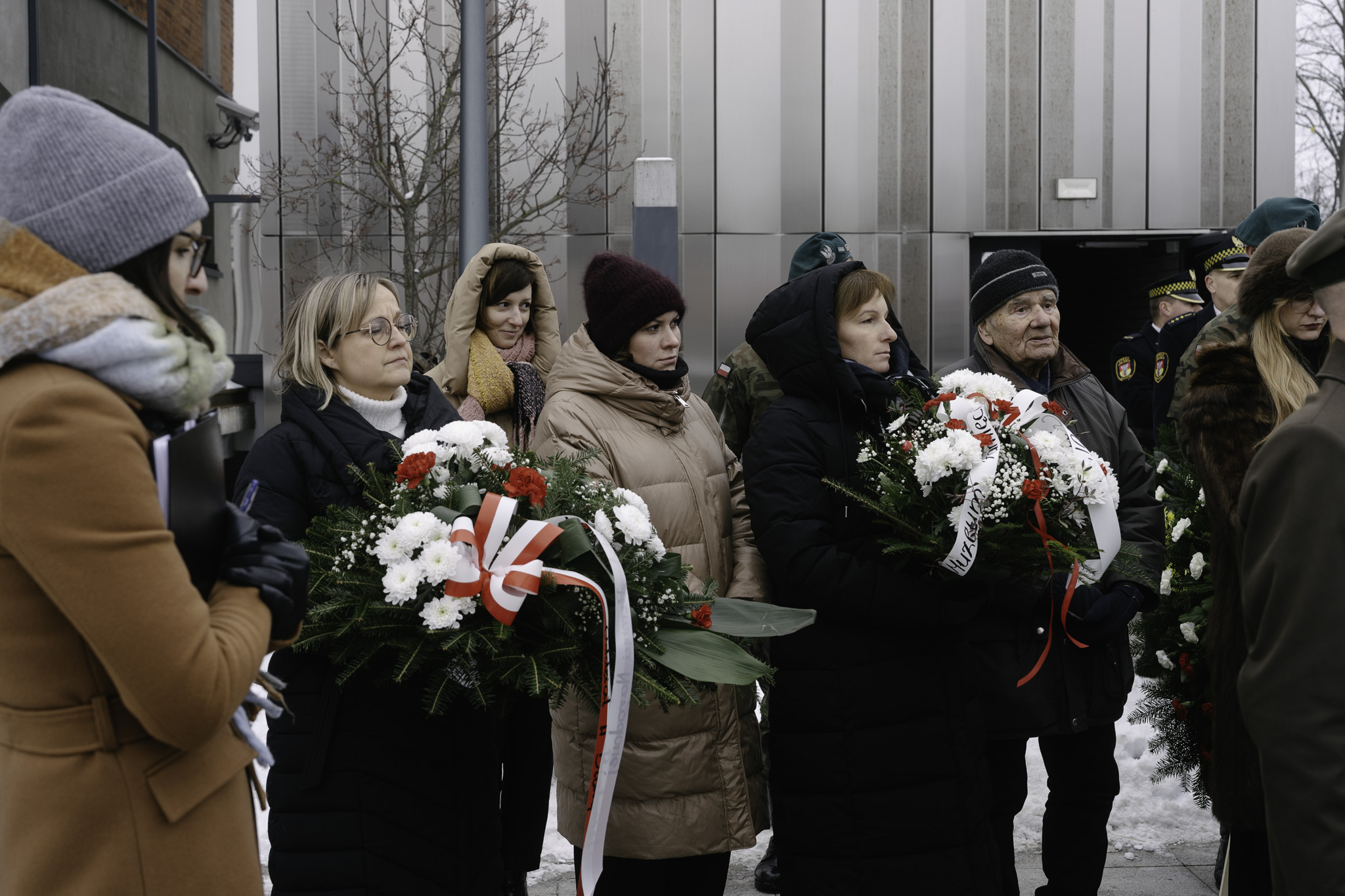
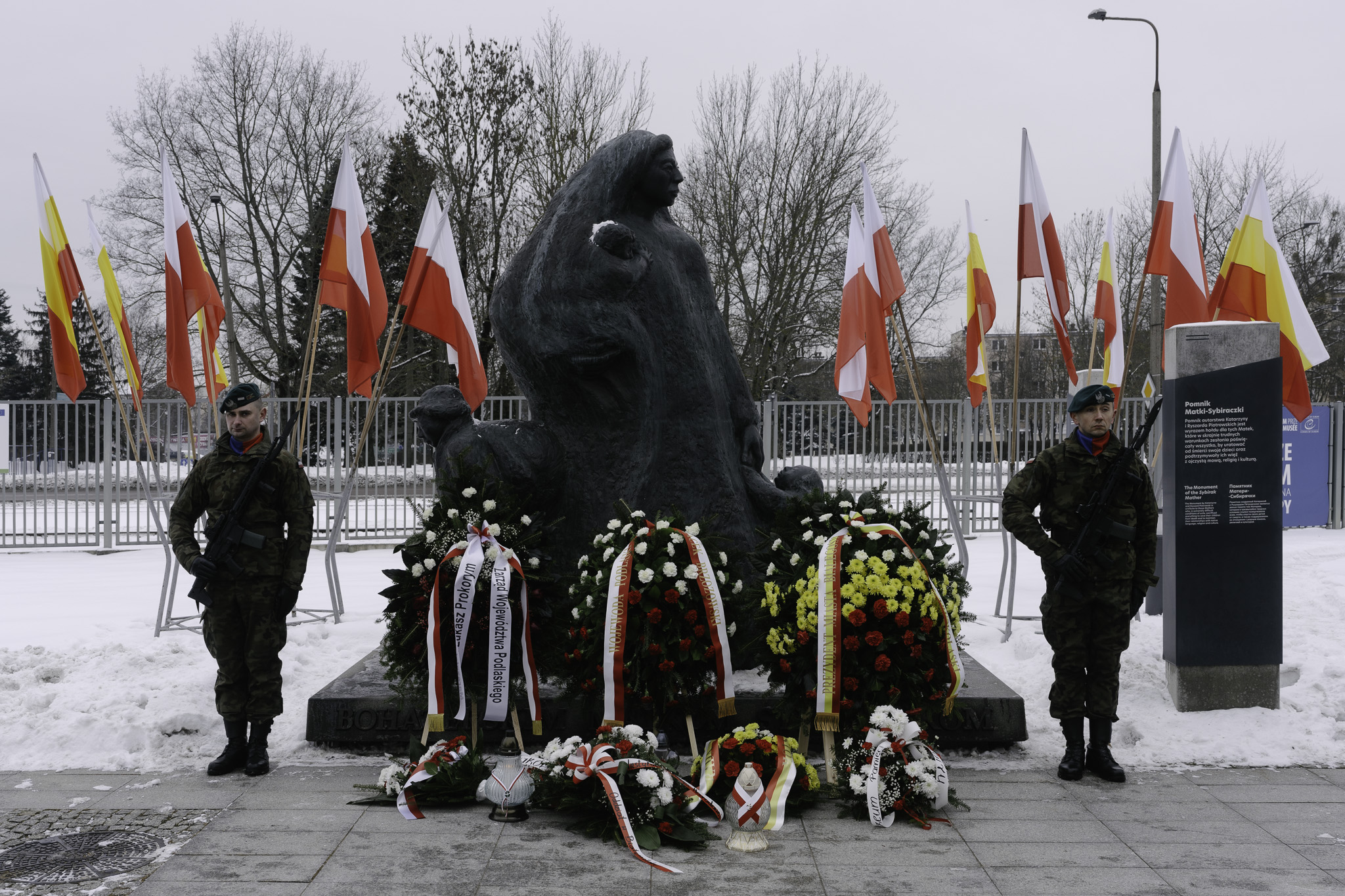
Between 1940 and 1941 alone, during four mass deportations, hundreds of thousands of Polish citizens were deported deep into the Soviet Union. Many of them — especially children and the elderly — did not survive the harsh conditions of exile. Those who survived returned to their homeland after many years or scattered around the world, carrying the memory of those events with them.
At 5:00 p.m., the symbolic Light of Remembrance was lit on the railway tracks in front of the Sybir Memorial Museum, marking the culmination of the commemorations of the 86th anniversary of the first of the four mass deportations of Polish citizens into the Soviet Union.
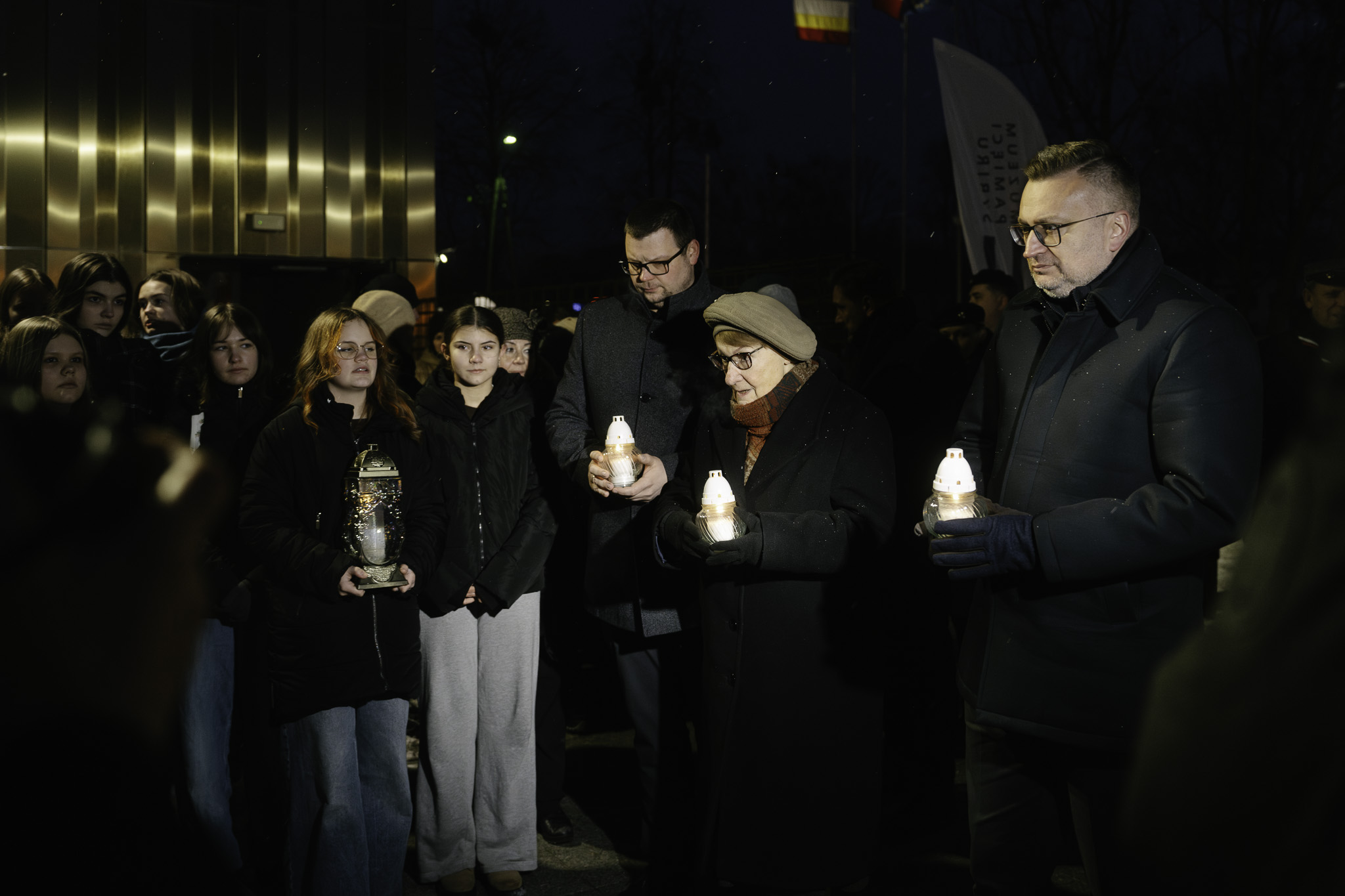
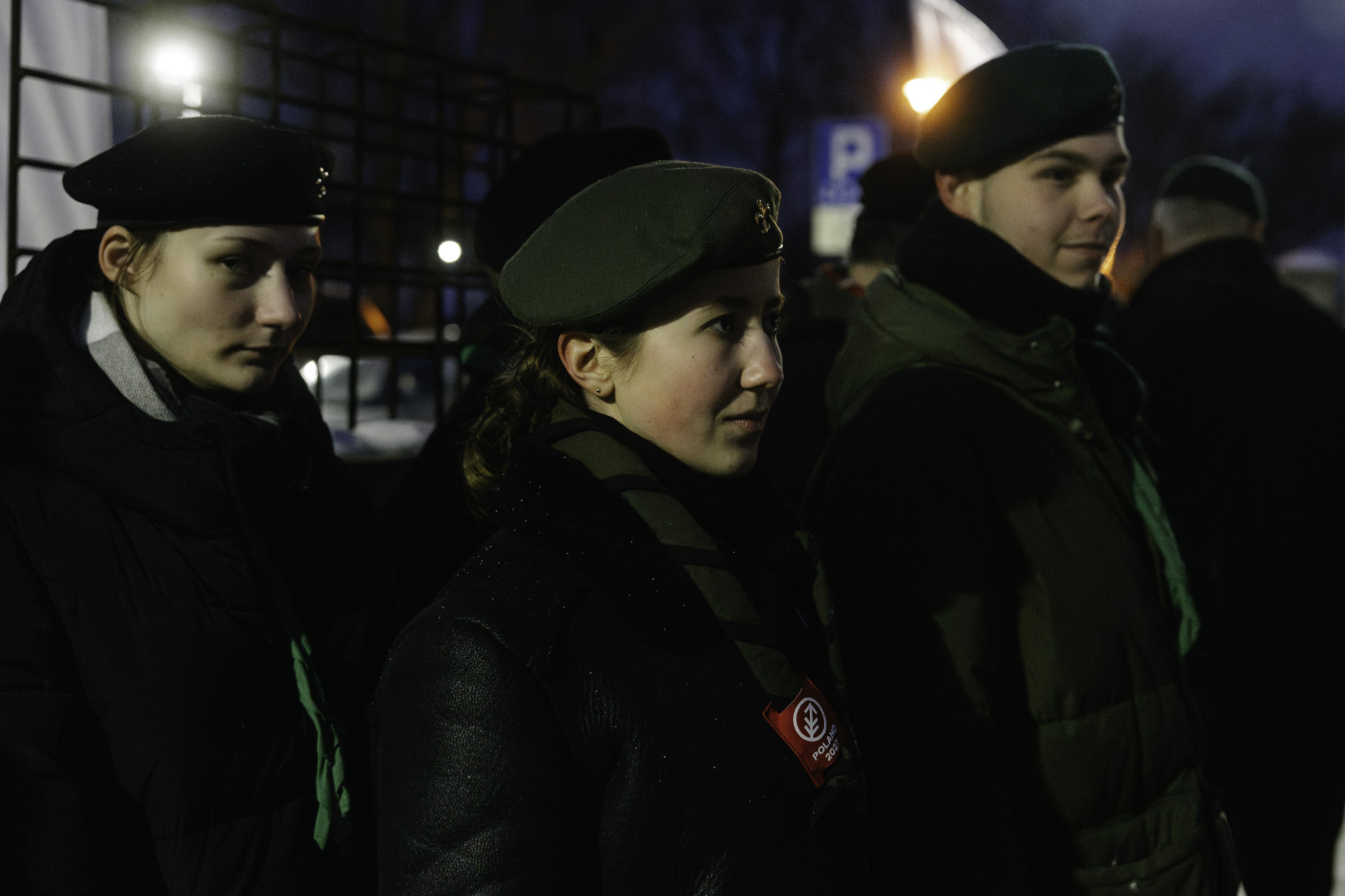
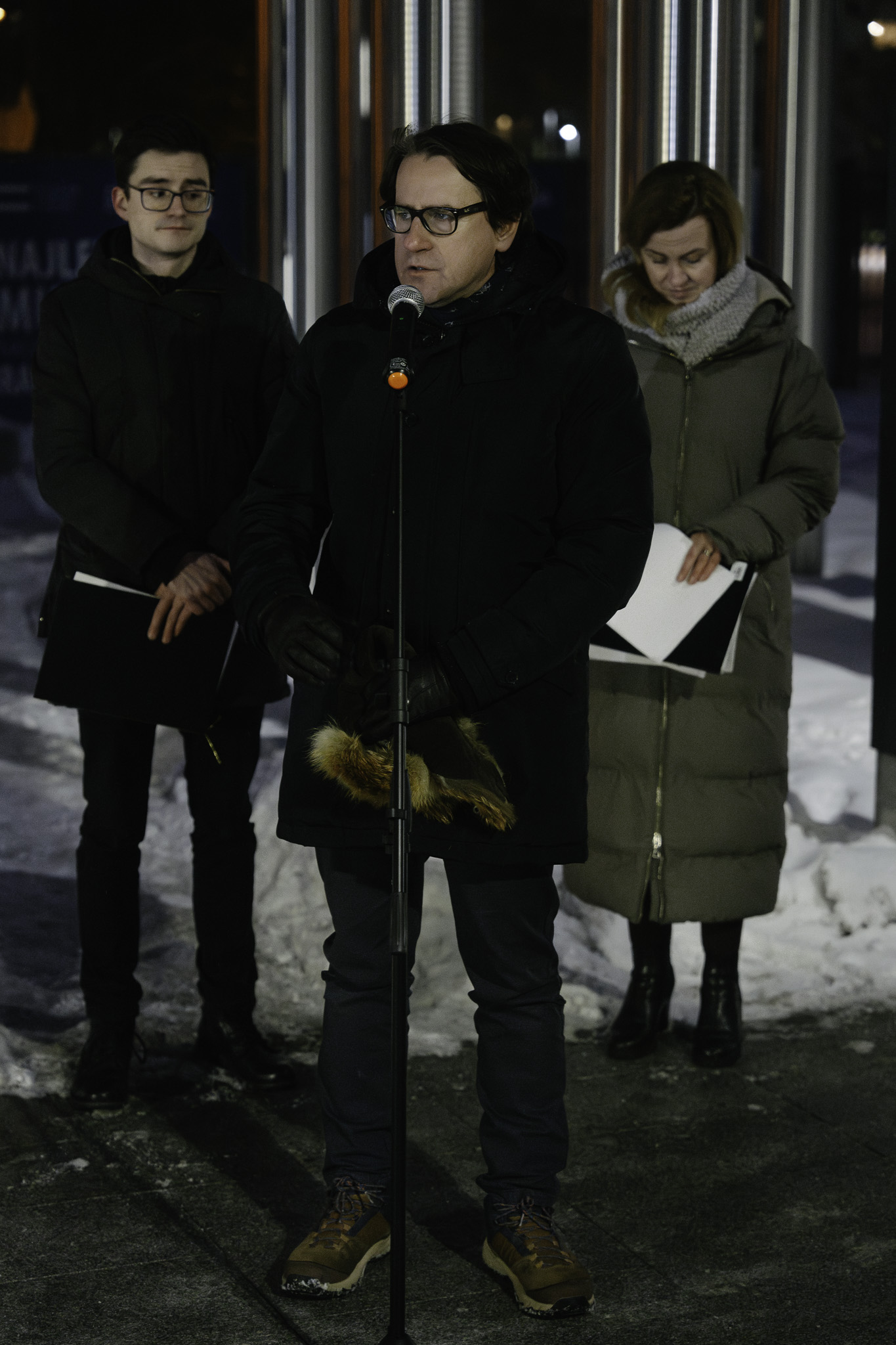
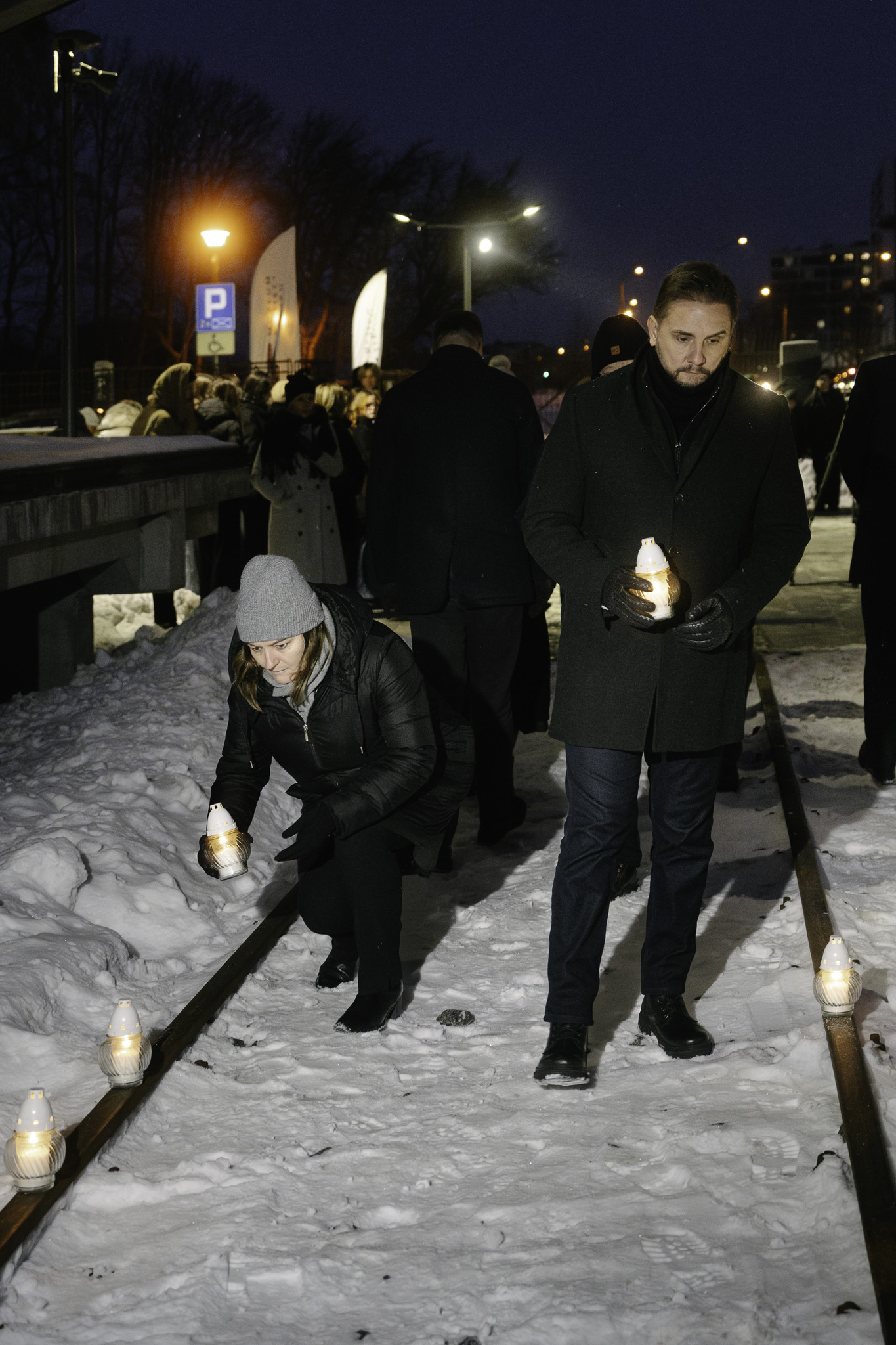
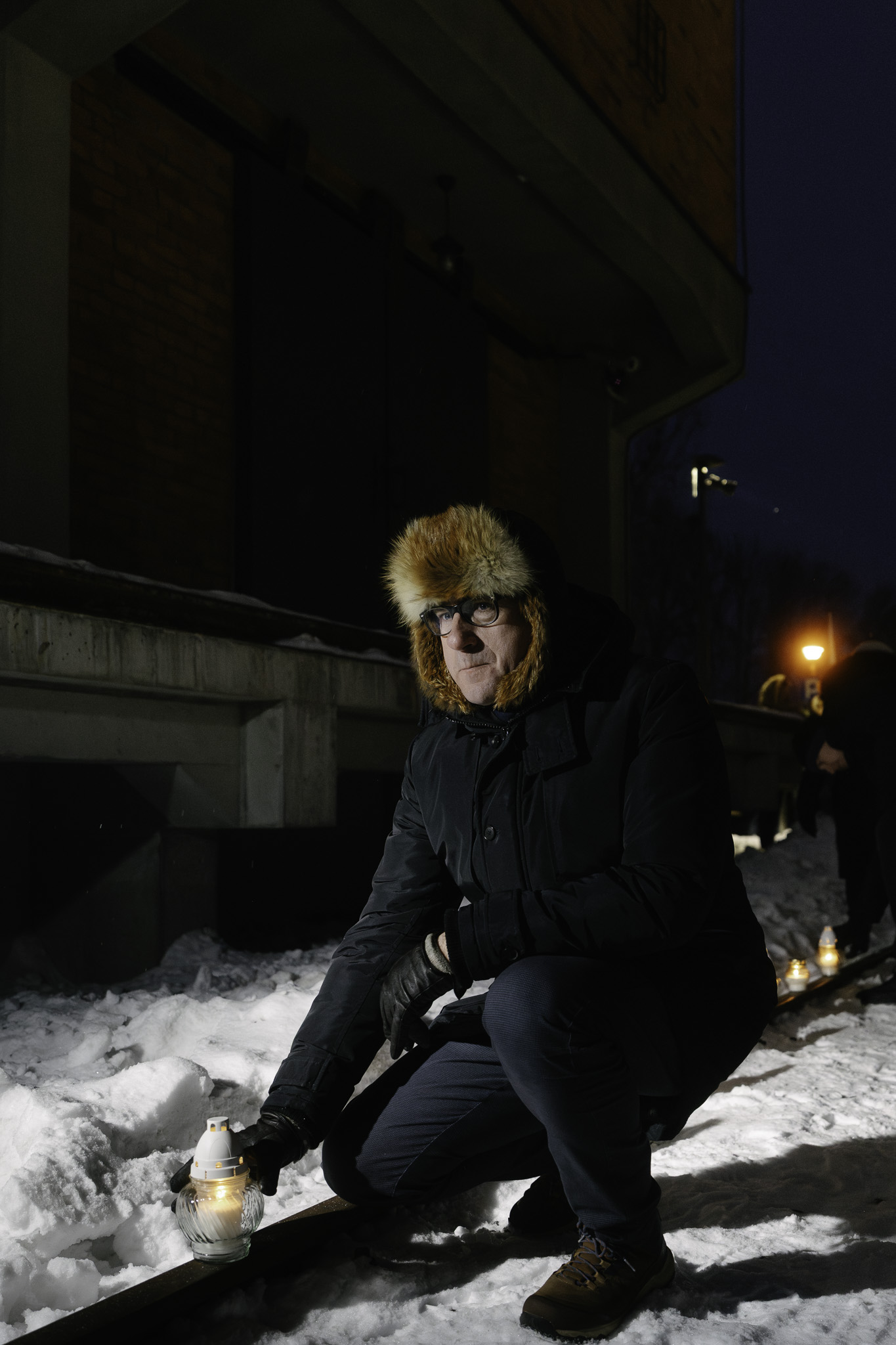
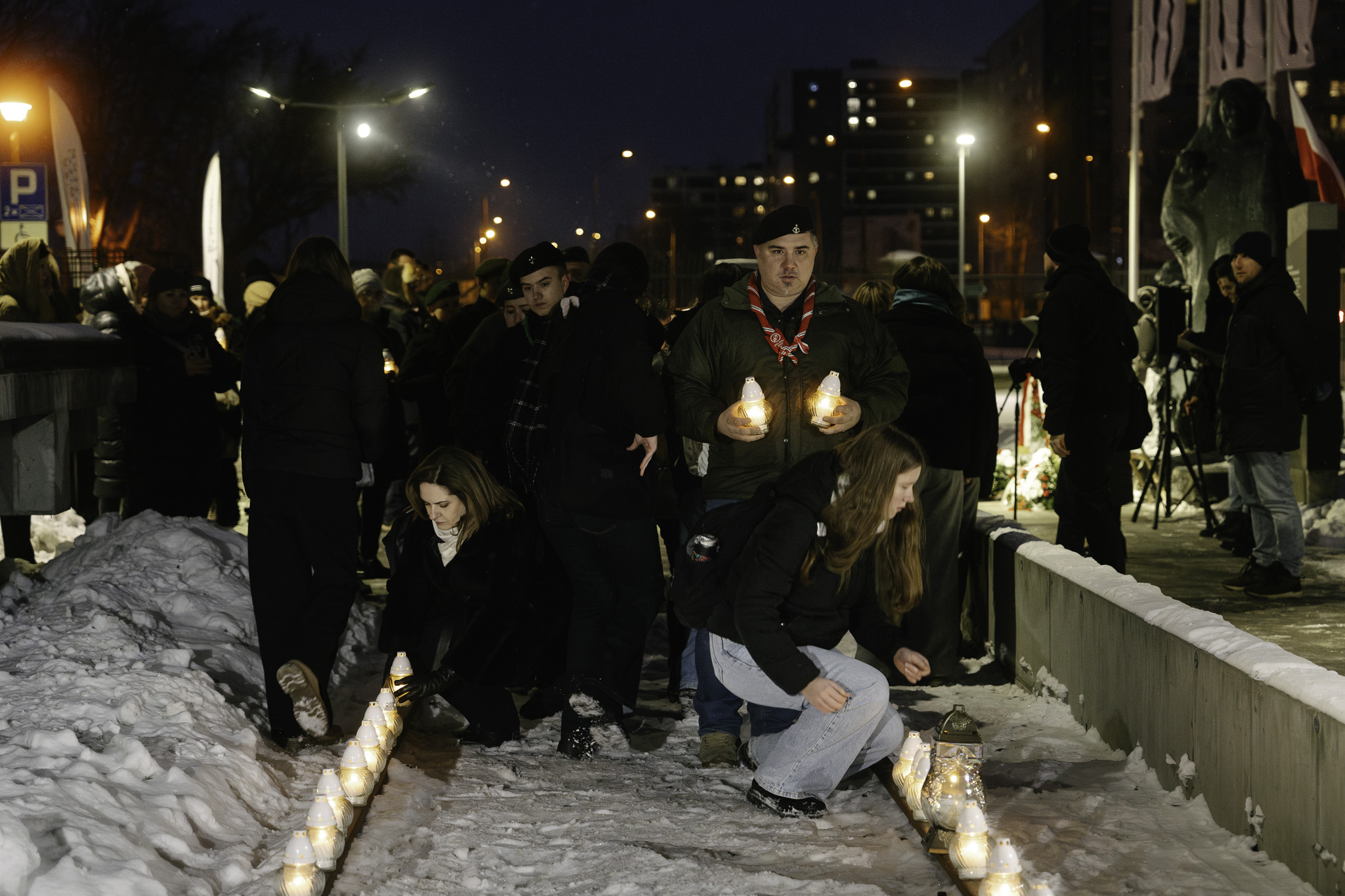
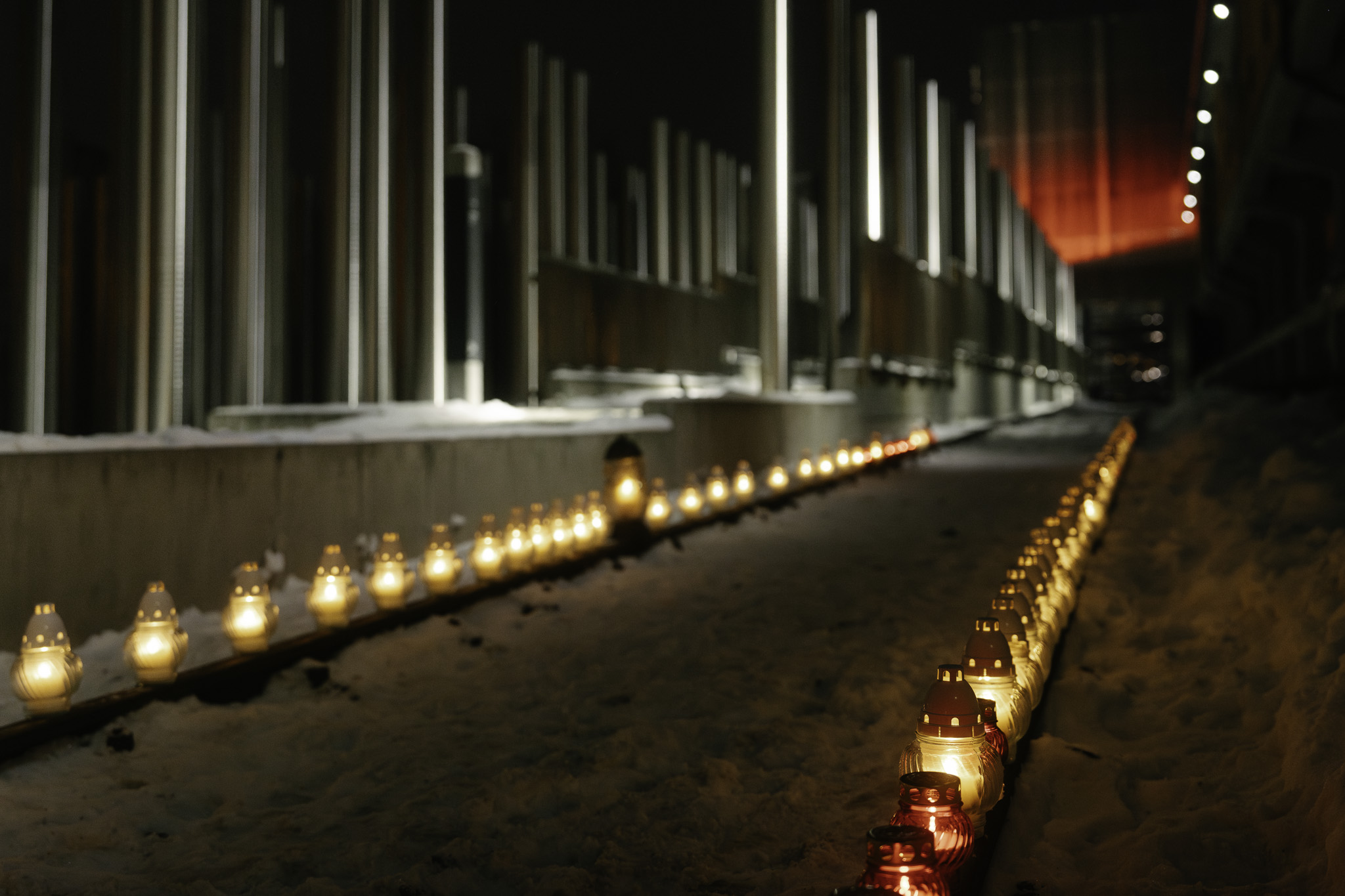
During the ceremony, excerpts from deportees’ testimonies were read aloud, recalling the dramatic deportations and the struggle for survival. In this way, tribute was paid to the victims of Soviet repression and to all those whose lives were marked by Siberian exile.
“Once they ordered us to get dressed and take whatever we could carry, a truck took us to the Fabryczny Railway Station. Freight cars were waiting there, with bunks on both sides, a hole in the middle, and nothing more. There was a small stove, but no one used it because we were given no fuel. They crammed about fifty or sixty people into each car, packed like sardines, one next to another. This also had its good side — it kept us warm, because the cars were not sealed, and it was freezing, cold, and windy. When we huddled together, we warmed one another. That was how it was possible to survive.” — excerpt from the account of Mieczysław Pluta, deported on February 10, 1940, to Kazakhstan.