



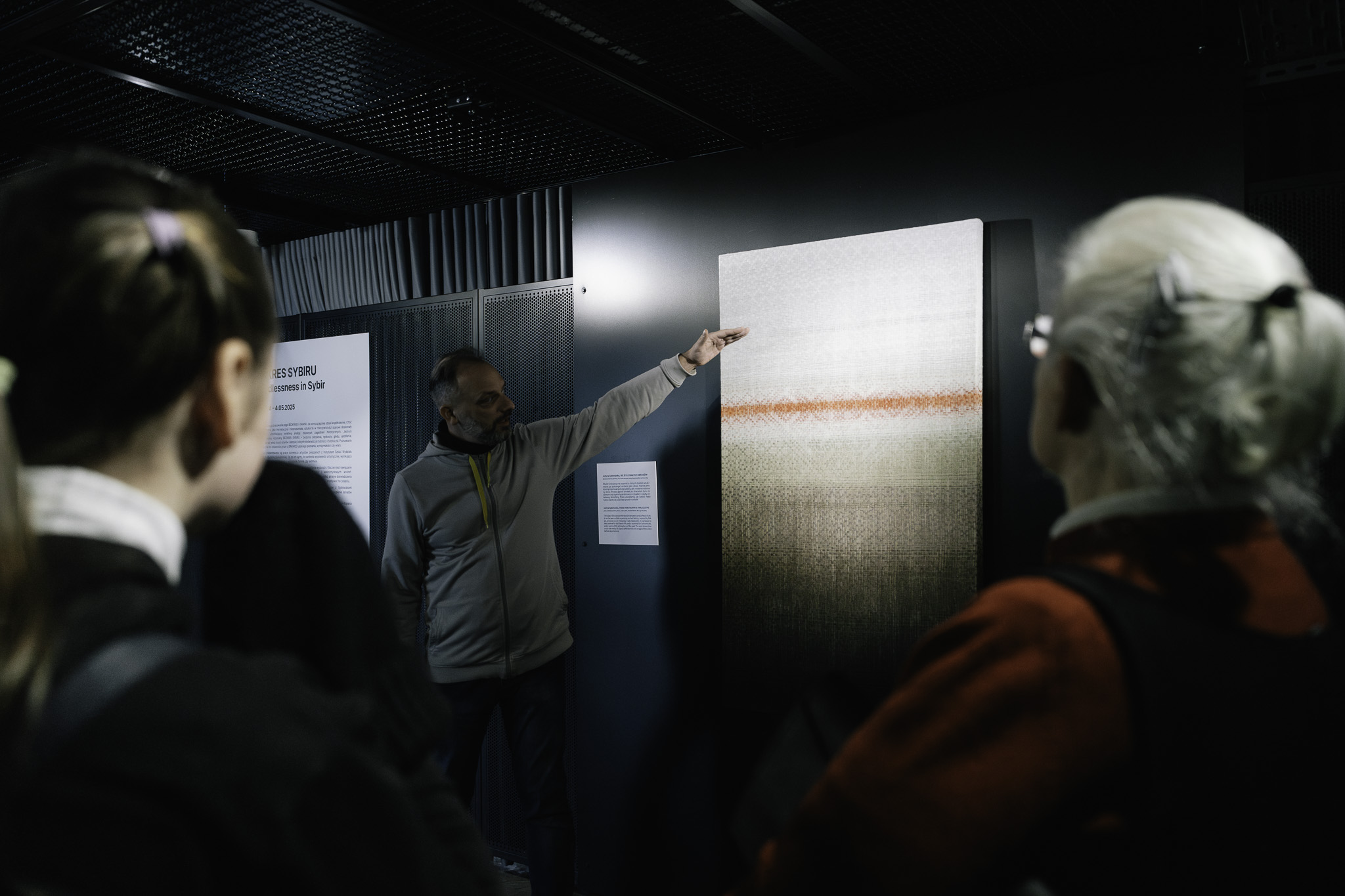
Curatorial Tour of the Temporary Exhibition “Boundlessness in Sybir”
- June 29, 2025, at 1:00 p.m.
“Boundlessness in Sybir” tells the powerful story of men and women who experienced forced deportations deep into the Soviet Union. Their lives — marked by suffering and loss, but also extraordinary strength and perseverance — have inspired contemporary artists affiliated with the Institute of Art at the Faculty of Architecture, Bialystok University of Technology.
Through the lens of contemporary art, the exhibition explores the physical and symbolic boundaries of human endurance — and the boundlessness of faith and hope. Each artwork was created in dialogue with personal accounts shared by Sybiraks.
During the tour of the exhibition, its curators — Ewelina Kamieńska and Kamil Kopania — will speak about the creation process, artistic concepts, and their remarkable encounters with the Sybiraks — Polish survivors of Siberian deportations and witnesses of history who helped shape the exhibition.
Free admission. Complimentary tickets will be available at the Museum’s ticket office from June 17, 2025.
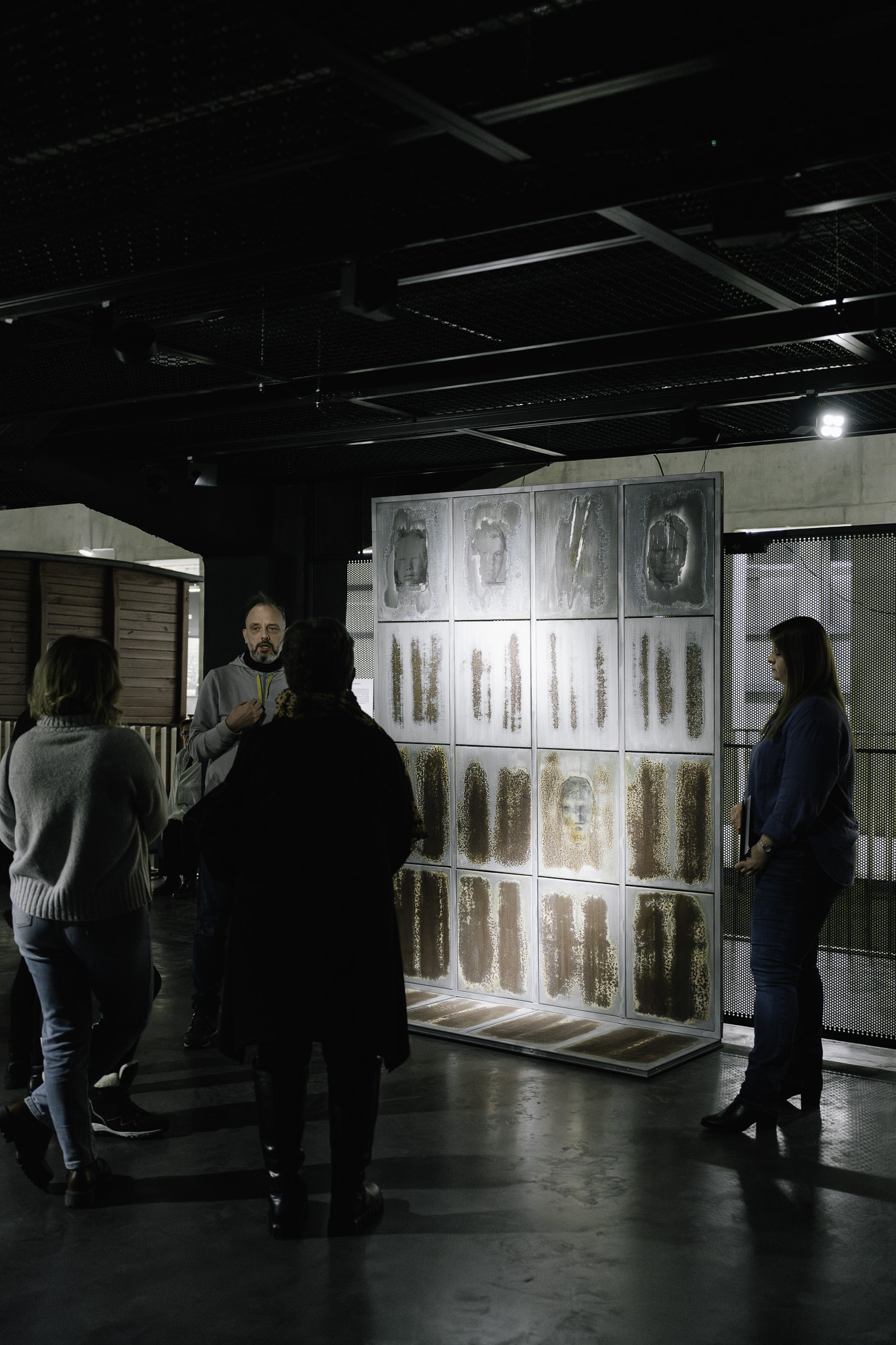

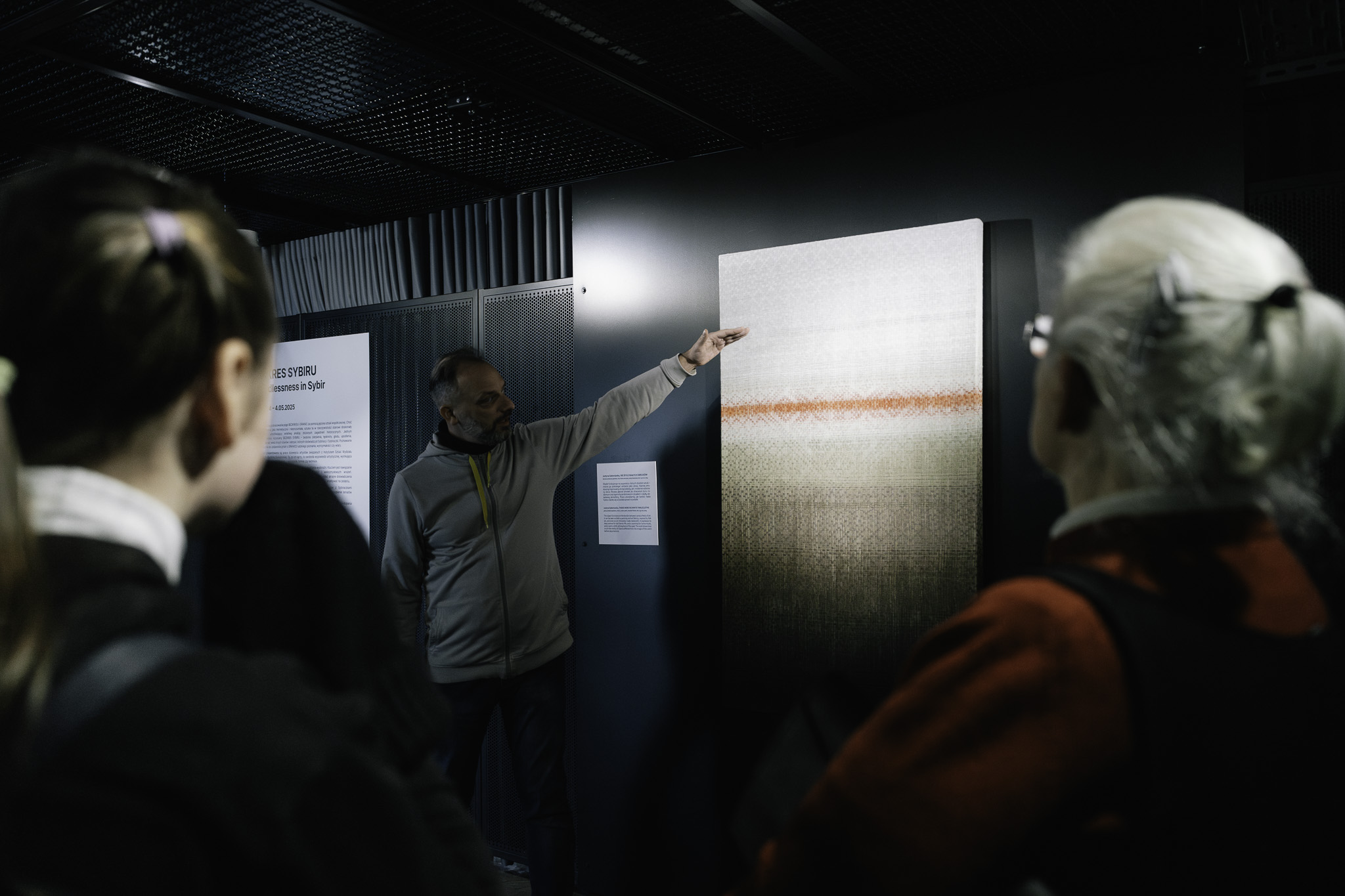
Artistic Activity: “The Earth Has Not Forgotten Spring”
- June 29, 2025, 2:00–5:00 p.m.
Immediately following the tour, beginning at 2:00 p.m., visitors are invited to take part in a unique artistic activity prepared by Aleksandra Jakuć — one of the artists featured in “Boundlessness in Sybir”. Her interactive installation, “The Earth Has Not Forgotten Spring”, will take place in the first-floor hall.
Participants will co-create a symbolic meadow of memory and hope. Using green-toned paints and native plants — such as yarrow, mullein, origanum, and mugwort — they will press imprints onto a prepared surface. These simple, meditative gestures will serve as acts of remembrance, tenderness toward the past, and a tribute to nature’s resilience — mirroring the human capacity to endure even the harshest conditions.
The plants chosen for this activity are not accidental — they grow both in Siberia and in Podlasie, making them a symbol that connects two worlds: the place of exile and the homeland. Their presence represents the continuity of life, resilience, and renewal. Green, the dominant color of the activity, carries with it hope, freshness, and healing. In the act of pressing the plants — simple, yet deeply meaningful — lies the desire to transform the memory of suffering into something that gives strength and unites people in a shared experience of history.
Free admission