


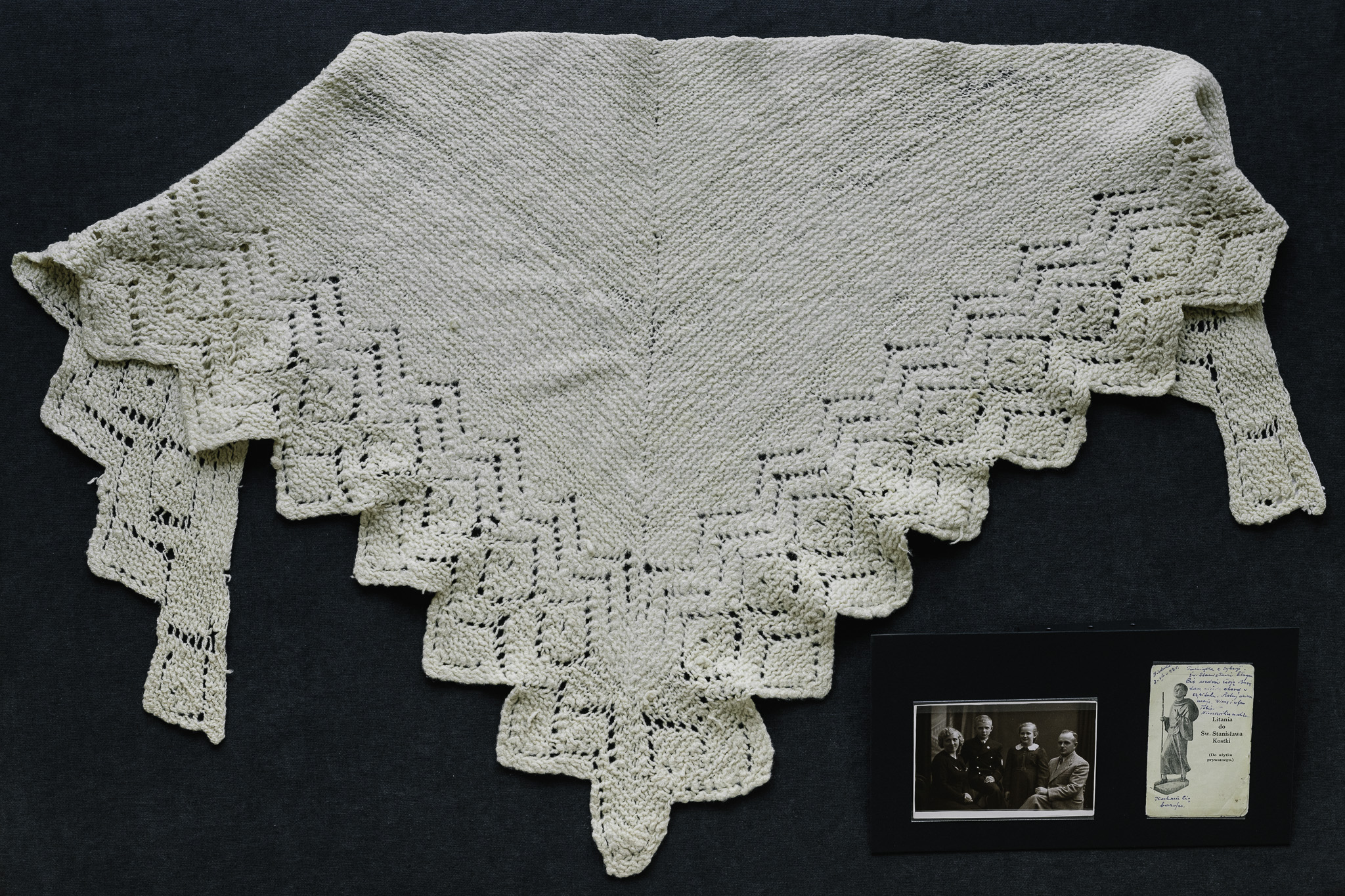
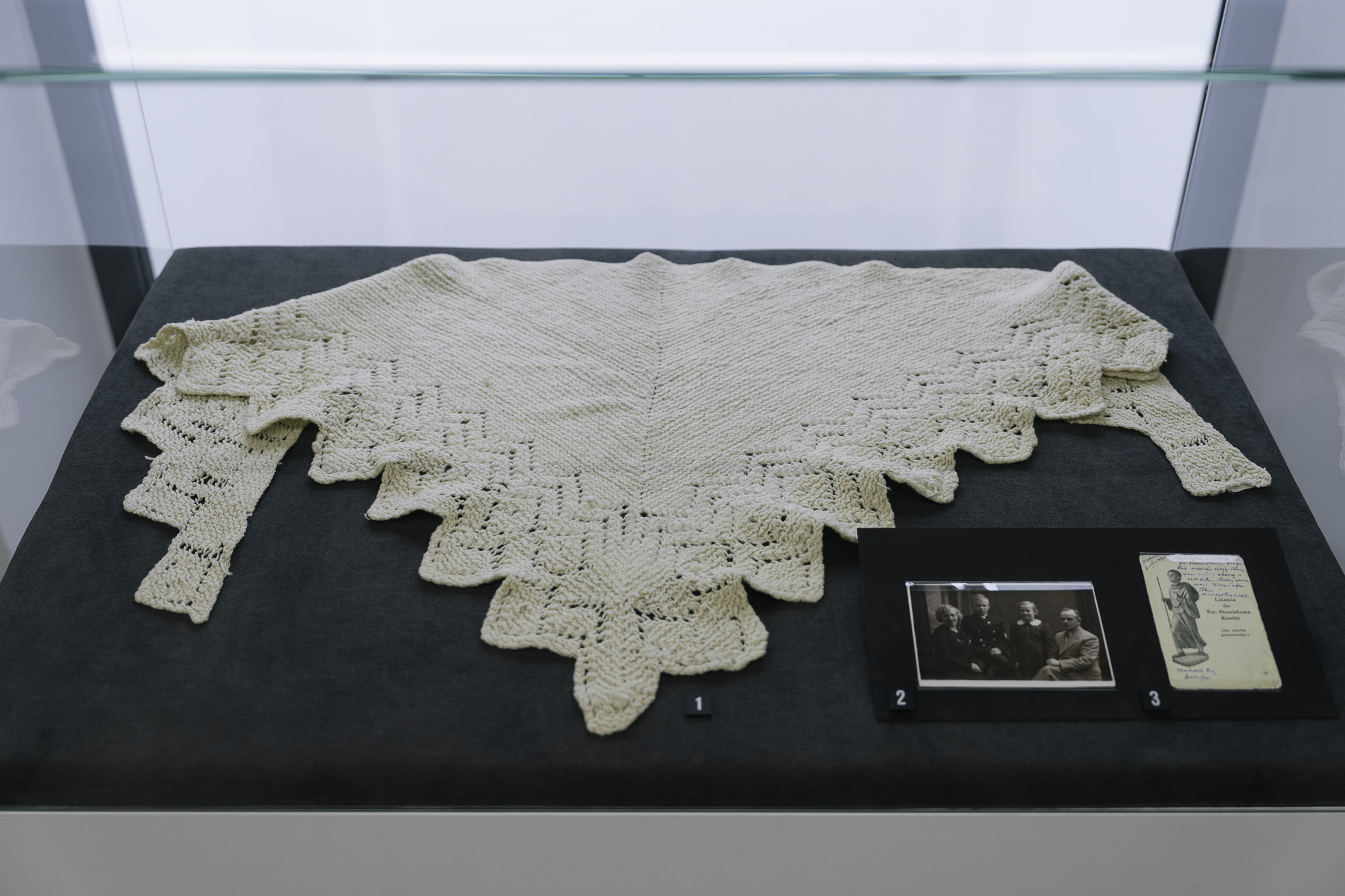
A shawl that once belonged to Barbara Stokowska, a family photo, and a litany of St. Stanislaus Kostka with the handwritten intention of Basia Stokowska’s healing – these are the mementos that can be seen as part of the March edition of the Exhibit of the Month series.
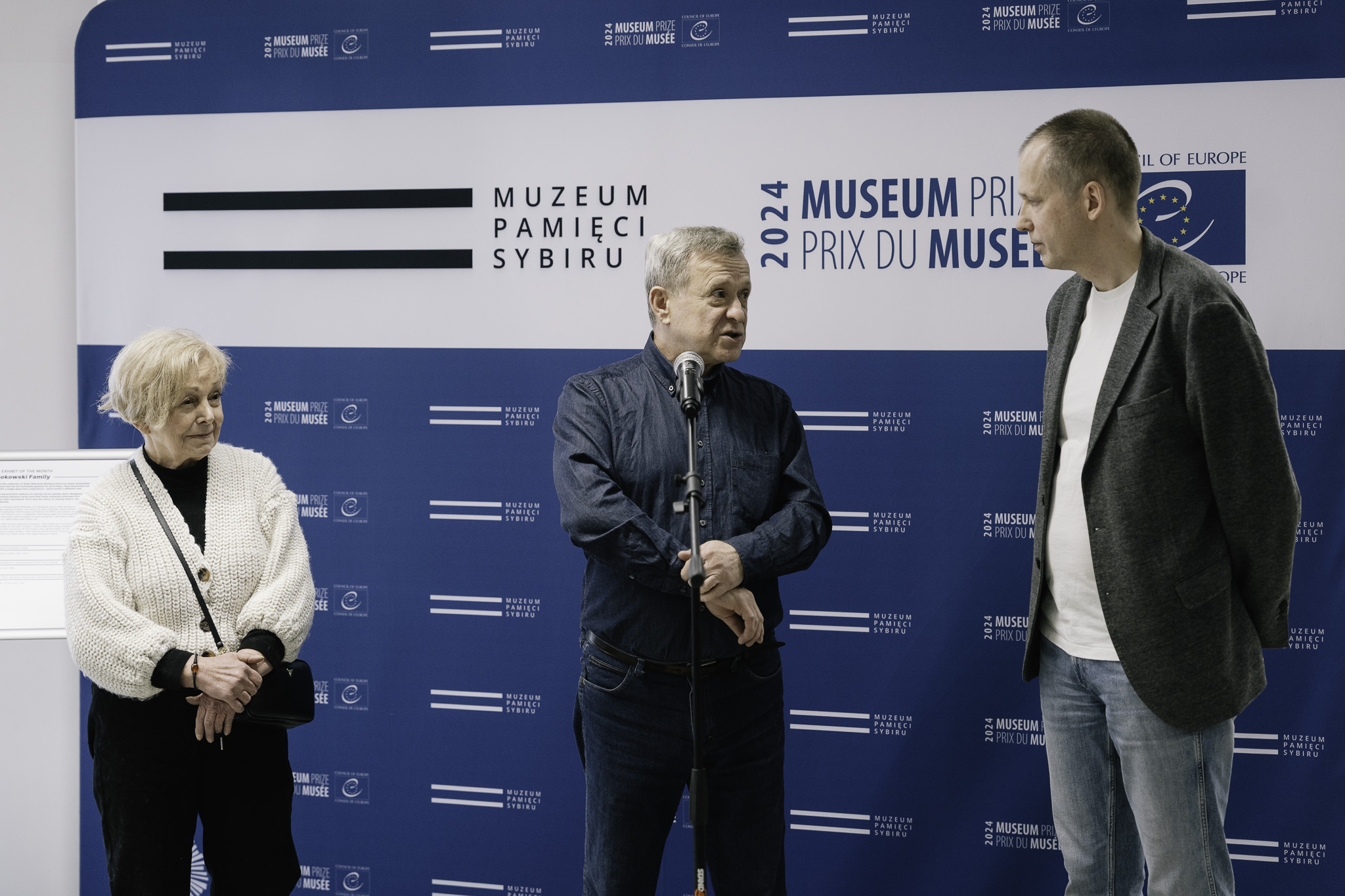
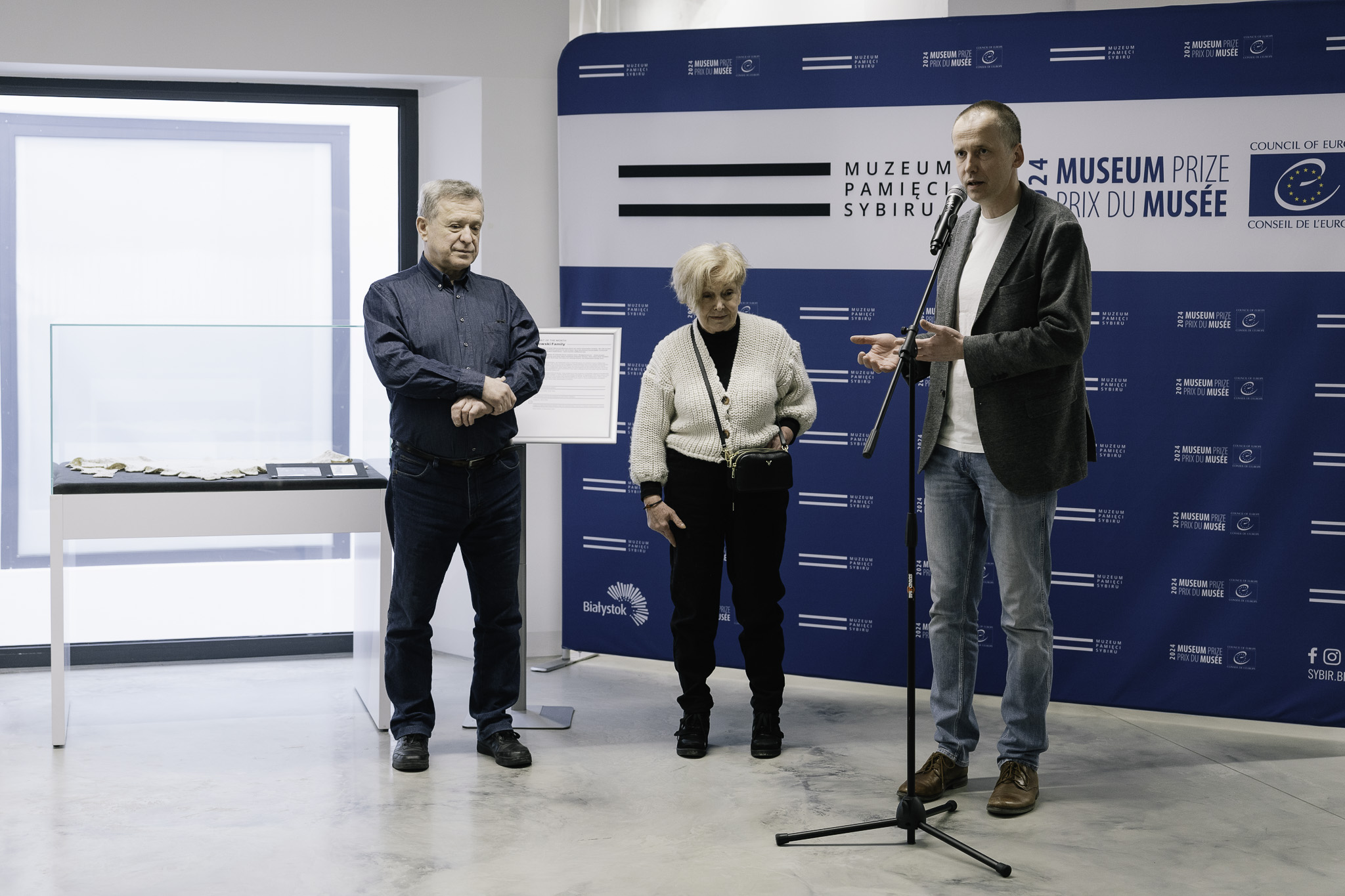
The guests of the museum – donor Jacek Drzewiński, son of Barbara Drzewińska (née Stokowska), along with his sister Małgorzata Drzewińska – shared stories about the items belonging to the Stokowski family from Białystok.
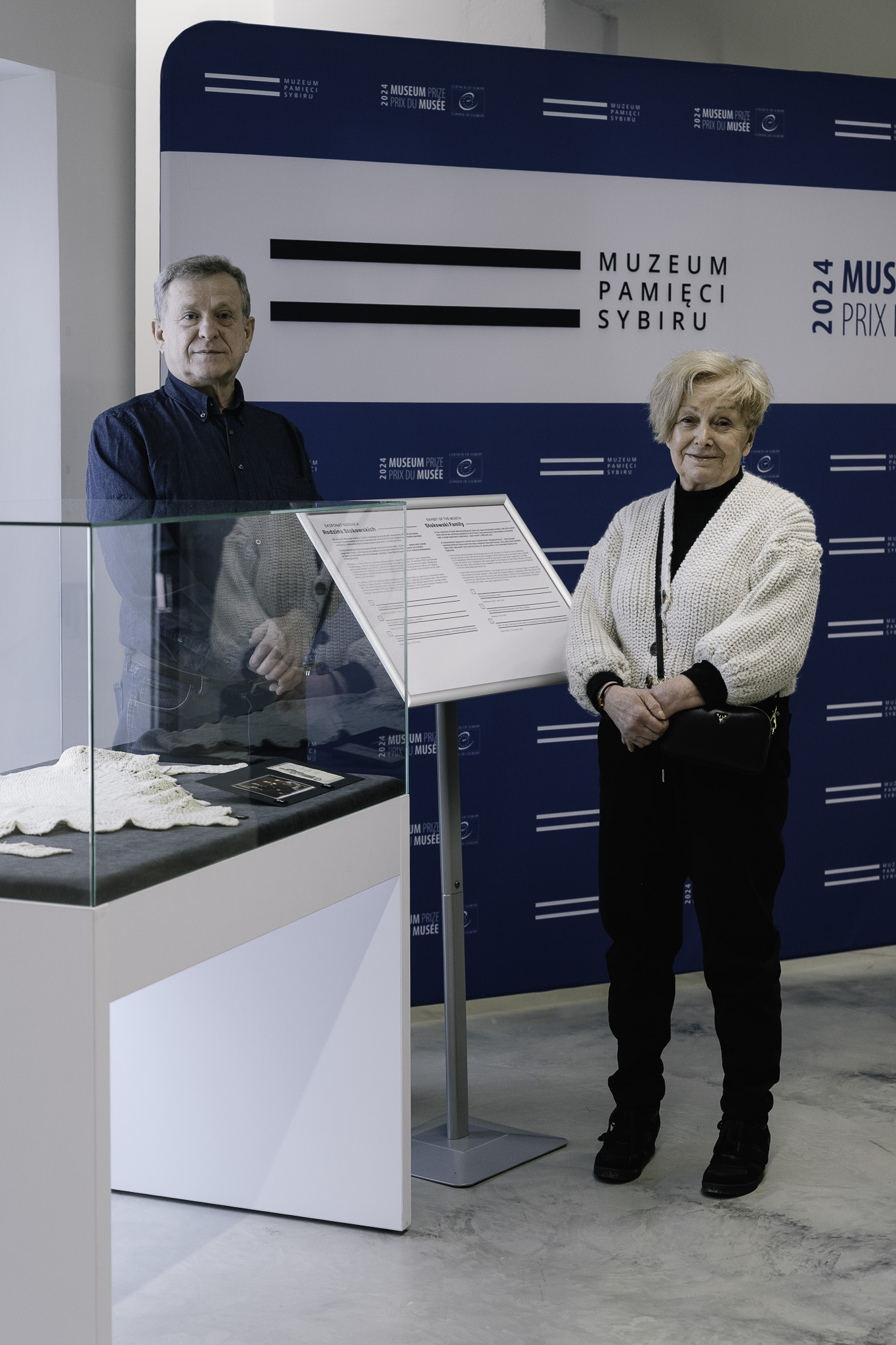
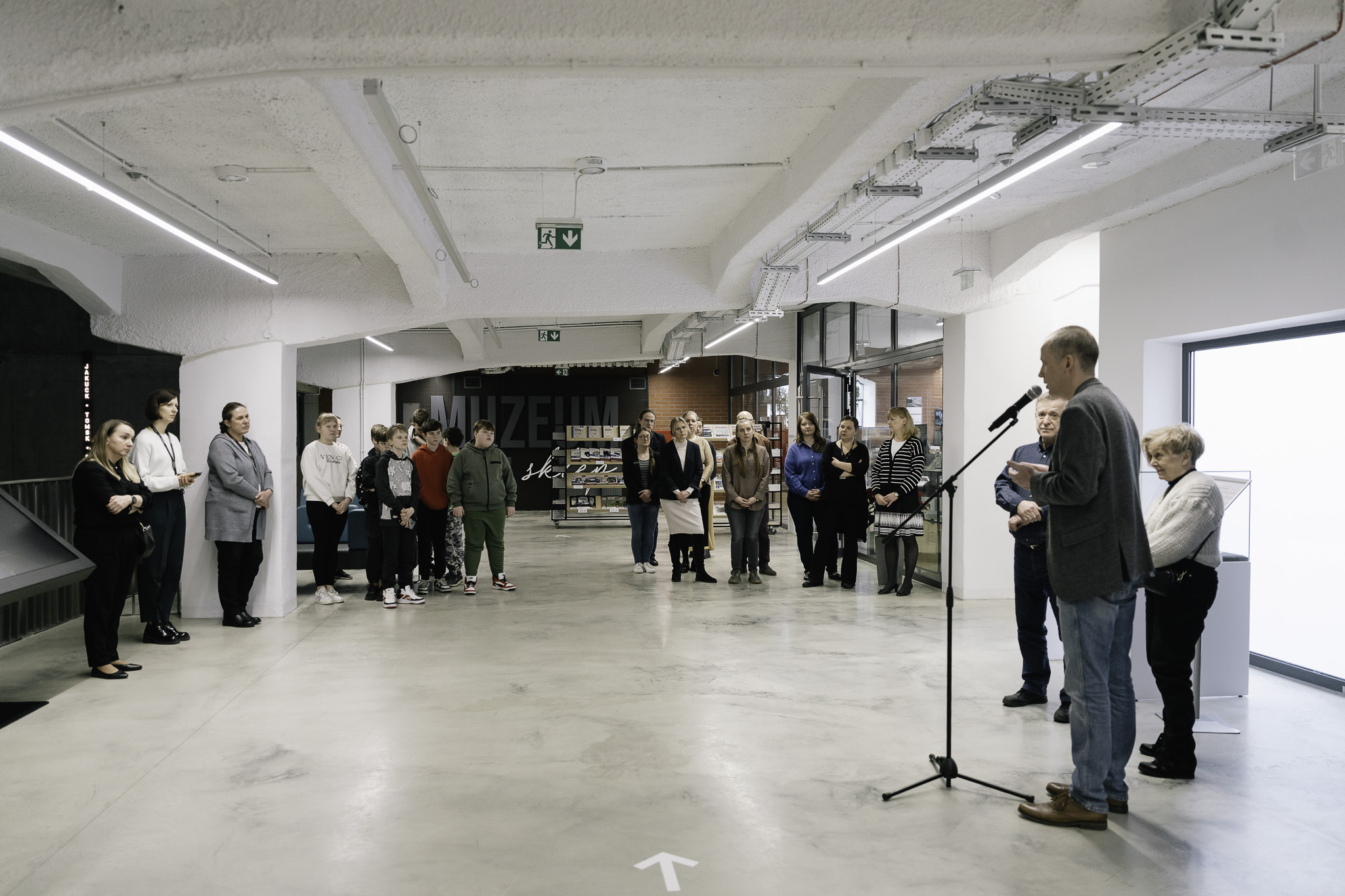
The guests, including the donors, as well as primary school students from Hajnówka were welcomed by Marcin Zwolski PhD:
“The Exhibit of the Month is a series that highlights artifacts donated by various donors. These memorabilia gain a new life at the museum. Today, we will hear the story of the Stokowski family. Very often, deported families were incomplete, being so short of men – victims of other Soviet repressions and crimes. In this case, we are dealing with a perfect example of that kind of history.”
The history of the Stokowski family is an example of the fate of people marked with Soviet terror. A characteristic feature of the system was the phenomenon of ‘disappearances’ – sudden and without a trace. Bolesław Jan Stokowski, Chief Secretary of the District Court in Białystok during the interwar period, had a wife, Anna, and two children, Barbara and Janusz Maciej. On September 25, 1939, he was arrested by the NKVD and placed under arrest organized in a shelter under the District Court in Białystok. After being taken for interrogation by the Soviet officials, the trace of him was gone. Most probably he was murdered in the Katyn massacre and his name mey be figuring on the so-called Belarusian Katyn List.
After Bolesław’s arrest, his family also suffered repression.. In April 1940, the Soviets deported Anna and her children to the sovkhoz in the Pavlodar Oblast in Kazakhstan, where they worked on the farm number 1. The conditions became increasingly difficult – by September 1941, field rations that the deportees could buy for the money they earned began to shrink. In early 1942, Janusz joined the so-called Anders’ Army and left the Soviet Union with it. Anna and Barbara remained in the USSR until 1946, when they were repatriated to Poland.
Jacek Drzewiński spoke about his family’s history and the donated memorabilia:
“The Soviets took my grandfather. All we know is that he was held in prison in Białystok for some time, and then he disappeared without a trace. After a while, my grandmother and her two small children – my mother and uncle – were deported. They only returned to Poland in 1946. At home, we talked about the scarf and photographs, but over time, a fondness for these objects for the next generations diminished. We decided to donate them to the museum so that a trace of those events would be preserved.”
The donation of the Stokowski family’s memorabilia is not just an act of preserving their memory but also a reminder of thousands of similar stories. Thanks to such contributions, the Sybir Memorial Museum becomes a place where the past meets the present, allowing future generations to learn about the tragic fate of Poles.