



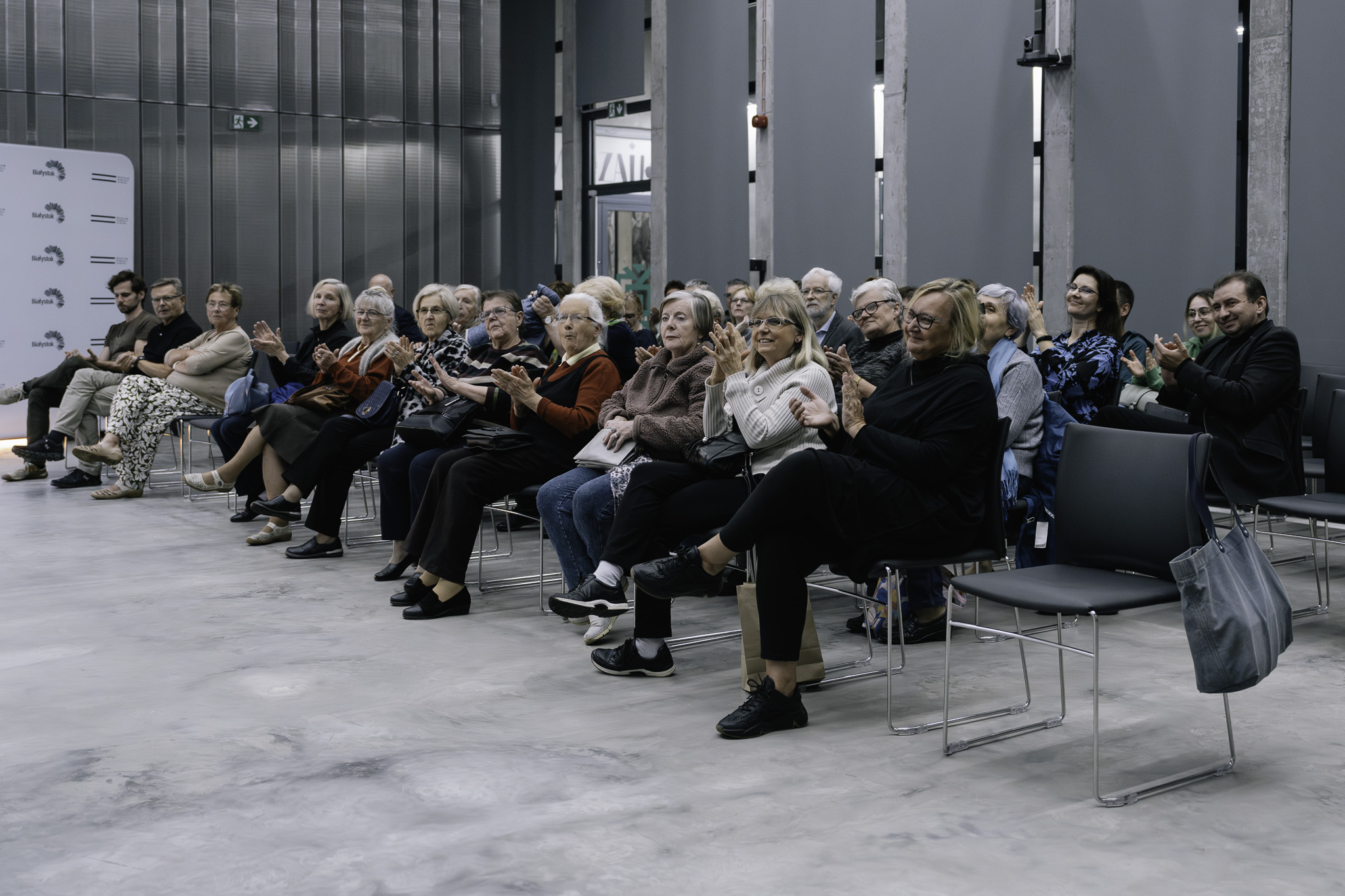
In the first part of the meeting, Prof. Lamentowicz discussed the overall global climate situation, focusing on how global warming is affecting subarctic and Arctic regions, including Siberia. He reported on three possible scenarios for changes in Siberia’s ecosystems: maintenance of the current level of warming, acceleration of warming, and potential cooling. He relied on the results of research by both Polish and international scientists, emphasizing how unpredictable further changes in this key climate region could be.
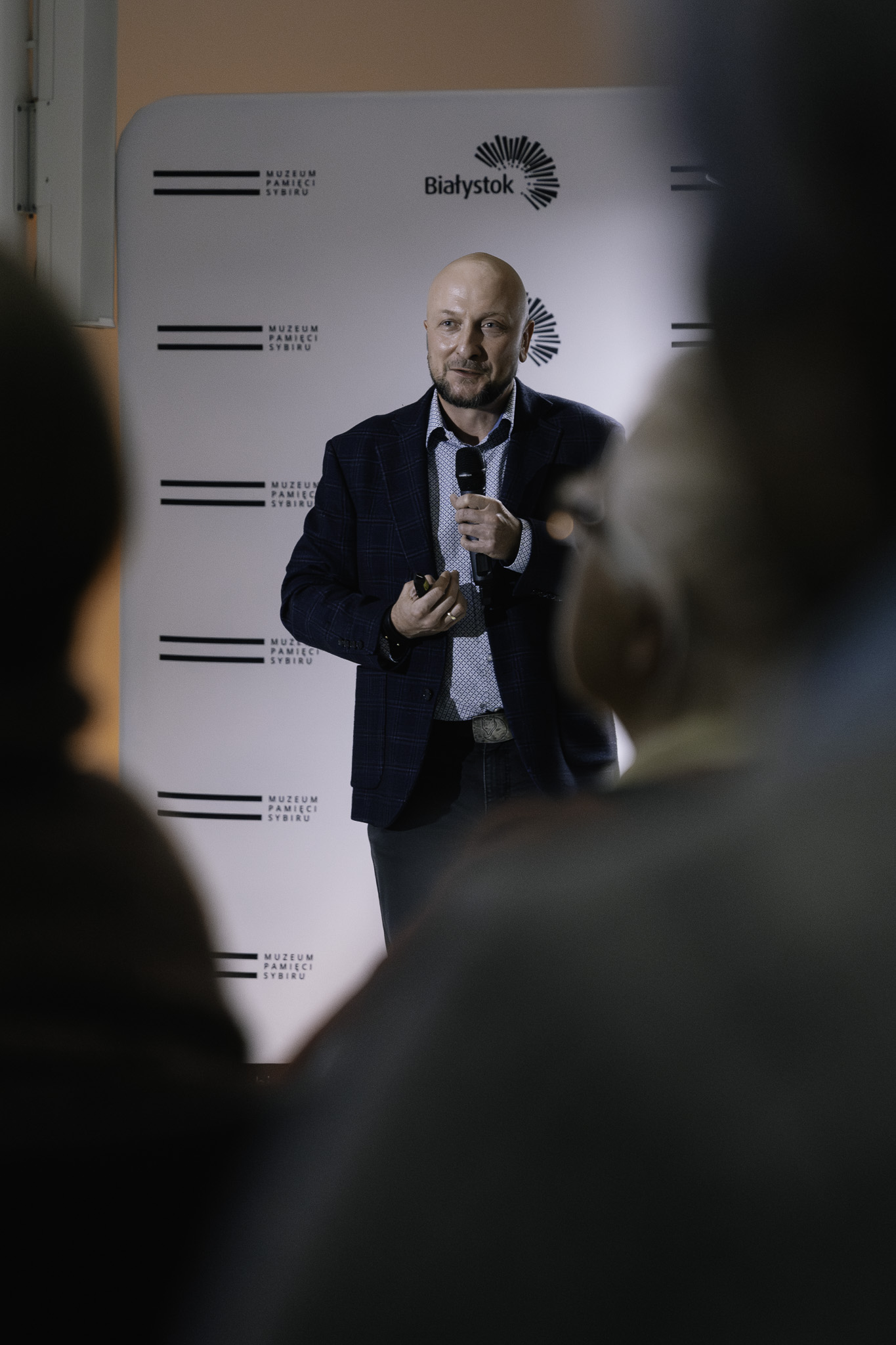
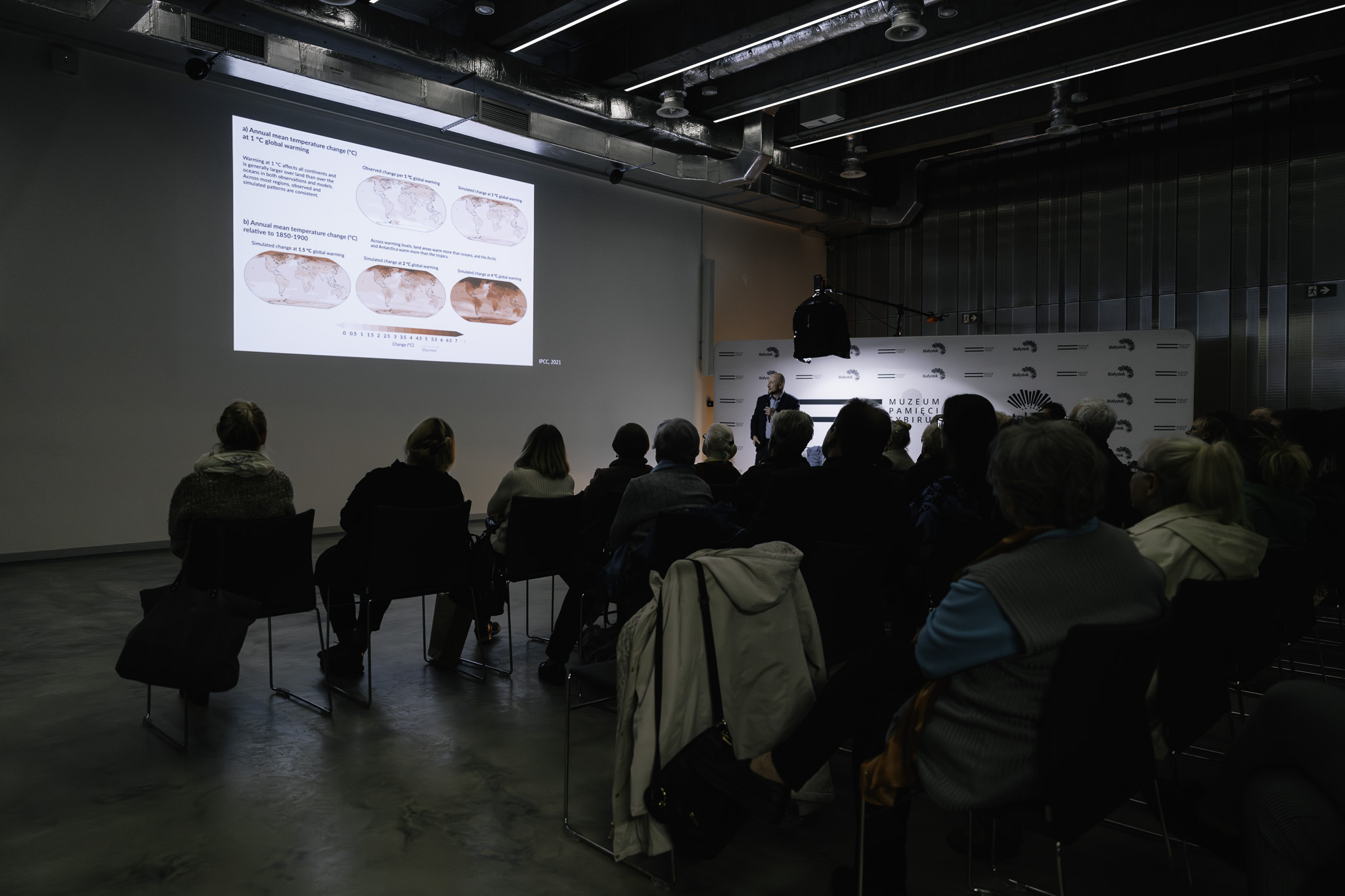
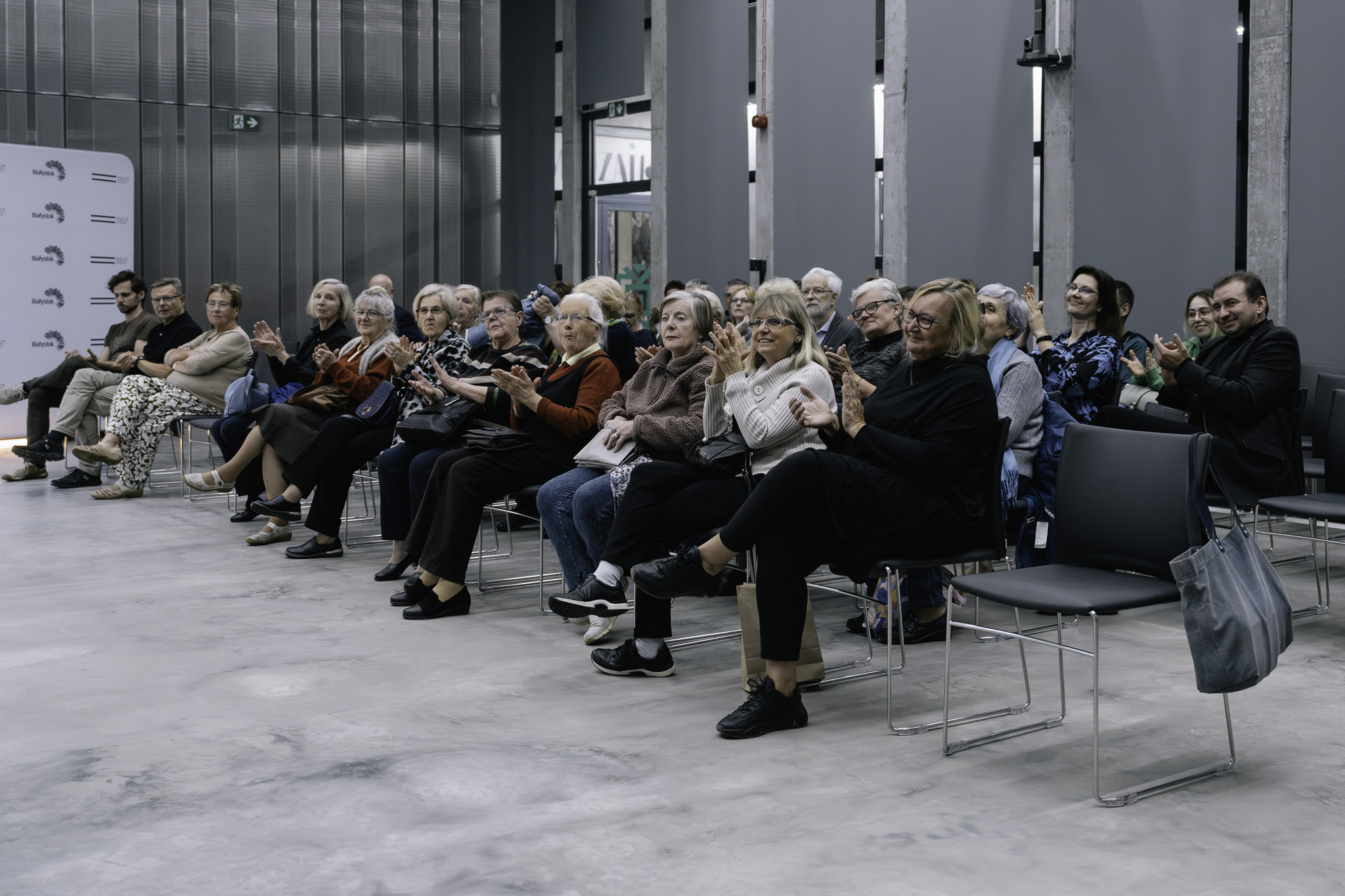
In the second part of the lecture, the professor focused on the geographic and biological diversity of Siberia, emphasizing that this vast region is not homogeneous – the eastern and western parts of Siberia differ significantly. He also presented the results of his research conducted in the West Siberian lowlands, based on collaboration with teams from France, Switzerland and the United States. This research provides a better understanding of the dynamics of historical fires in the peatlands and forests of Siberia, as well as changes in water levels in these areas.
One of the main topics discussed during the lecture was Siberian peatlands and permafrost, which play a key role in absorbing carbon dioxide. Unfortunately, climate warming is leading to their degradation, which in turn is increasing methane emissions and accelerating the process of global warming. The professor pointed out that these peatlands, while vital to the climate, are increasingly threatened by temperature changes and fires.
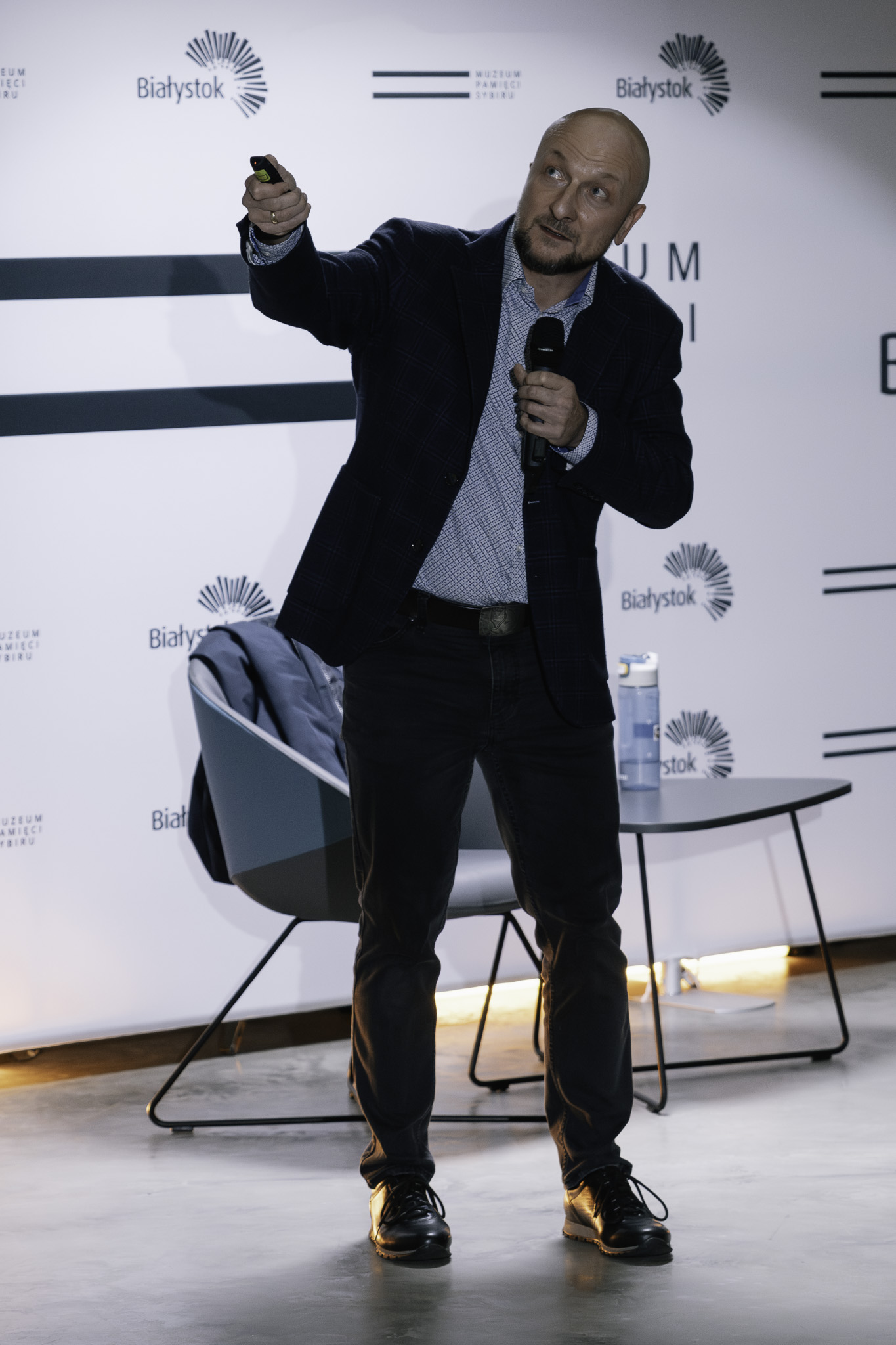
In the context of scientific research, the professor emphasized the importance of monitoring Siberia with satellite images. Thanks to them, one can see vast, uninhabited areas, interspersed with lakes and peat bogs. These inaccessible areas, covered with mosses, lichens and peat vegetation, represent one of the most rugged ecosystems on Earth. However, climate change is causing the permafrost to begin melting at an unprecedented rate, upsetting the delicate balance of these regions. As a result, Siberia’s landscape is being transformed, and peat hills are collapsing. Our guest pointed out that the degradation of Siberia is one of the clear symptoms of the global climate crisis. Unfortunately, due to the war in Ukraine, further research in this region has become impossible, which significantly hinders the work of scientists.
We would like to thank everyone for attending the meeting with Prof. Lamentowicz, which allowed us to better understand the challenges facing Siberia and their impact on global climate change.