


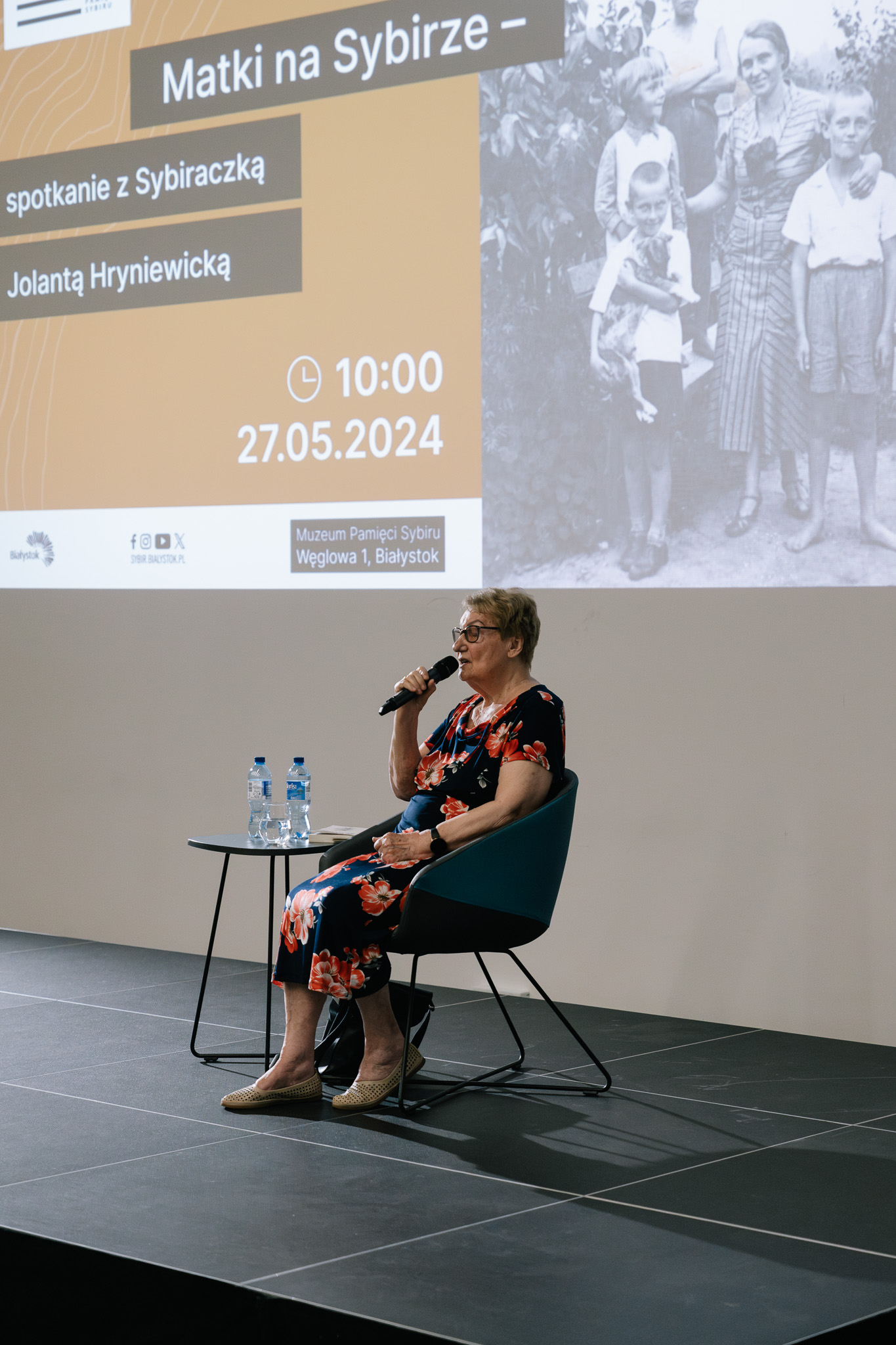
“The word ‘mother’ is usually the first word spoken by children all over the world, regardless of the country and the latitude and longitude,” Jolanta Hryniewicka, a Sybirak, President of the Białystok Branch of the Association of Siberian Deportees started the meeting entitled “Mothers in Siberia”. “My mother was extremely important in my life. Sometimes I wonder how in 1941, during our deportation, in intense heat, she coped with her small children: me and my siblings. She had to feed us, swaddle us, wash us and change our clothes. How did she deal with it? I appreciated it only when I became a mother myself. I appreciated my mother’s sacrifice and effort,” she emphasized.
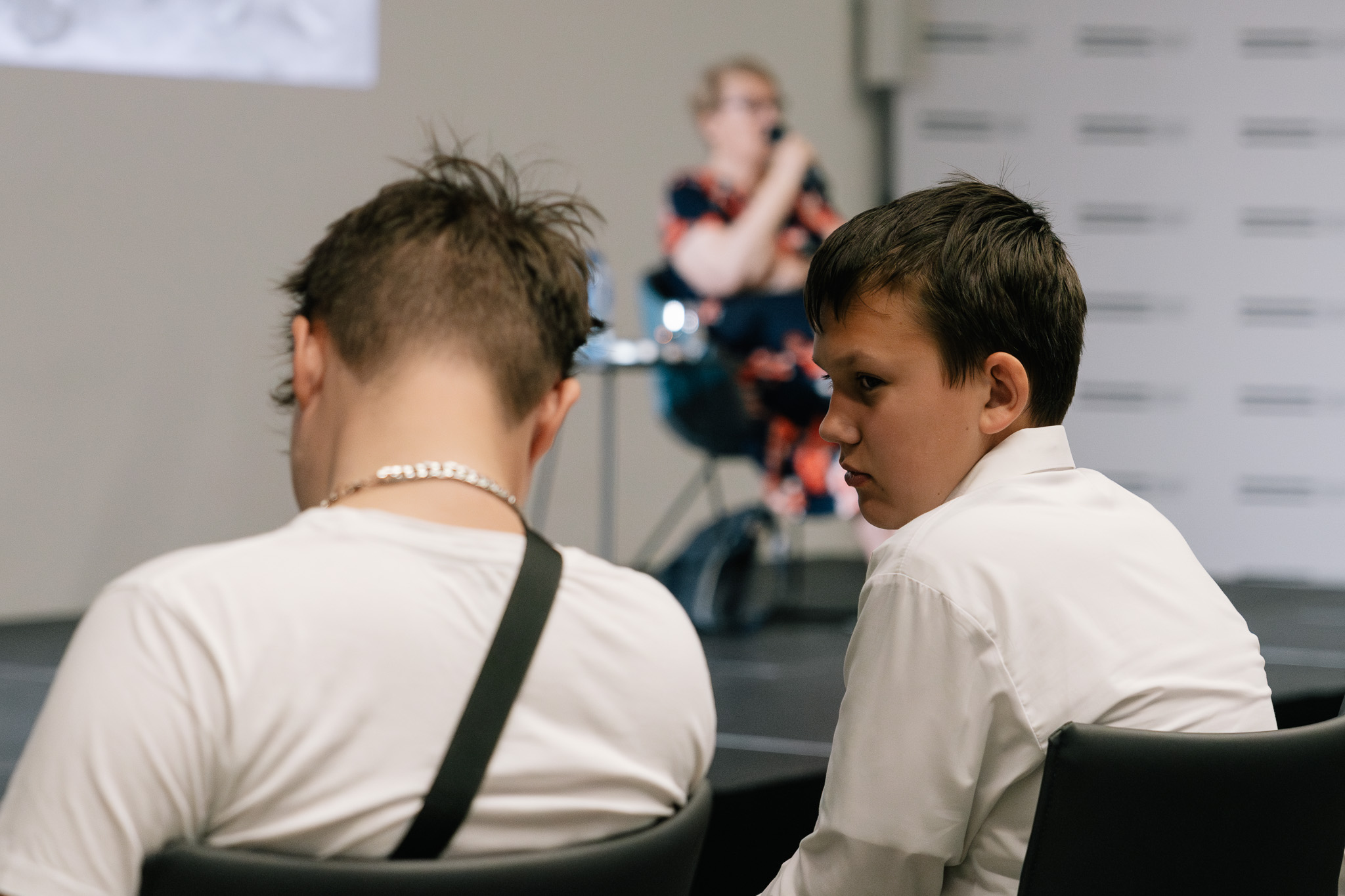
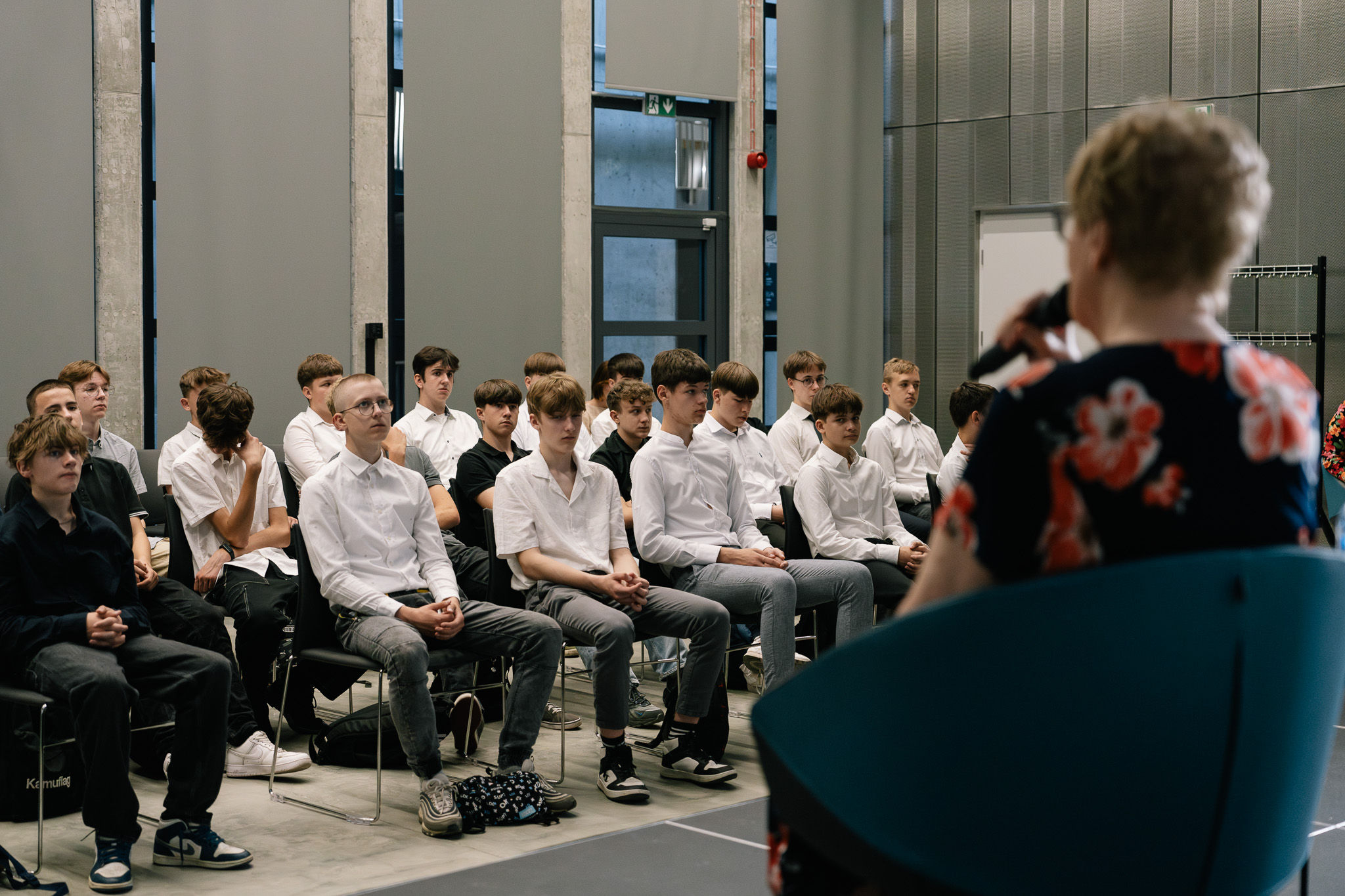
Students of the Technical School Complex named after General Władysław Anders in Białystok listened to a moving story about deportation, difficulties of being exiled and a stormy return to Poland.
In her story, Jolanta Hryniewicka emphasized the huge role of her mother, who was a rock for her and took care of her safety:
“In June 1941, at 3:00 a.m., Soviet soldiers knocked on our door. They told us to pack up and leave the house in 15 minutes. They told us to take a few things, because we didn’t need anything, and that we would have it like in paradise. Back then, no one even thought that we would spend many years in Siberia. While in exile, my mother had to work hard. We felt hungry and cold. We were alienated. My only consolation was my mother. I still remember her great courage and how she cared for us during this difficult time. It was thanks to her perseverance that we managed to return to Poland,” recalled Jolanta Hryniewicka.

Jolanta Hryniewicka was deported to the East in 1941 as a little girl together with her four siblings and her mother. Initially, they were sent to the poselok of Karasie in the Novosibirsk Oblast, and then they lived in Voronezh. Her youngest sister, Marysia, died in exile.
Jolanta Hryniewicka returned to Poland only in 1946.